
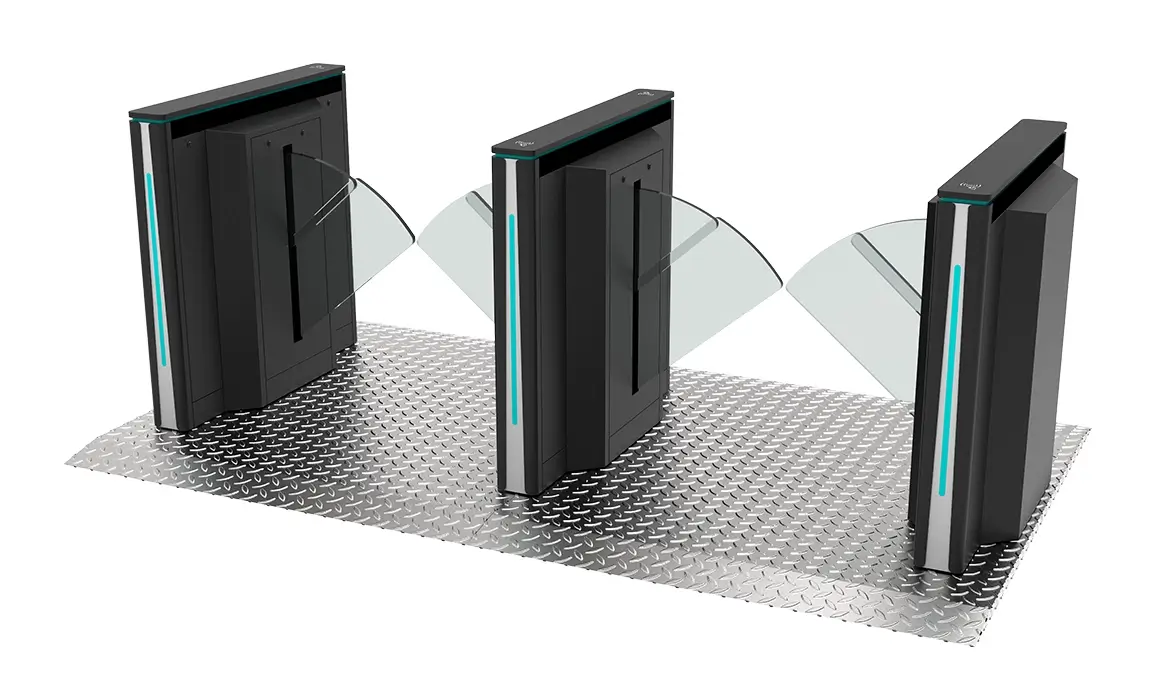

A turnstile is a channel blocking device (channel management equipment) used to manage pedestrian flow and regulate pedestrian access. It is mainly used in subway turnstile systems and fare collection turnstile systems. Its most basic and core function is to allow only one person to pass through at a time, and it can be used at entrance channels in various payment and access control situations.
Working principle
Depending on the control method of the movement, they are divided into mechanical, semi-automatic and fully automatic. Some manufacturers call the semi-automatic type electric and the fully automatic type automatic.
Mechanical stop mechanisms are controlled manually, with mechanical limit switches controlling the movement of the stop body (connected to the mechanism). Semi-automatic stop mechanisms use electromagnets to control their operation. Fully automatic stop mechanisms use motors.
By controlling the movement of the mechanism, the opening and closing of the stop body can be further controlled.
Depending on the number of mechanisms and barriers contained in the same turnstile, turnstiles can be divided into single-mechanism (containing 1 mechanism and 1 barrier) and double-mechanism (containing 2 mechanisms and 2 barriers, in a symmetrical form).
Depending on the type of barrier and the method of blocking, they can be classified as Tripod Turnstile, Swing Turnstile, Flap Barrier Gate, Speed Gate Turnstile, Sliding Turnstile, single-lane turnstiles,turnstiles (full height turnstiles), turnstiles (semi-full height turnstiles), etc.
Identification method
Since their development, turnstiles have used various identification methods, including: card swiping (magnetic cards, ID cards, IC cards, and various irregularly shaped cards), document scanning (ID cards, passports, military ID cards, etc.), barcodes/QR codes, and biometrics (fingerprints, iris scans, facial recognition).
The characteristic of card, document, and barcode/QR code identification methods is that they only recognize the card, document, or code, not the person.
Advantages: Fast recognition speed and high success rate, resulting in fast passage.
Disadvantages: If a pedestrian forgets or loses their card/document/code, they will lose access. Furthermore, this method does not verify the person’s identity, making it impossible to guarantee that the card/document/code matches the person. Additionally, cards/documents/codes can be stolen, posing significant security risks to management.
Biometric identification methods like fingerprints and iris scans identify individuals based on their biological characteristics, offering relatively high reliability.
Advantages: Compared to card/ID/code recognition, they eliminate the inconvenience of carrying external media.
Disadvantages: Fingerprint and iris scans are relatively easy to collect and can be easily spoofed, thus presenting certain vulnerabilities. Furthermore, verification requires the active cooperation of the pedestrian.
Facial recognition uses visible light to capture facial images. As pedestrians move, cameras actively capture their facial information to quickly determine their access rights.
Advantages: Verification is only required upon the person’s presence; there is no coercion, no need for active cooperation, no contact, and faces are difficult to fake.
Different locations use different recognition methods for turnstiles; some use a single method, while others combine multiple methods. For example, subway turnstiles commonly use card swipe recognition, while customs gates use a combination of facial, ID, and fingerprint recognition.
Application scenarios
Turnstiles are used both indoors and outdoors, and the appropriate turnstiles differ depending on the environment.
All types of turnstiles are suitable for indoor use.
Outdoor use involves complete exposure or some shelter, but must still withstand harsh outdoor conditions such as direct sunlight, rain, dust storms, extreme temperatures, and large diurnal temperature variations. Outdoor turnstiles need to be able to withstand these weather conditions. Suitable turnstiles include outdoor swing gates, outdoor wing gates, semi-automatic tripod turnstiles, and semi-automatic full-height turnstiles specifically designed for outdoor use.
Basic requirements for outdoor turnstiles: IP65 waterproof and dustproof rating, high and low temperature resistance, and resistance to sunlight interference. These requirements can be met through special customization for outdoor swing gates, outdoor wing gates, semi-automatic tripod turnstiles, and semi-automatic full-height turnstiles.
Advanced requirements for outdoor turnstiles: Suitable for both pedestrians and vehicles, and resistant to forced entry and exit. In some situations, pedestrians may ride bicycles, push strollers, or sit in wheelchairs. Outdoor wing gates, semi-automatic tripod turnstiles, and semi-automatic full-height turnstiles cannot meet this need. Outdoor swing gates for both pedestrians and vehicles can meet this need. In addition, turnstiles may be hit by bicycles, so they also need to have anti-violent impact gate function.
Main types
Tripod Turnstile
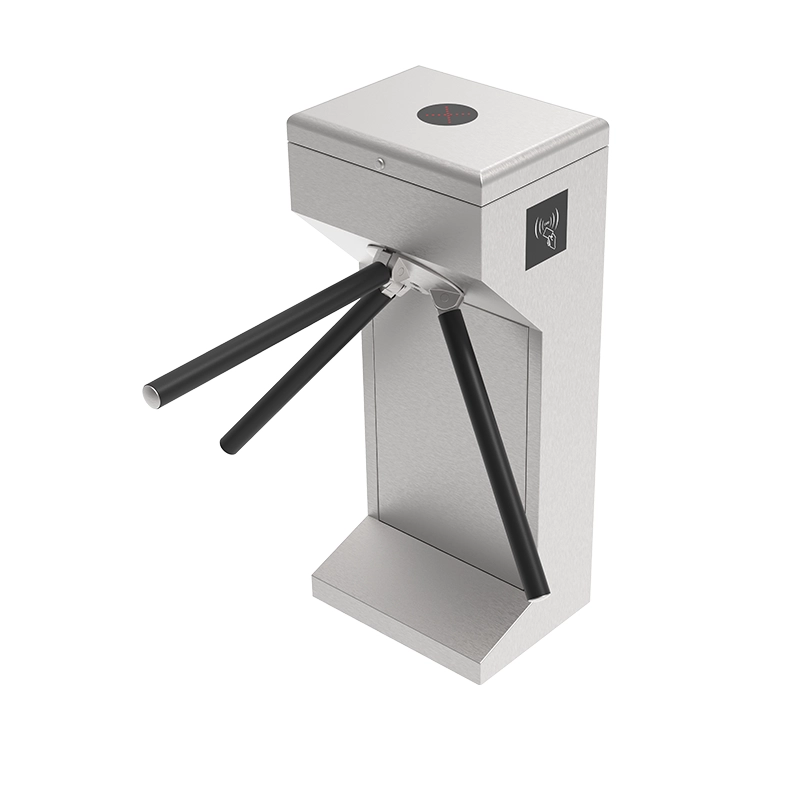
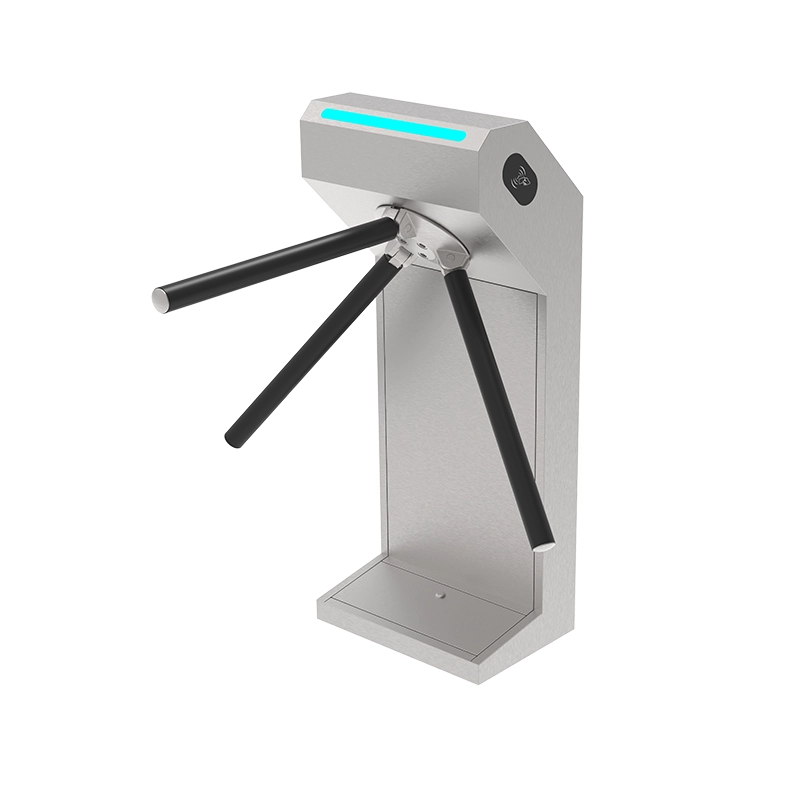
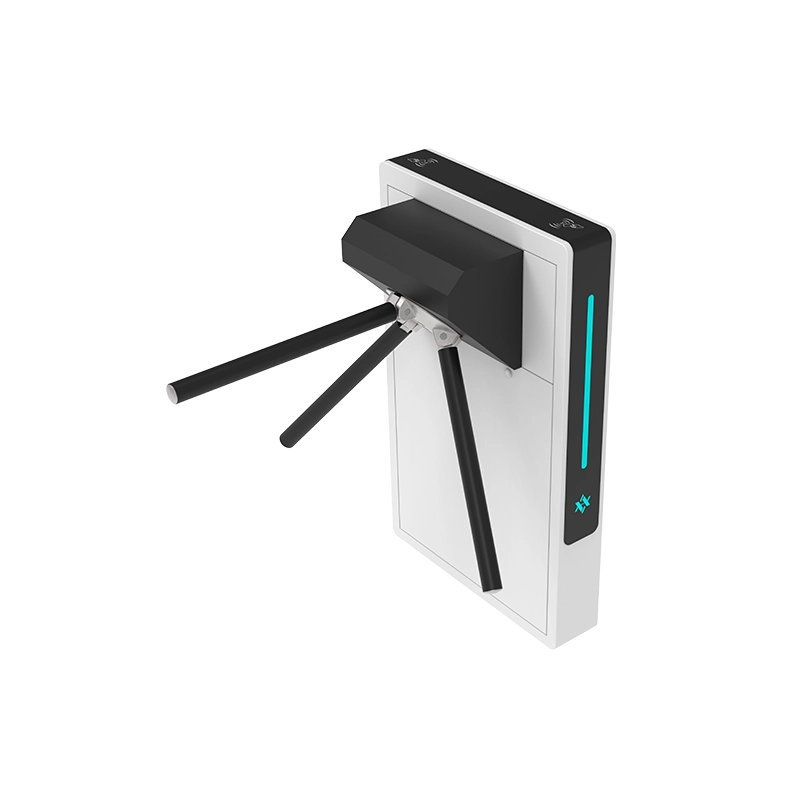
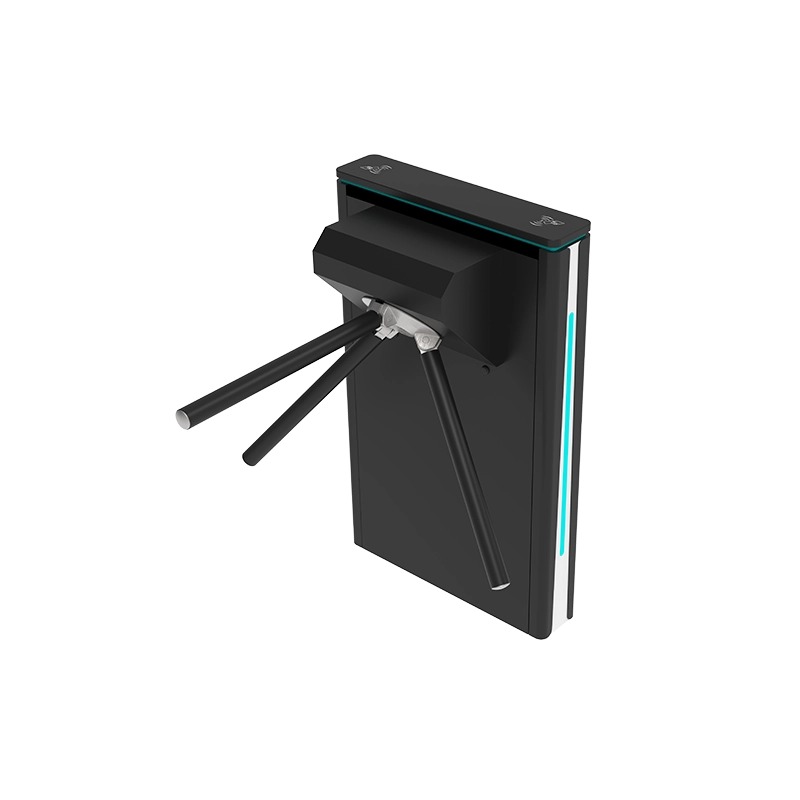
Tripod turnstiles, also known as three-bar turnstiles, three-rod turnstiles, or roller turnstiles, are barriers consisting of three metal rods forming a spatial triangle. They are typically made of hollow, enclosed stainless steel tubing, making them sturdy and resistant to deformation. Interception and passage are achieved through rotation.
Tripod turnstiles were the earliest type of turnstile and remain the most mature and sophisticated, but they are gradually being replaced by swing gates and wing gates.
Based on their control mechanism, they are classified as mechanical, semi-automatic, and fully automatic. In terms of form, they are divided into vertical and bridge types. Vertical tripod turnstiles are smaller and easier to install; bridge-type tripod turnstiles have longer passageways and offer higher security.
【Advantages】
1. Effectively allows for single-person passage, meaning only one person can pass at a time, resulting in high safety and reliability.
2. Low cost.
3. Strong waterproof and dustproof capabilities, highly adaptable to various environments, suitable for both outdoor and indoor use.
【Disadvantages】
1. The passage width (the width allowing pedestrians to pass) is relatively small, generally around 500mm.
2. The passage speed is relatively slow.
3. Due to the limitations of the barrier’s shape, it is not suitable for people carrying luggage.
4. The design is not very customizable; most styles lack aesthetic appeal. However, AIPADA’s tripod turnstiles solve the aesthetic problem.
5. Mechanical and semi-automatic tripod turnstiles experience mechanical collisions during operation, resulting in higher noise levels. Fully automatic tripod turnstiles do not have this problem.
【Application Scenarios】
Suitable for ordinary pedestrians and places with low traffic or where pedestrians do not take good care of the product, as well as some harsh outdoor environments.
](https://aipadaturnstile.com/wp-content/uploads/2025/11/AT102-TC-01.webp "Working Principle And Types Of Turnstiles 1")
](https://aipadaturnstile.com/wp-content/uploads/2025/11/AT104-TC-01.webp "Working Principle And Types Of Turnstiles 2")
](https://aipadaturnstile.com/wp-content/uploads/2025/11/AT107-TC-01.webp "Working Principle And Types Of Turnstiles 3")
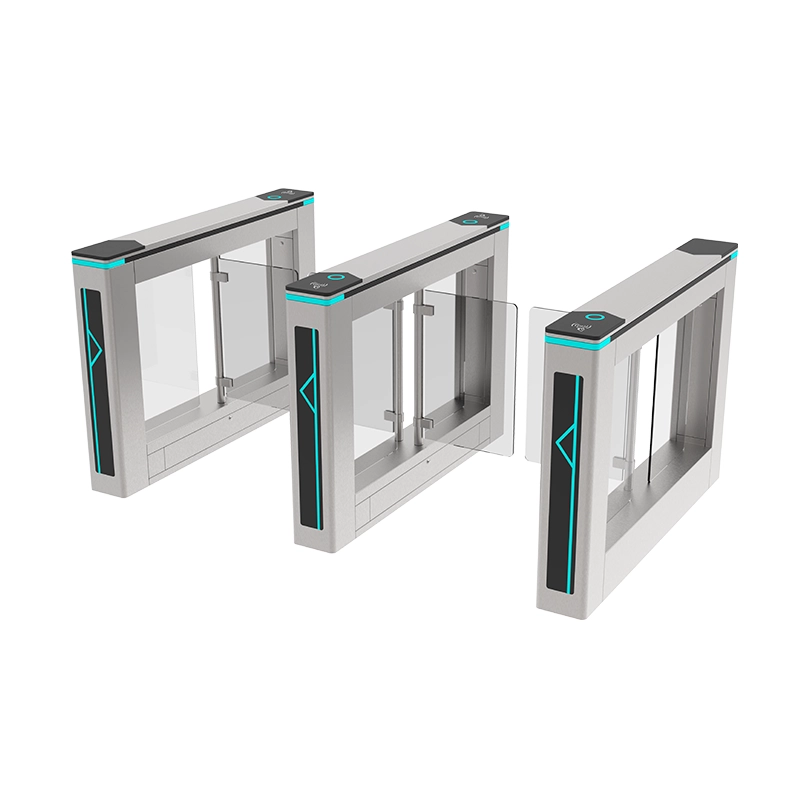
Speed Gate Turnstile
A Speed Gate Turnstile is an advanced access control solution designed to provide fast, secure, and efficient entry and exit in high-traffic areas. It uses motorized barriers or gates that automatically open upon verification of authorized access, providing both security and a smooth flow of people.
Speed Gate Turnstiles are sophisticated systems that combine security and ease of use. These turnstiles are designed with fast-moving gates that allow individuals to pass quickly through while ensuring that unauthorized access is blocked. They are equipped with advanced sensors and access control systems such as RFID, biometric recognition, or card readers. The design is often sleek and modern, making them suitable for environments that require both high security and aesthetic appeal.
【Advantages】
1.Fast Passage:The primary advantage of Speed Gate Turnstiles is their ability to allow rapid access. This makes them ideal for places with high foot traffic, such as airports, subway stations, and office buildings.
2.Space-Saving:They have a compact design that saves space, making them a good choice for environments where floor space is limited.
3.Enhanced Security:Speed gates offer superior security features, such as biometric authentication and anti-tailgating sensors, which prevent unauthorized access.
4.Modern Design:With their sleek, contemporary look, speed gates complement modern architecture and are often used in upscale commercial and corporate environments.
5.Easy Integration:These turnstiles can be easily integrated with other access control systems, including facial recognition or RFID technology, providing flexibility in security management.
6.Durability and Low Maintenance:Many models are made from durable materials like stainless steel and are built to withstand heavy usage, minimizing maintenance costs.
【Disadvantages】
1.Cost:Speed Gate Turnstiles can be more expensive compared to traditional turnstiles due to their advanced features and sleek design. The upfront investment might be a concern for some businesses.
2.Space Requirements for Installation:Although they save space in terms of entry width, speed gates may require specific installation space for proper functioning. Depending on the model, they may need a larger footprint than traditional turnstiles.
3.Power Dependency:Speed gates rely on electrical power to operate. Any power failure can disrupt access, although most systems have backup power options.
4.Complex Setup:Due to the sophisticated technology and integration requirements, installation and setup of speed gates may take longer and require professional assistance.
【Applications 】
Airports and Transit Hubs:Speed gates are commonly used in airports and railway stations where passengers need to be processed quickly but securely. They handle a high volume of people while preventing unauthorized entry.
Office Buildings and Corporate Campuses:Many modern office complexes use speed gates to ensure secure entry for employees and visitors, often integrating them with card readers or biometric systems for added security.
Museums and Exhibition Centers:In places where security is important but minimal interference with the flow of visitors is needed, such as museums or exhibition halls, speed gates help maintain control while providing a user-friendly experience.
Stadiums and Arenas:With the high volume of visitors in sports stadiums and event venues, speed gates provide quick and secure access, especially when large crowds need to enter or exit in a short period of time.
Banks and Financial Institutions:These environments often require high-security measures, and speed gates help protect against unauthorized access while offering a fast entry process for authorized personnel.
Speed Gate Turnstiles are highly effective in environments where both security and efficiency are a priority. They provide fast passage, integrate well with modern access control technologies, and enhance security while maintaining a stylish design. However, they come with higher initial costs and the need for proper installation and maintenance. These factors should be considered when choosing whether a speed gate turnstile is the right solution for your space.
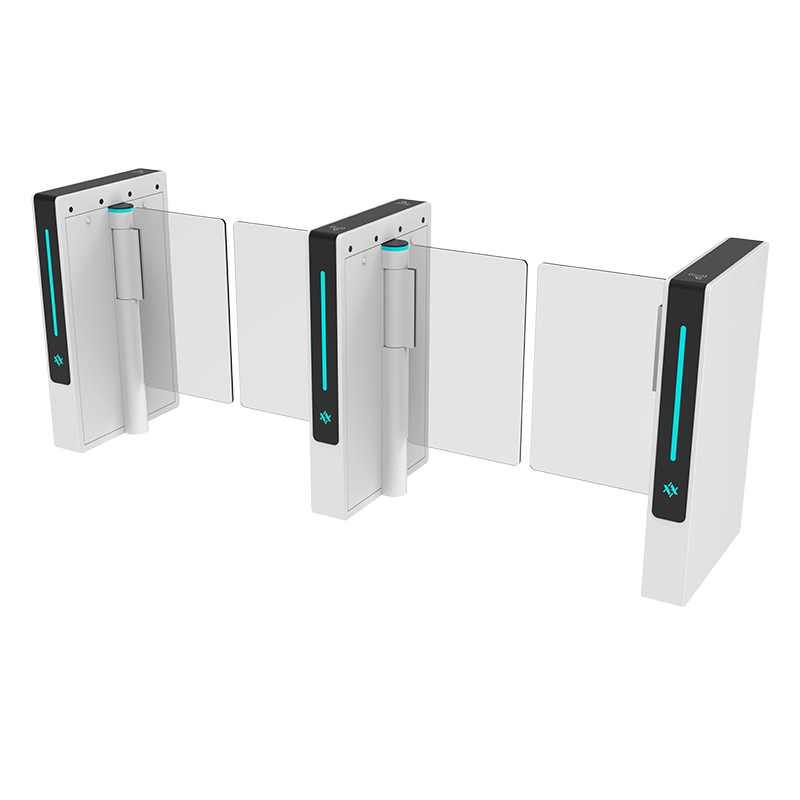
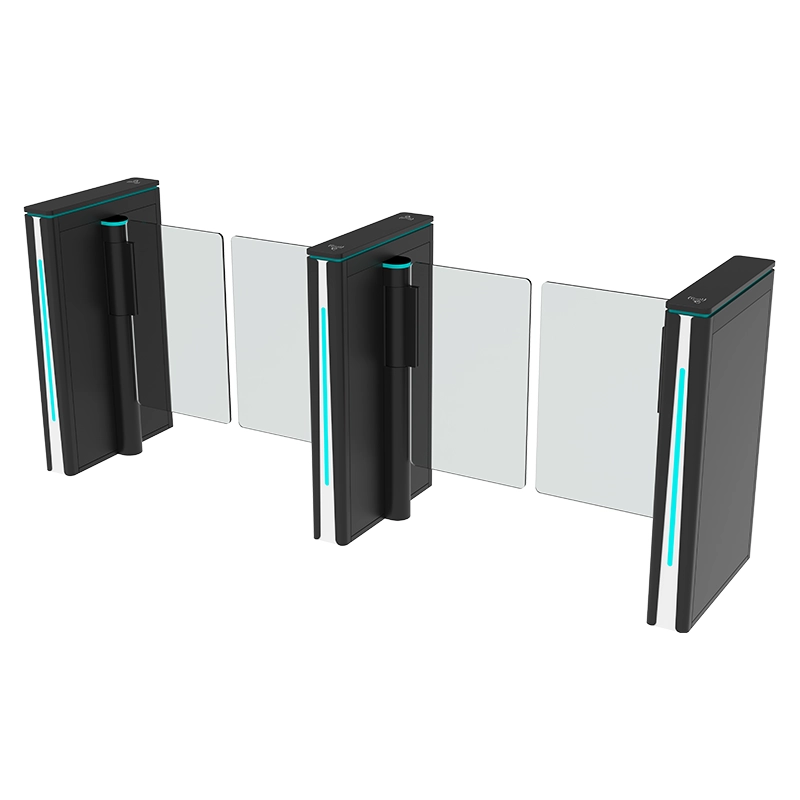
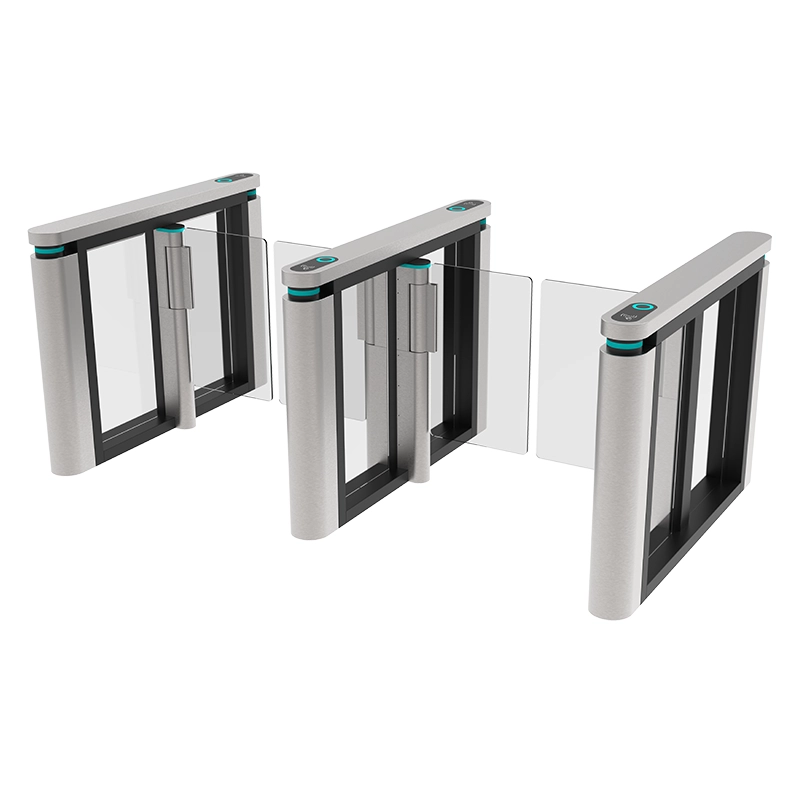
Flap Barrier Gate
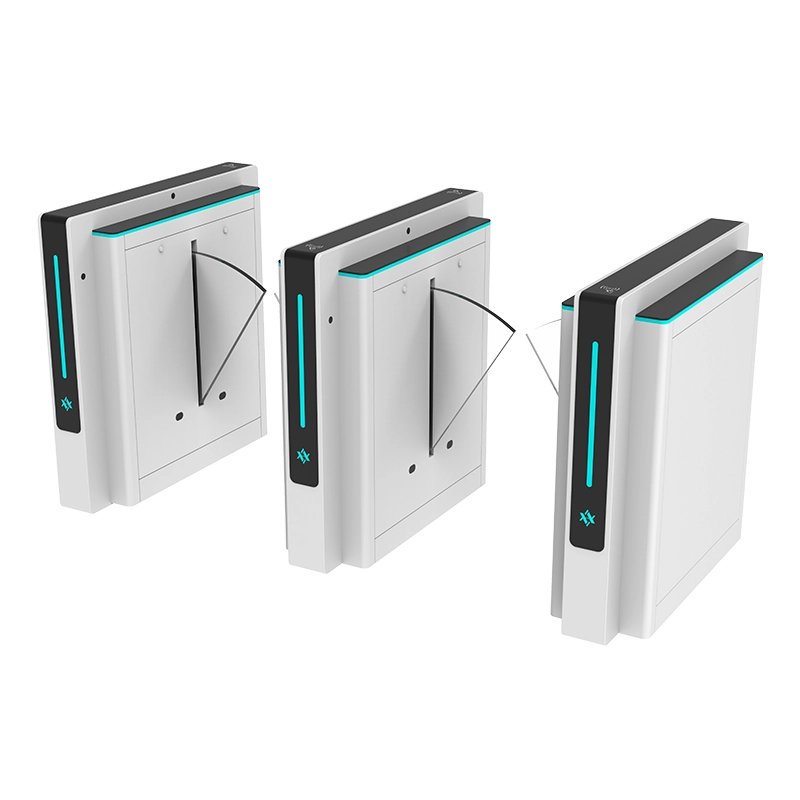
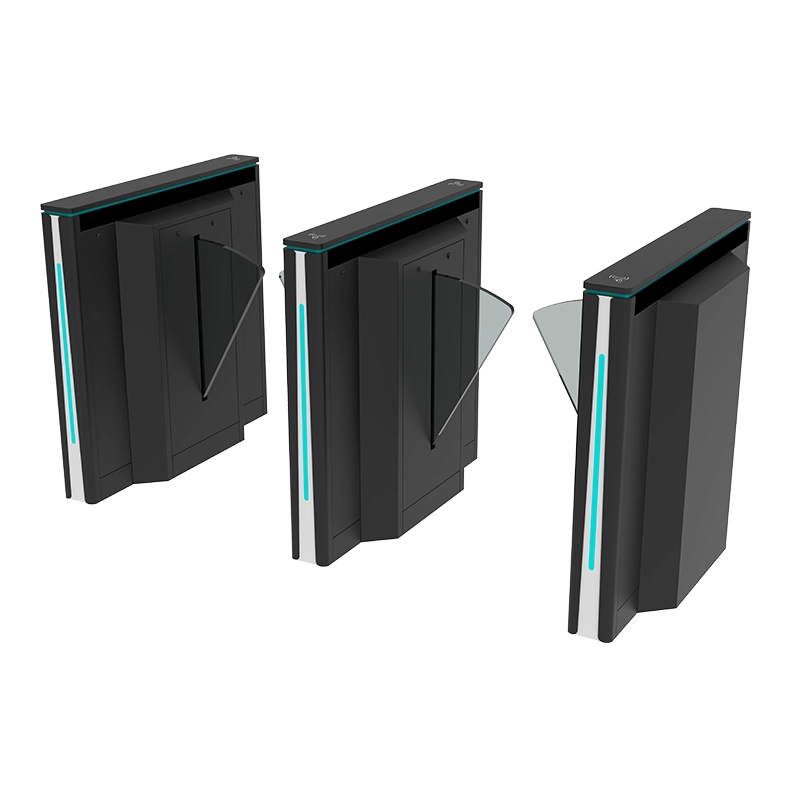
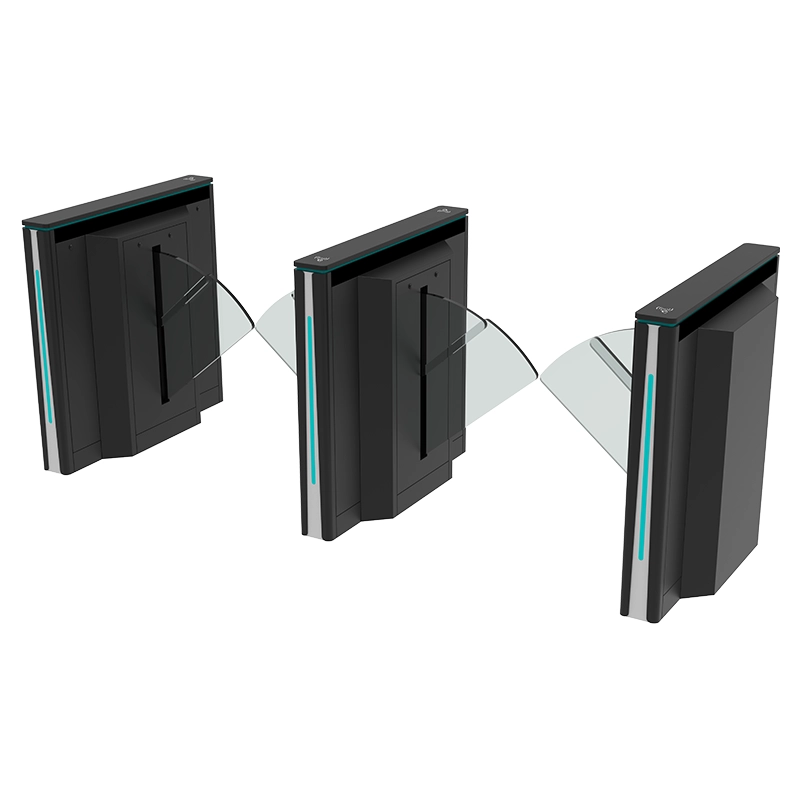
Flap Barrier Gate,Wing gates, generally known as scissor gates in the rail transit industry and often as speed gates, typically have a fan-shaped, plane-like barrier (gate wing) perpendicular to the ground. They extend and retract to block and allow passage. Common materials for the barrier include acrylic glass and tempered glass; some also use metal plates encased in special flexible materials (to reduce the risk of injury to pedestrians from impacts).
The control mechanism is only fully automatic. The only available form is the bridge type, and the pedestrian detection module is highly functional.
【Advantages】
1. Fastest throughput among all turnstiles.
2. Passage width between tripod turnstiles and swing gates, generally between 550mm and 900mm.
3. Aesthetically pleasing appearance, with a variety of materials available for the gate wings.
4. In emergencies, the gate wings quickly retract into the housing, easily creating an unobstructed passage, improving throughput and facilitating pedestrian evacuation.
【Disadvantages】
1. The control method is relatively complex and costly.
2. Insufficient waterproof and dustproof capabilities.
3. Limited appearance and design flexibility.
4. Due to the limitations of the barrier’s shape, the impact resistance of the wing gate is lower than that of the tripod turnstile; illegal pedestrian attempts to pass through can easily damage the gate wings and mechanism.
5. Requires high technical expertise from the manufacturer; poor design can significantly reduce product reliability and the ability to prevent pinching injuries.
[Application Scenarios]
Suitable for indoor locations with high foot traffic, such as subway and train station ticket checkpoints. Also suitable for occasions where aesthetics are a primary concern.
](https://aipadaturnstile.com/wp-content/uploads/2025/12/AT311-Y-TC-02.webp "Working Principle And Types Of Turnstiles 9")
Swing Turnstile
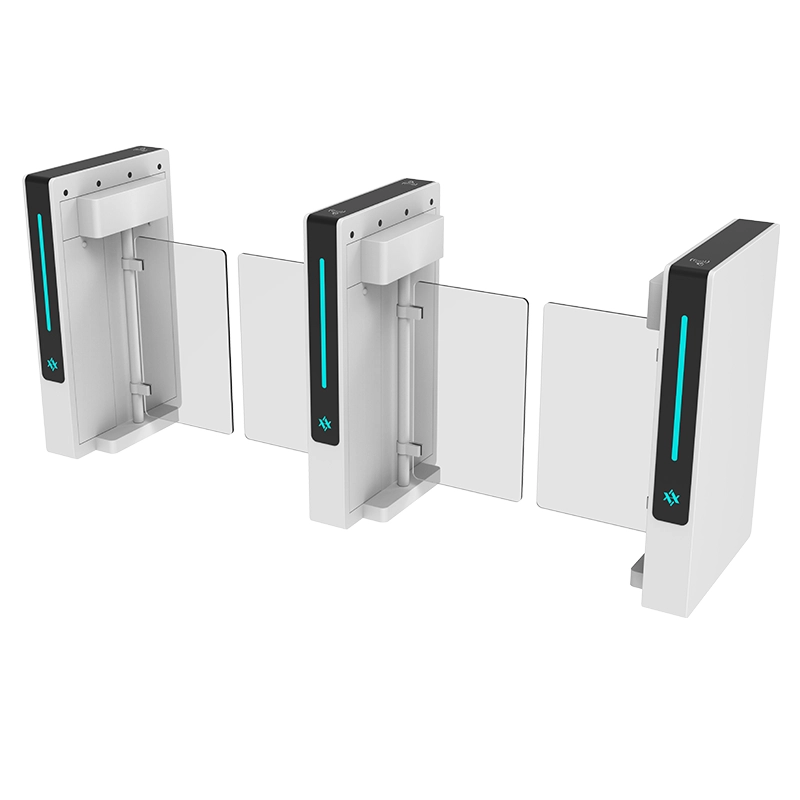
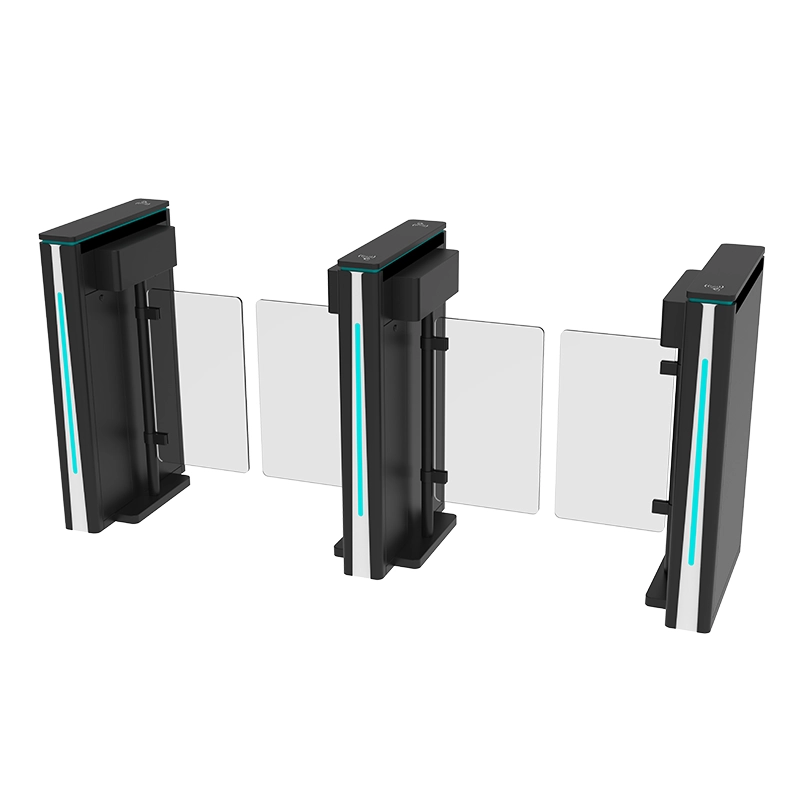
Swing gates, generally known as flap gates in the rail transit industry, are flat, perpendicular to the ground, barrier bodies (swing gates) that rotate and swing to block and release pedestrians. Common materials for the barrier bodies include stainless steel, acrylic glass, and tempered glass; some also use metal plates encased in special flexible materials (to reduce the risk of injury from impacts).
In terms of control mechanism, they are classified as mechanical or fully automatic. In terms of form, they are classified as vertical, bridge-type, and cylindrical. Vertical and cylindrical swing gates are smaller and easier to install, but have shorter passage lengths and limited pedestrian detection module functionality; bridge-type swing gates have longer passages, stronger pedestrian detection module functionality, and higher security.
【Advantages】
1. Widest passage width among all turnstiles, generally between 550mm and 1000mm, with some high-end models reaching 1500mm. Suitable for pedestrians or bicycles carrying luggage, and can also be used as a dedicated passage for people with disabilities.
2. Compared to tripod turnstiles, bridge-type swing gates add a pedestrian detection module, effectively detecting pedestrians and providing strong anti-tailgating capabilities.
3. Most versatile in appearance, with a wide variety of materials for the barrier and diverse box shapes, allowing for aesthetically pleasing designs. Therefore, they are commonly used in high-end settings such as office buildings, smart buildings, and clubs.
4. No mechanical collisions during swing gate operation, resulting in lower noise.
【Disadvantages】
1. Higher cost, especially for customized models, such as those with wider passages or using special materials, significantly increasing technical difficulty.
2. Some models lack sufficient waterproof and dustproof capabilities, suitable only for indoor use, and less adaptable to different environments than tripod turnstiles. 3. Due to the limitations of its barrier shape, the impact resistance of a swing gate is lower than that of a tripod turnstile. Unauthorized and rapid passage by pedestrians can easily damage the gate swing and its mechanism.
4. Poor design by the manufacturer can significantly reduce product reliability and the ability to prevent pinching and collisions that could cause personal injury.
【Application Scenarios】
Suitable for situations requiring wide passageways, including areas with a high volume of pedestrians carrying luggage or bicycles, and dedicated passageways for people with disabilities. Also suitable for situations where aesthetics are a priority.
](https://aipadaturnstile.com/wp-content/uploads/2025/12/AT206-TC-01.webp "Working Principle And Types Of Turnstiles 10")
](https://aipadaturnstile.com/wp-content/uploads/2025/12/AT211-TC-01.webp "Working Principle And Types Of Turnstiles 11")
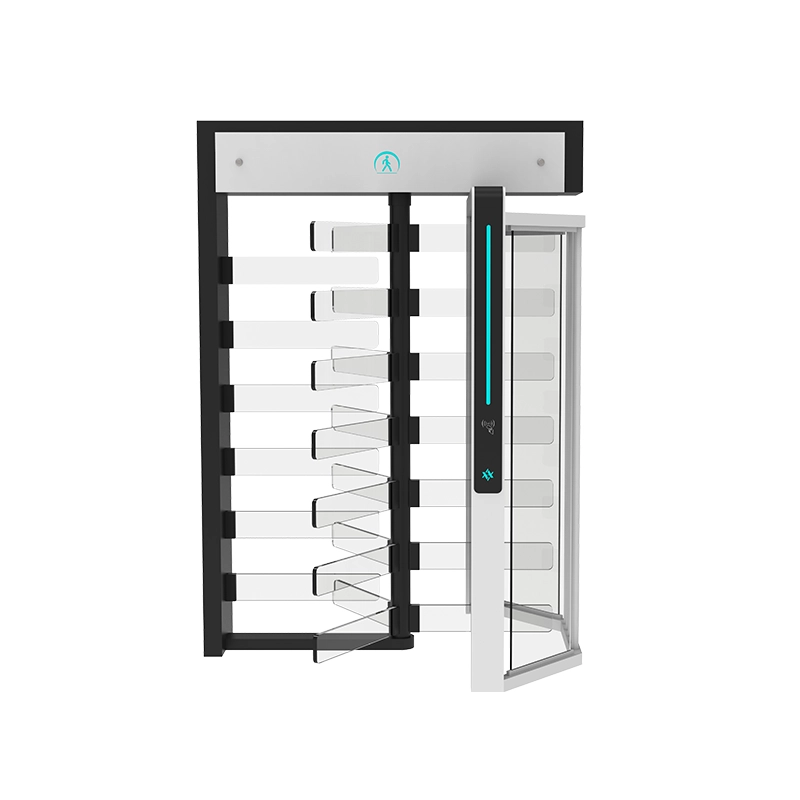
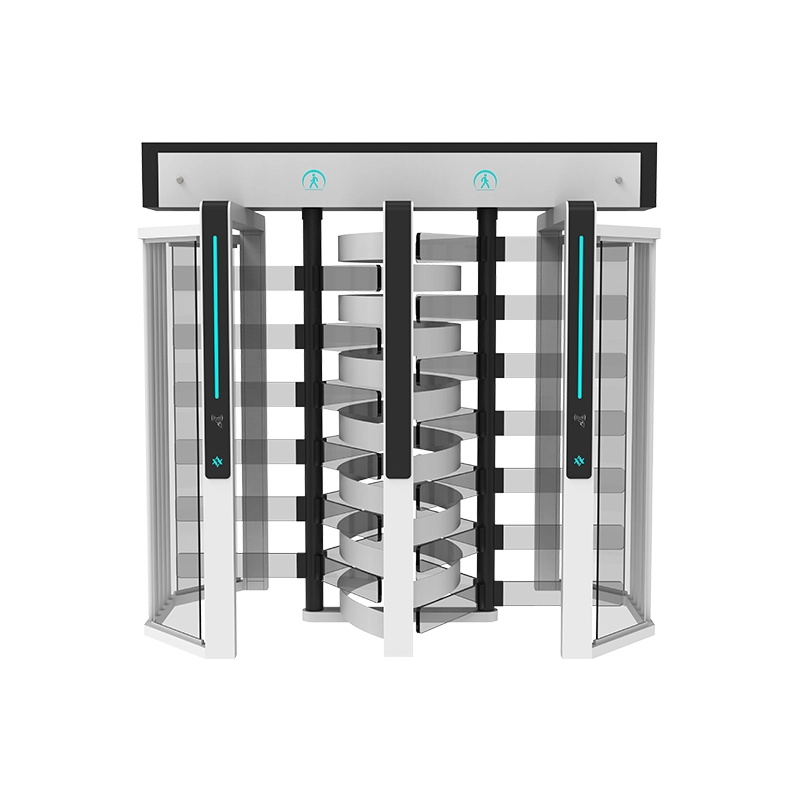
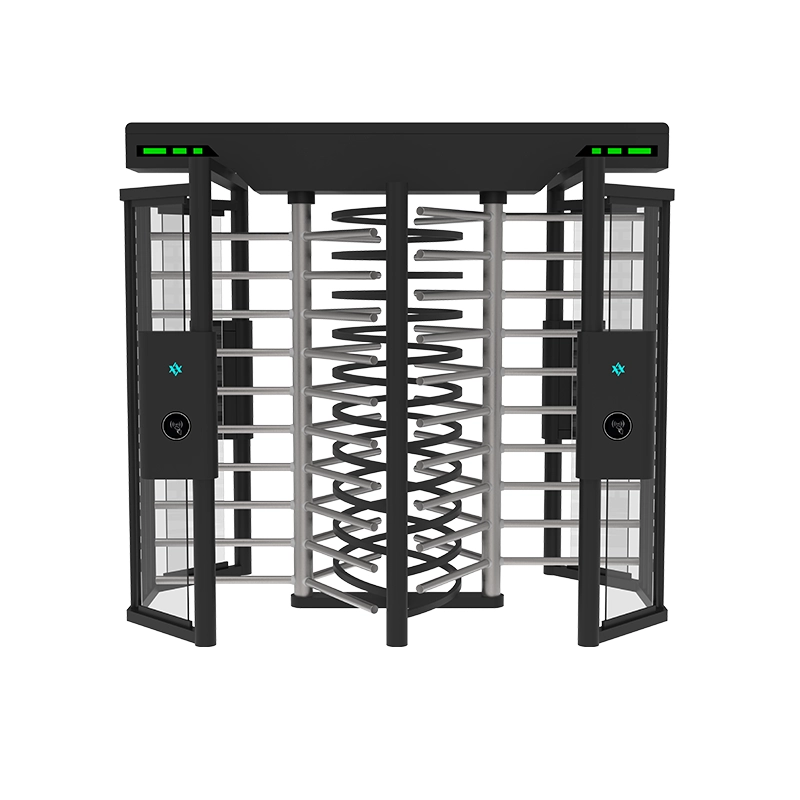
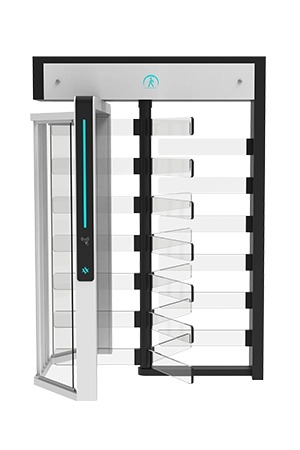
Full Height Turnstile
Full Height Turnstile, also called rotary turnstiles, evolved from tripod turnstiles. Based on the height of the barrier, they are divided into full-height turnstiles (also called full-height gates or full-height rotary gates) and half-height turnstiles (also called half-height rotary gates), with full-height turnstiles being more commonly used.
The barrier (gate arm) generally consists of 3 or 4 metal rods arranged parallel to the horizontal plane in a “Y” shape (also called a three-bar turnstile) or a “+” shape (also called a cross turnstile).
Based on the control mechanism, they are divided into mechanical, semi-automatic, and fully automatic types. Based on the number of channels, they are divided into single-channel, double-channel, triple-channel, and quad-channel types, with single-channel and double-channel being more common.
【Advantages】
1. Full-height turnstiles offer the highest security among all turnstiles and are the only ones that can achieve unattended operation.
2. They effectively enable single-person passage, meaning only one person can pass at a time, resulting in high security and reliability.
3. Strong waterproof and dustproof capabilities, highly adaptable to various environments, suitable for both indoor and outdoor use.
【Disadvantages】
1. Passage width is generally around 500mm.
2. Relatively slow passage speed.
3. Due to the shape of the barrier, it is not suitable for those carrying large luggage.
【Application Scenarios】
Full-height turnstiles are suitable for unattended operations and situations with very high security requirements, as well as some harsh outdoor environments.
Half-height turnstiles are suitable for situations with high requirements for passage order, such as stadiums、station、 prisons.
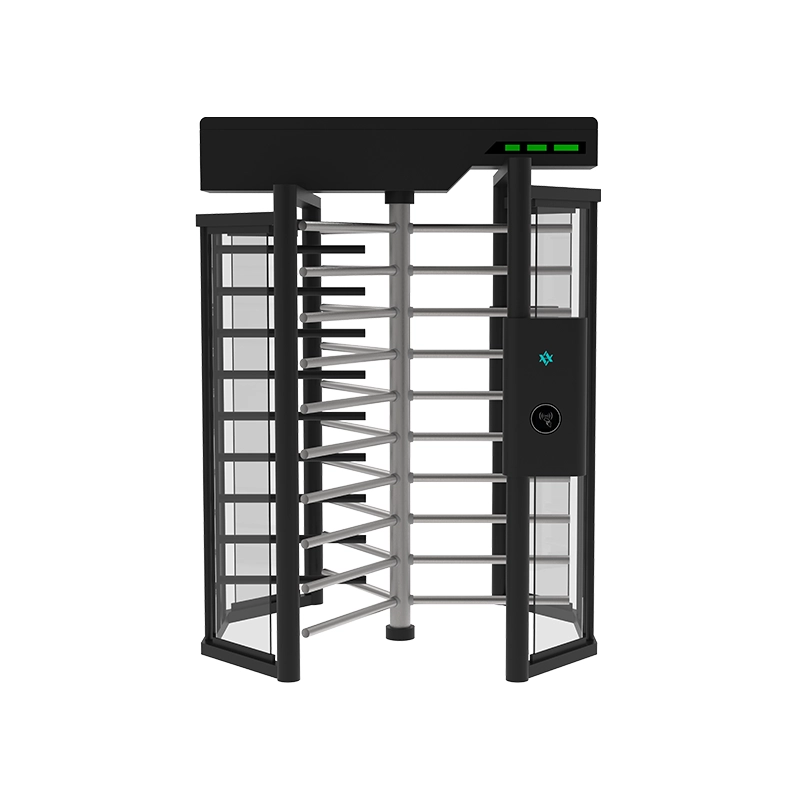
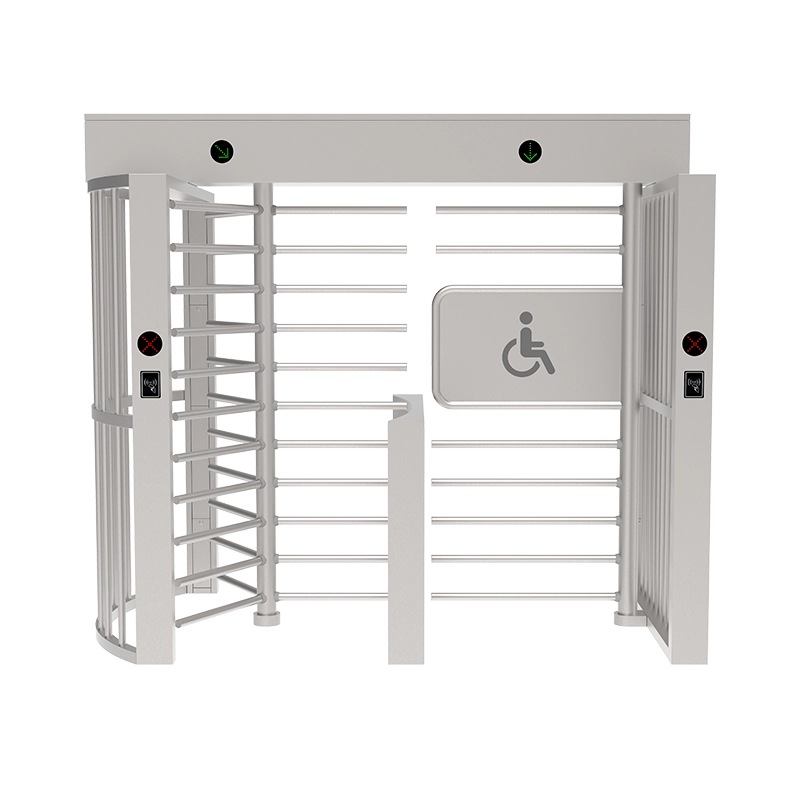
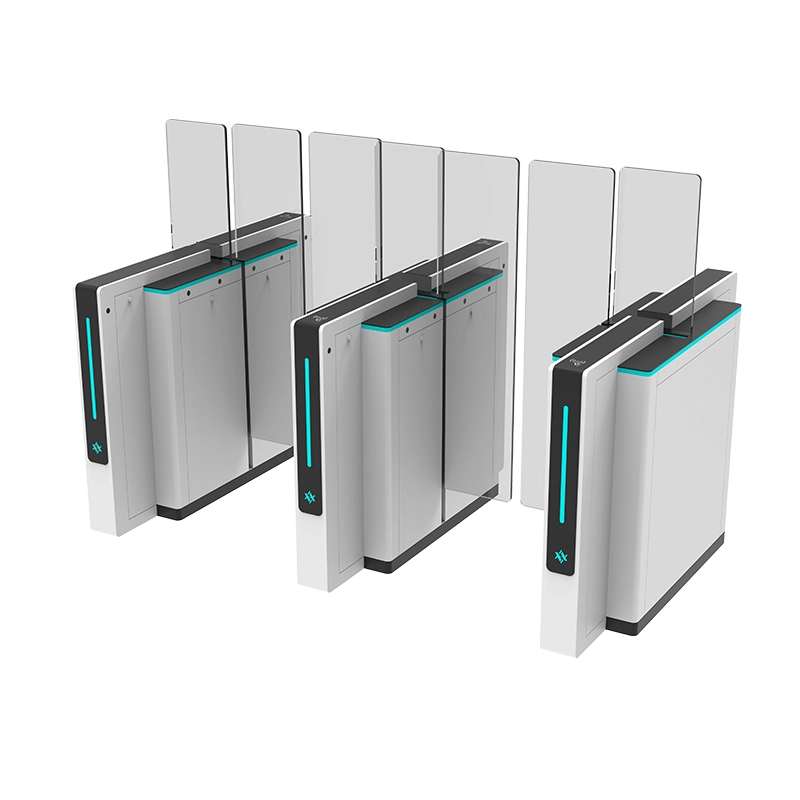
Sliding Turnstile
Sliding gates, also called sliding doors or full-height wing gates, evolved from wing gates and borrow features from automatic doors. They have a large barrier (gate wing) with a high blocking height, perpendicular to the ground, and achieve blocking and passage through extension and retraction. Sliding gates are commonly made of acrylic glass or tempered glass.
The control mechanism is only fully automatic. They are bridge-type gates with a robust pedestrian detection module.
【Advantages】
1. Strong security: The large barrier effectively prevents pedestrians from climbing or crawling to pass illegally.
2. Aesthetically pleasing appearance.
3. Fast passage speed, similar to wing gates.
4. Passage width is between tripod turnstiles and swing gates, generally between 550mm and 900mm.
5. In emergencies, the gate quickly retracts into its housing, easily creating an unobstructed passage, increasing passage speed, and facilitating pedestrian evacuation.
【Disadvantages】
1. The control method is relatively complex, resulting in higher costs.
2. Insufficient waterproof and dustproof capabilities; generally only suitable for indoor use. A rain canopy is necessary for outdoor applications.
3. Limited design options and flexibility.
4. Requires high technical expertise from the manufacturer. Poor design can significantly reduce product reliability and the ability to prevent pinching injuries.
【Application Scenarios】
Suitable for indoor applications where both security and aesthetics are paramount.
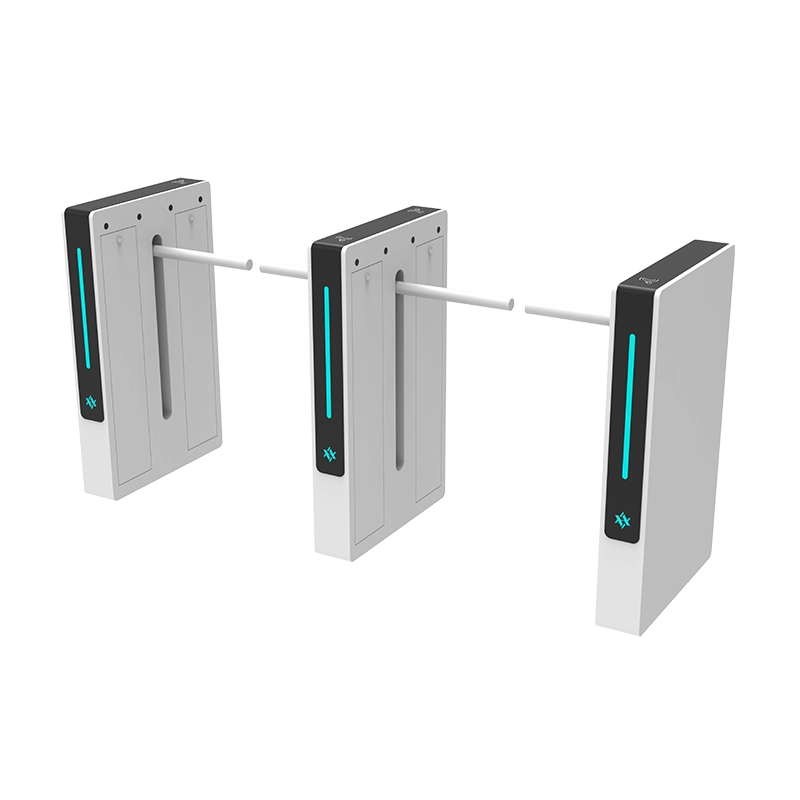
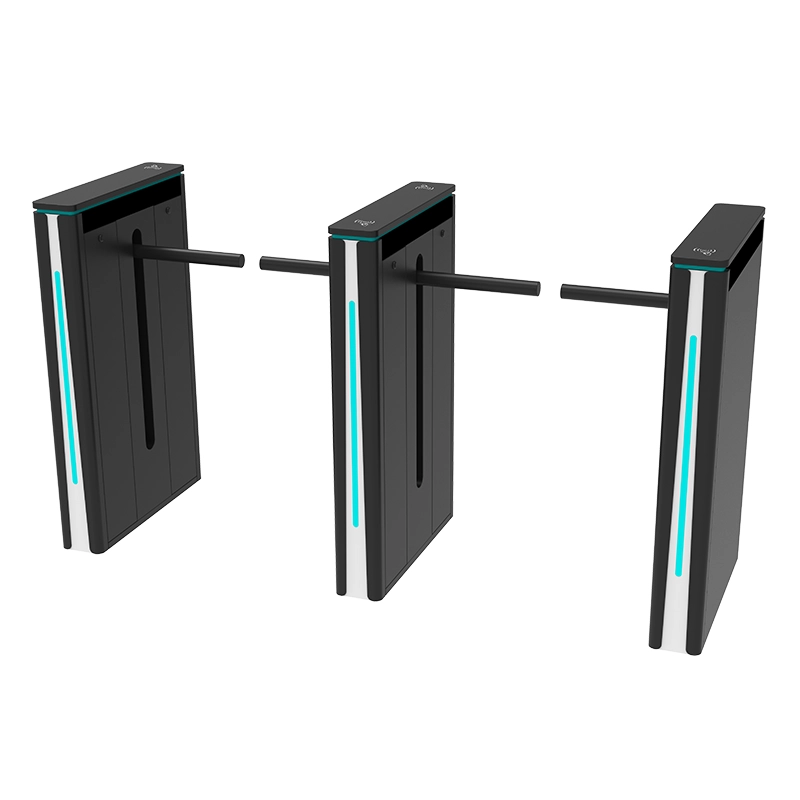
drop arm turnstile
The single-bar turnstile is one of the earliest types of turnstiles. The barrier (gate arm) is a single metal rod, typically made of hollow, enclosed stainless steel tubing, making it sturdy and resistant to deformation. Blocking and allowing passage are achieved by raising the gate arm to make it parallel to the horizontal plane and lowering it back into the housing.
The gate arm of the single-bar turnstile moves by raising and lowering it 90 degrees within the same vertical plane. The mechanism control is only available in a fully automatic mode, and the only form factor is bridge-type. However, AIPADA has designed a relatively space-saving housing. AIPADA’s design capabilities have overcome the limitations of the single-bar turnstile in terms of form and provide strong pedestrian detection capabilities, which would otherwise easily injure pedestrians.
](https://aipadaturnstile.com/wp-content/uploads/2025/12/AT701-TC-01.webp "Working Principle And Types Of Turnstiles 17")
](https://aipadaturnstile.com/wp-content/uploads/2025/12/AT702-TC-01.webp "Working Principle And Types Of Turnstiles 18")
System integration
As a channel management device, the most fundamental function of a turnstile is to allow only one person to pass at a time by blocking and releasing them. Its application targets are pedestrians (including those carrying luggage and bicycles), and its application is at entrances and exits. However, as part of an intelligent channel management system, turnstiles can be used in conjunction with other systems in various special situations, thus playing a greater role.
Currently, the most common systems that turntiles are used with are access control systems and ticketing systems.
In access control systems, the earliest blocking method was the electronic gate, but gates cannot effectively ensure that only one person can pass at a time, and due to structural and form limitations, their application is relatively limited. Turnstiles can solve these problems, especially at the entrances and exits of buildings or enclosed geographical areas, where they are very suitable as the blocking mechanism for access control systems. Examples include intelligent buildings, government agencies, corporate parks, residential communities, factories, and prisons.
The relationship between turnstiles and the ticket checking section of ticketing systems is even more inseparable. Any non-manual, automated ticket checking system cannot function without turnstiles. The two most typical application types are rail transit and electronic tickets. Rail transit, including subways and high-speed rail, no longer considers turnstiles as a separate product, but rather as part of automatic ticket checking machines; electronic tickets mainly refer to automatic ticket checking at the entrances of various paid entertainment venues, including scenic spots, amusement parks, stadiums, ski resorts, and entertainment venues.
](https://aipadaturnstile.com/wp-content/uploads/2025/12/vertical-tripod-turnstile.jpg)
](https://aipadaturnstile.com/wp-content/uploads/2025/12/popup-img.jpg)