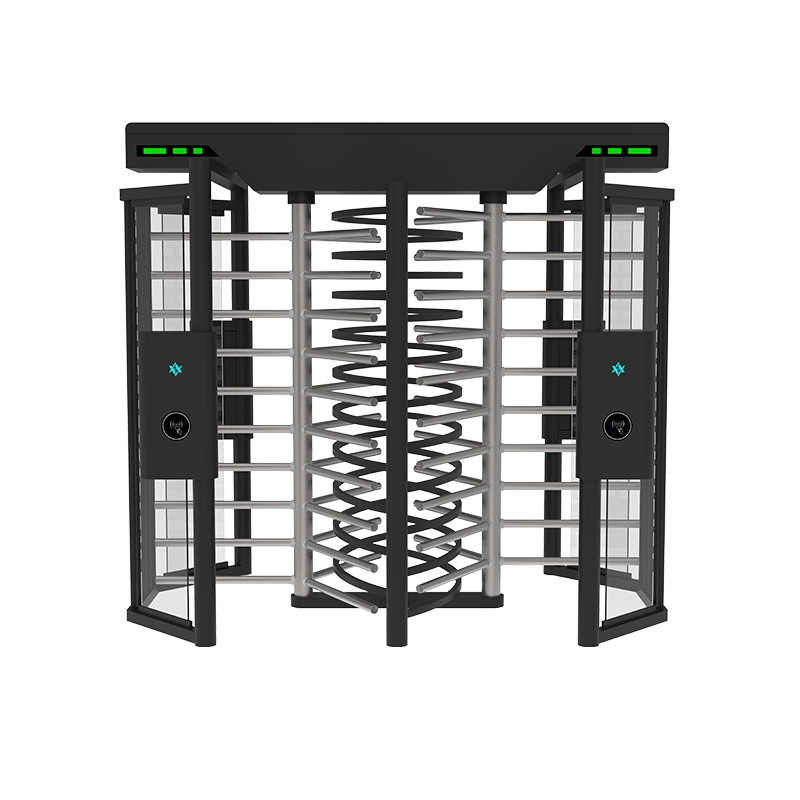
A gym turnstile is a membership control device that happens to look like a security gate — and that difference decides which model you should buy. Fitness clubs do not need maximum security; they need fast, unattended check-in, accurate attendance data and a barrier that cannot be talked past by a member whose subscription lapsed last month. A lane that is perfect for an airport fails in a gym within a week, because it is too slow at 18:00 and too attractive to tailgaters at 06:00.This guide covers how to choose gym turnstiles in 2026: what the device actually does, the four requirements that dominate fitness club entrances, which gate type suits which club format, throughput and integration, hygiene and pool-area specification, cost framing, a specification checklist and the mistakes that cost clubs real money.
What a Gym Turnstile Actually Does
At its simplest, the lane validates a credential and counts the person through. In a fitness business that translates into five commercial functions:
- Membership enforcement. Only active memberships open the lane. Frozen, expired and unpaid accounts are stopped at the door, politely and consistently, without a staff confrontation.
- Attendance and usage data. Every passage is a timestamped record: who came, when, and how often. That data drives retention campaigns, class scheduling and equipment investment.
- Unattended operation. A 24/7 club can run overnight and at weekends without reception staff, because the lane does the checking.
- Capacity and fire-load awareness. Live occupancy counts help staff manage peak crowding and satisfy safety requirements.
- Revenue protection. Tailgating and shared memberships are measurable losses; a correctly specified lane with anti-tailgating detection converts them into visible exceptions.
Four requirements dominate gym entrance design
Everything else follows from these:
- Speed at peak. Classes start at fixed times. A queue at 18:55 costs member satisfaction more than almost anything else in the club.
- Unattended reliability. Nobody is standing next to the gate at 05:30. It must work, or the club is effectively closed.
- Hygiene and moisture. Sweat, pool chlorine, shower humidity and cleaning chemicals attack hardware that would be perfectly happy in an office lobby.
- Experience. A gym is a consumer environment. A clanking industrial gate contradicts the brand every member is paying for.
Which Gate Type Suits Which Gym Format
| Gate type | Strength in a gym setting | Watch out for | Best suited to |
|---|
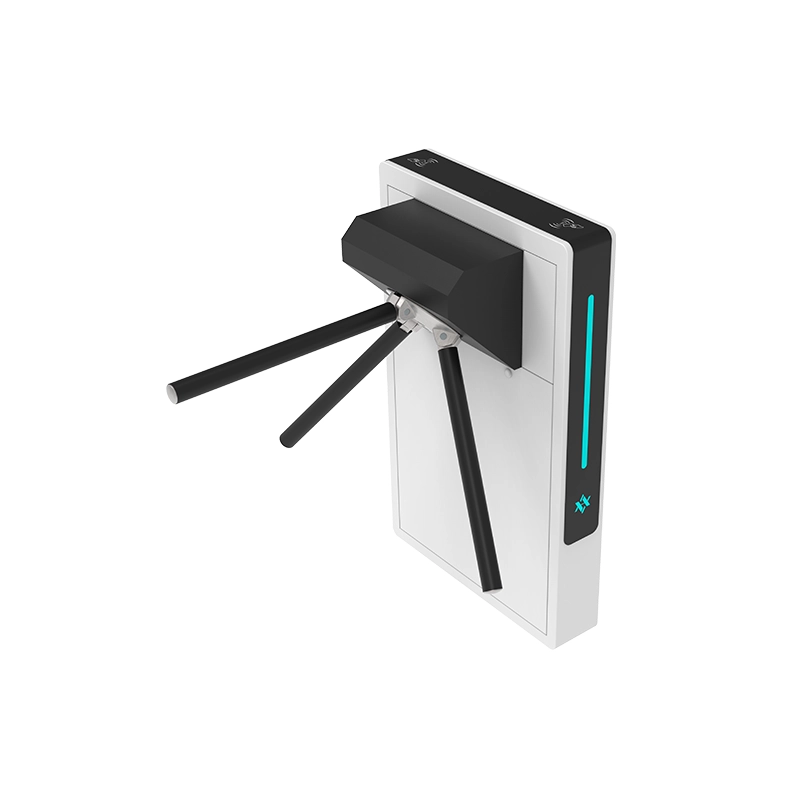
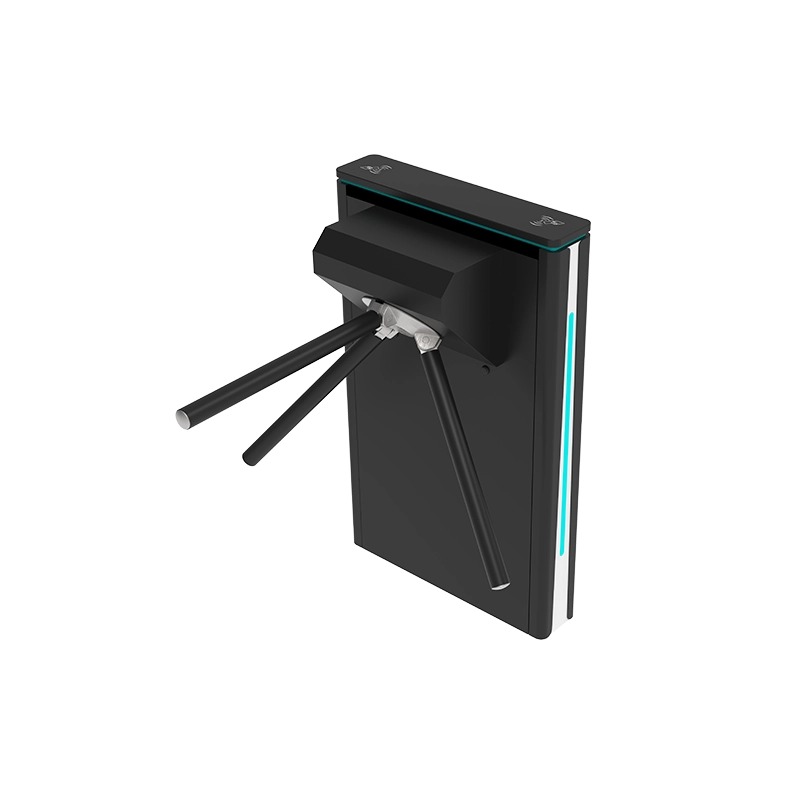
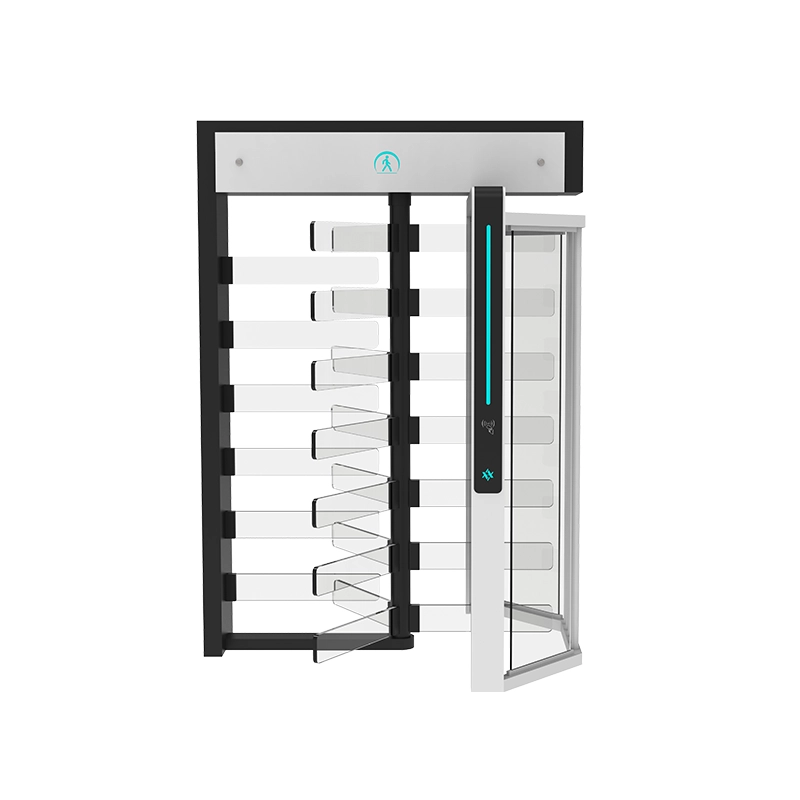
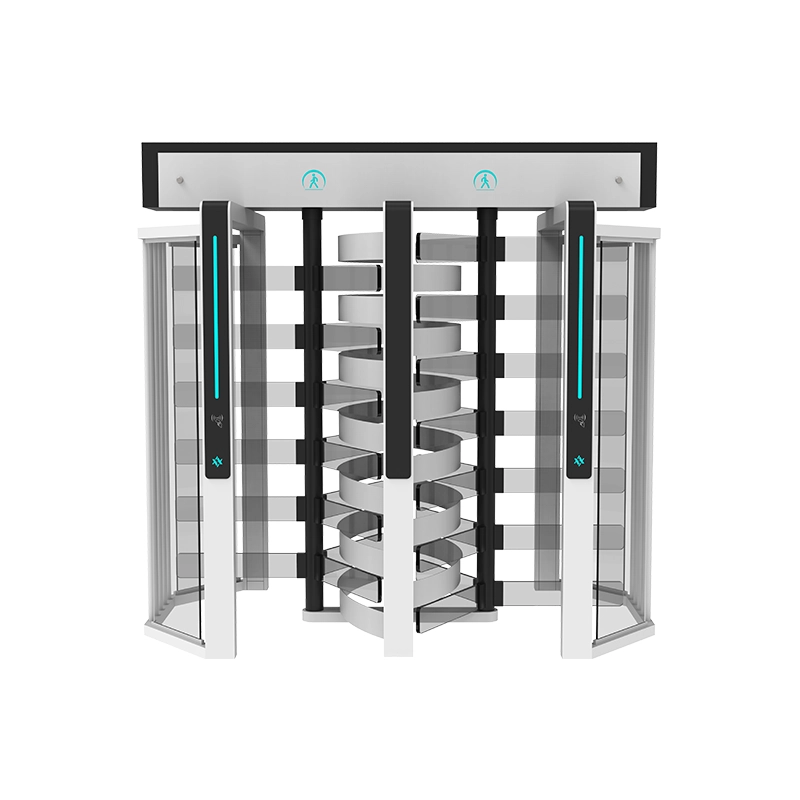
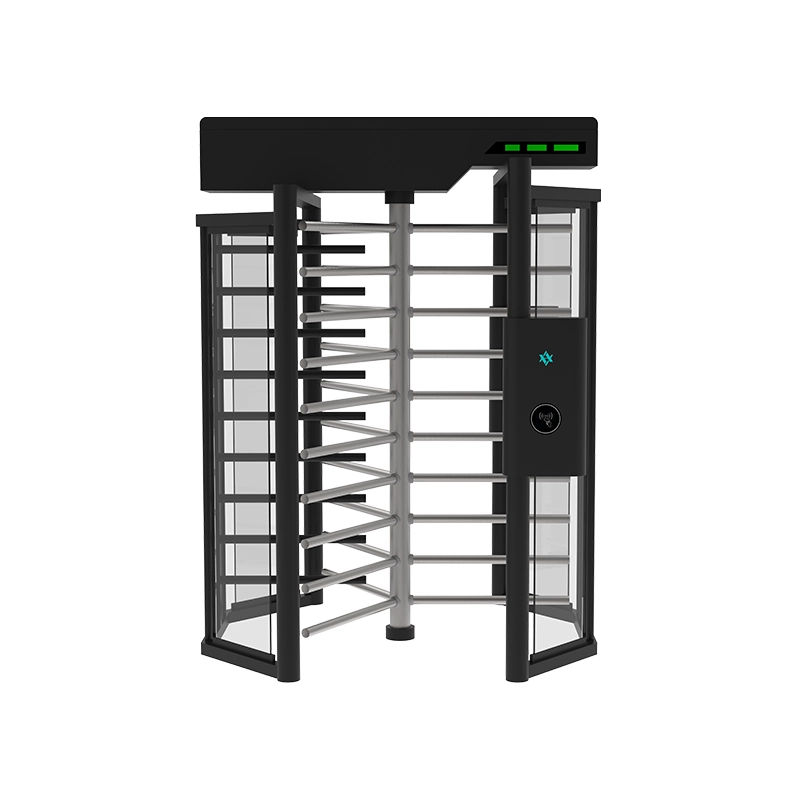
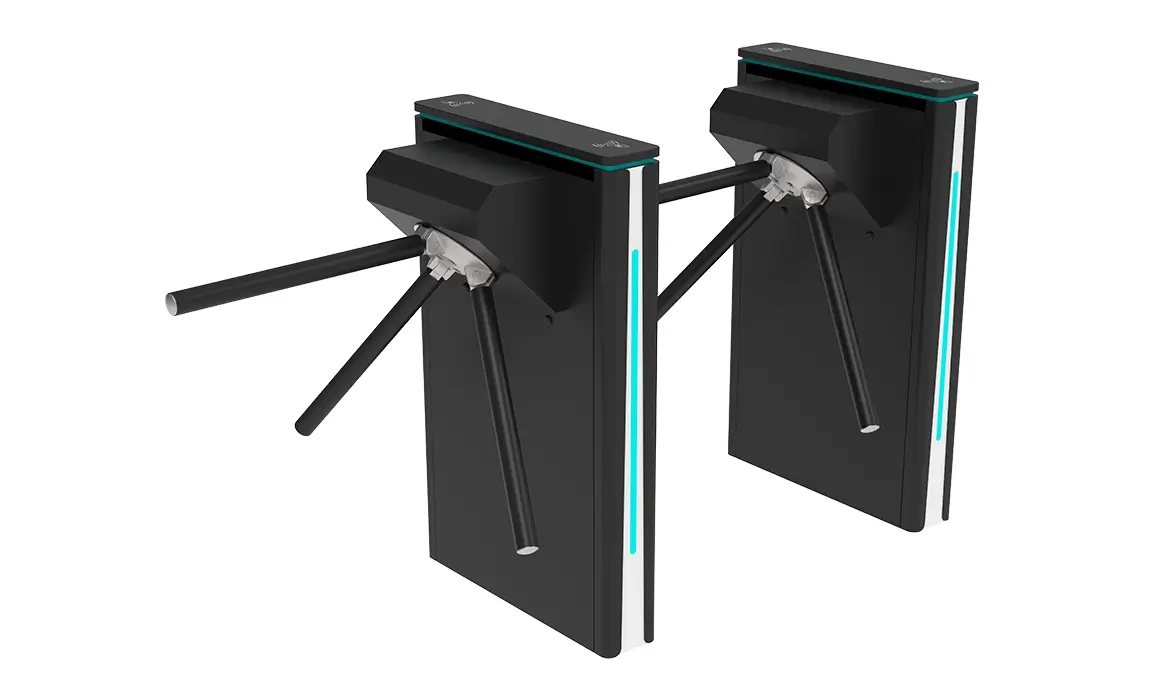
| Tripod turnstile | Lowest cost, robust, mechanical drop-arm release for emergencies, tolerant of rough treatment | Slower one-at-a-time passage; not accessible for wheelchairs; dated look in premium clubs | Budget gyms, 24/7 clubs, back-of-house or staff entries, spinning and martial arts studios |
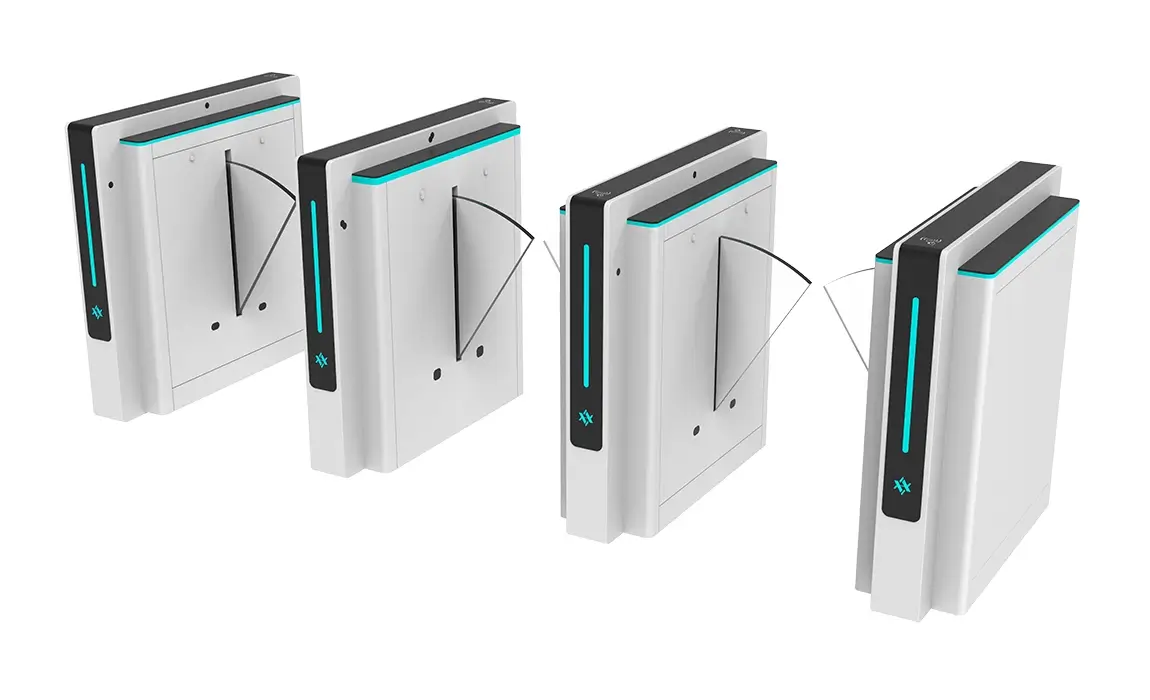
| Flap barrier | Fast, transparent, glass wings look modern; good throughput with proper beam logic | Wing height and width limit accessible passage; wings can be forced if specified cheaply | Mainstream fitness clubs, swimming pools with separate accessible gates, multi-lane entrances |
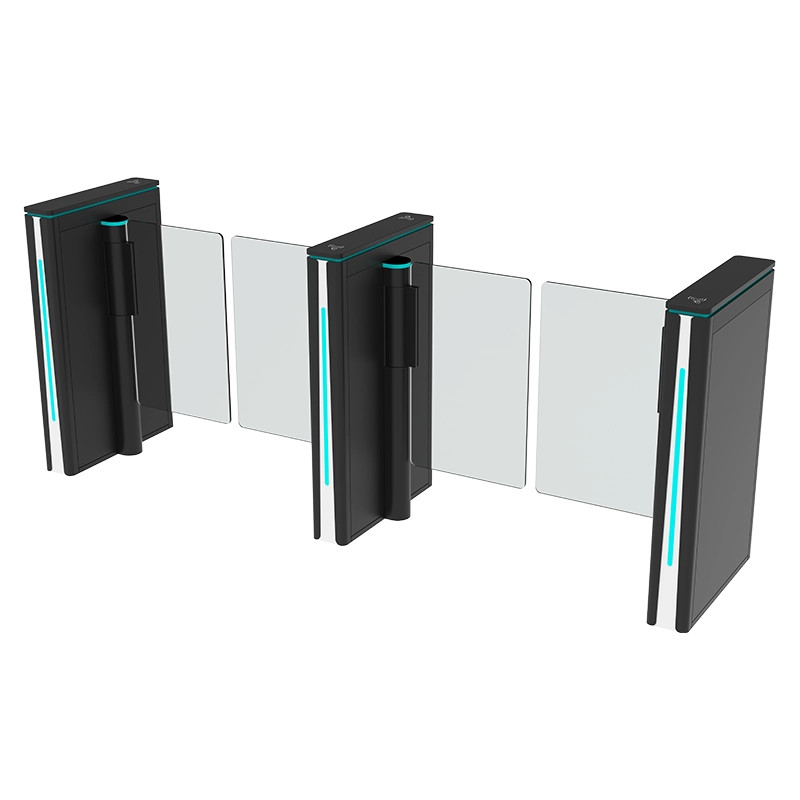
| Speed gate | Fastest passage per lane, premium appearance, excellent anti-tailgating when well specified | Highest cost; narrow lane, not an accessible route; sensor maintenance matters | Premium and boutique clubs, hotels with gyms, high-volume city-centre clubs |
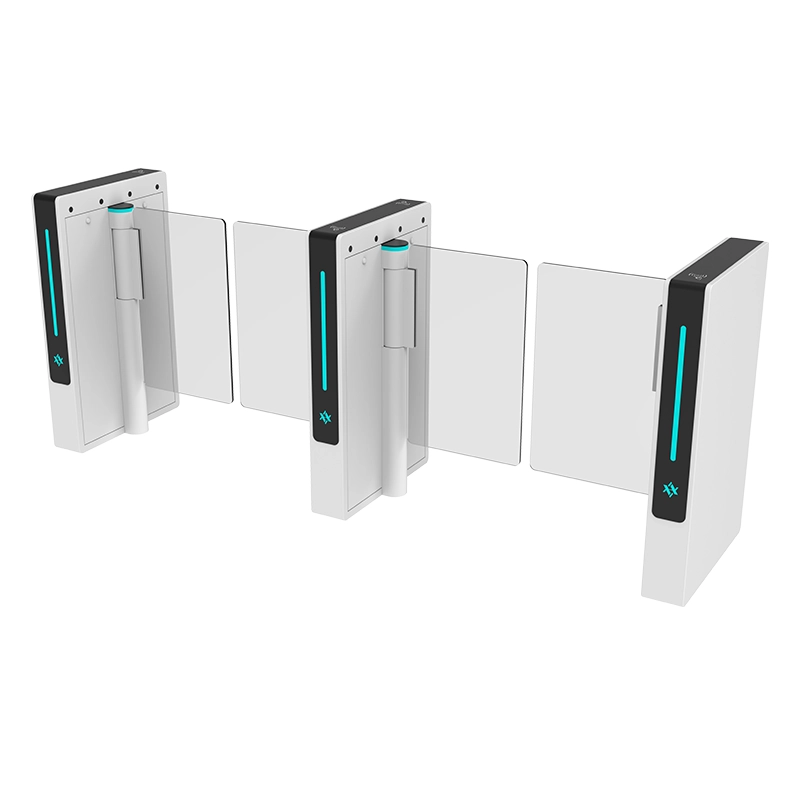
| Swing turnstile | Wide clear opening, quiet, architectural; can double as the accessible lane | Larger footprint and swing arc; higher cost than a flap lane | Premium clubs with reception design briefs, hotels, spas, residential clubhouses |
| Sliding turnstile | Widest clear opening, very quiet, door-like movement | Needs lateral space and a deeper cabinet; premium price | Upscale spa and wellness entrances where accessibility is mandatory |

A practical rule on real projects: if the club operates unattended hours and the floor space is tight, a
flap barrier usually wins on value. If the entrance is part of the brand and the club charges premium membership, a
speed gate or
swing turnstile pays for itself in perceived quality. If the budget is genuinely fixed and the site is rough, a
tripod turnstile still works — see the
tripod turnstile features and safety guide.
Check-In Speed and Peak-Hour Throughput
Throughput is the number that decides how many lanes a club needs. Indicative figures per lane:
- Tripod turnstile: roughly 20–30 people per minute with a fast reader;
- Flap barrier: roughly 30–45 per minute;
- Speed gate: roughly 40–60 per minute;
- Swing or sliding lane: roughly 25–45 per minute depending on stroke time.
Then apply reality: at peak, people arrive in bursts, some cannot find their card, the app QR code is not open, and the person at the front does not know where to put their phone. A practical planning rule for a fitness club is to size for
35–50% of the theoretical maximum. A club whose busiest ten minutes sees 90 arrivals needs at least three lanes, not two.Also decide the credential before the hardware. If most members use a phone QR code or an app pass, a lane with a large, high-mounted scanner reads faster and causes fewer failures than a small reader at hand height. If members wear RFID wristbands or carry cards, the reader position and read range change the queue dynamics.
Integration With Gym Management Software
This is where gym projects succeed or fail. The gate is trivial; the membership logic is not.
| Requirement | What to specify |
|---|
| Live membership validation | Lane queries the management system, or the system pushes an updated local list. Decide which, because it changes network dependency. |
| Offline operation | The lane must keep accepting valid members when the internet or the server is down, then sync the passage log automatically when the connection returns. |
| Credential types | QR/barcode from the member app, RFID card or wristband, fingerprint, face recognition — or a combination for staff and premium tiers. |
| Membership states | Active, frozen, expired, payment overdue, day pass, guest, personal-training session, staff. Each needs its own behaviour. |
| Data output | Passage log export in a format your retention and reporting tools can ingest, with a clear timestamp convention. |
| Remote management | Ability to open or lock a lane remotely, change access rules, and read lane status without sending an engineer. |
Ask your gym software vendor for the integration interface
before you order gates, and send the interface document to the gate manufacturer with the enquiry. Projects that skip this step discover a mismatch during installation, when nobody has time to fix it.
Access Control Logic Worth Configuring Properly
- Grace period for expired memberships. A two-day grace period with a friendly screen message converts renewals; a hard stop at midnight loses them.
- Guest and day passes. Lane behaviour should be different from a member’s — usually a single-passage flag and a printed or emailed receipt.
- Group entry. Couples and families on one membership need a defined rule: one passage per person, or a group credential with a permitted count.
- PT and class bookings. Some clubs allow entry only when a booked session is active, which requires the gate to read the booking system, not just the membership status.
- Staff and contractor lanes. Separate credentials and often a separate lane, so staff movement does not consume member lane throughput.
- Emergency logic. Every lane must release on fire alarm or power failure. Test it quarterly and log the test.
24/7 Unattended Clubs: Security and Safety
An unattended club is a different risk profile from a staffed one.
- Anti-tailgating matters more than anywhere. Without staff, one member can admit unlimited people. Specify the beam count and the anti-tailgating logic explicitly, and test it with two people walking close together.
- Anti-passback stops a credential being handed back through the gate to a second person.
- Lone-worker safety. Consider an emergency call point or intercom next to the lane, linked to a monitoring service.
- CCTV integration. A camera covering the lane, recording the passage event, turns an exception into evidence.
- Emergency egress. Fail-open behaviour and mechanical release on the inside; nobody should ever be trapped by a membership dispute.
- Alarm and exception reporting. Push a message to a manager’s phone when a lane reports a forced opening out of hours.
Our guide to
common speed gate and turnstile problems lists the failure signatures that matter most in unattended operation, and the
turnstile working principle guide explains how beam arrays and lane logic are structured.
Hygiene, Humidity and Pool Areas
A gym entrance is a wet, salty, chlorinated environment. Specify for it:
- Material. 304 stainless as a minimum indoors; 316 stainless or a suitable coating for pool halls and coastal sites. Avoid mild steel finishes regardless of how good the powder coat looks.
- IP rating. Higher ingress protection for lanes near showers, pools and wash-down areas.
- Cleaning chemicals. Chlorine and aggressive sanitising agents attack seals, coatings and printed graphics. Confirm the cleaning regime with the manufacturer.
- Smooth surfaces. Fewer ledges and crevices means faster cleaning and less biofilm.
- Reader placement. Keep readers out of splash zones; wet hands, wristbands and phones all affect read performance.
- Wing material. Where hygiene and impact both matter, stainless or laminated glass wings are easier to clean than acrylic, which scratches and clouds.
Member Experience and Branding
Gyms compete on experience, and the entrance is the first and last thing a member touches on every visit.
- Quiet operation. Belt or servo drive lanes are notably quieter than budget mechanisms — audible in a calm morning club.
- Finish and colour. Brushed stainless, black, white or a bespoke colour matched to the club’s fit-out.
- Branding. Etched or printed logos, illuminated lane indicators and a printed band on glass wings.
- Screens and messaging. A small display can greet, warn about an expiring membership or promote a class — turning a control device into a communication channel.
- Accessibility. A wide, clearly marked accessible lane, or a staff-operated accessible door beside the row, is both a legal requirement in many markets and a member-service signal.
Cost Framing for Gym Projects
As a market reference, not a quotation, complete lanes manufactured in China are typically quoted at:
| Configuration | Indicative ex-works price per lane |
|---|
| Tripod turnstile lane, standard | USD $350–700 |
| Flap barrier lane, standard indoor | USD $700–1,200 |
| Speed gate lane, standard | USD $1,000–1,800 |
| Swing or sliding lane, premium finish | USD $900–2,500 |
| Accessible wide lane | Add 20–50% over the standard lane of the same type |
For a typical club entrance of two to four lanes, the gate hardware is usually the smaller part of the project. Readers, gym software integration, civil works, power and network, installation and commissioning commonly add 30–60% on top of the hardware figure. Plan the whole budget, not just the lanes — the
speed gate price guide shows how those secondary costs behave on a comparable product.
Specification Checklist for Gym Turnstiles
| Item | Specify this |
|---|
| Lane count and layout | Number of lanes, accessible lane, staff lane, direction of each lane |
| Gate type and model | Chosen from the comparison above, with cabinet length and finish |
| Credential technology | QR/app, RFID card, wristband, fingerprint, face — including the mix of member tiers |
| Throughput target | Arrivals during the busiest ten minutes |
| Anti-tailgating | Beam count and required behaviour, with factory test evidence |
| Offline operation | Local validation list size and automatic sync behaviour |
| Integration interface | Protocol or API with the gym software vendor, named in the order |
| Environment | Indoor, pool hall or outdoor; IP rating; 304 or 316 |
| Emergency behaviour | Fail-open on alarm and power loss; mechanical release from inside |
| Warranty and spares | Term, exclusions, spare wing/drive/sensor prices |
| Documentation | Wiring diagrams, parameter list, maintenance schedule, training video |
Common Mistakes When Buying Gym Turnstiles
- Buying on price alone. A cheap drive on a 24/7 lane fails in the second year, and the club loses revenue every hour it is down.
- Buying one lane too few. Peak queues are remembered; the money saved on the third lane is spent twice on lost retention.
- Ignoring offline behaviour. A lane that stops working when the internet drops closes the club.
- Specifying “anti-tailgating” without a beam count. The feature exists mainly in the quotation, not in the lane.
- Forgetting the accessible route. A row of narrow lanes with no accessible option creates a compliance problem and a service problem on the same day.
- No spare wings or reader on site. A single damaged acrylic wing should not close two lanes for a week.
- Integrating after delivery. Interface documents must be exchanged before manufacture, not after installation.
Frequently Asked Questions
How many turnstile lanes does a gym need?
Size for the busiest ten minutes, then add a lane. A practical starting point is one lane per 1,000–1,500 active members for a club with a typical morning and evening peak, plus one accessible route. Clubs with fixed class times need more lanes than the member count alone suggests.
Can gym turnstiles work with our membership app?
Yes, if the interface is agreed first. Most systems support QR or barcode validation from an app, an API or database integration for live membership checks, and export of passage logs. Send the app vendor’s interface document with the gate enquiry.
What happens if the internet goes down?
The lane should continue validating against a locally stored list of active members and buffer passage records for later synchronisation. Confirm the size of that local list and the retention period of the buffer — these are specification items, not assumptions.
Is a tripod turnstile still a good choice for a gym in 2026?
For budget and 24/7 clubs, yes: it is robust, cheap and difficult to force. For premium and boutique clubs it usually reads as dated and slows peak flow. The
tripod turnstile guide covers the trade-offs in detail.
Do we need face recognition at a gym entrance?
It removes the “I forgot my card” queue and suits premium and unattended clubs, but it adds cost, privacy obligations and enrolment work. Many clubs use face recognition on a subset of lanes and card or QR on the rest, letting members choose.
How do we stop one member letting others in?
Specify anti-tailgating beams with a defined beam count, enable anti-passback, cover the lane with CCTV and link forced-opening events to an alert. No lane detects everything; the combination of detection, evidence and consequence is what changes behaviour.
What maintenance does a gym lane need?
Cleaning of the optical windows and panels daily in heavy-use clubs, a mechanical check and lubrication on a monthly schedule, and a quarterly test of the emergency release and fail-open behaviour. See the
speed gate maintenance checklist for a schedule that transfers directly to fitness lanes.
Gym Turnstile Layout: Where the Lanes Actually Go
Gate selection is half the decision; placement is the other half, and it is where clubs most often get the member experience wrong.
- Distance from the reception desk. Leave enough space that a member can be helped without blocking the lane, and that a queue can form without spilling onto the street or into the studio corridor. A practical guide is at least two to three metres of clear approach.
- Line of sight for staff. Staff should see the lane from the desk, both for service and for exceptions. A lane tucked around a corner guarantees disputes about who went through and when.
- Straight approach. Members arrive carrying bags, bottles and phones. Curved or angled approaches slow check-in and cause people to clip the wings.
- Accessible lane. Either a wide lane within the row with a level threshold, or a clearly signed accessible door adjacent to it, released by staff or by a fixed credential. Marking it properly matters as much as providing it.
- Locker room and studio access. Some clubs gate the changing area or the studio corridor as well as the entrance. If you plan to do that later, specify compatible hardware and firmware now so the lanes can be grouped and managed as one system.
- Staff and delivery route. A separate staff lane or a side door with its own reader keeps member lanes for members and prevents the “held open for the cleaner” behaviour that erodes control.
- Out-of-hours exit path. Where the club closes the main entrance overnight, confirm which door remains usable and how it is controlled, alarmed and monitored.
Retrofitting Turnstiles Into an Existing Club
Most gym gate projects are retrofits, and retrofits fail for reasons that have nothing to do with the gate.
- Floor. Confirm the slab can be cut or drilled for cable routes and fixings, whether there is underfloor heating or post-tensioning, and whether a plinth is needed to keep the lane clear of a wet floor.
- Power. A dedicated circuit per lane with a lockable isolator, plus UPS or battery backup if the lane must keep validating members through short outages.
- Network. A data outlet per lane with the bandwidth and VLAN policy agreed with IT, especially where face terminals or cloud management are involved.
- Fire compliance. Confirm the fail-open linkage with the fire alarm contractor, and record the test. An unlinked lane is a compliance problem, not a security feature.
- Phasing. Install and commission lanes in stages so the club keeps trading — commonly one lane converted at a time out of hours, with temporary staffing at peak.
- Member communication. Tell members what is changing and why, provide enrolment support at the desk for the first two weeks, and expect a short queue-discipline learning curve regardless of how good the lane is.
- Housekeeping. Confirm that cleaning chemicals used on the surrounding floor and glass are compatible with the lane finish, and put that on the cleaning schedule.
Frequently Asked Questions (continued)
Can we keep reception staff during peak hours and run the gates unattended otherwise?
Yes, and it is the most common arrangement. Configure the lane to validate members continuously, and give staff a local override plus a visible exception report so they can see who was refused and why during the hours they are present.
How do we handle members who forget their card?
Three practical options: a face-recognition option on one lane, a staff-assisted release at the desk with an audit entry, or app-based QR as an alternative credential. The choice is really about how much staff time you are willing to spend, so the definitive answer is a decision about operations, not about hardware.
Will the gates reduce our insurance premium or satisfy an audit?
Sometimes. Insurers and auditors typically ask whether the site can demonstrate who entered, when, and that only authorised people could enter. A lane with accurate passage logging, anti-passback and out-of-hours exception reporting answers that directly, and the evidence is exportable. Present it proactively rather than waiting to be asked.
How long does a gym gate installation take?
A single lane retrofit is commonly a one-day installation plus commissioning, provided power, data and floor preparation are done in advance. A multi-lane row in a new fit-out takes longer and should be sequenced with the floor and network trades, not after them.
Next Step
Decide three things first — the credential technology, the peak throughput and whether the club runs unattended — and the choice of gate type almost makes itself. Then put lane count, environment, integration and anti-tailgating requirements on one page and send it to two or three manufacturers.AIPADA supplies
flap barrier,
speed gate,
tripod,
swing and
sliding lanes for fitness, leisure and hospitality projects, with CE certification, CMA/CNAS test reports, a 2-year warranty and OEM/ODM support for club chains that need their own branding. Send your member volume, credential types and site conditions, and we will recommend a lane layout with an ex-works quotation.



 A practical rule on real projects: if the club operates unattended hours and the floor space is tight, a flap barrier usually wins on value. If the entrance is part of the brand and the club charges premium membership, a speed gate or swing turnstile pays for itself in perceived quality. If the budget is genuinely fixed and the site is rough, a tripod turnstile still works — see the tripod turnstile features and safety guide.