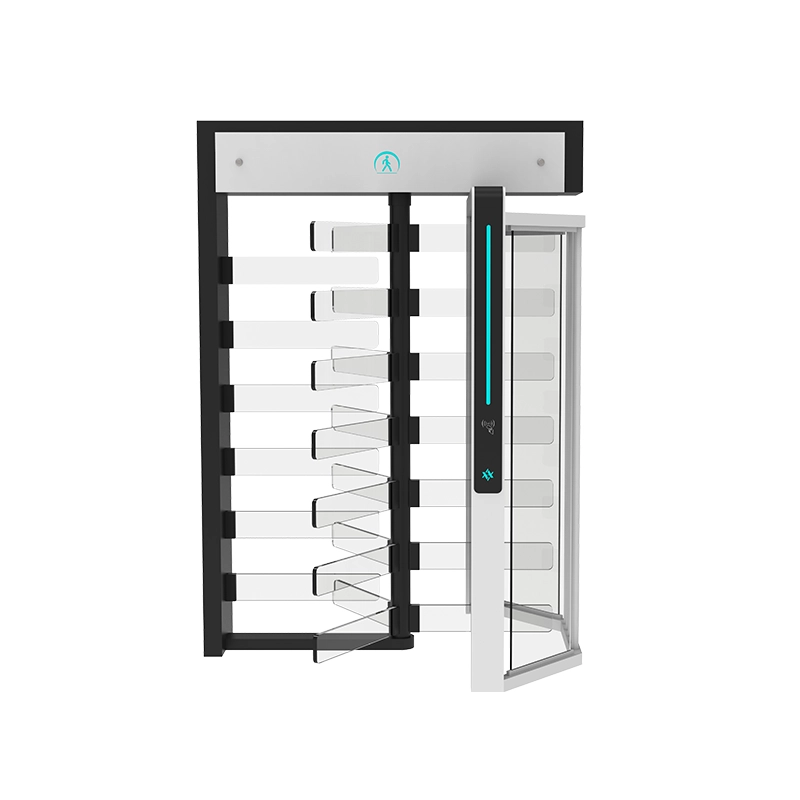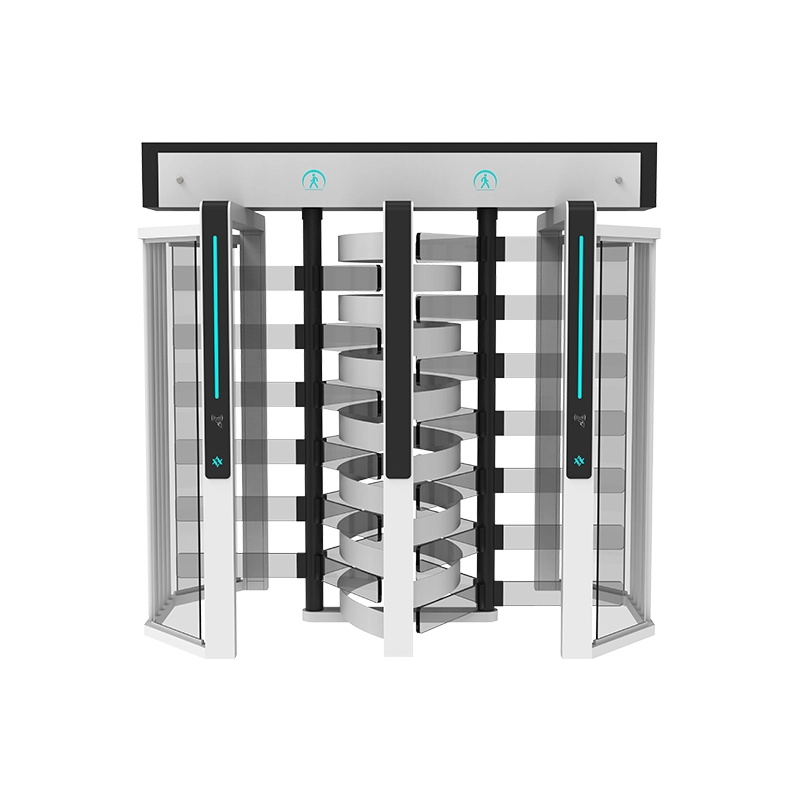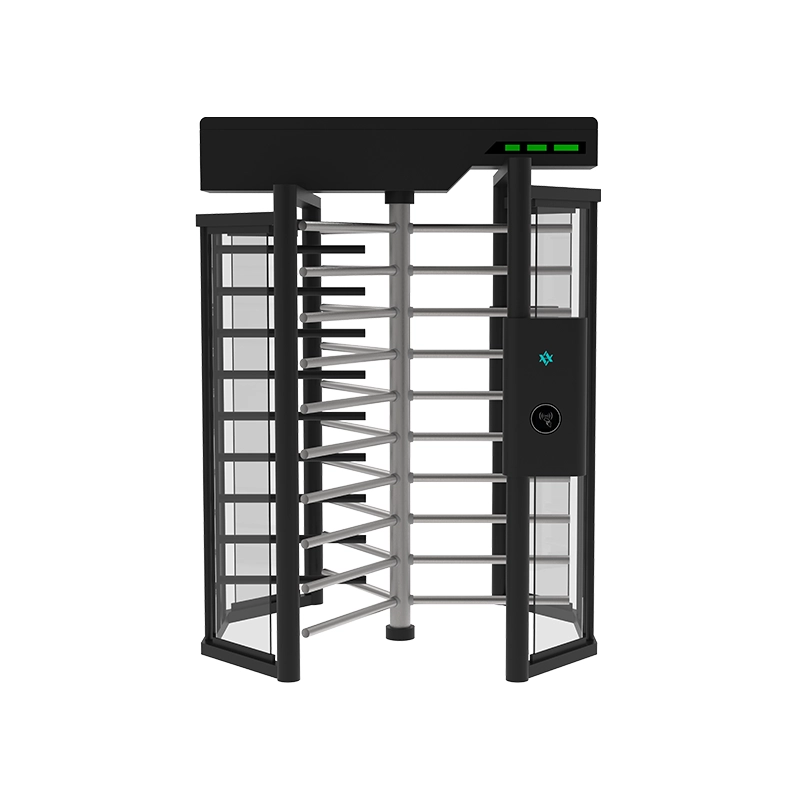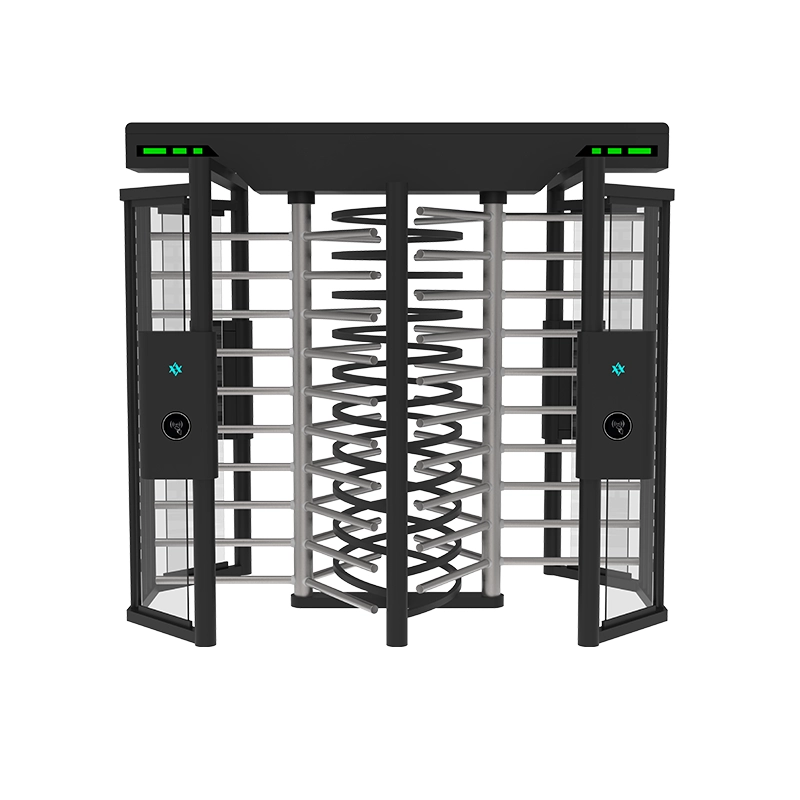

A swing turnstile is a pedestrian access control gate built around one or two swing panels that rotate open only after a credential is authenticated. It sits between a flap barrier and a speed gate in both price and throughput, and it is the only common turnstile type that can be widened to a 900–1000 mm clear passage without redesigning the cabinet — which is why it is the default choice for entrances that must serve wheelchairs, luggage, service carts and general pedestrian traffic through the same bank of lanes.
This guide compares the swing turnstile against flap barriers, speed gates and tripod turnstiles on the four dimensions buyers actually decide on — throughput, lane width and accessibility, security level and price — then covers swing panel materials, wide-lane configurations, applications, costing and integration. Price figures are China ex-works market reference ranges for planning, not a published price list.
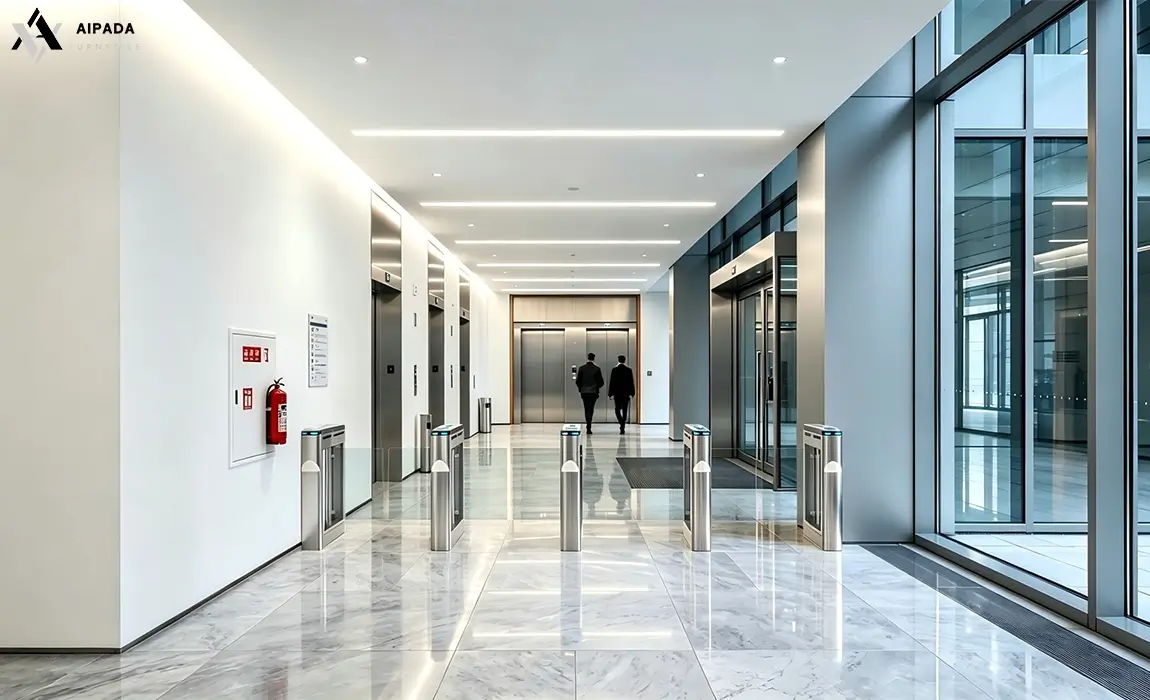
What a Swing Turnstile Is and Where It Fits
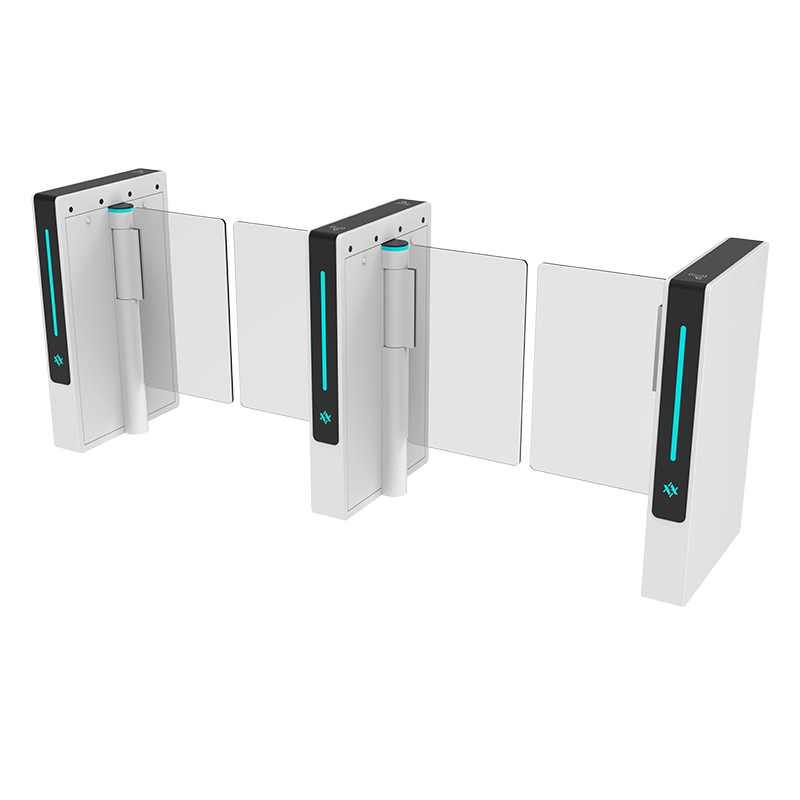
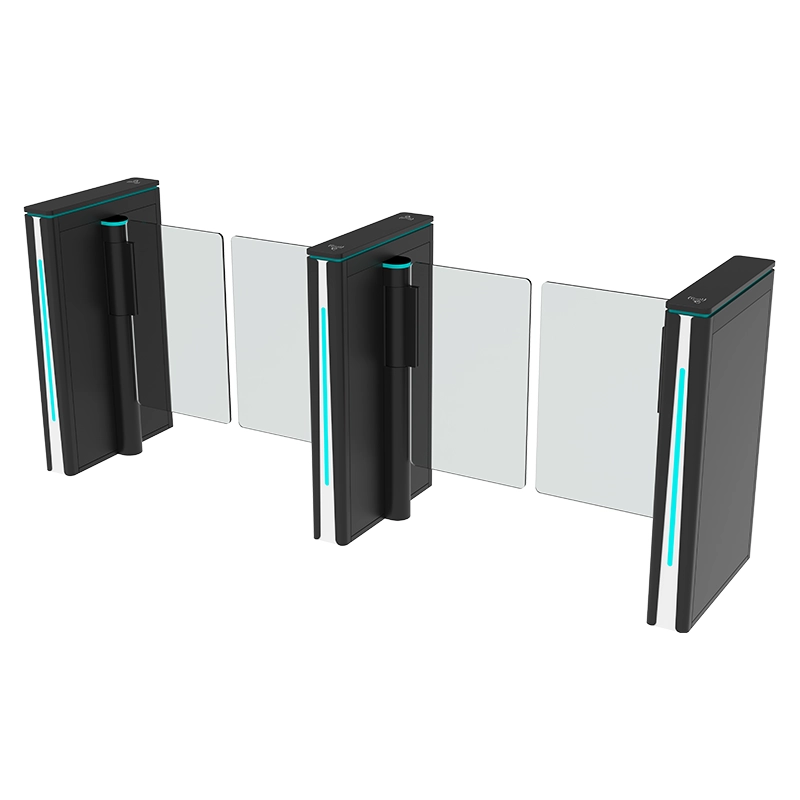
A swing turnstile — also written swing gate turnstile or swing barrier gate — consists of one or two stainless steel cabinets, each housing a swing panel driven by a motor, plus an infrared sensor array, a control board and a reader interface. The sequence is fixed: the reader authenticates the user, the controller releases the drive, the panel swings through roughly 90 degrees, the passage sensors confirm one person has cleared the lane, and the panel closes behind them.
The mechanism determines everything downstream. A swing panel is a single rigid leaf on a vertical hinge, so its length can be extended to widen the passage without changing the drive geometry or the cabinet footprint. That is why swing lanes reach 900–1000 mm clear width while a retractable flap wing or a rotating tripod arm cannot scale the same way. The trade-off is panel travel time: a longer, heavier leaf takes longer to sweep than a short flap wing, which is why swing lanes land below speed gates on throughput.
Where a Swing Turnstile Fits Best
- Mixed user groups in one entrance. Employees, visitors, delivery staff and contractors passing through the same lanes with cards, QR codes or face recognition.
- Accessibility requirements. Any project with ADA obligations or an accessible route that must stay under access control rather than bypassing it.
- Baggage and trolley traffic. Airports, hotels, hospitals and exhibition halls where people carry suitcases, carts or equipment.
- Premium but not flagship lobbies. Entrances needing a clean visual line and brand-matched finish without speed-gate pricing.
- Indoor and sheltered outdoor entrances. With 304 or 316 stainless cabinets, sealed electronics and a stable foundation, swing turnstiles run reliably outside.
Where a Swing Turnstile Is the Wrong Choice
Reach for something else when one dimension dominates. For 50+ people per minute through a single lane, a speed gate holds the flow better. For an unmanned perimeter gate that must resist climbing, a full-height turnstile is the right specification. For bare counting at the lowest cost, a tripod wins. A swing turnstile is a balance product, and balance is the wrong answer when a single constraint drives the project.
Swing Turnstile vs Flap Barrier vs Speed Gate vs Tripod: Full Comparison
The table below is the decision shortcut. Read the row that matches your binding constraint — throughput, lane width, security level or budget — and the product choice usually resolves itself. Throughput figures are typical sustained rates for a single lane with a trained user population, not peak burst rates.
| Turnstile type | Throughput (per lane) | Lane width / accessibility | Security level | Price band (China ex-works, per lane) | Best use |
|---|---|---|---|---|---|
| Swing turnstile | 25–35 persons/min | 600–1000 mm; 900–1000 mm ADA-friendly, no cabinet change needed | Medium — infrared anti-tailgating, anti-pinch, one-person-per-credential logic | USD $500–1,500 | Office and hotel lobbies, hospitals, banks, gyms, accessible lanes, mixed pedestrian and trolley traffic |
| Flap barrier turnstile | 30–40 persons/min | 500–600 mm standard; wide models to ~900 mm but narrower cabinet options shrink | Medium-high — fast retracting wings close the gap quickly, reducing tailgating windows | USD $400–1,200 | Standard employee lanes, metro concourses, campus and gym entrances, compact hallways |
| Speed gate / optical turnstile | 40–60 persons/min | 550–650 mm typical; premium lanes prioritize speed over width | High — dense IR arrays, tailgating alarms, faster and more precise close logic | USD $1,000–3,500 | Class A corporate lobbies, financial trading floors, transit halls, high-traffic secure entries |
| Tripod turnstile | 20–30 persons/min | 500–550 mm fixed; not suitable for wheelchair or cart passage | Low-medium — mechanical arms give basic one-person-at-a-time control only | USD $150–500 | Factories, construction sites, staff gates, low-budget counting and timekeeping entrances |
Swing Turnstile vs Flap Barrier
This is the comparison most projects actually face, and it turns on lane width. A flap barrier stores its wings inside the cabinet and swings them out horizontally, which keeps the cabinet compact and the closing motion very fast, but it also caps the usable passage. When a project needs a lane that a wheelchair, a luggage trolley or a stretcher can clear, the flap barrier either needs a special wide model with a larger cabinet or it needs to be replaced by a swing lane. A swing turnstile handles that requirement with a longer panel and the same cabinet family.
The second difference is behavior in the lane. Flap wings close very quickly, which is a security advantage and occasionally a comfort problem — users feel the wing at their back. A swing panel sweeps through a wider arc with a longer travel time, which feels calmer and gives the sensor array a longer window to detect and reverse. For a dimension-by-dimension breakdown, see the dedicated flap barrier vs swing turnstile comparison.
Swing Turnstile vs Speed Gate
A speed gate is often a swing mechanism pushed harder: brushless servo drive, more sensor pairs, faster and quieter panel travel, slimmer cabinet, tighter finish tolerances, at roughly two to three times the price per lane. Choose the speed gate when throughput or image is binding — a trading floor, a headquarters reception, a transit hall. Choose the swing turnstile when lane width, budget or accessibility is binding. Many buildings use both: speed gates on the main employee bank and one wide swing lane beside them for accessible and trolley traffic.
Swing Turnstile vs Tripod Turnstile
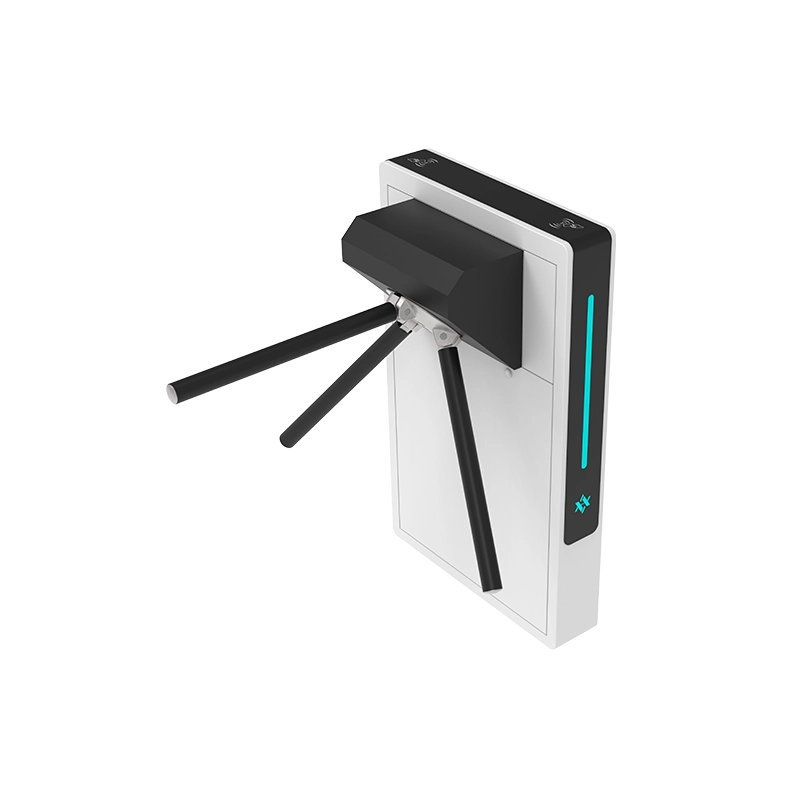
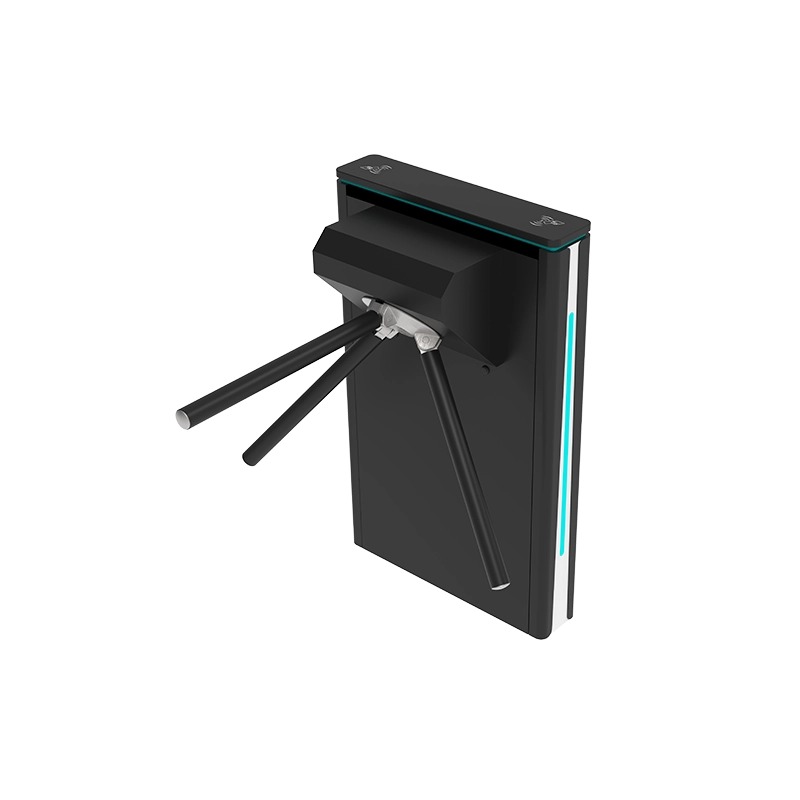
The tripod is the budget answer, and a good one for its job: cheap, mechanically simple, durable, and effective at counting one person per credential. It fails on passage. Three rotating arms at a fixed height make wheelchair access, cart traffic and emergency egress impractical, and the arm geometry is uncomfortable for anyone carrying anything bulky. In factories, the common layout is three or four tripod lanes for shift-change attendance plus one wide swing lane for visitors, managers, maintenance crews and tool carts.
Which Turnstile Fits Which Brief: Quick Selection Table
| Project brief | First choice | Why |
|---|---|---|
| Wheelchair access required under control | Swing turnstile, 900–1000 mm lane | Only common type with a wide enough clear passage and an ADA-compatible drive profile |
| Highest throughput per lane, premium lobby | Speed gate | 40–60 persons/min with dense sensor logic and premium finish |
| Compact lane in a narrow corridor | Flap barrier | Small cabinet footprint and fast retracting wings |
| Lowest cost per lane, basic attendance | Tripod turnstile | Lowest unit cost and simplest mechanism |
| Suitcases, carts, hospital equipment | Swing turnstile, 800–1000 mm lane | Panel length scales with the load the user is carrying |
| Unmanned outdoor perimeter | Full-height turnstile | Climb-resistant enclosure; a swing lane cannot deter forced entry |
| Mixed staff and visitors, one entrance | Swing lanes plus flap or speed lanes | Segregate credential types without forcing accessible users to a side door |
Swing Panel Options: Tempered Glass, Acrylic and Stainless Steel
The swing panel is the part users touch, see and occasionally walk into, so its material affects safety behavior as much as it affects appearance. All three common options are available with edge treatment, LED status indication and printed branding, and all three can be produced in single-leaf or double-leaf lanes.
| Panel material | Typical thickness | Appearance | Durability | Safety behavior | Best for |
|---|---|---|---|---|---|
| Tempered glass | 8–12 mm | Premium, transparent, edge-polished, supports logo printing | High scratch resistance; rigid, no flex | Shatters into blunt granules on breakage; heavy leaf requires correct drive torque | Corporate lobbies, bank halls, hotel and premium commercial entrances |
| Acrylic (PMMA) | 10–20 mm | Glossy, available in color tints and translucent finishes | Moderate — scratches and can yellow under sustained UV without additive treatment | Lighter leaf, more forgiving on impact, less dangerous under blast or vandal pressure | Budget and mid-range lobbies, gyms, indoor lanes with high contact frequency |
| Stainless steel | 1.5–2.0 mm plate | Industrial, opaque, brushed or mirror finish; can be perforated or powder coated | Very high — resists impact, vandalism and weather | Rigid and opaque; no transparency, but the strongest anti-forcing and anti-vandal performance | Outdoor entrances, factories, industrial parks, high-abuse and coastal sites |
Two selection notes cut through most of the debate. Acrylic vs tempered glass is rarely the deciding cost factor on a swing lane — drive system, sensor count and stainless grade move the price more than the panel. And on long lanes panel weight becomes a real engineering input: a 1000 mm tempered glass leaf weighs considerably more than the same leaf in acrylic, which changes the required torque and braking profile. Specify panel material and lane width together so the drive is sized for the actual load.
Wide-Lane and Accessibility Configurations
Accessibility is where a swing turnstile separates itself from every other option in the table. The drive can be profiled for slower, wider opening with a longer hold-open time, the sensor array can be extended to cover the full passage depth, and the cabinet can be installed with a call button, intercom or card reader mounted at an accessible height. The lane stays under access control — an accessible user is not routed around the security perimeter.
| Configuration | Clear lane width | Typical users | Notes |
|---|---|---|---|
| Standard single lane | 600–700 mm | General employee and visitor traffic | Most common lobby specification; lowest panel weight and drive cost |
| Comfort lane | 700–900 mm | Users with backpacks, day bags, light luggage | Noticeably better ergonomics with only modest extra cost |
| Wide accessible lane | 900–1000 mm | Wheelchair users, parents with strollers, crutches, service animals | ADA-oriented clear passage; requires longer panel, higher torque and extended sensor coverage |
| Oversize lane | 1000 mm+ | Trolleys, hospital beds, luggage carts, materials handling | Project-engineered: confirm panel rigidity, wind load on outdoor panels and drive duty cycle |
| Accessible lane with call point | 900–1000 mm | Assisted access where the reader is not reachable | Call button, intercom or remote release wired through the lane controller |
Three practical rules apply to accessible lanes. Put the wide lane at the end of the bank so the accessible route does not cross the general flow. Keep the floor surface continuous and level through the lane, since a threshold or level change defeats the point of a wide passage. And write the accessible lane into the original layout drawing — retrofitting width after production usually means replacing the cabinet, not adjusting a panel. Typical cost premium for a 900 mm accessible lane runs in the low hundreds of dollars per lane, well below the cost of reopening a finished lobby floor.
Where Swing Turnstiles Are Specified: Applications
Corporate and Office Lobbies
The most common application. A three-to-six lane bank with one wide accessible lane covers employee card access, visitor QR or face recognition and contractor credentials in one installation, while keeping the lobby visually open — which matters when the entrance is part of the brand experience.
Banks and Financial Counters
Bank halls combine public traffic, controlled staff zones and high-value areas. Swing lanes at the hall entrance with flap or speed lanes at the vault and back-office doors is the usual pattern: the swing lane manages mixed public traffic and accessibility, the tighter lane enforces staff-only access.
Gyms, Fitness Clubs and Leisure Centers
Members arrive with bags, towels and water bottles in bursts around class times. Wider swing lanes tolerate that traffic far better than a 550 mm flap lane, and the panel surface holds up to constant contact. Membership platforms integrate through a dry-contact interface, so an existing check-in system can usually drive the lane without replacement.
Hospitals, Clinics and Care Facilities
Wheelchairs, trolleys and stretchers set the lane width here, and hygiene sets the finish. Stainless cabinets with sealed electronics clean down easily, and a compliant opening profile avoids the wheelchair-versus-close-speed problem that fixed-width barriers create. Emergency release and free-exit logic belong in the specification from day one.
VIP Lanes and Premium Entrances
Custom swing lanes with tempered glass panels, black or brushed finish, edge LED indication and backlit branding serve executive floors, hotel club levels, private terminals and members-only entrances. These projects are bought on appearance, with throughput secondary.
Industrial Parks and Factory Staff Gates
Tripod lanes handle shift-change volume; one or two wide swing lanes handle visitors, maintenance crews, tool carts and accessibility. The combination keeps the cost of the high-count lanes low while meeting requirements the tripod cannot.
Swing Turnstile Price: Reference Ranges and Cost Drivers
For planning purposes, a swing gate turnstile from a China factory typically falls in the USD $500–1,500 per lane ex-works range. The bottom of that band is a standard-width indoor lane with acrylic panels, a brushed-drive mechanism and a basic dry-contact interface. The top is a wide accessible lane with tempered glass panels, a brushless drive, extended sensor coverage, premium finish and integrated facial recognition. For reference on adjacent categories, a flap barrier lane runs roughly $400–1,200 and a speed gate lane roughly $1,000–3,500; the swing turnstile product range sits in the middle of that set on both price and capability.
Note the difference between per-lane and per-cabinet. A lane count of N usually needs N+1 cabinets: single-core end cabinets at each end of the bank and dual-core cabinets between lanes, so a three-lane bank is four cabinets. That arithmetic moves material cost more than any single component upgrade. Add 25–30 percent for freight, duties and commissioning when converting an ex-works figure into a delivered budget.
What Drives the Price Up or Down
| Cost driver | Lower-cost specification | Higher-cost specification | Typical impact |
|---|---|---|---|
| Drive system | Brushed DC motor | Brushless DC or servo drive with encoder feedback | Significant — also determines duty cycle and service life |
| Swing panel material | Acrylic, standard thickness | Tempered glass or stainless with custom edge and branding | Moderate |
| Stainless grade and thickness | 304 stainless, 1.2–1.5 mm | 316 stainless, 2.0 mm and up, or powder-coated finishes | Moderate to significant, depending on grade and wall thickness |
| Sensor count and logic | Basic entry and exit detection | Extended array with tailgating alarms and directional logic | Moderate — also a lead time factor |
| Lane width | Standard 600–700 mm | Wide accessible lane at 900–1000 mm | Low hundreds of dollars per lane |
| Integrated readers | Interface only; buyer supplies readers | Face recognition, QR and RFID integrated and configured | Significant, and it swings the total more than the gate itself |
| Order volume | Single lane | Multi-lane bank or multi-site rollout | Quantity pricing improves materially above ten units |
| Testing and documentation | Routine factory check | Third-party test report and certification package | Small on unit price, large on bid compliance |
Three things shorten a quotation cycle: cabinet dimensions and lane count, reader type and mounting height, and whether the accessible lane is required. A quotation that arrives without those answers priced in will be revisited.
Integration Notes: RFID, QR Code and Face Recognition
Swing turnstiles are among the easiest turnstile categories to integrate because the lane logic is deliberately simple: a valid dry-contact or Wiegand signal opens the lane, an invalid signal or a tailgating alarm keeps it closed, and the lane reports passage events back to the host system. The gate can therefore sit behind almost any credential platform instead of forcing a proprietary one.
RFID and IC cards. The classic specification for employee access and timekeeping. The reader mounts on the cabinet top or a side bracket, the controller receives the credential, and the lane logs entry, exit and direction. Attendance reporting comes from the host software, not the turnstile, so the interface is a set of dry contacts plus event outputs.
QR codes and barcodes. Common for visitors, tickets, memberships and deliveries. Practical detail: mount the scanner at a comfortable height and an angle users can hit on the first try — a badly angled scanner is the most common source of queueing at an otherwise correctly specified lane.
Face recognition. The fastest-growing request and the one with the highest impact on lane layout. A face terminal needs a defined capture distance and lighting, so the terminal position, the standing point and the panel opening profile must be coordinated. Where the terminal is mounted outdoors, both the terminal and its cabling need to be rated for the environment — a durable turnstile paired with an indoor-only reader is a common and expensive mismatch.
On hybrid sites several credential types frequently share one lane bank. A practical design is one reader per credential family on the lanes where that family dominates, rather than crowding every lane with every device. Most integrations need only a dry-contact interface, a Wiegand connection or a documented protocol — see the access control integration options that pair with these lanes. For background on how drive and sensor logic differ across product families, the guide to the working principle and types of turnstiles covers the full range.
Why Buyers Specify AIPADA Swing Turnstiles
AIPADA (Shenzhen Aipada Technology Co., Ltd.) has manufactured pedestrian access control equipment since 2014, from a 3,000 m² facility at Building 19, Guorun Industrial Park, Tangxia Town, Dongguan, with 80 staff and a monthly capacity of 3,000 units. The product range covers swing turnstiles, flap barriers, tripod turnstiles, speed gates, sliding and full-height turnstiles, drop-arm gates and vehicle barriers, which means a recommendation is matched to the brief rather than forced onto whichever model is in stock.
On documentation and compliance, the swing turnstile line is CE certified under certificate number ZR0119400918C, carries a CMA and CNAS test report UCT1648D35, one design patent (ZL 2021 3 0788509.8) and four software copyrights. Certification packages matter at bid stage because they separate equipment that was tested from equipment that was assumed. Commercial terms: 2-year warranty with lifetime technical support, 7–15 day lead time, MOQ of 1 unit, T/T with 30 percent deposit. Export destinations run Europe 40 percent, Middle East 25 percent, Southeast Asia 20 percent and South America 15 percent. Buyers comparing alternatives can review the flap barrier turnstile range on the same platform.
Frequently Asked Questions
What is the difference between a swing turnstile and a flap barrier?
A swing turnstile uses a rigid panel on a vertical hinge and can be widened to a 900–1000 mm clear passage, making it suitable for wheelchairs, luggage and carts. A flap barrier uses retractable wings stored inside a compact cabinet, closes faster and costs less at the entry level, but its passage width is capped. Choose the swing lane when width and accessibility are binding; choose the flap lane when compactness and fast standard-width flow are.
How wide can a swing turnstile lane be?
Standard lanes run 600–700 mm, comfortable lanes 700–900 mm, and accessible lanes 900–1000 mm. Beyond that the lane becomes a project-engineered oversize passage, where the panel rigidity, drive torque, braking profile and sensor coverage all need to be designed together rather than selected from a catalogue. Always decide lane width before production, because widening after the cabinet is built normally means replacing the cabinet.
What is the throughput of a swing turnstile?
Roughly 25–35 persons per minute per lane for a trained user population with the credential ready. That is below a speed gate at 40–60 and close to a flap barrier at 30–40. If your peak hour needs more than about 35 people per lane per minute, add lanes or mix in speed gates instead of pushing the swing lane harder.
Can swing turnstiles be installed outdoors?
Yes, with the right specification: 304 stainless for general outdoor conditions, 316 stainless for coastal, humid or chemically exposed sites, sealed cabinet and electrical compartments, protected cable routing, an outdoor-rated reader, and a level concrete foundation with proper anchoring. Confirm the outdoor rating of the access control device as carefully as the rating of the gate itself — the reader is the component that usually fails first.
Do swing turnstiles work with face recognition and QR codes?
Yes. Swing lanes typically provide dry-contact and Wiegand interfaces, so they can be driven by RFID and IC cards, QR and barcode scanners, fingerprint terminals, facial recognition devices, ticketing systems and visitor management platforms. The one design rule that matters: plan the reader position and the lane geometry together, because capture distance, angle and lighting affect face and QR readers far more than they affect a card reader.
How much does a swing gate turnstile cost?
Typical China ex-works reference range is USD $500–1,500 per lane, covering the gate, drive, sensors and a basic reader interface in standard materials. Panel material, stainless grade, drive type, sensor density, lane width, integrated readers and order volume all move that figure, and a lane bank needs N+1 cabinets. Treat the range as a budget line and get a project quote for a firm number.
Next Step
Fix three numbers before requesting a quotation: lane count, clear lane width for the accessible lane, and the credential type the lane must read. With those, a swing turnstile configuration can be priced accurately and the layout drawing prepared without revision cycles. Send them to AIPADA through the swing turnstile category page, and the engineering team will return a lane layout, a material and drive specification, an installation drawing and a project price.