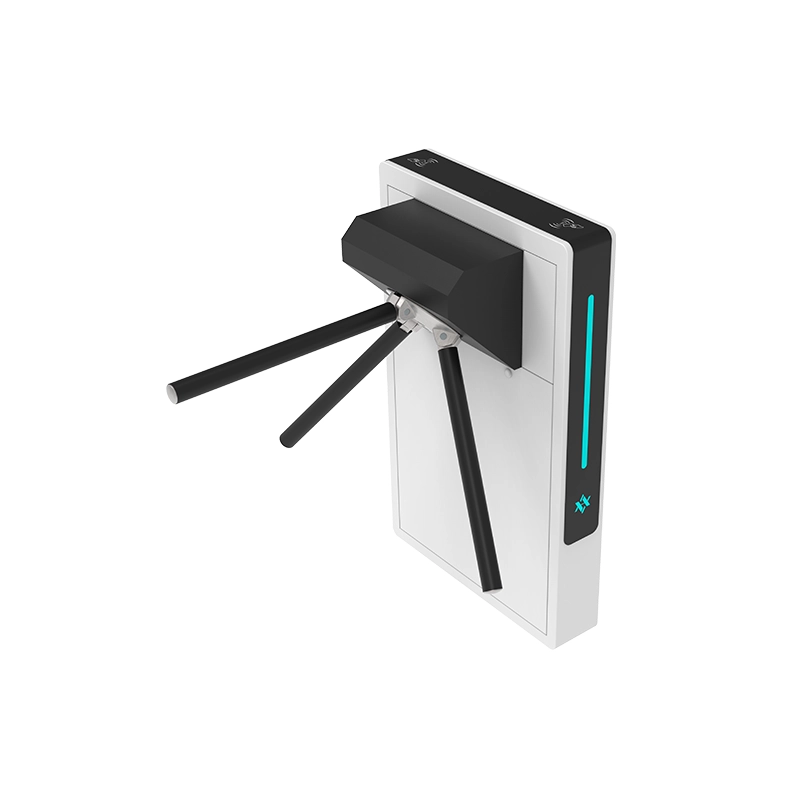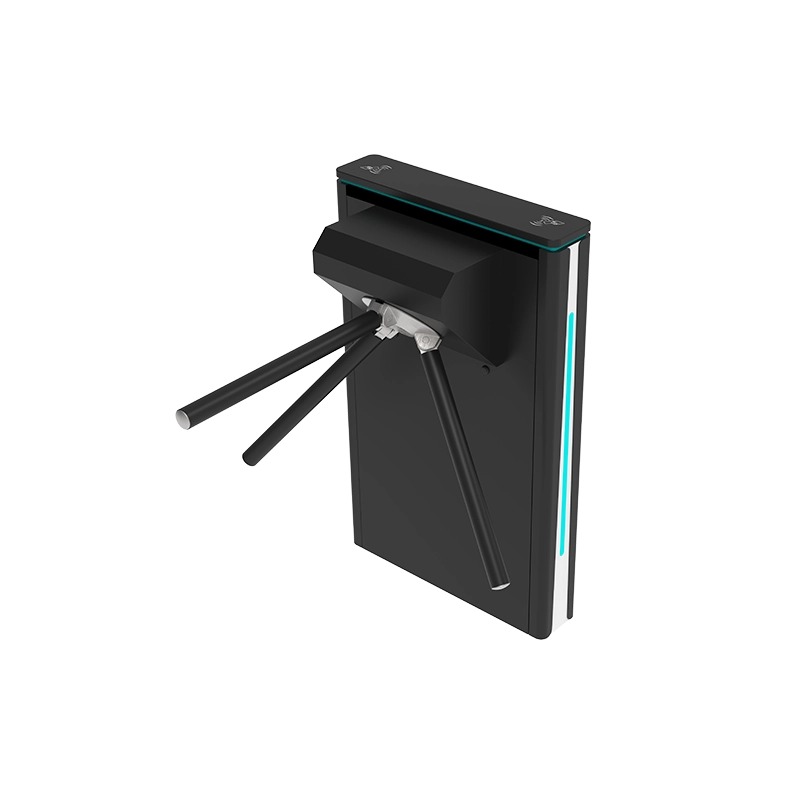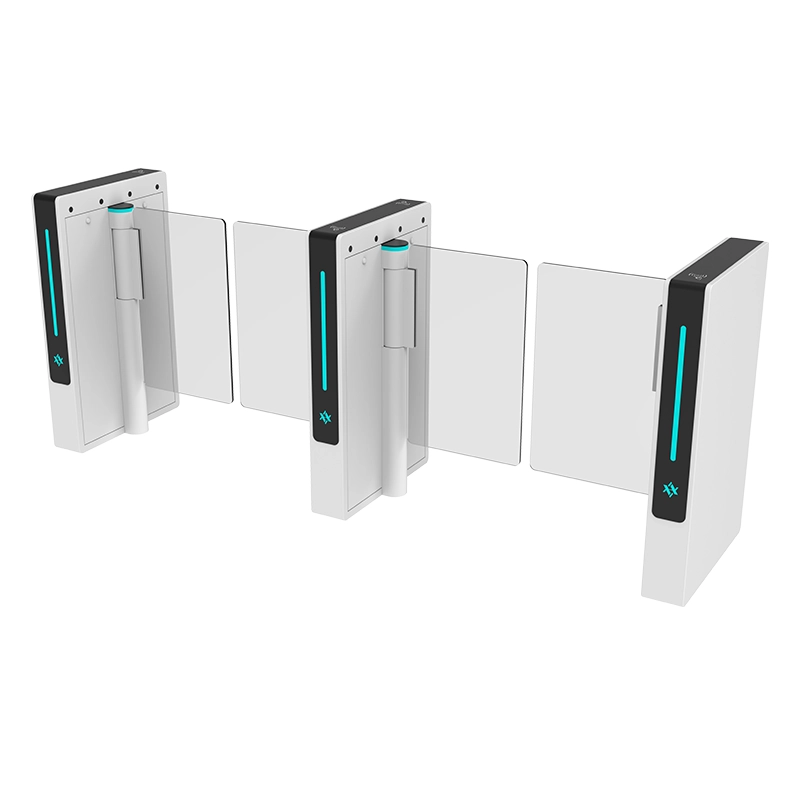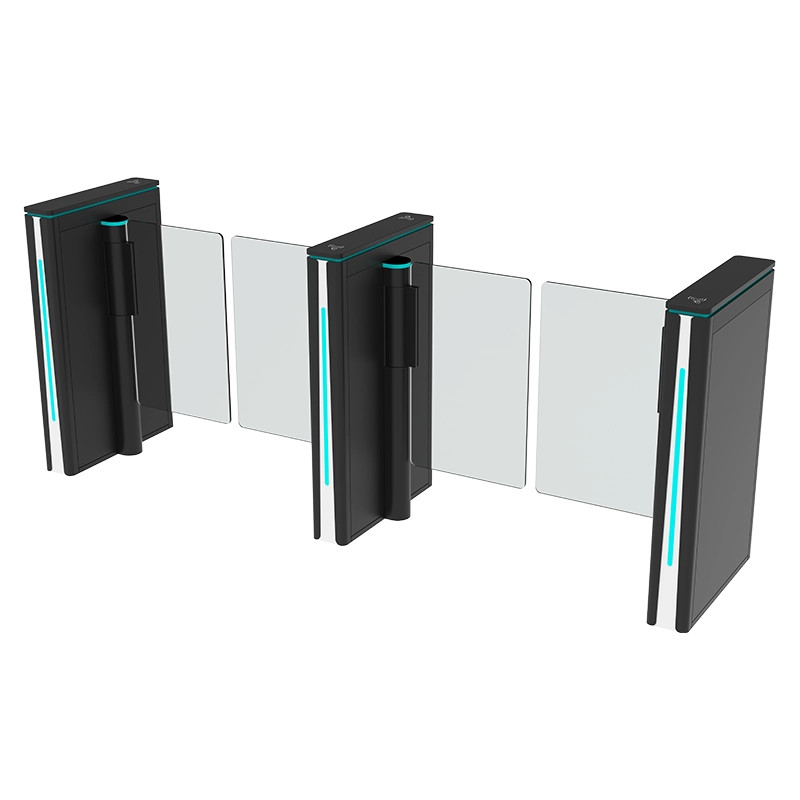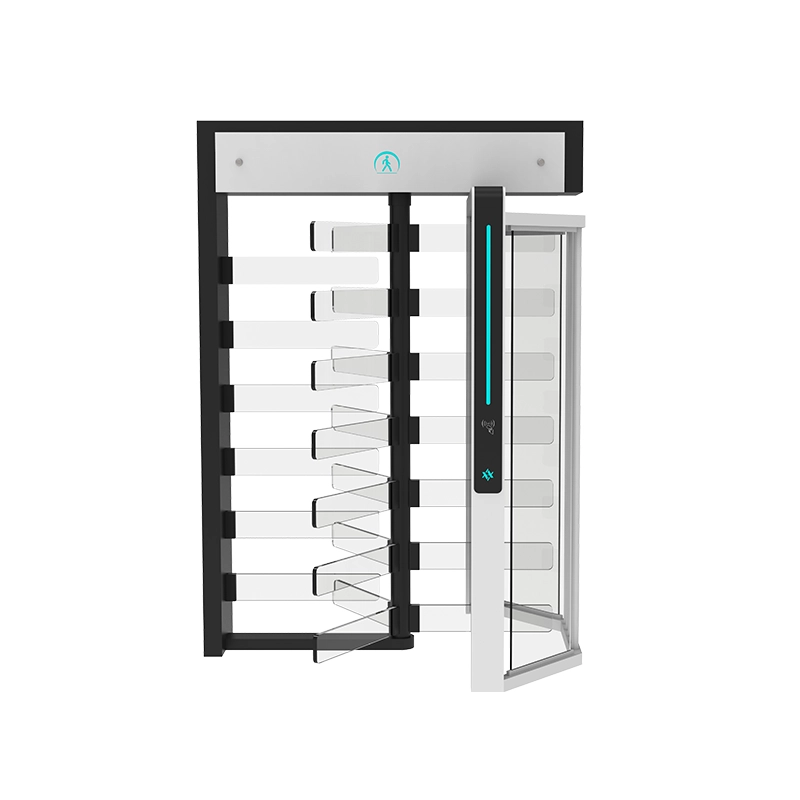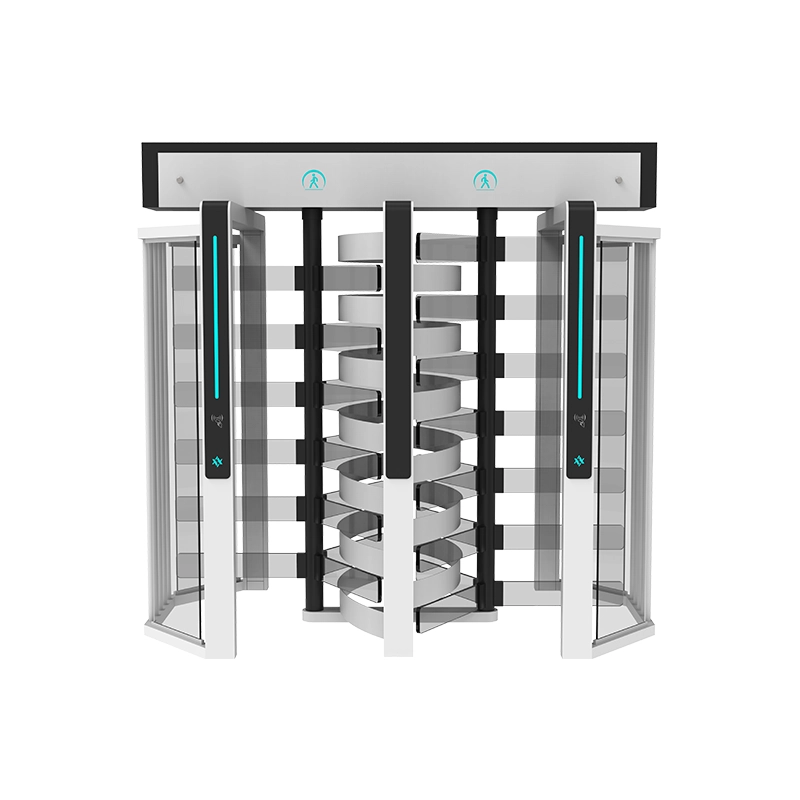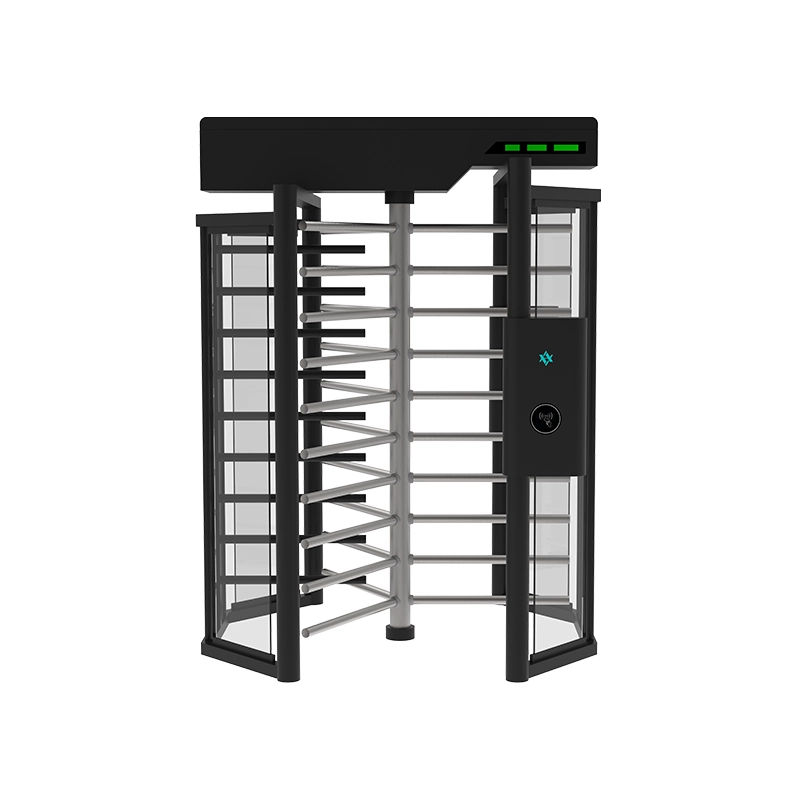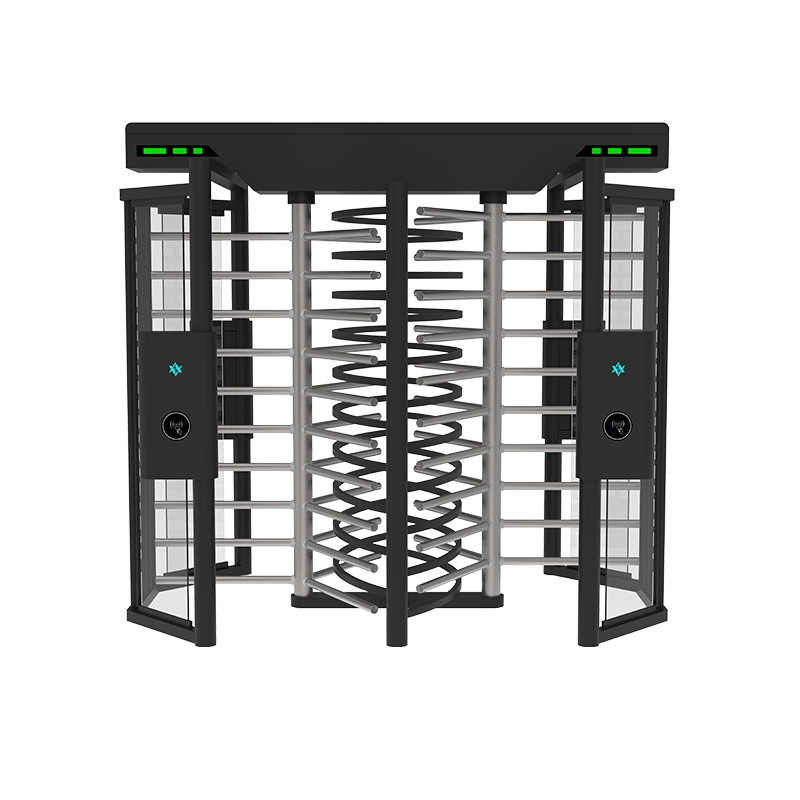

A speed gate turnstile costs USD $1,000–3,500 per lane from a China factory, ex-works. That range covers a complete optical turnstile lane with a brushless servo drive, an infrared sensor array, a controller and a standard 304 stainless steel cabinet. Scale it to a project: a 2-lane office lobby typically lands at $5,000–9,500 delivered, a 6-lane transit-style entrance at $16,000–34,000, and a 10-lane airport hall at $36,000–77,000 once freight, duties, integration and commissioning are counted.
Everything below uses typical China ex-works market reference ranges. They are planning numbers for budgeting and supplier comparison — not a published AIPADA price list. An exact speed gate turnstile price depends on lane count, drive type, sensor count, stainless grade, glass type, ADA lanes, integration depth, order quantity and Incoterms, and it needs a project quote.
Speed Gate Turnstile Price: Quick Answer
If you want one number before reading further, use the per-lane reference ranges below. They assume a China ex-works quotation for equipment only, in standard 304 stainless steel with acrylic barriers and a basic card-reader interface.
| Product type | Typical China ex-works range (per lane) | Typical lead time | Where it makes sense |
|---|---|---|---|
| Speed gate / optical turnstile | USD $1,000–3,500 | 7–15 days | Office lobbies, corporate receptions, transit halls, secure floors |
| Flap barrier turnstile | USD $400–1,200 | 7–15 days | Mid-security entrances, gyms, campus gates, staff entrances |
| Swing gate turnstile | USD $500–1,500 | 7–15 days | Wide passage, ADA-friendly lanes, mixed pedestrian and trolley traffic |
| Tripod turnstile | USD $150–500 | 5–12 days | Low-cost counting and one-way control, industrial and stadium gates |
| Full height turnstile | USD $600–2,000 | 10–20 days | Perimeter security, unmanned outdoor entrances, high-deterrence sites |
Three qualifiers keep this table honest. First, “per lane” is not the same as “per cabinet.” A 2-lane arrangement usually needs three cabinets (two single-core end cabinets plus one central dual-core cabinet), so lane count and cabinet count diverge. Second, the top of the speed gate range — $3,000–3,500 per lane — is a high-duty brushless servo system with a dense IR sensor layout, 316 stainless, tempered glass barriers and integrated facial recognition. Third, the range excludes freight, duties, site wiring and commissioning.

For a full model and cabinet-layout overview before you budget, review the AIPADA speed gate turnstile range. For lower-budget mid-security projects, the flap barrier turnstile category runs roughly 40–60% below optical turnstile pricing per lane.
What Drives Speed Gate Cost: Component-Level Breakdown
Two quotations that both say “speed gate, 304 stainless” can differ by 3x. The difference lives in the bill of materials. The table below shows what actually moves the number.
| Component | Low-cost build | High-spec build | Typical price impact per lane |
|---|---|---|---|
| Motor and drive | Brushed DC motor, mechanical limit stops | Brushless servo with closed-loop encoder and controlled acceleration | +$400–1,200 |
| Transmission mechanism | Clutch-based linkage, lower duty cycle | Servo-driven direct mechanism, high duty cycle, low noise | +$300–900 |
| Infrared sensors | 4–6 IR pairs, basic anti-pinch | 12–24 IR pairs, tailgating, wrong-way and luggage discrimination logic | +$150–500 |
| Cabinet material | 304 stainless, thinner gauge, painted steel | 316 stainless for corrosive or coastal sites, heavier gauge, brushed finish | +$200–700 |
| Barrier panels | Acrylic 10 mm | Tempered glass or laminated glass, custom height, polished edges | +$120–450 |
| Controller and power | Standard board, single power supply | Redundant controller, UPS backup, supervisory software port | +$250–800 |
| Access integration | Dry-contact interface only | RFiD, QR, fingerprint or face terminal with SDK and mounting | +$150–1,200 |
| ADA / accessible lane | Not offered in base model | 900 mm clear passage, wider panels, adjusted sensor coverage | +$250–1,200 |
| Quantity | Single unit | 10+ units on one order (MOQ is 1 unit at AIPADA) | −5% to −15% |
| Incoterms | EXW / FOB only | CIF or DDP with duties prepaid | +$80–600 per lane equivalent |
The single largest swing is the drive system. A brushed motor with a mechanical stop is a $150–350 component; a brushless servo package with encoder feedback and a matched reduction mechanism is a $600–1,500 component. In a busy lobby cycling 3,000+ passages a day, that difference shows up in noise, panel positioning accuracy, and how often the mechanism is rebuilt.
Sensor count matters more than most buyers expect. A 4-pair layout can detect a person but struggles to separate a rolling suitcase from a trailing pedestrian. An 18-pair layout with directional logic can hold the barrier closed on a tailgate attempt, reverse safely on an obstruction, and log the event. Sensor hardware itself is inexpensive; the firmware logic and testing behind it is what you are paying for.
Why Motor Type Changes Everything
Brushed motors are cheap, simple and serviceable with basic tools. They also wear — brushes, commutator, mechanical clutch — and they produce more audible noise at speed. Brushless servo motors cost more up front and deliver controlled acceleration, accurate panel return, quiet operation and a longer rated duty cycle. For an internal door used 200 times a day, a brushed unit is defensible. For a reception lane used 3,000 times a day, it is a scheduled failure.
Ask any supplier to state, in writing: motor type, rated duty cycle, opening/closing time in seconds, noise level at 1 m, and expected mechanism life in millions of cycles. If a quote cannot produce those five data points, it is a price, not a specification.
Hidden Costs Buyers Miss
The quoted gate price is usually 55–75% of the true installed cost. The rest arrives in five places.
1. Freight and packaging. A speed gate cabinet is bulky and heavy — typically 60–120 kg per cabinet in an export crate. Sea freight from Shenzhen or Ningbo to a European or US port runs roughly $600–3,500 per shipment depending on volume, and air freight multiplies that. Wooden export crating adds $80–150 per cabinet. Budget the whole lane assembly, not the cabinet only.
2. Duties, taxes and customs handling. Turnstiles are electromechanical equipment and attract import duty plus value-added tax or sales tax at destination. Buyers who requested FOB pricing and then chose a DDP-style supplier discover a 15–25% landed-cost increase. Confirm HS code, duty rate and clearance responsibility before signing.
3. Access control integration. A gate with a dry-contact interface is not a working access control system. Readers, mounting brackets, power supplies, network switches, software licenses and configuration labor are separate. Face recognition terminals add roughly $450–1,200 each; QR and RFID readers run $120–400 each. A full integration software package can add $1,500–5,000 to a project.
4. Spare parts and consumables. Cheap gates consume more parts. Budget an annual spares allowance: $150–350 per lane for a premium brushless system, $400–900 per lane for a budget brushed system, based on realistic replacement of clutches, springs, sensor boards and power supplies over five years.
5. Installation and commissioning. Site work is rarely included in an ex-works quotation. Floor preparation, core drilling, cable routing, guardrails, power connection, parameter configuration and operator training are separate line items. For a 6-lane entrance, on-site installation and commissioning typically runs $1,500–3,500; for a 10-lane hall, $3,000–7,000.

Price vs Quality: Where Cheap Gates Fail
A gate at $600 per lane and a gate at $2,800 per lane both open and close on day one. The differences surface at month 8, month 24 and month 40.
Mechanism Life
Budget gates typically use a clutch linkage rated around 3–5 million cycles. A brushless servo mechanism with a matched reduction gear is commonly rated 10–20 million cycles. At 3,000 passages per day, 3 million cycles is roughly 33 months — and that is the optimistic figure. Once a mechanism reaches end of life, replacement is a $600–1,200 event per lane, plus downtime and labor. Premium buyers are not paying extra for nothing; they are prepaying for cycles they would otherwise buy twice.
Sensor False Reads
Under-specified sensor logic creates three recurring complaints: the barrier closes on a trailing pedestrian, the barrier refuses to close because a bag is misread as a person, and the lane logs tailgating events that never happened. Each false refusal causes congestion at peak hour; each false close is a safety and liability issue. Adding sensor pairs cannot be retrofitted cheaply — it usually means replacing the controller and re-running the sensor harness.
Support and Spare Availability
The lowest-priced offers frequently exclude drawings, firmware access, remote diagnostic support and individually orderable spare parts. That means a single failed control board can idle a lane for weeks waiting on a shipment. Confirm before purchase: is the control board orderable separately, is the firmware updatable, will the factory provide wiring diagrams and offer remote commissioning support?
AIPADA provides a 2-year warranty with lifetime technical support and ships from a 3,000 m² Dongguan facility with 80 staff and 3,000-unit monthly capacity. Certification for reference: CE certificate ZR0119400918C, CMA and CNAS test report UCT1648D35, design patent ZL 2021 3 0788509.8 and four software copyrights. Verified credentials matter because they are a proxy for whether the specification you paid for was tested or assumed.
Sample Project Budgets
Three realistic scenarios, itemized using the reference ranges above. All figures are equipment-and-delivery planning estimates in USD, not quotations.
Scenario 1: 2-Lane Office Lobby (Budget ~$5,000–9,500)
| Line item | Quantity | Unit range | Extended range |
|---|---|---|---|
| Speed gate cabinets (single and dual core) | 3 | $1,100–1,900 | $3,300–5,700 |
| Brushless servo drive and lane controller | Included | — | Included |
| IR sensor arrays (standard layout) | Included | — | Included |
| RFID card readers with mounting kit | 2 | $120–250 | $240–500 |
| Accessible lane upcharge (900 mm) | 1 | $250–600 | $250–600 |
| Power supply and cabling kit | 1 | $150–350 | $150–350 |
| Export plywood crating | 3 | $80–150 | $240–450 |
| Sea freight (CIF, EU or US port) | 1 | $600–1,400 | $600–1,400 |
| Remote commissioning and training | 1 | $0–500 | $0–500 |
| Estimated total | $4,780–9,500 |
This is the most common first purchase. The biggest lever on cost is not the cabinet — it is whether an accessible lane is required and whether the buyer’s existing access control platform can be reused without new readers.
Scenario 2: 6-Lane Transit-Style Entrance (Budget ~$16,000–34,000)
| Line item | Quantity | Unit range | Extended range |
|---|---|---|---|
| Speed gate cabinets (7 cabinets for 6 lanes) | 7 | $1,300–2,300 | $9,100–16,100 |
| High-duty brushless servo drives | Included | — | Included |
| Dense IR sensor layout (12+ pairs per lane) | Included | — | Included |
| Ticket / QR / fare integration per lane | 6 | $300–700 | $1,800–4,200 |
| 316 stainless upgrade and coastal finish | 7 | $150–400 | $1,050–2,800 |
| UPS and emergency-open power backup | 1 | $400–900 | $400–900 |
| Export crating | 7 | $80–150 | $560–1,050 |
| Sea freight (CIF) | 1 | $1,800–3,500 | $1,800–3,500 |
| On-site installation and commissioning | 1 | $1,500–3,500 | $1,500–3,500 |
| Estimated total | $16,710–33,650 |
At this scale, the drive and controller specification should be raised rather than trimmed. Peak-hour throughput, multi-lane coordination and continuous duty matter more than a $300 per lane saving. This is also the point where buyers should ask for a redundant controller option and a defined emergency-open sequence tied to the fire alarm system.
Scenario 3: 10-Lane Airport-Style Hall (Budget ~$36,000–77,000)
| Line item | Quantity | Unit range | Extended range |
|---|---|---|---|
| Speed gate cabinets (11 cabinets for 10 lanes) | 11 | $1,600–2,800 | $17,600–30,800 |
| Wide accessible lanes (900–1,000 mm) | 2 | $500–1,200 | $1,000–2,400 |
| Face recognition terminals with SDK | 10 | $450–1,200 | $4,500–12,000 |
| Integration software and license package | 1 | $1,500–5,000 | $1,500–5,000 |
| 316 stainless cabinets with tempered glass barriers | 11 | $180–450 | $2,000–5,000 |
| Redundant controllers and UPS | 1 | $1,200–3,000 | $1,200–3,000 |
| Export crating | 11 | $80–150 | $880–1,650 |
| DDP freight with duties prepaid | 1 | $3,500–8,000 | $3,500–8,000 |
| On-site installation and commissioning | 1 | $3,000–7,000 | $3,000–7,000 |
| Recommended spares kit | 1 | $800–2,000 | $800–2,000 |
| Estimated total | $36,000–76,850 |
Airport-scale projects invert the usual logic. The equipment is a minority of lifetime cost: downtime at a security checkpoint is far more expensive than the gate itself. Buyers at this level should insist on a spares kit held on site, a defined maintenance interval, remote diagnostics, and a documented firmware update path.
Total Cost of Ownership Over 5 Years
Purchase price is one line in a five-year budget. This comparison is per lane, assuming roughly 3,000 passages per day in a commercial lobby.
| Cost category | Budget speed gate | Mid-range speed gate | Premium speed gate |
|---|---|---|---|
| Purchase price per lane | $1,000 | $2,000 | $3,200 |
| Spare parts, years 1–5 | $400–900 | $250–500 | $150–350 |
| Mechanism replacement (year 3–4) | $600–1,200 | $0–600 | $0 |
| Scheduled maintenance labor | $500–900 | $300–600 | $200–400 |
| Downtime / congestion cost | High | Moderate | Low |
| Estimated 5-year total per lane | $2,500–4,000 | $2,550–3,700 | $3,550–3,950 |
The honest conclusion: at 3,000 daily passages, the budget gate does not save money — it reshuffles spend from capital to maintenance and downtime. At 300 daily passages on an internal door, the budget gate can genuinely be the more rational purchase. Match the drive specification to the duty cycle rather than to the lowest quotation.
How to Get an Accurate Speed Gate Quotation
Suppliers can only price what you describe. Provide these eleven items and your quotation will be comparable against competing offers.
- Entrance drawing or sketch with available width and depth
- Number of standard lanes and accessible lanes
- Required clear passage width per lane (600 mm standard, 900 mm accessible)
- Expected daily and peak-hour pedestrian volume
- Indoor, sheltered or outdoor installation conditions
- Preferred cabinet material (304 or 316 stainless) and barrier material
- Required authentication methods — RFID, QR, fingerprint, face or ticket
- Existing access controller model and communication interface
- Fire alarm and emergency-opening requirements
- Power supply, cable route and floor conditions
- Delivery address, Incoterm and required schedule
Photos and a short walkthrough video of the entrance are as useful as a drawing. They let the supplier spot existing wiring, floor obstructions, ceiling height and traffic flow — the details that decide whether a standard cabinet fits or a customized base is needed.
For integration choices, compare AIPADA access control devices and interfaces before finalizing the reader list. If your project is mid-security rather than high-security, the flap barrier turnstiles guide explains where a $400–1,200 per-lane solution outperforms an optical gate on cost without failing on duty cycle.
If you are still selecting a supplier, the speed gate manufacturer selection guide covers factory audits, certification verification and how to test whether a quoted specification is real.
How to Compare Speed Gate Quotations Line by Line
Once three quotations are on the table, the comparison is mechanical. Do not compare totals first — compare scope. A quotation that omits readers, freight or commissioning will always look cheaper until the missing items are priced.
Build one row per specification point and fill it in for every supplier. The points that most often differ are the drive type (brushed versus brushless servo), the number of IR sensor pairs, the stainless steel grade and gauge, the barrier material and thickness, the controller make and whether it is redundant, the reader interface (dry contact versus integrated), whether export crating is included, whether installation drawings and cable schedules are provided, and whether spare parts can be ordered individually after delivery.
| Comparison point | What to confirm in writing | Red flag |
|---|---|---|
| Scope | Lane count, cabinet count, mechanism, sensors, materials listed | “Standard speed gate” with no model or drawing |
| Drive | Motor type, duty cycle, opening time, noise level, rated cycles | Drive specification omitted entirely |
| Sensors | IR pair count per lane, tailgating and wrong-way logic | “Standard sensors” with no count |
| Materials | 304 versus 316 stainless, gauge, barrier glass type | Material schedule absent from quotation |
| Integration | Readers, brackets, power, licenses, configuration labor | Gate interface priced, readers and software unpriced |
| Logistics | Incoterm, crating, freight, duties, destination port | Ex-works price presented as installed cost |
| Support | Warranty period, covered parts, remote commissioning, spares | No drawings, no firmware access, no spares channel |
An unusually low offer deserves the same scrutiny as an unusually high one. If a quotation is 40% below the reference range for the stated specification, something in the build — the motor, the sensor count, the cabinet gauge or the controller — has been reduced. Ask which one. A supplier who cannot answer that question is not offering a cheaper product; it is offering a different, unspecified one.
The goal is not the cheapest quotation or the most expensive one. It is the proposal that meets the actual duty cycle and safety requirement with the fewest unpriced assumptions attached.
Frequently Asked Questions
What is the average speed gate turnstile price per lane?
For a China ex-works optical turnstile, the working range is $1,000–3,500 per lane. A basic brushed-drive indoor lane with card access sits near the bottom; a brushless servo lane with dense IR sensors, 316 stainless, tempered glass barriers and facial recognition sits at the top. There is no single average, because lane count, cabinet count and integration scope change the total more than the unit price does.
Why do two similar-looking speed gates have such different prices?
The cabinet outline is the cheapest part to copy. The drive system, sensor count and firmware logic, controller redundancy, stainless grade, glass specification and testing regime are not visible in a product photo. Compare motor type, duty cycle rating, IR pair count and material schedule line by line before comparing totals.
Does the speed gate price include access control?
Usually not. Many quotations cover the gate with a dry-contact interface only, letting you connect your own controller. Others bundle readers, software, licenses and configuration. Both structures are legitimate — the failure mode is a quotation that is silent about it, leaving reader cost and integration labor unpriced until after the order.
Does a wider wheelchair-accessible lane cost more?
Yes, typically $250–1,200 extra. A 900 mm clear passage requires longer barrier panels, adjusted drive torque and re-planned sensor coverage so detection stays reliable across the wider opening. The accessible lane should be included in the original layout drawing, not added after production, because retrofitting it usually means replacing the cabinet.
Is a brushless servo motor speed gate worth the extra cost?
At high traffic — roughly 2,000+ passages per lane per day — yes. The brushless servo delivers a longer duty cycle, quieter operation, accurate panel positioning and fewer mechanism rebuilds. For a low-frequency internal door used a few hundred times a day, a brushed drive can be adequate and the saving is real.
How can buyers reduce speed gate cost without cutting reliability?
Four moves: use standard cabinet dimensions instead of custom ones, reuse your existing access control platform where the interface is compatible, buy multi-lane orders in a single shipment to capture quantity pricing (AIPADA’s MOQ is 1 unit, with volume discounts above 10 units), and choose FOB over DDP if you have your own freight forwarder. Never reduce the drive or sensor specification below the actual traffic level — that is where the cost reappears as downtime.
Next Step: Turn These Ranges Into a Real Quote
Use $1,000–3,500 per lane as your budget line, add 25–30% for freight, duties and commissioning, and reserve $150–350 per lane per year for spares. Then replace every assumption with a specification.
AIPADA has manufactured turnstiles since 2014 from a 3,000 m² factory in Dongguan with 80 staff and 3,000-unit monthly capacity, shipping to Europe (40%), the Middle East (25%), Southeast Asia (20%) and South America (15%). Every quotation includes a 2-year warranty, lifetime technical support, 7–15 day lead times, MOQ of 1 unit and T/T with 30% deposit.
Send your entrance drawing, lane count, authentication requirements and delivery port to info@aipadaturnstile.com or WhatsApp +86 191 2995 1956 for a project-specific speed gate turnstile price quotation.