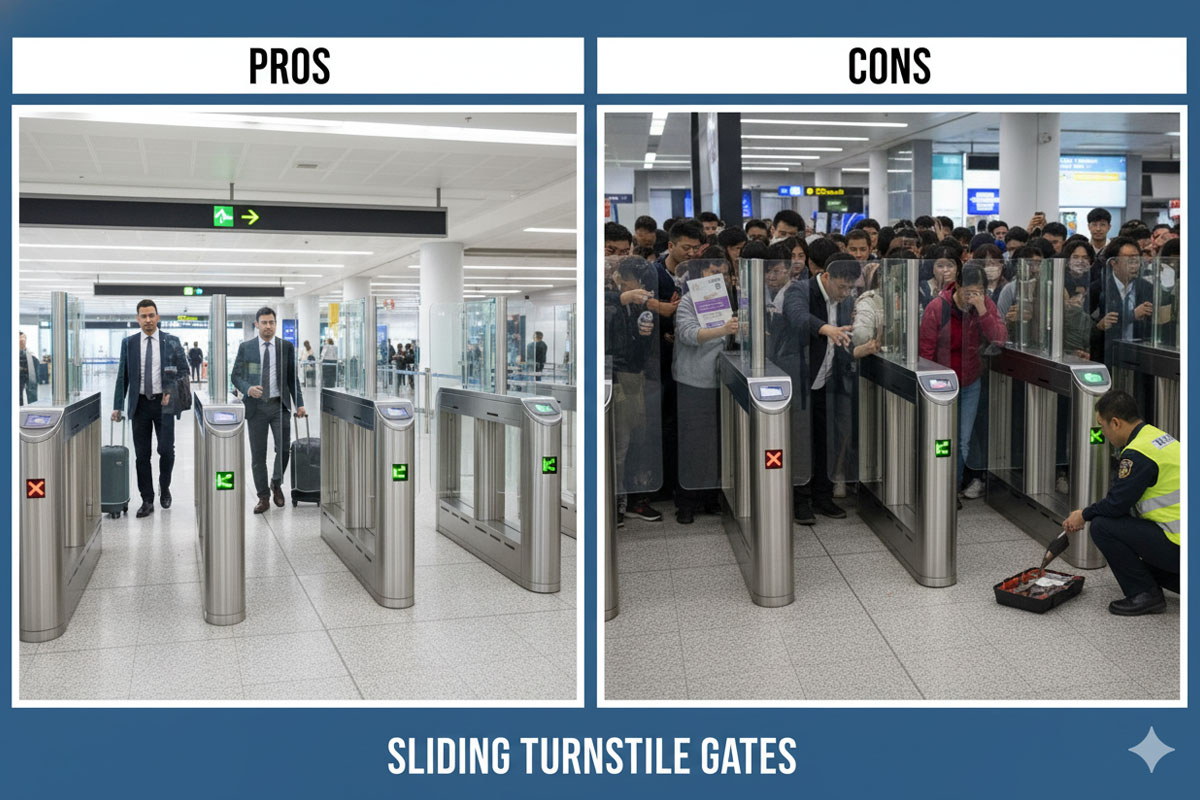
](https://aipadaturnstile.com/wp-content/uploads/2026/04/What-are-the-Pros-and-Cons-of-Sliding-Turnstile-Gates.jpg "What are the Pros and Cons of Sliding Turnstile Gates")

A sliding turnstile moves a barrier panel sideways instead of swinging it. The panel runs parallel to the cabinet along a guided track, so the lane opens like a sliding door rather than a gate. That single mechanical decision changes almost everything a buyer cares about: the clear opening you can offer a wheelchair or a luggage trolley, how much floor space the lane needs, what happens when the drive fails, how easily the surface can be cleaned, and how the gate feels to walk through.
This guide covers sliding turnstile gates end to end: what the mechanism actually is, how it differs from swing, flap and speed gate designs, the genuine advantages and the real limitations, the applications where it wins, a specification checklist, cost framing, and the situations where a different gate type is the better purchase.
What a Sliding Turnstile Gate Actually Is
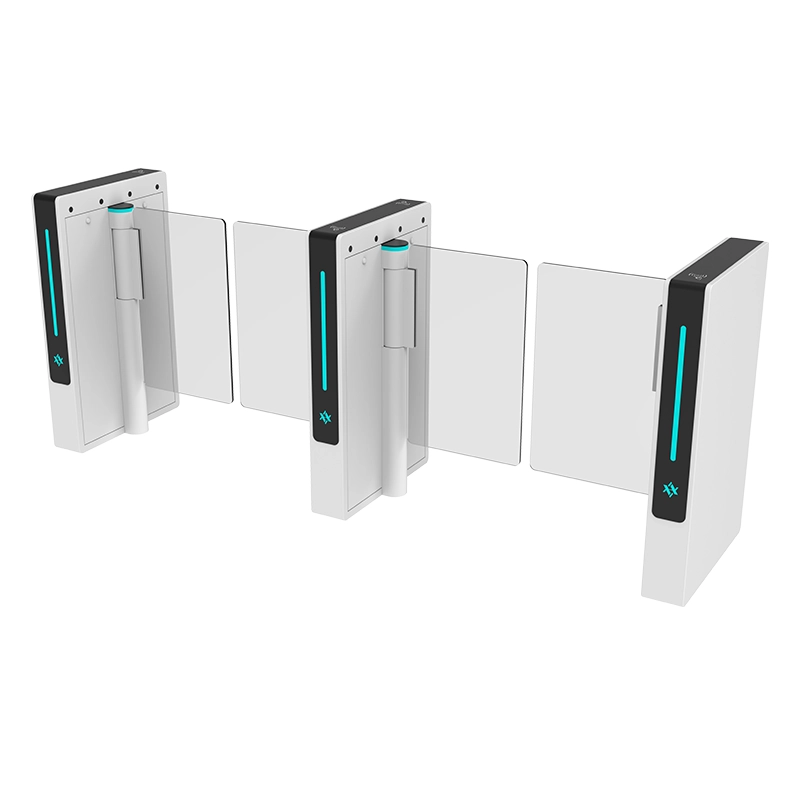
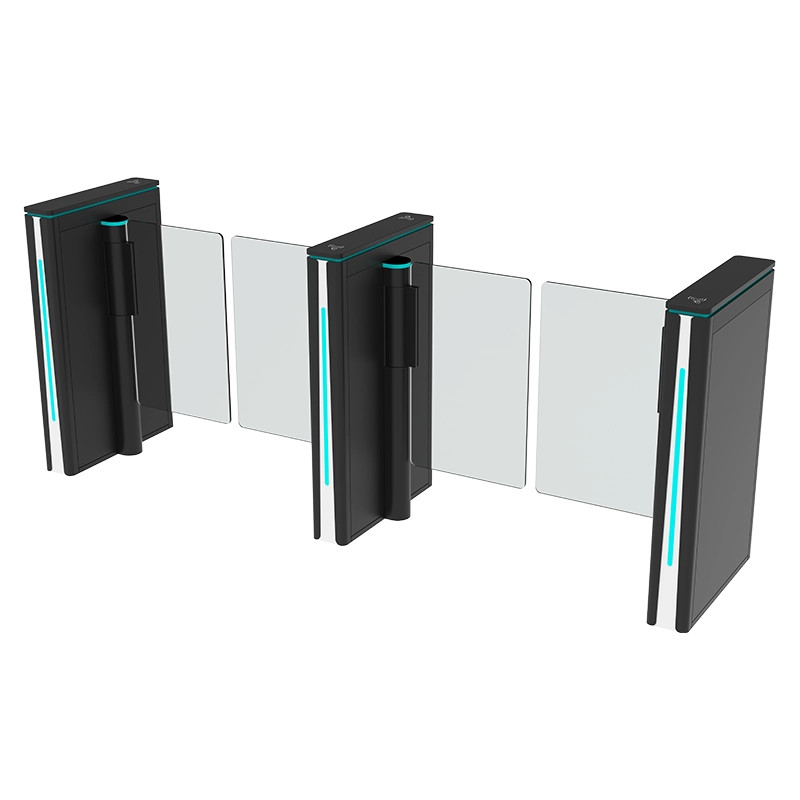
A sliding turnstile (also written as sliding gate turnstile or sliding barrier turnstile) uses a cabinet that hides the drive and the retracted panel. On a valid credential the panel travels horizontally — typically 300–900 mm of stroke — to open the lane, and returns on the same track to close it.
Two architectures dominate:
- Single-panel sliding lane. One panel retracts into or along one cabinet. Used for narrow to medium clear widths, and for lanes where only one side has room for a cabinet.
- Twin-panel centre-opening lane. Two panels meet in the middle and part to both sides, like a sliding door pair. This halves the travel distance per panel and suits wide clear openings and high throughput.
Because the panel travels rather than rotates, the lane does not need the swing arc clearance that a swing gate or a full-height rotor demands. What it does need is linear space beside the cabinet, or a cabinet deep enough to swallow the panel.
Where it sits in the turnstile family
Pedestrian access gates are usually grouped into three mechanical families: rotary (tripod, full-height rotor), swing (swing gate, flap barrier, speed gate with rotating wings) and sliding (sliding turnstile, sliding speed gate). AIPADA builds all three, and the working principle and types of turnstiles guide explains the mechanical differences in detail. The sliding family is the least understood of the three by overseas buyers, partly because it is often confused with a swing gate in renderings — both look like a flat panel across an opening.
Sliding Turnstile vs Swing, Flap and Speed Gates
The fastest way to understand the pros and cons is to compare the sliding panel against the three gate types it competes with on real projects.
| Attribute | Sliding turnstile | Swing turnstile / swing gate | Flap barrier | Speed gate |
|---|---|---|---|---|
| Panel motion | Horizontal travel along a track | Rotates about a vertical hinge | Wing rotates or retracts at 90° | Twin wings retract into the cabinet |
| Clear opening | Widest — a full-width opening can be produced | Good, but limited by the swing arc | Medium; wings are usually 260–350 mm each | Narrow to medium; designed for single-person passage |
| Floor space needed | Linear space beside the cabinet | Swing arc clearance in front | Minimal | Minimal |
| Barrier-free access | Excellent — wheelchair, trolley, stretcher | Good when a wide lane is specified | Limited by wing height and width | Poor — not a wheelchair lane |
| Throughput | High; 30–50 persons/min per lane | 25–40 persons/min | 30–45 persons/min | Highest; 40–60 persons/min |
| Pinch risk | Low — travel path is away from the body line | Moderate — hinge and closing edge | Moderate — wing closing edge | Low with modern sensor logic |
| Visual impression | Architectural, door-like, premium | Classic access-control look | Transparent, retail-friendly | Technical, airport-style |
| Relative cost (China ex-works) | Mid to high | Low to mid | Low to mid | Mid to high |
The comparison explains why sliding gates are often specified for lobbies where the lane must double as an accessible route, and why they are rarely specified for ticket-checking queues where the speed gate’s narrow single-person lane is the point.
Advantages of Sliding Turnstile Gates
1. The widest usable clear opening
Because the panel travels sideways, the opening it creates can be as wide as the cabinet and structural support allow — commonly 900 mm and, in twin-panel configuration, well beyond that. This is the single strongest argument for sliding gates in buildings that must satisfy accessibility requirements: a wheelchair, a luggage trolley, a cleaning cart or a hospital bed can pass through the same lane as everyone else, with no separate accessible gate and no staff escort.
2. Space efficiency in the direction people walk
A swing gate needs clearance in front of the lane for the panel arc. In a narrow lobby, that clearance eats into the walking route and can conflict with queuing. A sliding panel needs no arc; it needs lateral room. In corridors and entrance vestibules where depth is the scarce dimension, sliding is often the only configuration that fits at the required clear width.
3. Low pinch risk at the closing edge
A sliding panel closes across the lane along the line of travel, not across the pedestrian’s body from the side. With proper beam coverage and force limiting, the closing motion is easier to make safe, and the point of contact on an obstruction is a flat edge travelling parallel to the walking direction rather than a rotating wing sweeping through the lane. Both mechanisms require correct sensor design — the difference is the geometry of the hazard.
4. Quiet, stable and mechanically simple in daily use
A well-built sliding lane runs on a guided track with a belt or rack drive. There is no long rotating arm to counterbalance and no wing spring to re-tension. Cycle noise is low, which matters in libraries, museums, hospitals and premium office lobbies where a clacking lane is immediately noticed.
5. Predictable integration behaviour
Sliding lanes behave like a door: one open command, one close command, and a hold-open input that is easy to wire to a fire alarm panel or a building management system. Integrators appreciate that the control logic is easy to explain to a facilities team and easy to test during commissioning.
6. Strong architectural presence
With framed glass, stainless, or a printed brand band, a sliding lane reads as part of the entrance design rather than a bolted-on security device. For flagship retail, banks, corporate headquarters and cultural venues, that matters as much as the security function.
Limitations and Drawbacks of Sliding Turnstile Gates
Honest buying decisions need the other column. Sliding turnstiles are not universally better — in several common situations they are the wrong tool.
1. They need lateral room, and that room is not always available
The panel must go somewhere when the lane opens. Either the cabinet is deep enough to contain it (which increases cabinet length and cost) or the panel travels along the face of the cabinet into adjacent space. In a tight two-lane installation with no room beside the cabinets, the design can become impossible without moving walls or reducing lane count.
2. Higher cost than an equivalent swing or flap lane
More mechanism, longer cabinet, more track and usually more sensors add up. A sliding lane typically costs more than a comparable swing or flap barrier lane at the same finish level. The premium buys the clear opening and the architectural look — if neither is required, the money is better spent elsewhere.
3. Track and rail maintenance
Any linear mechanism is sensitive to debris in the track. Outdoor installations, construction sites and dusty industrial environments need a covered track and a cleaning routine. A neglected track produces noise, then drag, then a drive fault — and the fault usually appears as an intermittent problem that is hard to diagnose remotely.
4. Alignment matters at installation
Sliding panels are less forgiving of a badly levelled floor or a cabinet set out of square than a swing panel. The lane must be set level and parallel within tight tolerance, and floor-mounted guides (where used) must be protected from damage. This puts more weight on the installing contractor’s quality than on the gate itself.
5. Not a vandal-resistant device
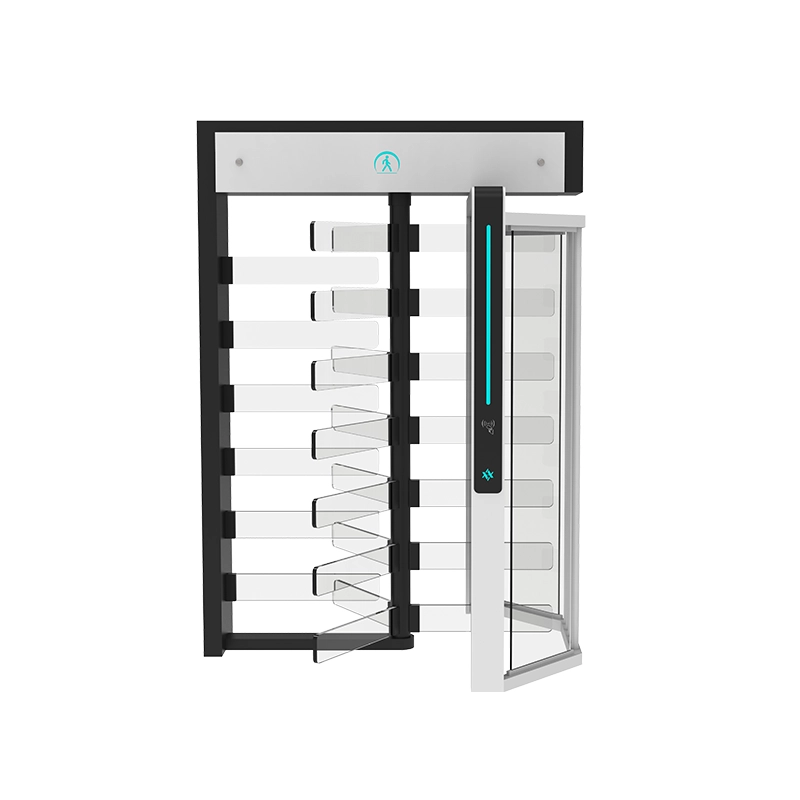
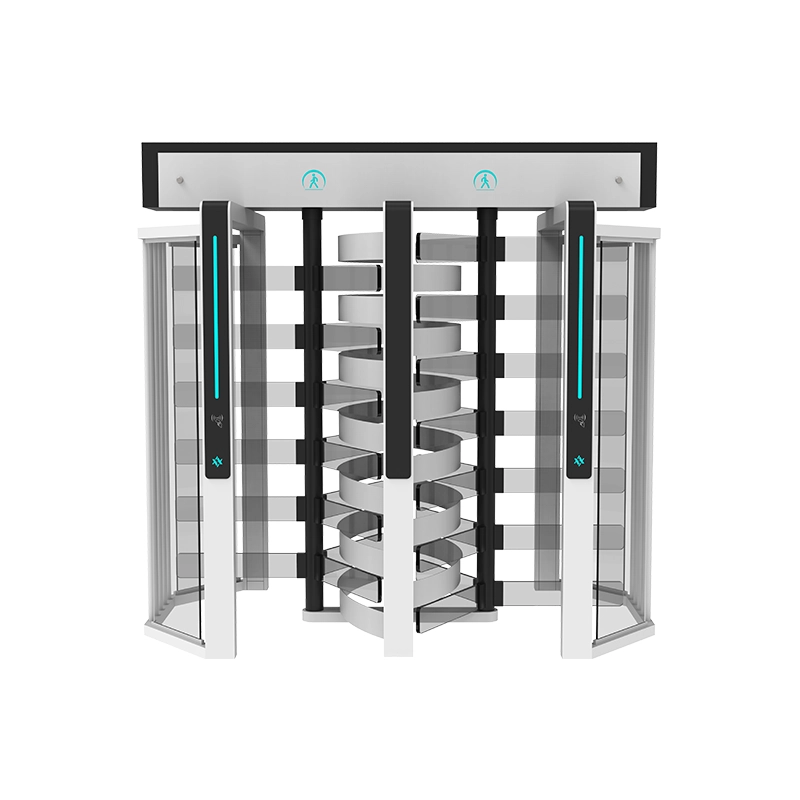
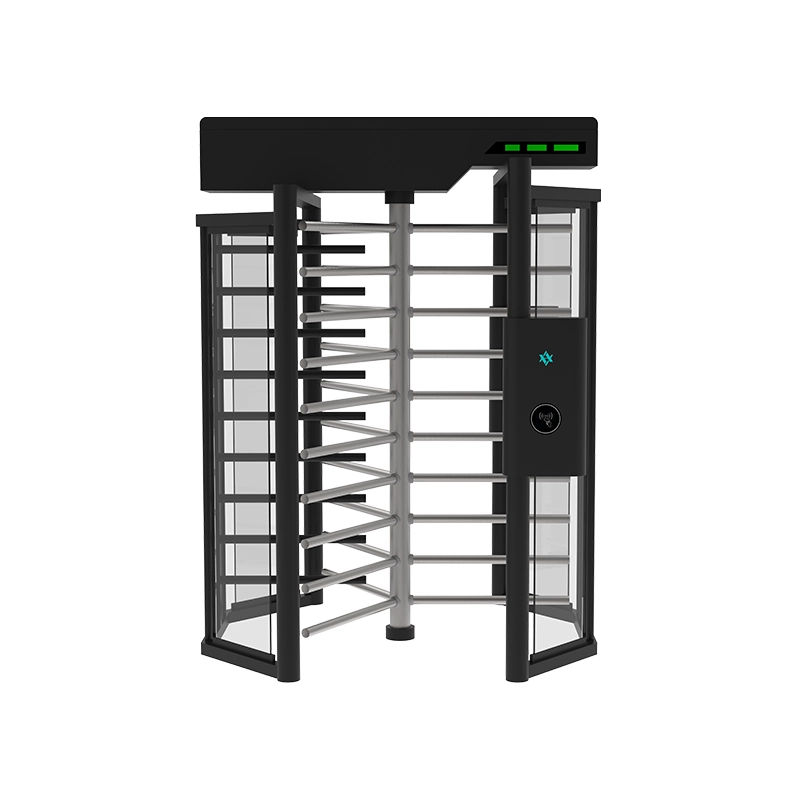
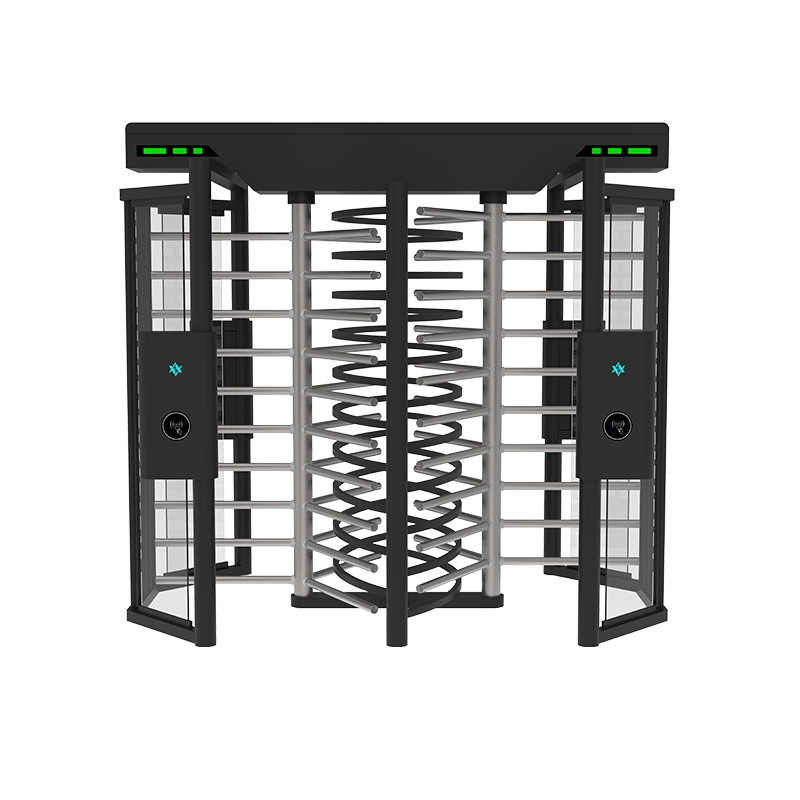
A sliding lane is a controlled-flow gate, not a physical barricade. Where the threat model includes deliberate ramming, climbing or crowd pressure — stadium perimeters, some transit edges, construction sites at night — a full-height rotor or a reinforced swing gate is the correct choice, and the full height turnstile range exists precisely for those sites.
6. Sensor-dependent anti-tailgating
Like every optical lane, tailgating prevention depends on the beam array and its logic, not on the panel. Buyers who need certified one-person-per-credential control should specify the beam count and the anti-tailgating behaviour explicitly, and test it during factory acceptance. Our guide to common speed gate turnstile problems covers the failure modes that apply to any optical lane.
7. Power failure behaviour must be specified
On power loss, a sliding panel can fail open (releasing the lane), fail closed (locking it), or fail to the last state — but only if a battery or mechanical release is included. Emergency egress and fire-alarm linkage must be written into the order, not assumed. This is the most common specification omission we see on sliding lane enquiries.
Where Sliding Turnstile Gates Work Best
- Corporate headquarters and business parks. Wide, quiet lanes that match a glass lobby and can double as the accessible route.
- Hospitals and clinics. Wheelchairs, stretchers and equipment trolleys share the main lane; hygiene-friendly surfaces and low noise.
- Airports and rail terminals. Staff and crew lanes, and premium passenger lanes where luggage width matters. See the airport swing gates passenger flow planning guide for the wider layout logic.
- Banks and financial institutions. A visible, controlled buffer between the public area and the service floor.
- Libraries, museums and galleries. Quiet operation, architectural finish, and counting/anti-tailgating without a cage-like appearance.
- Premium retail and flagship stores. Where the lane also carries the brand — see supermarket and retail one-way flow layouts for retail-specific planning.
- Government service halls and embassies. Controlled entry with wide clear widths for citizens with pushchairs or reduced mobility.
Specification Checklist Before You Buy
Use this list when comparing quotations. Two lanes that look identical in a picture can differ on every line below.
| Item | What to specify | Why it matters |
|---|---|---|
| Clear opening | Actual finished clear width in mm, in open position | Decides accessibility compliance |
| Panel material and size | Tempered glass / laminated glass / acrylic / stainless; thickness and finished height | Drives weight, drive torque, appearance and replacement cost |
| Drive | Brushless DC or servo; rated cycles and MCBF | Determines life in high-traffic lanes |
| Open/close time | Seconds per full stroke | Sets achievable throughput |
| Beam array | Number of infrared pairs and their purpose (safety only vs anti-tailgating) | Decides whether tailgating can be detected at all |
| Anti-crush | Force limiting, obstacle detection, retry behaviour | Safety and liability |
| Emergency behaviour | Fail-open on fire alarm / power loss; battery backup option | Building code compliance and evacuation |
| Integration | Wiegand, RS485, relay, TCP/IP; reader and face terminal compatibility | Decides whether your existing credentials work |
| Environment | Indoor/outdoor, IP rating, coating, operating temperature | Outdoor coastal sites need more than standard paint |
| Finish | 304 or 316 stainless, brushed or mirror, colour and brand band | Cost and longevity |
| Warranty and spares | Years of warranty, spare part lead time, remote support terms | The real cost of ownership |
Cost Framing: What a Sliding Lane Actually Costs
As a market reference — not a quotation — a complete sliding turnstile lane manufactured in China is typically quoted in the range of USD $900–2,500 per lane ex-works, depending on:
- cabinet length and whether the panel hides inside it;
- drive type and rated operating cycles;
- panel material and finish (acrylic at the low end, laminated glass or 316 stainless at the high end);
- infrared pair count and anti-tailgating logic;
- integrated reader, face terminal or ticket hardware;
- finish level and branding work.
Lanes above that band are usually custom: extra-wide openings, bespoke cabinet geometry, or integration with a specific building system. Our speed gate price and cost factors guide explains how the same cost drivers work on a neighbouring product, and the ordering and RFQ guide shows what information to send to get an accurate quotation first time.
The recurring costs to plan for are panel replacement after impact damage, drive and sensor spares, and track cleaning consumables on outdoor lanes. Ask every supplier for the price of a panel, a drive and a sensor board at the time of purchase — not at the time of failure.
Installation and Maintenance Notes
- Set the lane level and parallel. Use the manufacturer’s datum points; do not shim the cabinet to hide an uneven floor.
- Protect the travel path. On outdoor lanes, cover open tracks and keep the approach clear of grit, gravel and standing water.
- Clean the beams, not just the panels. Dirty infrared windows are the most common cause of “the gate opens late” complaints.
- Test the emergency release on a schedule. Function once a quarter, and record it — auditors ask.
- Log every fault. Intermittent drag is a maintenance signal; ignoring it turns a cleaning job into a drive replacement.
The same discipline applies across gate types — see the speed gate maintenance and service checklist for a schedule you can adapt.
When Not to Choose a Sliding Turnstile
- Maximum throughput single-file lanes. A speed gate passes more people per minute in a narrower footprint — see speed gate vs turnstile.
- Budget-driven projects. A swing or flap lane delivers the same basic access control for less. Compare flap barrier vs swing turnstile.
- High-vandalism or crowd-pressure sites. Use a full-height rotor.
- Zero-lateral-space installations. Use a swing or flap barrier instead.
Frequently Asked Questions
Is a sliding turnstile the same as a sliding speed gate?
Not exactly. Both use a horizontally travelling panel, but “speed gate” usually describes a twin-wing gate optimised for single-person, high-frequency passage with a narrow lane. Sliding turnstiles are generally wider, slower per cycle and aimed at accessibility and architectural entrances rather than the fastest possible throughput.
Can a sliding turnstile be used outdoors?
Yes, with the right specification: IP-rated cabinets, corrosion protection suited to the location (316 stainless or a suitable coating near the coast), a covered track, and a temperature range matched to the site. Outdoor lanes also need a firmer maintenance routine because the track sees grit and water.
Does a sliding gate need floor-mounted guides?
Smaller panels can be fully cantilevered from the cabinet, leaving the floor clear — preferred in hospitals and venues where a floor track is a trip hazard or a cleaning problem. Longer or heavier panels normally need a floor guide for stability. Decide this at design stage; it affects civil works.
What happens during a power failure?
Whatever you specify. Options are fail-open (lane releases), fail-closed (lane locks), or battery-backed operation that continues normal function for a period. For most buildings, fail-open on fire alarm plus a manual release is the safe default — but confirm it with the fire strategy for the site.
How many people per minute can one lane handle?
Typically 30–50 persons per minute per lane for a well-specified sliding lane with a fast drive and correct beam logic. Real throughput depends on how quickly people present credentials, not only on gate speed.
Can it read our existing cards and face terminals?
Almost always, provided the interfaces are specified: Wiegand or RS485 for card readers, relay for simpler signals, TCP/IP for management integration, and a defined protocol for face terminals. Send the credential hardware model numbers with the enquiry so the interfaces can be confirmed before manufacture.
How long does a sliding lane last?
Service life is driven by rated cycles and maintenance rather than by the mechanism type. A high-cycle lane with a brushless drive and a proper service schedule reaches millions of operations; a budget drive on a neglected track does not, regardless of the brand on the cabinet.
Sliding Turnstile Gates and Building Regulations
A sliding lane is a power-operated pedestrian barrier, and in most markets that places it inside the safety regime for automatic doors rather than the looser regime for static turnstiles. Three obligations recur in every jurisdiction, even where the wording differs.
- Safe closing force. The wing or panel must limit the force it applies to a person or object, with sensing that reverses the closing motion. In Europe this is addressed through the EN 16005 framework for power-operated pedestrian doorsets; equivalent force and reversal requirements appear in most national codes and in the accessibility standards used for public buildings.
- Accessible route. Where the lane forms part of an accessible entrance, the clear opening, threshold and approach must work for a wheelchair user without assistance. Specifications that satisfy this in one country may fail in another, so state the target standard in the purchase specification rather than assuming a default.
- Egress and fire strategy. The lane must not reduce the escape width required for the building’s occupancy, and it must release on fire alarm or power failure with a mechanical release independent of the control system. In many projects the lane is one of several exit routes; in a small vestibule it may be the only one, which changes the design completely.
The practical implication for buyers is straightforward: tell the manufacturer which standard and which fire strategy apply before the lane is designed, not after it arrives. Adding force limiting or a battery release later is possible; reengineering a cabinet to produce a wider clear opening is not.
How to Write the Specification and Compare Returns
A specification that produces comparable quotations has five parts:
- Purpose and traffic. What the lane controls, peak people per minute, and whether the lane doubles as the accessible route.
- Geometry. Finished clear opening in mm, lane count, cabinet positions, floor level conditions and available lateral space.
- Behaviour. Open and close logic, direction control, anti-tailgating requirement, emergency and fail-safe behaviour, alarm interfaces.
- Integration. Credential hardware model numbers, interface protocol, software or BMS connection, data output.
- Commercial terms. Finish, certification documents required, warranty, spare parts prices, documentation and training deliverables.
When the returns arrive, compare them line by line against the list above rather than against the headline price. The supplier who answers every line in writing is usually the one whose lane works first time, and the two hours spent comparing properly are cheaper than a commissioning dispute. The ordering and RFQ guide contains a ready-made enquiry template that transfers directly to sliding lanes.
Questions buyers ask about our own sliding lanes
Most sliding lane enquiries we receive are variations on five questions, listed here with direct answers.
- “Can you match our cabinet colour and print our logo?” Yes — powder coat or brushed finish to a supplied reference, and printed or etched branding on the panel. This is standard OEM work rather than a special project.
- “Can the panel be replaced by our own glazier?” Only if the replacement matches the drawing: hole pattern, edge treatment, thickness and weight. An out-of-tolerance panel changes stroke timing and load on the drive. Order spares against the drawing.
- “Do you supply installation drawings?” Yes, with the datum points, conduit positions and clearance zones. Giving these to the installing contractor before the floor is finished prevents most alignment problems.
- “What is the delivery lead time?” Standard sliding lanes are typically 7–15 days ex-works for a single lane, longer for multi-lane rows with custom finishes.
- “What happens if a lane fails in service?” Remote diagnosis first, then a documented spare-part route. Keep one panel, one drive and one sensor board on site for critical lanes.
Frequently Asked Questions (continued)
Can a sliding turnstile be integrated with our existing access control system?
Yes. Sliding lanes are usually delivered with relay, Wiegand or RS485 interfaces, which covers the great majority of installed access control platforms, and with a documented protocol for face terminals and ticket systems. Send the model numbers of your existing hardware with the enquiry so the interface can be tested before shipment.
What is the difference between a sliding turnstile and an automatic sliding door?
An automatic sliding door opens for anyone who approaches it; it controls comfort and access to a building, not identity. A sliding turnstile opens only on a valid credential, closes behind each passage, and can detect and flag tailgating. A sliding door can be fitted with access control, but it is not a lane: it does not count, does not prevent following, and is not designed for per-person validation at throughput.
How much floor space does a sliding lane need?
The lane itself needs the width of the cabinet plus the clear opening. Beyond that, you need either lateral space of roughly the panel length beside the cabinet, or a cabinet deep enough to conceal the panel. Plan a minimum of 1,200 mm of clear depth in front of the lane on the approach side and confirm the panel travel path is free of columns, signage and furniture.
Is a sliding lane slower than a speed gate?
Per cycle, yes. A speed gate’s twin wings retract in a fraction of a second and are built for single-file high-frequency passage. A sliding lane is designed for a different job: a wider opening, a more deliberate movement and a better experience for people with luggage, trolleys or reduced mobility. Where throughput per square metre is the governing requirement, a speed gate is the correct product.
Next Step
If your project needs a wide, accessible, architecturally quiet lane, a sliding turnstile is likely the correct choice — and the specification list above is the difference between a lane that works for a decade and one that annoys people daily.
AIPADA manufactures sliding turnstile gates alongside swing turnstiles, flap barriers, speed gates and tripod turnstiles, with CE certification, CMA/CNAS test reports, OEM/ODM support and a 2-year warranty. Send the clear opening you need, the credential technology you use and the site conditions, and we will come back with a lane drawing and an ex-works quotation.