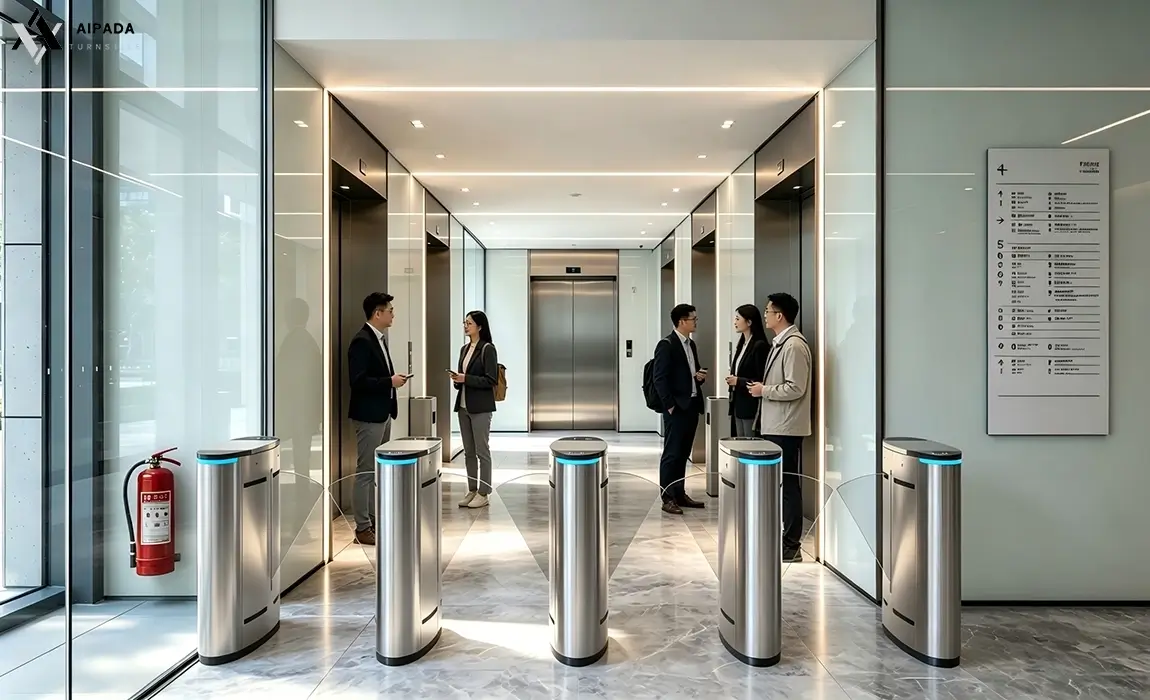
Have you ever faced a bottleneck at an entrance, unsure why different gates are used in different places? Poor access control can cause frustration and delays. Choosing the correct access gate is important for smooth movement and security. Besides flap barriers and swing turnstiles, the tripod turnstile is also a widely adopted solution for public and industrial access control scenarios.
Flap barriers are best for high-traffic areas that need speed and a small footprint, such as metro stations or modern office buildings. Swing turnstiles are ideal for wider access, accommodating wheelchairs, large luggage, or trolleys, often found in corporate lobbies or accessible entry points. Each gate type offers specific advantages for different requirements. For basic crowd management in factories, stadiums and residential compounds, a tripod turnstile delivers reliable performance with cost-effective design.
Understanding the strengths of flap barriers and swing turnstiles helps in making good decisions. This guide will help you understand which system works best for your specific needs. Let’s look at the main differences and ideal uses for each.
What is the Difference Between a Flap Barrier and a Turnstile?
Are you unsure about the terms “flap barrier” and “turnstile”? These words are sometimes used interchangeably, but they describe distinct types of access control gates
[1]. Knowing their differences is key to proper selection.
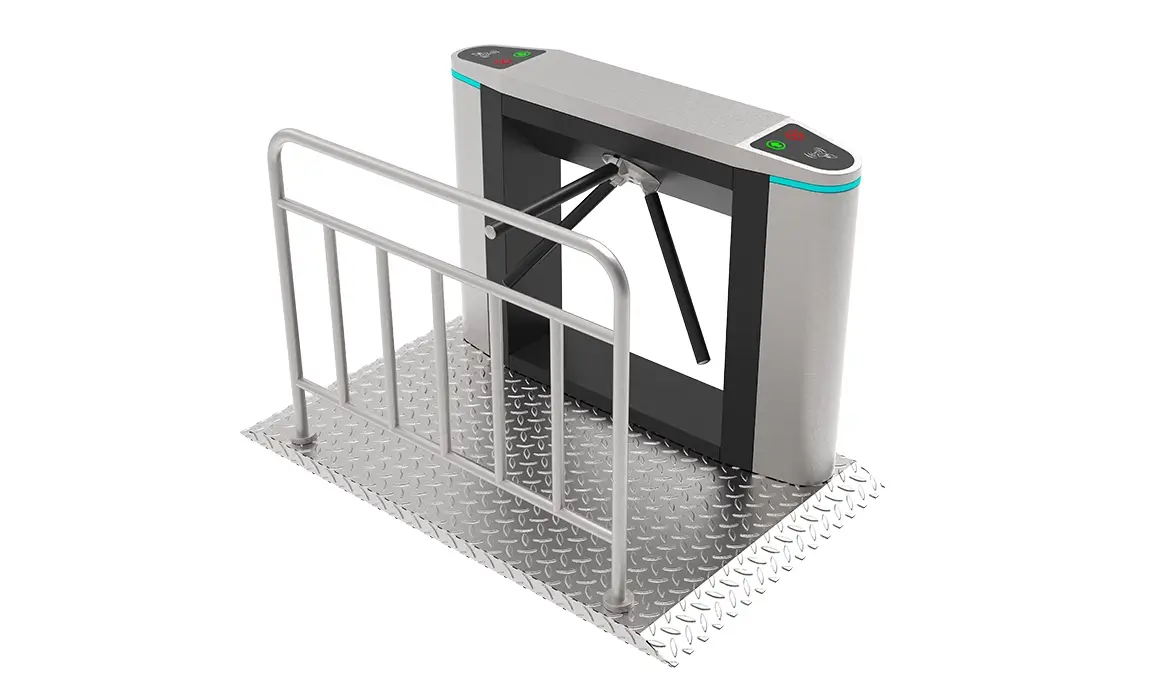
The main difference is their physical operation and typical application. Flap barriers use retractable panels that open and close quickly, making them good for speed and preventing people from following too closely. Swing turnstiles use a single or double swinging arm, offering a wider lane for accessibility and greater flexibility. Meanwhile, the classic tripod turnstile features three rotating arms, focusing on basic security and one-way passage control.
Consider a large office complex with multiple entry points. The main entrance often features flap barriers. These gates process many people quickly during rush hours. They allow swift badge verification and entry. In contrast, a nearby accessible entrance might have a swing turnstile. This wider gate allows easy passage for wheelchairs, strollers, or maintenance staff with equipment. For outdoor public areas and industrial zones, tripod turnstiles are commonly installed for stable daily access management. This shows how each type serves a unique purpose based on its design.
How Each System Works
Both systems control access, but their mechanics are different.
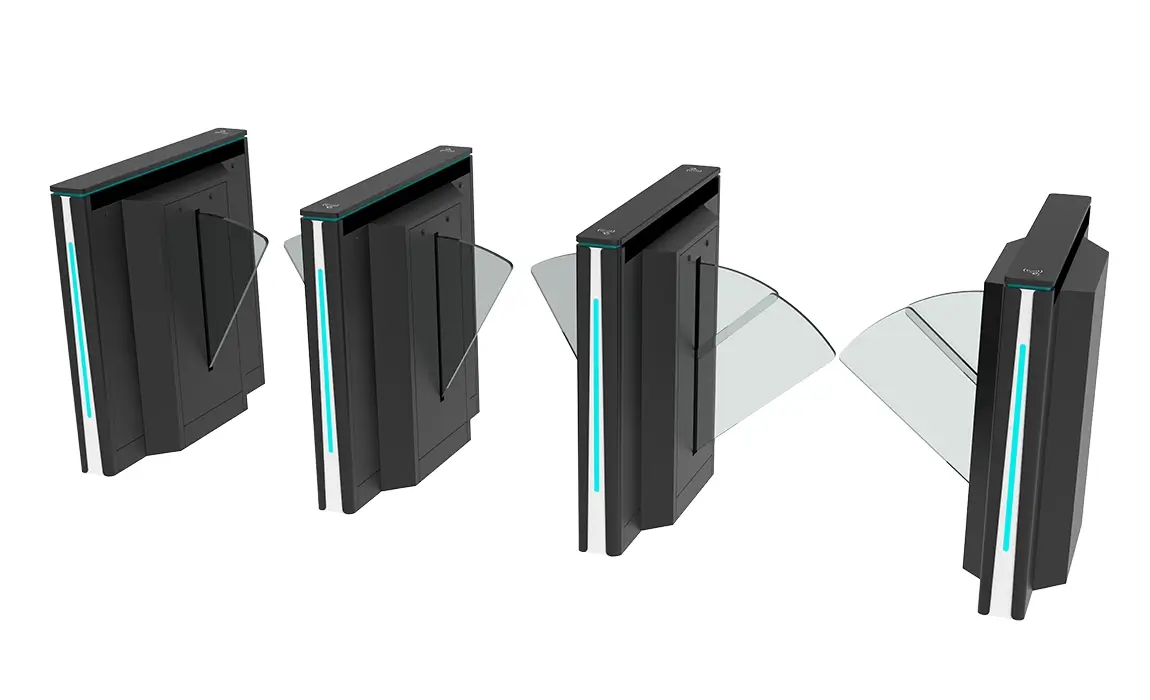
Flap Barriers
Operation: Flap barriers have two panels. These panels retract into the main housing when a valid access credential is shown. They close automatically right after a person passes through.
Speed: These gates operate very quickly. They are designed to handle a large number of people per minute.
Space: They have a compact design. This makes them suitable for locations where floor space is limited.
Security: They are effective at preventing tailgating. The fast closing action makes it hard for a second person to enter without authorization.
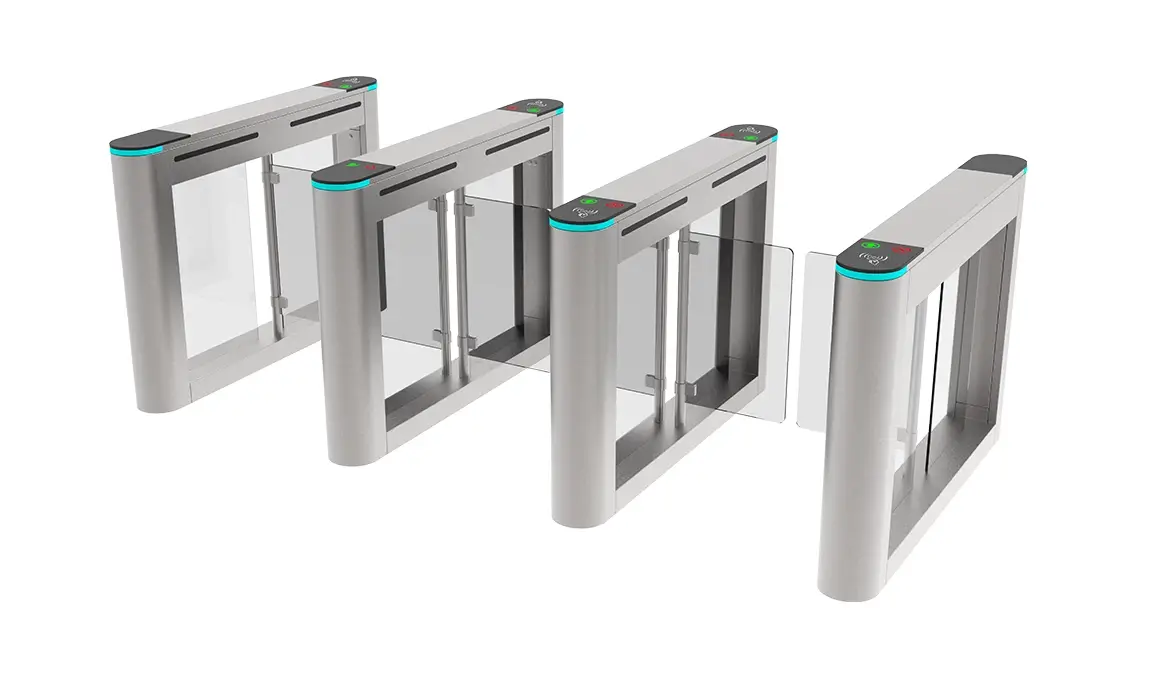
Swing Turnstiles
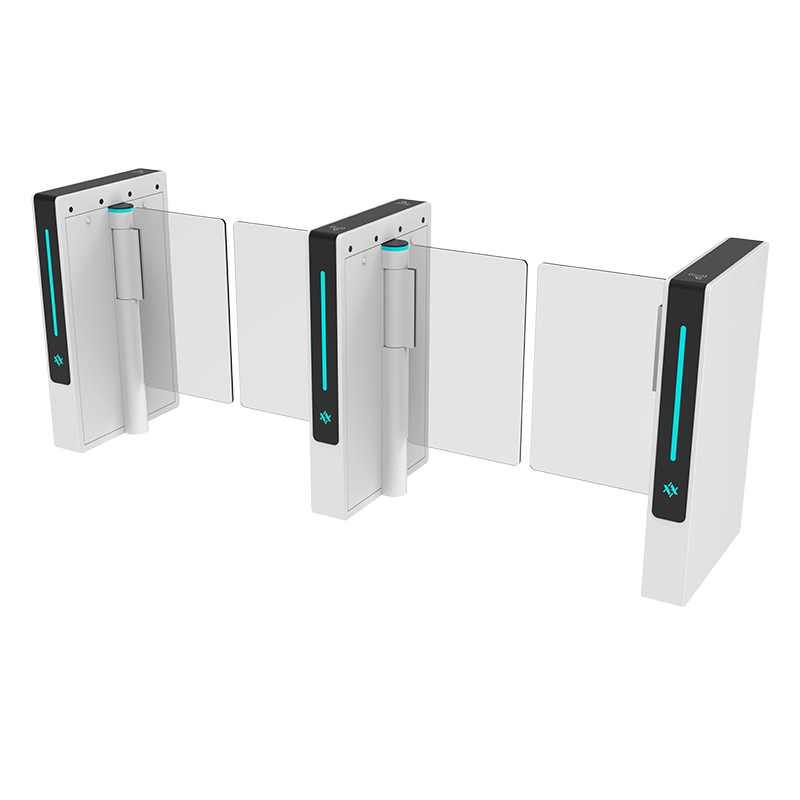
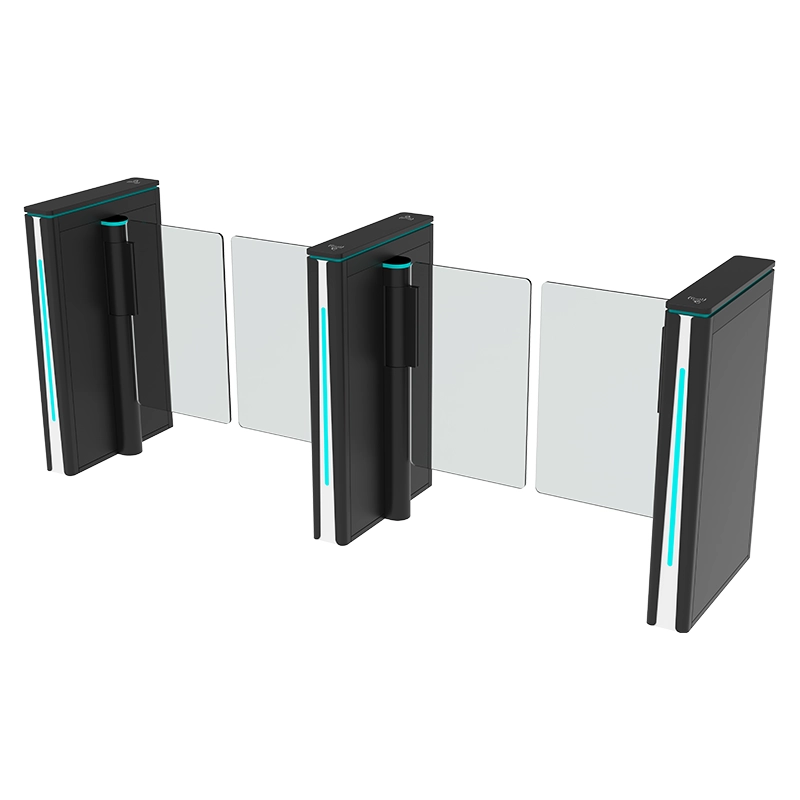
Operation: Swing turnstiles have one or two arms. These arms swing open, like a regular door, when activated. They swing back to their closed position after someone passes.
Width: They provide wider passage lanes. This is beneficial for accommodating wheelchairs, baby strollers, or individuals with large bags.
Flexibility: They are versatile. They can serve as both standard access points and emergency exits.
Design: Swing turnstiles can have a more traditional or robust appearance. Their design can often be customized to match building aesthetics.
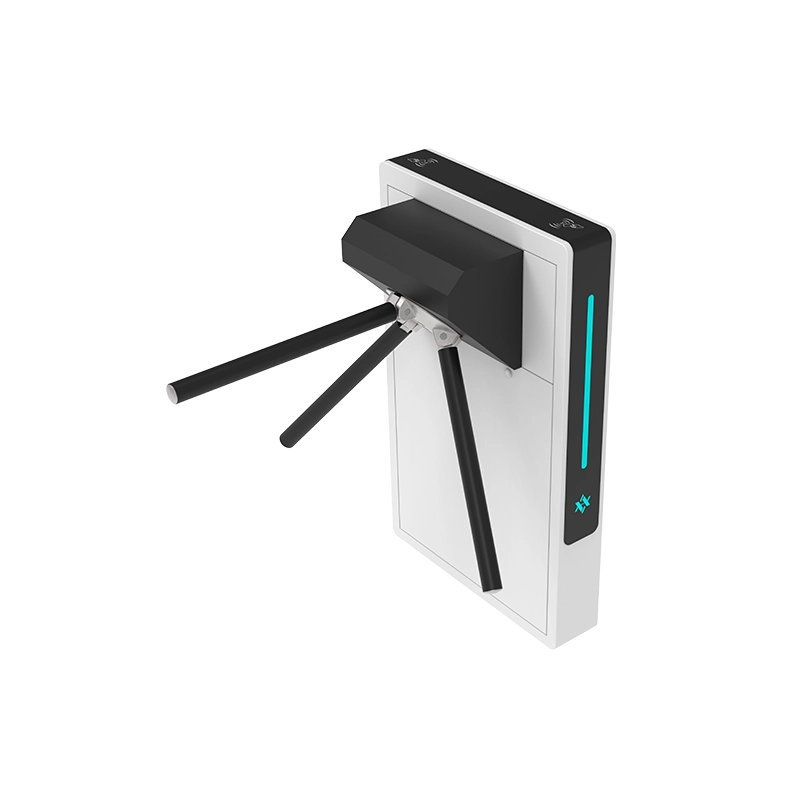
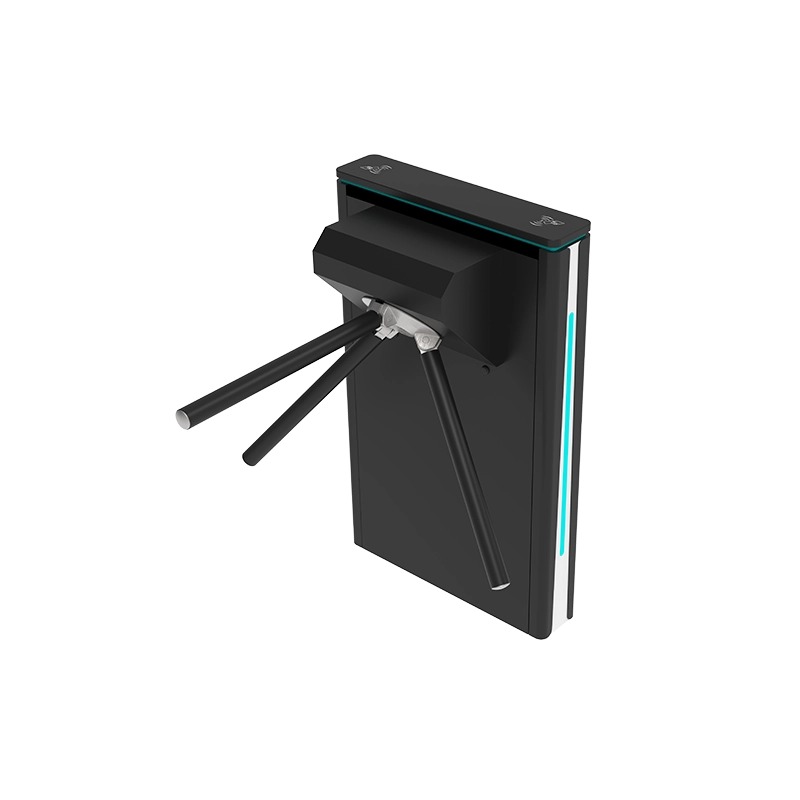
Tripod Turnstile
Operation: Equipped with three rotating metal arms, it rotates partially after access verification to allow single-person passage.
Features: Simple structure, strong durability and low maintenance cost. It balances basic security and cost performance perfectly.
Application: Widely used in factories, schools, stadiums and public transport stations.
Key Distinctions
This table summarizes the main differences:
| Feature | Flap Barrier | Swing Turnstile | Tripod Turnstile |
|---|
| Mechanism | Retracting panels | Swinging arms | Rotating tripod arms |
| Speed | High throughput, very fast | Moderate throughput | Stable medium speed |
| Lane Width | Standard, typically narrow | Wider, designed for accessibility | Standard single lane |
| Primary Use | High-traffic flow, anti-tailgating | Accessible entrances, versatile applications | Industrial & public basic access |
| Aesthetics | Modern, sleek, space-saving | Can be classic or modern, adaptable to design | Practical, durable style |
| Security Focus | Strong anti-tailgating, rapid closure | Good security, adaptable for various scenarios | Basic anti-tailgating |
| Cost | Often higher due to complex engineering | Generally more economical for standard models | Budget-friendly |
Understanding these specific features helps in selecting the appropriate gate. The choice should align with the functional requirements of the access point.
What is the Problem with the Flap Barrier?
While flap barriers offer significant benefits, they also come with specific challenges. It is important to know these potential issues to implement them effectively. No access control system is without its drawbacks.
The primary issues with flap barriers often include the potential for minor physical contact or “pinching” if users are not quick or if sensors are misaligned. They also have limitations in accommodating exceptionally wide passages required for very large equipment or multiple simultaneous users. These factors can impact user experience and operational smoothness.
Consider a busy metro station during rush hour. Flap barriers are essential for speed. However, some users might find them intimidating or feel rushed. A common problem is when someone hesitates or carries a bulky item. The flaps might attempt to close, causing a gentle push against the person. This is usually not dangerous due to safety sensors, but it can be startling. This highlights the need for precise sensor calibration and clear user guidance.
Common Issues Encountered
Flap barriers are built for efficiency. However, their design and speed can create certain problems if not managed properly.
Pinching or Minor Contact
Cause: The panels close quickly. If a person moves slowly or pauses, the flaps might make light contact with them.
Effect: This can cause minor discomfort or a sense of urgency. Modern flap barriers have safety features, so serious injury is rare.
Mitigation: High-quality flap barriers use multiple infrared sensors. These detect people and prevent premature closure. Regular sensor calibration is critical to prevent such occurrences.
Limited Accommodation for Wide Objects
Issue: Standard flap barrier lanes are designed for one person at a time. Their width is generally restricted.
Effect: They are not suitable for items like wheelchairs, large strollers, bulky luggage, or utility carts. These require a much broader passage.
Mitigation: It is common practice to install a wider accessible flap barrier or a dedicated swing turnstile alongside standard flap barriers. For general public areas, pairing with tripod turnstiles is also a practical solution. This ensures that all users, regardless of their specific needs, can pass through.
Installation and Maintenance Demands
Initial Cost: Flap barriers often have a higher upfront cost compared to simpler turnstile types. This is due to their advanced mechanisms, such as brushless motors and sophisticated sensor arrays.
Maintenance: Their moving parts and electronic sensors require consistent maintenance. This ensures their reliability and extends their operational life. Dust accumulation on sensors can also affect performance.
Mitigation: Investing in robust systems from reputable suppliers helps reduce long-term issues. Establishing a schedule for routine inspections and maintenance is also important for consistent performance.
By understanding these potential challenges, project planners can take proactive steps. This ensures the implementation of a flap barrier system that is both secure and user-friendly.
Which Gate is Better, Sliding or Swinging?
Deciding between a sliding gate (like a flap barrier) and a swinging gate (like a swing turnstile) depends on specific operational requirements. There is no universally “better” option. Each type performs optimally in different settings. You may also consider a tripod turnstile if you prioritize budget and durability.
A sliding gate, such as a flap barrier, is generally better for locations requiring rapid, high-volume pedestrian flow, where space is limited and strong anti-tailgating measures are essential. A swinging gate, like a swing turnstile, is better for providing wider, more accessible passage for wheelchairs or large items, and offering greater versatility in design and function.
Consider two different environments: a high-traffic corporate headquarters and a public library entrance. The corporate office prioritizes fast entry for hundreds of employees daily. Here, sliding flap barriers are ideal because they process people quickly and prevent unauthorized entry efficiently. At the library, accessibility for patrons with mobility aids or large bags is key. A swinging turnstile, with its wider opening, serves this purpose better, ensuring ease of access for everyone. For factory entrances and campus gates, tripod turnstiles remain the most practical choice. This demonstrates that the optimal choice is always context-dependent.
Factors for Comparison
When selecting between sliding and swinging gates, several key factors guide the decision.
- Throughput and Speed Requirements
Sliding Gates (Flap Barriers): These are designed for maximum speed. Their panels retract almost instantly, allowing for very high pedestrian throughput. They are suitable for locations with extremely high foot traffic, such as metro stations, large corporate offices during peak entry/exit times, and events requiring rapid ticket validation.
Swinging Gates (Swing Turnstiles): While efficient, these are typically slower than flap barriers due to the arm’s movement. They are appropriate for areas with moderate pedestrian traffic, entrances where accessibility is prioritized over absolute speed, and locations needing flexible passage options.
- Accessibility and Passage Width
Sliding Gates (Flap Barriers): Standard flap barriers offer narrower lanes, suitable for single-person passage. Wider versions exist but are often used as dedicated accessible lanes.
Swinging Gates (Swing Turnstiles): These excel in providing wide access. The swinging arm allows for significantly broader passage, making them essential for wheelchair and mobility scooter users, individuals with strollers or baby carriages, and people carrying large luggage or packages.
- Security Level and Tailgating Prevention
Sliding Gates (Flap Barriers): They are very effective at preventing tailgating. The rapid closing action makes it difficult for a second person to follow closely behind an authorized individual. Integrated sensors enhance this capability.
Swinging Gates (Swing Turnstiles): They offer good security. However, their wider opening can potentially make tailgating slightly easier than with flap barriers if not paired with advanced sensor technology. They often include anti-pass-back features.
- Spatial Footprint and Installation
Sliding Gates (Flap Barriers): They are more compact. The panels retract into the unit’s housing, requiring minimal external swing space. This makes them ideal for narrow corridors or crowded lobbies.
Swinging Gates (Swing Turnstiles): They require more clear space for the arm to swing open and close. This needs careful consideration in areas with limited room.
- Aesthetic Integration and Customization
Sliding Gates (Flap Barriers): Often feature a sleek, modern design. They contribute to a high-tech and contemporary feel, commonly found in upscale corporate environments.
Swinging Gates (Swing Turnstiles): Can be highly versatile in terms of design materials and finishes. They can be adapted to blend with various architectural styles, from classic to ultra-modern.
The choice between a sliding and swinging gate requires a detailed evaluation of these factors. It must always align with the operational needs and physical constraints of the installation site.
What is the Use of a Flap Barrier?
Flap barriers are more than simple entry gates; they are key components in modern access control systems. Their design and functionality make them highly suitable for specific environments where managing pedestrian flow and enhancing security are critical.
The primary use of a flap barrier is to provide fast, controlled access in high-traffic areas where space is constrained and the prevention of unauthorized entry or “tailgating” is essential. They are ideal for locations requiring rapid pedestrian throughput combined with robust security measures.
Consider their application in a major urban transportation hub. Thousands of commuters need to pass through turnstiles quickly during peak hours. Flap barriers excel here. They quickly verify tickets or passes, allowing for continuous movement and minimizing queues. Simultaneously, their immediate closing action actively deters individuals from attempting to follow an authorized person without validation. This dual capability makes them indispensable in such demanding environments.
Key Applications and Benefits
Flap barriers are best applied in locations that demand both efficiency and a high level of security.
Corporate Office Buildings and Campuses
Challenge: Efficiently managing daily entry and exit for a large workforce while maintaining security.
Solution: Flap barriers, integrated with employee ID cards or biometric systems, provide swift and secure access. They track attendance and deter unauthorized individuals.
Benefit: Improves operational efficiency during peak times, enhances security protocols, and projects a modern image.
Public Transportation Systems
Challenge: Processing a high volume of passengers quickly and preventing fare evasion.
Solution: Metro stations, train terminals, and airports widely use flap barriers for rapid ticket or pass validation.
Benefit: Reduces passenger queuing times, improves the overall travel experience, and ensures proper revenue collection.
Data Centers and High-Security Facilities
Challenge: Restricting access to sensitive areas where unauthorized entry could have severe consequences.
Solution: Flap barriers are often paired with advanced biometric verification (like fingerprint or facial recognition) to ensure only highly authorized personnel can enter.
Benefit: Provides a strong physical and technological barrier, safeguarding critical infrastructure and sensitive information.
Cultural and Entertainment Venues
Challenge: Managing large crowds and verifying tickets or passes efficiently at events.
Solution: Flap barriers can rapidly scan QR codes, barcodes, or RFID tickets, allowing for smooth entry and exit during concerts, exhibitions, or sports events.
Benefit: Streamlines visitor management, reduces congestion at entry points, and enhances event security.
Why Flap Barriers are Effective
Several characteristics contribute to the effectiveness of flap barriers in these applications.
High Throughput: Their rapid opening and closing cycles allow for a significant number of people to pass per minute.
Anti-Tailgating Capability: The immediate and precise closure mechanism makes it very difficult for two individuals to pass on a single authorization.
Compact Footprint: They require less physical space compared to swing gates, which is advantageous in crowded or space-limited entry points.
Modern Aesthetics: Many flap barrier designs are sleek and contemporary. This allows them to integrate well into modern architectural environments.
System Integration: They are easily compatible with various access control technologies. This includes facial recognition, QR code scanners, and RFID readers.
The combination of speed, security, and integration capabilities makes flap barriers an essential element in contemporary access control solutions. They balance efficient pedestrian flow with robust security measures.
My Insights: Best Applications for Flap Barriers vs. Swing Turnstiles
Choosing between flap barriers and swing turnstiles? Understand their ideal uses to enhance security and accessibility.
Flap barriers excel in high-traffic, controlled environments like metro stations and office buildings, while swing turnstiles are ideal for spaces requiring wider access and ADA compliance, such as hospitals and airports. For general public areas with basic access demands, tripod turnstiles remain a cost-effective and reliable choice.
Exploring Ideal Uses for Flap Barriers and Swing Turnstiles
Flap Barriers
High-Traffic and Secure Locations
Best for places like metro stations, airports, and corporate lobbies.
Offer fast throughput and strong visual deterrents.
Technological Integration
Suitable for areas with electronic ticketing and access control systems.
Enhance aesthetic appeal and streamline crowd flow.
Swing Turnstiles
Accessibility and Space Considerations
Fit well in hospitals, educational institutions, and airports.
Provide wider lanes for wheelchair access and bulky items.
User-Friendly Entry
Enable smooth manual passage options, supporting diverse entry needs.
Practical for limited space environments like galleries or museums.
| Aspect | Flap Barriers | Swing Turnstiles | Tripod Turnstile |
|---|
| Speed and Throughput | Fast access in high-traffic locations | Controlled, accommodating wide and manual passage | Stable speed for regular crowd |
| Security | Strong deterrent and controlled entry | Focused on accessibility without tight constraints | Basic reliable security |
| Space and Accessibility | Compact layout | Flexible wide passage | Standard footprint |
Flap barriers are ideal for environments where quick and secure access is critical, while swing turnstiles serve best in spaces prioritizing accessibility and flexible entry options. If you need a budget solution for daily crowd management, the tripod turnstile is worth considering.
Conclusion
Choosing between flap barriers and swing turnstiles requires careful consideration of specific site demands. Flap barriers excel in speed and tailgating prevention for high-traffic, secure zones. Swing turnstiles offer wider, accessible lanes for diverse user needs and varied environments. Meanwhile, tripod turnstiles provide a practical, low-cost option for conventional access control scenarios. Select the right gate according to your traffic volume, accessibility requirements, budget and site conditions.


](https://aipadaturnstile.com/wp-content/uploads/2025/11/AT107-TC-01.webp)
](https://aipadaturnstile.com/wp-content/uploads/2025/12/vertical-tripod-turnstile.jpg)
](https://aipadaturnstile.com/wp-content/uploads/2025/12/popup-img.jpg)