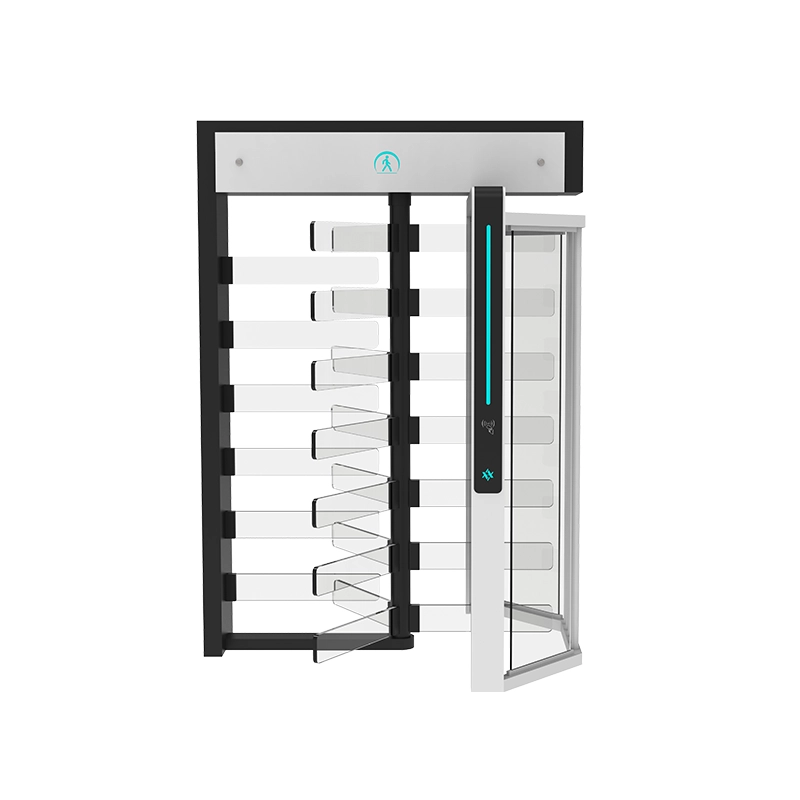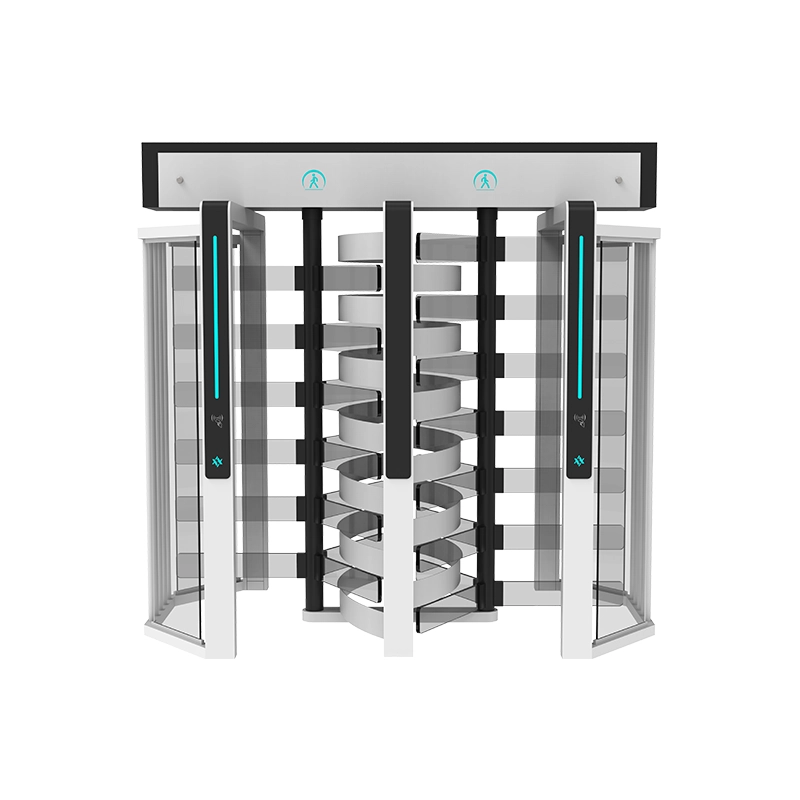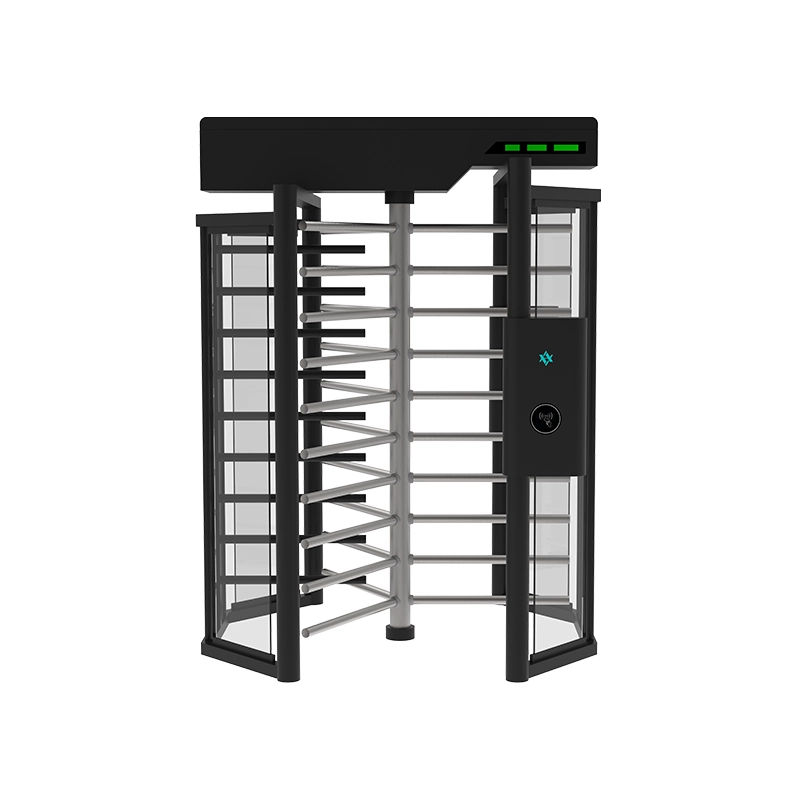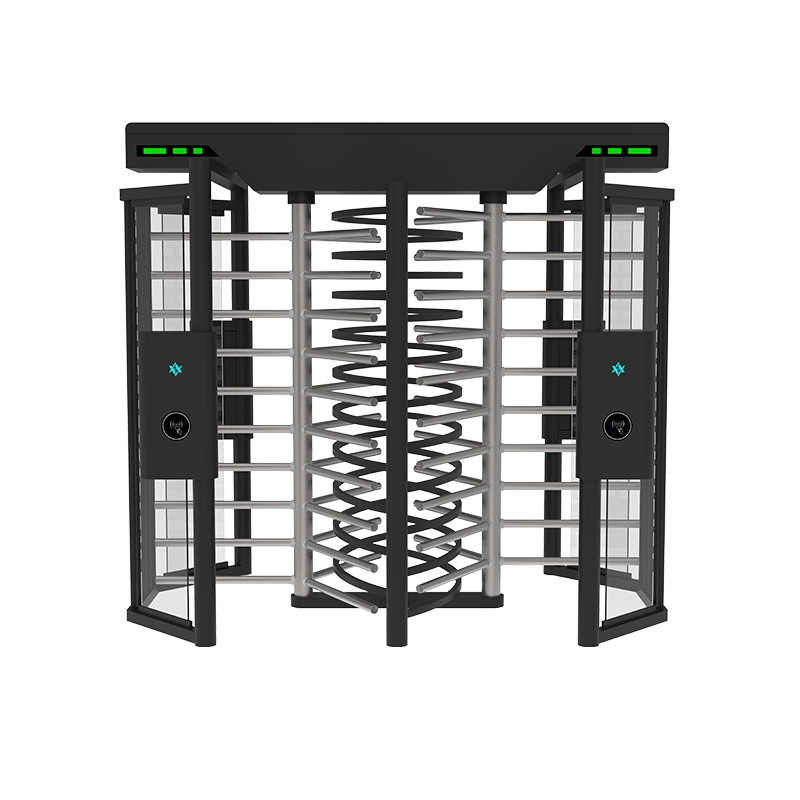

Speed Gates in High-Traffic Areas: Throughput, Lane Planning and the Benefits That Actually Matter
The case for a speed gate in a busy entrance sounds simple: they are fast. The reality is more specific. A speed gate outperforms a mechanical gate only when the whole lane — reader, wing, sensor logic and queue discipline — is tuned for volume. Installed without that thinking, the fastest gate on the market produces exactly the same queue as the cheapest one.
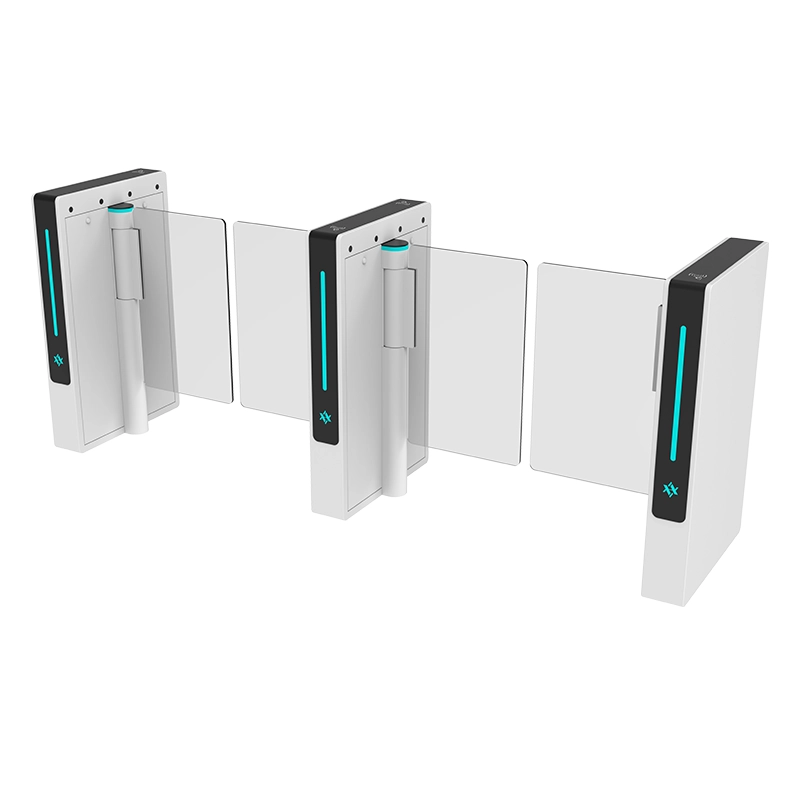
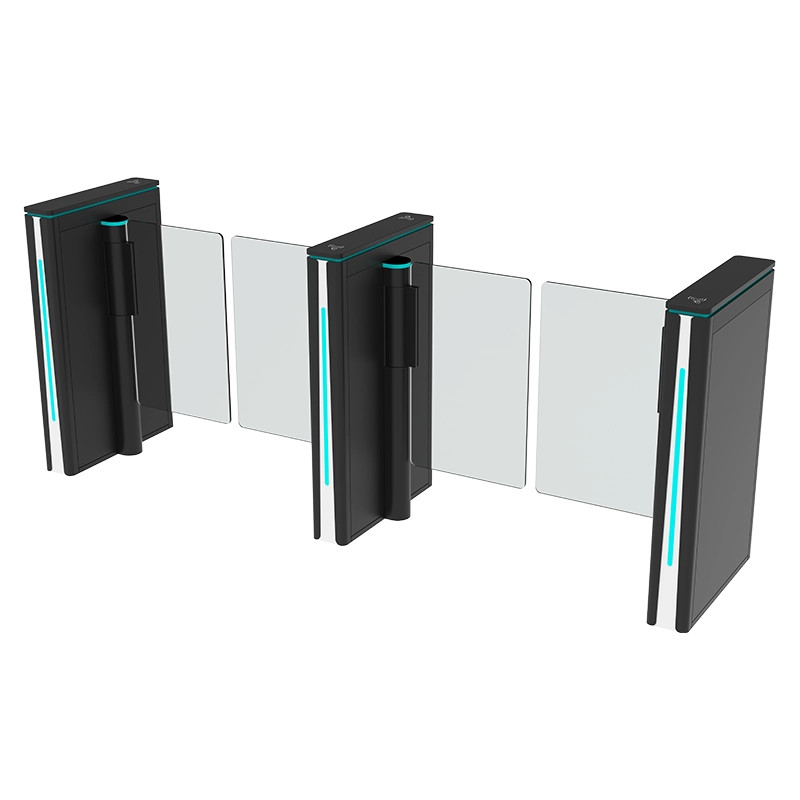
This article works through what “high traffic” means in numbers, how many lanes a given arrival rate actually needs, which features produce throughput and which merely look good on a specification sheet, and where speed gates are the wrong choice. AIPADA has manufactured speed gate turnstiles since 2014 at our 3,000 m² Dongguan plant, supplying contractors and distributors in Europe, the Middle East, Southeast Asia and South America.
What Counts as High Traffic
Design should be driven by the peak fifteen minutes, not the daily total. A useful set of reference points:
| Environment | Peak arrivals | Design pressure |
|---|---|---|
| Office tower lobby | 40–60% of headcount in a 30-minute window | Speed of the reader, not the wing |
| Factory shift change | 200–600 in 15–20 minutes | Lane count, and tolerance of dirt |
| University building | Lecture-change surges of 300–800 in 10 minutes | Bidirectional handling on one lane bank |
| Stadium or arena | Thousands within 45–60 minutes | Ticket throughput and reversible direction |
| Metro or rail | Tens of thousands per hour | Sub-second reads, MCBF, fail mode |
| Hospital main entrance | Steady plus clinic appointment surges | Accessible lane and luggage clearance |
Once arrivals exceed roughly 25 people per minute at one door, a waist-high motorised gate is the right product family, and at the upper end of the range a speed gate is usually the best of that family because the lane can be built wide and the wings cycle quickly.
Sizing the Lane Bank
Speed gate throughput per lane is typically 30–40 people per minute, measured over a sustained period with a working reader. Three qualifications matter:
- That figure assumes a healthy credential read. Where the reader takes one to two seconds to wake up, the wing cycle is irrelevant and the lane delivers far less.
- It assumes a queue feeding the lane. A single person arriving alone uses the lane at walking pace, not at the lane’s capacity.
- It assumes no anomalies. Anti-tailgating alarms, people standing in the lane and rejected credentials all subtract throughput.
A practical sizing method:
- Take the peak fifteen-minute arrival count.
- Divide by 25 (a deliberately conservative per-lane figure) to get a rough lane count.
- Add one spare lane if the bank has three or more lanes, so a single fault does not close the entrance.
- Split the bank into entry and exit. If the ratio is heavily one-sided, buy reversible lanes rather than mismatched fixed ones.
- Identify the accessible lane — normally a 900 mm lane in the same bank — rather than assuming a separate door will be added later.
| Peak arrivals in 15 min | Indicative lanes | With one accessible lane and a spare |
|---|---|---|
| 150 | 2 lanes | 3 lanes (2 standard + 1 wide) |
| 300 | 4 lanes | 5 lanes |
| 600 | 8 lanes | 9 lanes |
| 1,200 | 16 lanes | Two banks of 9, faced in opposite directions |
The Features That Actually Create Throughput
Fast reader, not fast wing
The wing cycles in 0.4–0.6 seconds either way. The reader is where seconds are lost: a card reader with a long polling interval, a QR scanner that needs the code held still, a face camera that has to search for a face. If the site’s peak matters, specify the reader for speed and test it with the actual credential population, not with the vendor’s demo card.
Normally-open mode
In this mode the wings sit retracted and the sensors count passages; the gate only closes when it detects an anomaly or a person without a valid credential. For very high-volume periods it removes the wing cycle from the critical path entirely. It is appropriate where the security requirement is monitoring rather than enforcement — staff entrances during a shift change, for example — and it should be a configurable mode, not a permanent state.
Dense sensor arrays
More beams means better separation of people, faster detection of a completed passage and fewer false tailgate alarms. This matters more at high traffic than at low traffic, because in a dense flow the gate has less time to distinguish one person from the next.
Bidirectional lane logic
At a peak that switches direction — morning inbound, evening outbound — reversible lanes let a bank serve both without doubling the lane count. Confirm the mode change is a software setting and can be scheduled, not a manual intervention.
Wide accessible lane
One 900 mm lane in the bank prevents the wheelchair, trolley and delivery traffic from disrupting the standard lanes. This is a throughput feature as much as an accessibility feature: put the awkward traffic in a lane built for it.
What Does Not Create Throughput
- A taller wing. Higher barriers look more secure and do not move people faster.
- A glass finish. Aesthetic only.
- A bigger display. Useful for guidance, irrelevant to cycle time.
- Extra alarms. Over-sensitive anti-tailgating raises false alarms in a dense queue and slows everyone down.
- More lanes than the door can receive. If the door, corridor or lift lobby behind the bank cannot absorb the flow, extra lanes only move the queue further inside the building.
The Real Benefits, Stated Honestly
1. Peak capacity without a wide bank
A speed gate lane moves 30–40 people per minute in roughly 1.5–2 m of frontage, including its cabinets. The same capacity from a mechanical gate family would need more lanes, more space and more cost. In retrofit projects where floor space is the binding constraint, this is often the deciding benefit.
2. Accessible passage inside the bank
Because the lane can be built to 900 mm, wheelchair, luggage and trolley traffic passes through the same bank as everyone else. The alternative — a separate accessible door — costs an extra controlled door, an extra reader and an extra failure point.
3. Credential flexibility as the site evolves
Speed gates consume a trigger signal, so the credential can change without changing the gate: RFID today, QR for visitors next quarter, face recognition for a new policy next year. At a busy entrance, avoiding the disruption of a gate replacement is itself a benefit.
4. Genuine anti-tailgating enforcement
A dense sensor array counts the bodies crossing the lane rather than the credentials presented. In a busy entrance this catches the single most common security failure in the building: the person who follows a colleague through the gate while holding a coffee. Our article on common gate problems covers how misconfigured anti-tailgating produces both false positives and false negatives.
5. Useful data
A speed gate bank that logs every passage produces occupancy data the building can actually use — live headcount, peak profiles, door-by-door comparison. In high-traffic buildings this is often the feature that pays for the installation, because it feeds space planning and security staffing decisions.
6. Appearance that suits a public entrance
At a hotel, museum, head office or premium retail entrance the gate line is part of the first impression. A glass speed gate bank does not read as a security checkpoint the way a cage or a bank of tripods does. That is a commercial benefit, not a security one, and it is frequently decisive.
Where Speed Gates Struggle
Three conditions where we would advise against them:
- Containment required. A speed gate is not a physical barrier. Anyone determined to climb it can. If the requirement is that no unauthorised person passes, the product is a full height turnstile — see the full height vs speed gate comparison.
- Hard outdoor environment. Optical sensors and glass wings dislike dust, rain and direct sun. Outdoor installation needs an IP-rated cabinet and a canopy, and even then a mechanical gate may be more appropriate. Our outdoor gates follow that specification.
- Very low traffic on a tight budget. A tripod turnstile credentials a quiet door for a fraction of the cost. Buying a speed gate for 50 people a day is spending on capacity that will never be used.
Making a Busy Entrance Actually Work
Hardware is only part of the problem. In our experience of high-traffic installations, these operational details decide whether the bank performs to specification:
- Reader placement. Readers must be reachable without breaking stride. A reader mounted where the user has to stop and aim converts a 0.5-second passage into three seconds.
- Signage and lane marking. Floor markings that separate queues, and clear indication of which lane is accessible, remove the hesitation that costs more throughput than any mechanical factor.
- Mode scheduling. Normally-open during shifts, credential-enforced outside them, with the change scheduled automatically rather than left to a guard.
- Staff routes. Delivery, cleaning and contractor traffic should have a defined lane so it does not appear in the main queue unannounced.
- Failure procedure. Everyone should know what happens when a lane faults — which lane to open, how to release it, and who to call. A dropped spare lane during a peak is the most expensive fault on the list.
Queueing Arithmetic: A Worked Example
Sizing arguments are easier to settle with numbers. Consider an office tower with 900 staff, of whom 55% arrive between 08:30 and 09:00:
- Peak arrivals: 900 × 0.55 = 495 people in 30 minutes, or roughly 250 in the busiest 15 minutes.
- Naive lane count: 250 ÷ 40 (optimistic per-lane throughput) = 6.25, which suggests seven lanes. That is almost certainly too many.
- Realistic lane count: 250 ÷ 25 (design figure including reader latency and anomalies) = 10 lanes. Also too many — because nobody arrives in a perfectly even stream.
The error in both calculations is treating arrivals as uniform. Real arrivals cluster, and a bank produces its own queueing behaviour. The practical approach is to model the peak as a queue: with eight lanes at a service rate of 25 per minute per lane, the bank has a theoretical capacity of 200 people per minute, far more than the 16.7 people per minute arriving. The queue that actually forms is set by how quickly people walk to the gate and how long the reader takes — not by the wings.
What that means in design terms: eight lanes, one of them 900 mm and accessible, plus a ninth lane that can be opened at peak as a spare. The bank is deliberately over-provisioned relative to the arithmetic, because the cost of a queue at a tower entrance is paid by the client every morning, while the cost of one spare lane is paid once.
| Design factor | Effect on the queue | Priority |
|---|---|---|
| Reader wake-up and read time | Dominant. One extra second per person costs more throughput than any wing specification | Highest |
| Arrival clustering | Creates the queue that exists in reality | High |
| Lane count | Sets the ceiling capacity | High |
| Wing cycle time | Marginal once the reader is fast | Medium |
| Accessible lane provision | Prevents the awkward traffic from randomising across lanes | Medium |
| Lane width | Affects comfort and trolley traffic more than headcount | Medium |
| Interface finish and signage | Removes hesitation, which is measurable in seconds per person | Medium |
Reader Selection for Throughput
| Reader | Typical read time | Throughput comment |
|---|---|---|
| 125 kHz proximity card | Fast — contactless, no aiming | Best raw throughput for a staff population |
| 13.56 MHz / NFC card or phone | Fast to moderate | Phone credentials depend on how quickly the phone presents |
| QR / barcode, printed or screen | Moderate | Slower than a card; needs a good scanner head and clear presentation |
| Fingerprint | Moderate to slow | Placement and enrolment quality determine time per person |
| Face recognition | Fast when walking, slow when not | Excellent at a door where people walk past; needs controlled lighting and camera height |
| Ticket with barcode | Fast with a fixed scanner | Depends on the ticketing platform response, not the gate |
The design rule that follows: choose the credential population first, then select the reader for the arrival rate that population will generate. A high-throughput lane fed by a slow reader is an expensive way to build a queue.
Commissioning a High-Traffic Bank
At a busy entrance, commissioning is not a formality — it is the point at which the design either holds up or does not:
- Test with the real credentials. Not the vendor’s demo card. Include a worn card, a phone credential and a visitor pass.
- Measure the actual read time at each lane, and compare lanes. Uneven lanes produce uneven queues.
- Tune anti-tailgating. Run a queue of people through at peak pace and confirm the alarm rate. Over-sensitive settings penalise every honest user.
- Verify anti-crush with an object, not a hand: a trolley or a bag in the lane should stop the wing.
- Test the fail mode at the lane and from the fire panel.
- Run a live peak rehearsal if the site has one — 100 people through the bank in ten minutes tells you more than a day of hand testing.
- Record the settings lane by lane and hand them over with the installation drawings.
Sites that commission this way report far fewer first-week complaints. Sites that do not usually discover the reader latency problem on the first Monday morning, with a hundred people watching.
Frequently Asked Questions
How many people per minute can one speed gate lane handle?
Typically 30–40 with a healthy reader and a feeding queue. Treat 25 per minute as the number to design against, so the bank still works when one lane is out of service or the reader is slow.
Do speed gates need a wide lane for accessibility?
Yes. A standard lane is around 600 mm; an accessible lane is 900 mm or more. Providing one wide lane in the bank is cheaper and more reliable than a separate accessible door, and it keeps the accessible route inside the same controlled line.
Can speed gates run in normally-open mode during peaks?
On models that support it, yes. The wings retract and the sensors count. It removes the wing cycle from the critical path and is appropriate where the requirement during that period is monitoring rather than enforcement. Make sure it can be scheduled and that it reverts automatically.
What is the most common cause of queues at a speed gate bank?
The reader, not the gate. Slow polling, a reader mounted at an awkward height, or a credential population that includes worn cards all produce queues that the gate is then blamed for. Test with the real cards before commissioning.
How do speed gates handle luggage and trolleys?
Through a wide lane, comfortably. Through a standard lane, badly — trolleys foul the sensors and slow the lane for everyone. Put that traffic in the accessible lane by design rather than allowing it to randomise across the bank.
Are speed gates suitable for outdoor stadium entrances?
Only with an IP-rated cabinet and a canopy, and in a position sheltered from driving rain and direct sun. Where that is not possible, a flap barrier in an outdoor specification is often the more durable choice.
How often do speed gates need servicing in heavy traffic?
Annually at minimum; more often where the gate runs long hours every day. The items are sensor optics, wing alignment, the wing drive mechanism and the power supply. Our speed gate maintenance guide lists the routine.
Is it better to add lanes or to add a normally-open mode?
Normally-open mode is cheaper and faster to deploy, and it removes the wing cycle from the critical path entirely. It is the right first move where the security requirement in that period is monitoring rather than enforcement. Adding lanes is the right answer when the constraint is the reader or the physical approach, because in that case an open gate does not help.
How much does a speed gate bank cost compared with flap barriers?
Speed gates carry a premium over flap barriers for the same lane count, reflecting the glass, the wing mechanism and a denser sensor array. Whether the premium is worth paying depends on the entrance: where appearance and open sight lines matter, the difference is usually justified; at a back-of-house or factory entrance where throughput and durability are the only criteria, flap barriers usually deliver the same result for less.
What happens when a lane faults during peak?
It depends entirely on preparation. A spare lane that can be opened, a documented procedure for releasing a lane manually, and a named contact with the service provider turn a fault into a short delay. Without those, one failed reader at 08:45 becomes a thirty-minute queue and a complaint to the building manager. This is the highest-return operational item on a high-traffic site.
Do we need cameras on the gate bank?
Useful but optional. The practical value is in resolving disputes and in following up anti-tailgating alarms: a passage event with a timestamp and a camera reference is far more actionable than a timestamp alone. Where privacy rules restrict imaging, be explicit about what is recorded and how it is retained.
How do we know the bank is oversized or undersized?
Look at behaviour rather than arithmetic. A queue that persists for more than a few minutes after the peak, or forms before 08:30 and does not clear until 09:15, indicates the bank is undersized for the arrival profile. Lanes that stand empty for most of the day, with a queue only in one direction, indicate a directional sizing problem rather than a capacity one.
Planning a High-Traffic Installation
Send us the peak arrival count, the direction split, whether an accessible lane is required, the credential types and a photograph or plan of the entrance, and we will return a lane layout, a configuration drawing and a quotation. AIPADA manufactures speed gate turnstiles and the complete range of pedestrian access gates at our 3,000 m² Dongguan facility, with a capacity of 3,000 units per month. Every gate ships CE-certified with a two-year warranty, minimum order quantity of one unit, and a typical lead time of 7–15 days; standard terms are 30% T/T with the balance against the bill of lading.
Browse the speed gate turnstile range, or read the office speed gate selection guide and the speed gate access control guide for the detail behind this article.
Prices quoted on this site are China ex-works market references for budgeting only. Request a quotation for a firm figure.