
Full Height vs Waist-High Turnstiles: Security Level, Cost and Site Requirements
The choice between a full height turnstile and a waist-high gate — a flap barrier, swing gate, speed gate or tripod — is the most consequential decision in a pedestrian access project. It changes the level of security you actually get, the throughput of every lane, the building work required, and the budget. It is also the decision most often made on price alone, which is why so many sites end up with a waist-high gate guarding a perimeter that needed a cage.
AIPADA has manufactured both families since 2014 at our Dongguan plant — full height turnstiles with rotating cage mechanisms, and waist-high flap, swing, speed and tripod gates — and supplies contractors and distributors in Europe, the Middle East, Southeast Asia and South America. This article sets out the difference honestly, including the cases where the cheaper gate is genuinely the right answer.
What “Full Height” and “Waist-High” Actually Mean
In this product family the two terms describe the physical barrier’s capability, not its aesthetics:
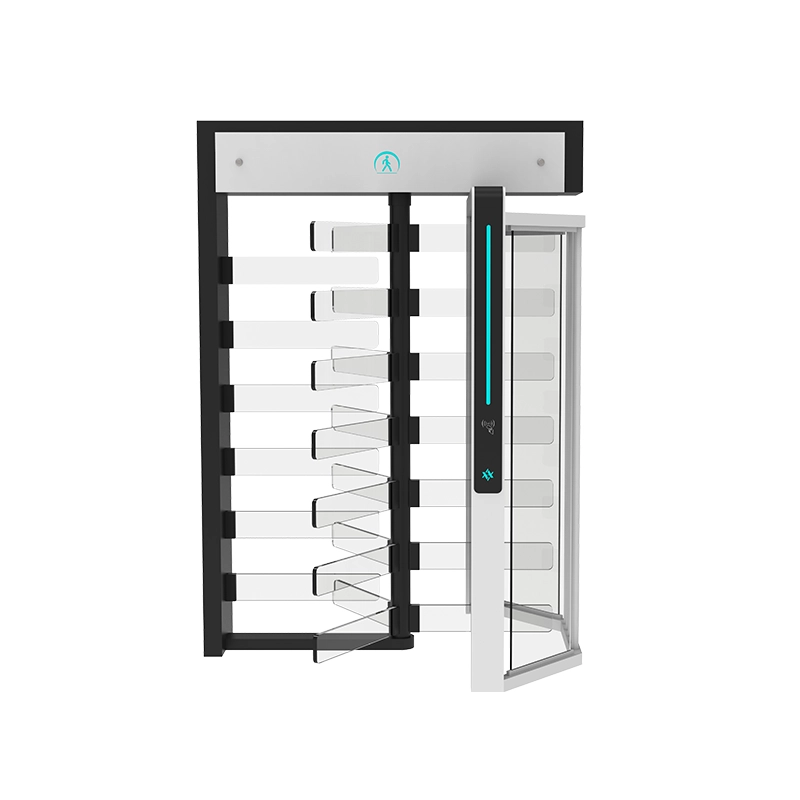
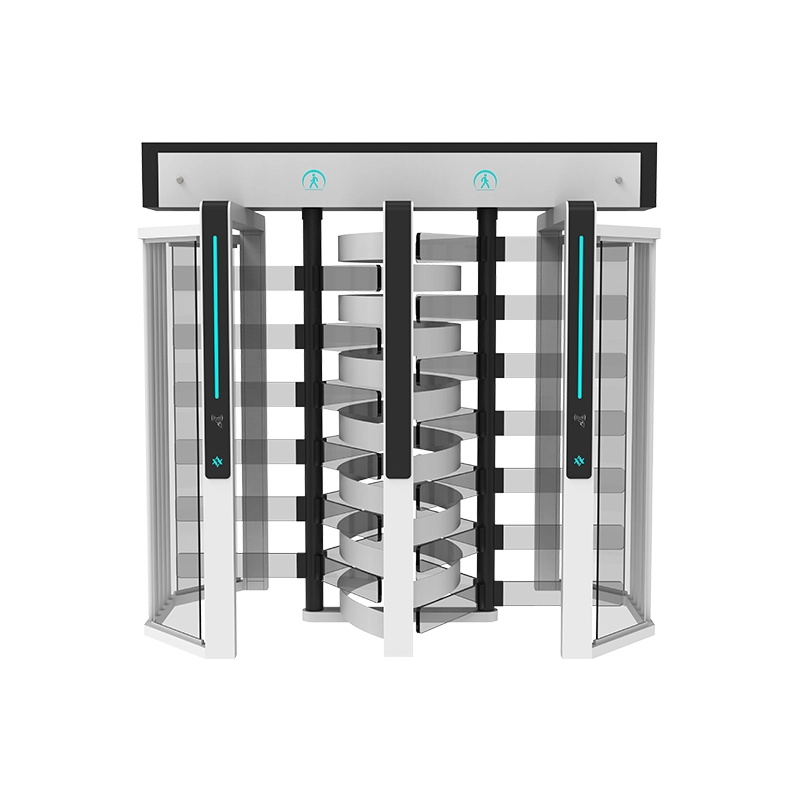
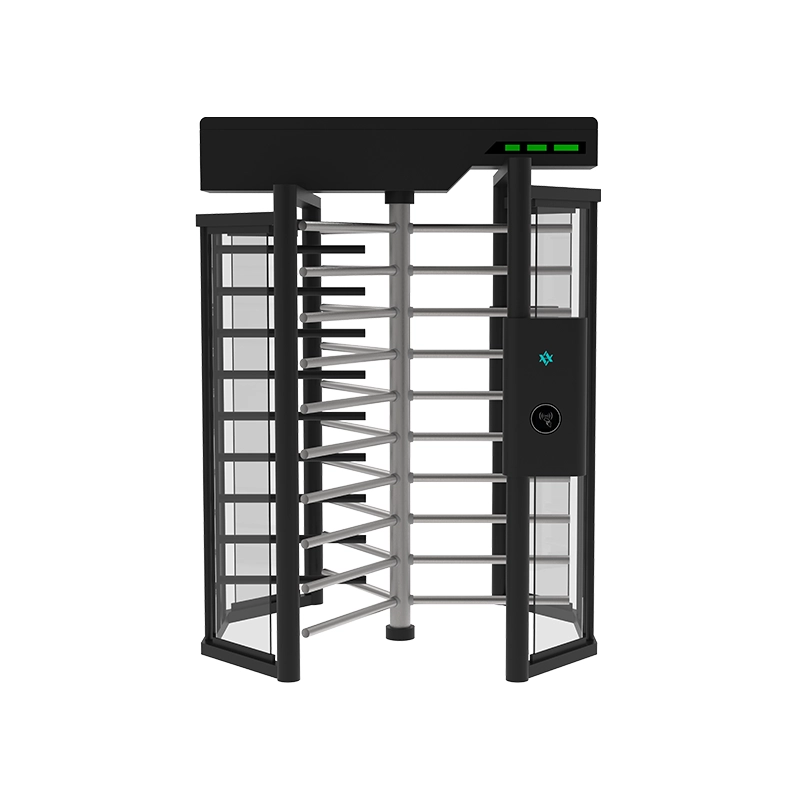
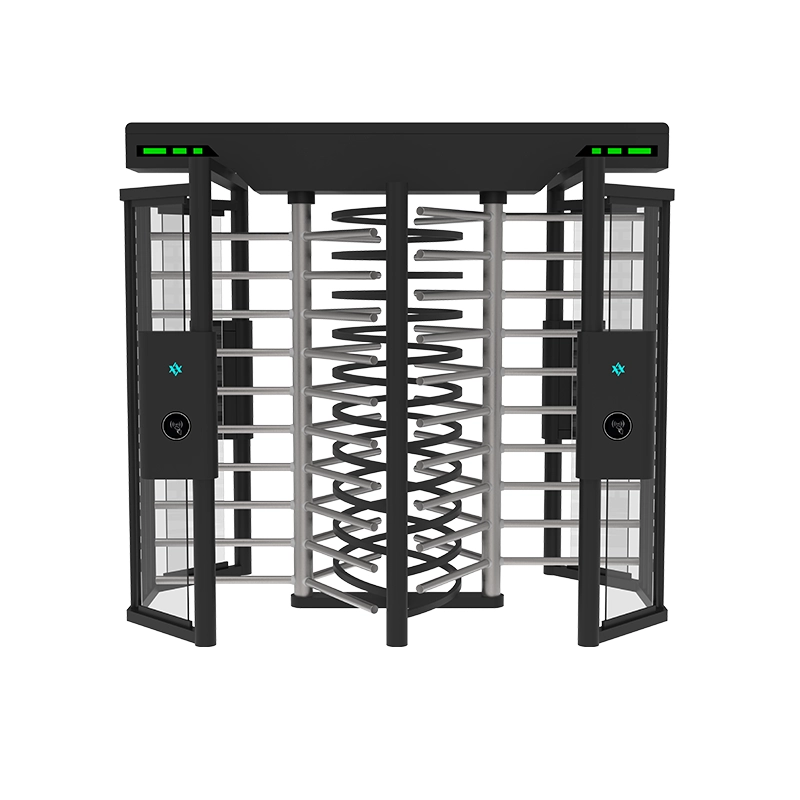
- Full height turnstile: a rotating mechanism with arms and a canopy frame that form a complete enclosure, typically 2.1–2.3 m tall. A person passes by walking into a compartment and rotating it. The gate cannot be vaulted, crawled under or pushed through without tools.
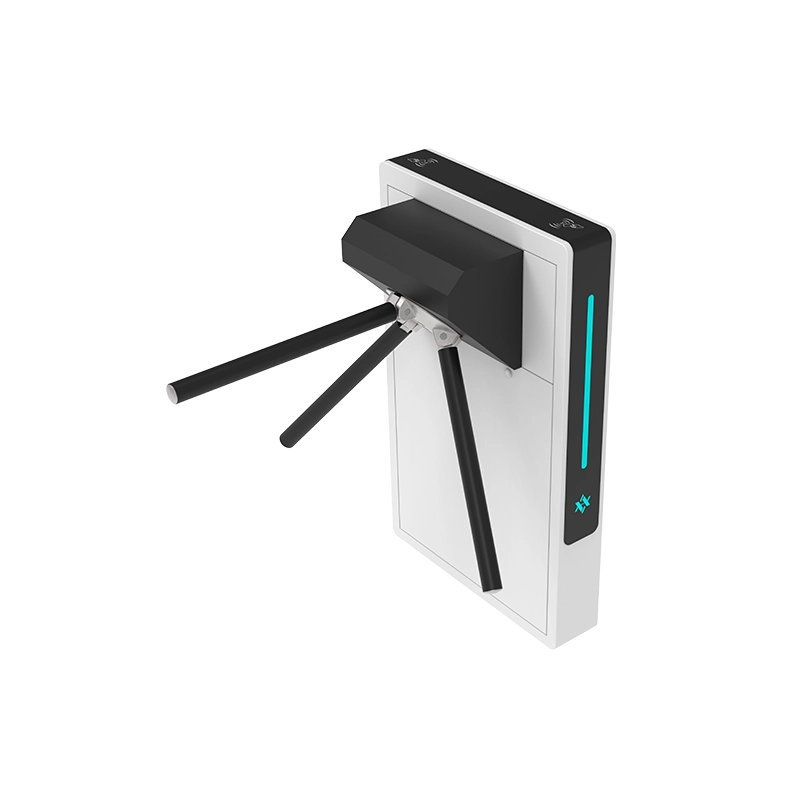
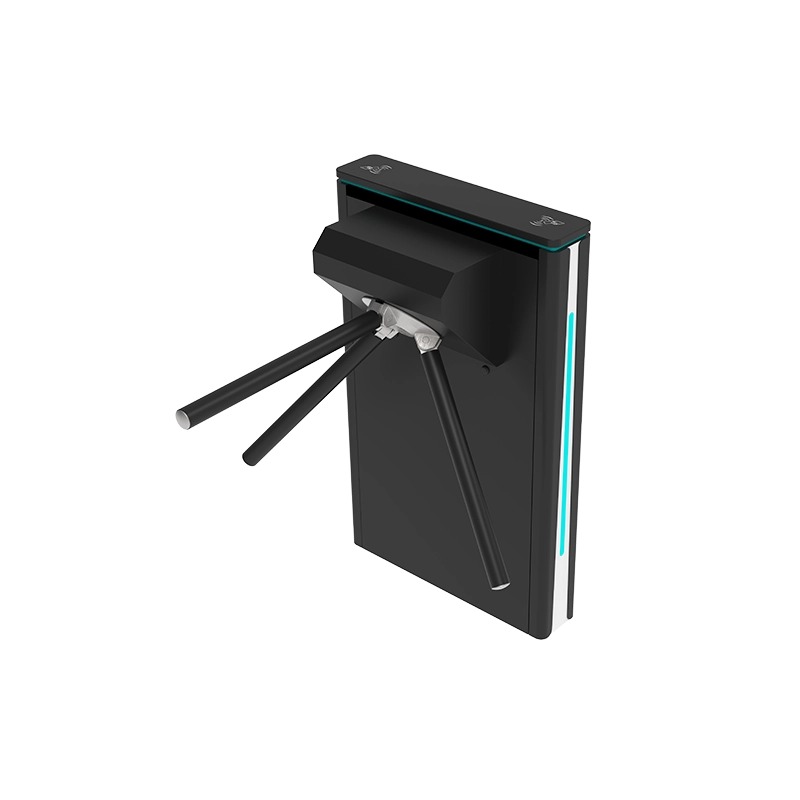
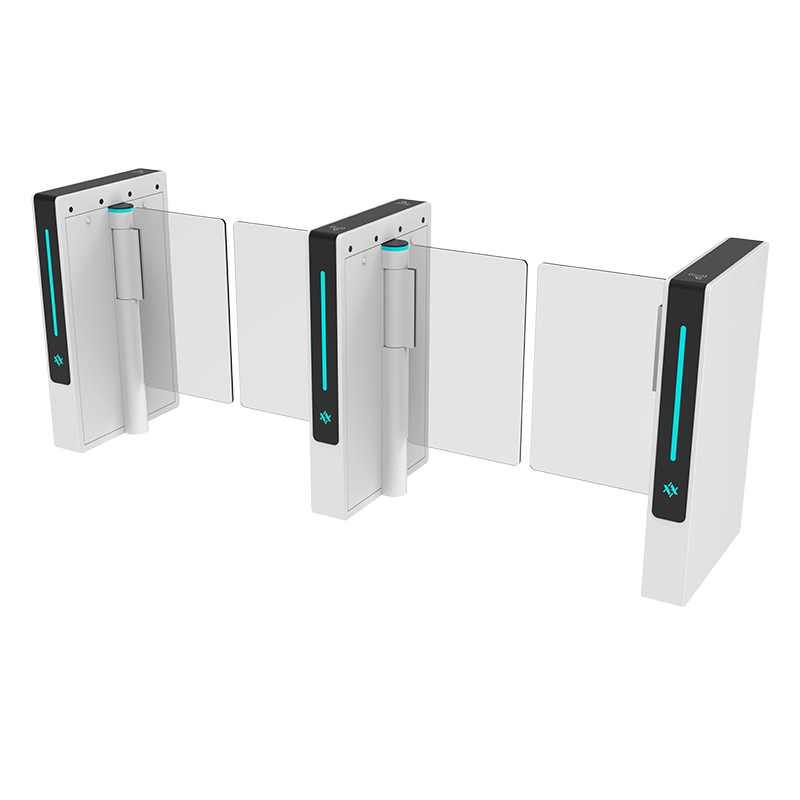
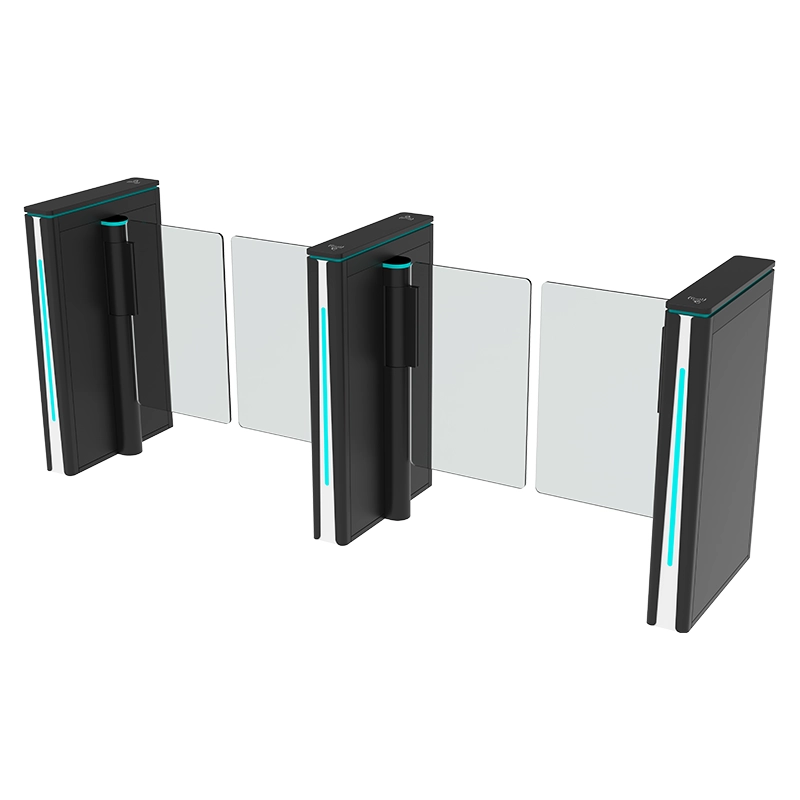
- Waist-high gate: a cabinet with wings or arms reaching roughly 0.9–1.1 m — flap barriers, swing turnstiles, speed gates, sliding turnstiles and tripod turnstiles. The barrier regulates and records passage; it does not physically contain a determined person.
That height difference is roughly one metre of steel, and it is the whole story. Everything else — sensors, readers, software, alarms — can be almost identical on both.
Security: What Each One Actually Stops
| Threat | Waist-high gate | Full height turnstile |
|---|---|---|
| Someone without a credential walking in behind a valid user | Prevented with counting sensors | Prevented by geometry — one person per rotation |
| Vaulting over the barrier | Not prevented | Prevented |
| Crawling under | Not possible on most models | Prevented |
| Pushing through by force | Wings give way under sustained force | Prevented; the mechanism resists |
| Passing a bag or item across rather than a person | Possible | Prevented by the enclosed compartment |
| Two people rotating together | Not applicable | Prevented by compartment size and lock |
| Casual unauthorised entry | Prevented | Prevented |
| Recorded audit trail of every passage | Yes | Yes |
The honest summary: a waist-high gate stops the casual and the careless, and (with counting sensors) catches the person who follows someone else through. A full height turnstile stops the determined — the person willing to climb, force or hand items over. If your security policy document says “no unauthorised person shall pass this point”, a waist-high gate does not deliver that sentence; a full height turnstile does.
Throughput: The Cost of Security
The physical constraint of a full height turnstile is the rotation. A person must enter the compartment, the mechanism must rotate, and the next person can only enter after the first has cleared. That cycle is typically 2.5–4 seconds, giving roughly 15–25 passages per minute per lane. A waist-high flap barrier or speed gate can sustain 30–40 per minute.
For a factory shift change of 600 people arriving within 20 minutes, that difference is real:
- Full height at 20 people/min/lane → 2 lanes is 40/min, which clears 600 people in about 15 minutes — workable but tight, and it assumes no lane faults.
- Waist-high at 35/min/lane → 2 lanes is 70/min, clearing the same 600 in under 9 minutes.
The usual resolution is a hybrid: full height turnstiles at the perimeter where security is non-negotiable, and waist-high gates at the internal doors where speed matters more. Larger sites often run several full-height lanes in parallel rather than accepting a slow single lane.
Space and Structural Requirements
Full height turnstile
- Footprint per lane: roughly 1.2–1.5 m wide and 1.4–1.6 m deep, plus clearance for the rotation envelope on both sides.
- Foundation: normally bolted to a prepared concrete slab with cast-in or chemical anchors. The unit is tall and heavy, and wind load on the frame matters on outdoor installations.
- Routing: outdoor units need drainage consideration at the base; indoor units need headroom for the frame.
- Visual impact: significant. A full height turnstile bank is a visible element of the entrance design, not a piece of furniture.
Waist-high gate
- Footprint per lane: a slim flap barrier cabinet can be as little as 130 mm wide and 980 mm tall, so a three-lane bank fits in under 2 m.
- Foundation: most units bolt to a level floor with standard anchors; no civil work beyond a level surface.
- Routing: cable entry through the floor or skirting; power and signal are the only services.
- Visual impact: low, and the cabinet finish can be matched to the interior.
For retrofit projects into an existing lobby, this difference frequently decides the question: if there is no slab to drill and no space to lose, a full height turnstile may not be installable at all. Our waist-height turnstile guide covers the retrofit case in detail.
Accessibility and Comfort
A full height turnstile is generally not an accessible route. The compartment is sized for one walking adult, and a wheelchair, a trolley or a person with limited mobility cannot use it comfortably. Standard practice is to provide a separate accessible lane — an automatic swing gate, a wide swing turnstile or a powered door controlled by the same access system — beside the full height bank, so both the security requirement and the accessibility requirement are met. Our accessible entrance guide sets out the lane dimensions that route usually needs.
Waist-high gates with a 900 mm clear lane pass wheelchairs, luggage and cleaning equipment without a separate door, which is one reason they dominate office and retail entrances where accessibility is a design priority rather than an afterthought.
Cost: Purchase, Installation and Lifetime
| Cost element | Waist-high (flap barrier) | Full height turnstile |
|---|---|---|
| Unit cost per lane | Lower | Higher — more steel, heavier mechanism, larger motor |
| Foundation / civil work | Minimal | Slab preparation, anchors, sometimes drainage |
| Installation labour | Low — most sites fit one lane in a day | Higher — heavier units, more alignment work |
| Accessible lane required | Not usually — one lane can be widened | Yes, normally a separate door or gate |
| Service parts | Wings, sensors, PSU, drive bearing | Rotation mechanism, lock, bearings |
| Service frequency | Annual in light use | Annual minimum; quarterly in heavy use |
| Cost per unit of security | Good for low-threat sites | Good where containment is a genuine requirement |
Because the full height turnstile is a heavier product with more steel and a bigger drive, the per-lane premium is substantial. The right way to judge it is not “how much more does it cost” but “what does a breach cost”. For a data centre, a cash-handling area, a stadium back-of-house or a chemical plant, one prevented intrusion pays for the difference many times over. For an office lobby where the gate’s job is to regulate employee flow and produce a sign-in record, it does not.
Where Each Type Wins
Choose a full height turnstile when…
- The gate is part of a genuine perimeter and a breach has real consequences — data halls, cash rooms, utilities, correctional and secure facilities.
- Items must not be passed across the barrier (contraband, samples, stock).
- The site is industrial and the gate may have to tolerate rough handling and weather; the mechanism is more tolerant of abuse than light wings.
- You need an unmistakable visual deterrent as part of the security statement.
- Throughput is modest — staff entrances, shift doors, back-of-house.
Choose a waist-high gate when…
- The entrance is public-facing and appearance matters — hotel, office tower, showroom, museum.
- Traffic is high and throughput is a service-quality issue.
- An accessible route must pass through the gate line.
- Luggage, trolleys or deliveries share the lane.
- The gate needs credential flexibility — tickets, QR codes, face recognition, membership systems — which motorised waist-high gates handle best.
- The building is a retrofit and there is no structural slab available.
The Hybrid Layout Most Projects End Up With
In practice a large site usually deploys both families:
| Zone | Gate | Reasoning |
|---|---|---|
| Main lobby / reception | Flap barrier or speed gate | High throughput, aesthetics, accessible lane, visitor credentialing |
| Staff perimeter door | Full height turnstile | Containment; moderate traffic; abuse-tolerant |
| Back-of-house / plant | Full height turnstile | Stops item passing and vaulting |
| Accessible entrance | Swing turnstile or automatic door | Clear width for wheelchairs and trolleys |
| Server room / strong room | Full height turnstile, often interlocked | Two-person or two-factor control |
All of these can sit on a single access control platform: one panel holds the policy, each lane receives a release signal and returns a passage event, and the fail mode is set per lane to suit its fire strategy. Our full height turnstile integration guide covers the wiring detail.
Site Survey: Seven Questions to Answer Before You Choose
Most specification errors in this product family are decided by facts that were available at the site visit and never written down. Ask these seven questions before selecting a gate:
- What is the peak arrival count and in what window? Not the daily total. A shift that arrives in twenty minutes needs a different answer from one that trickles in over two hours.
- Is the gate the perimeter, or is it inside the perimeter? If it is the perimeter and a breach matters, containment products are in scope. If it is an internal door, they are not.
- Must an accessible route pass through the gate line? If yes, a full height turnstile bank needs a separate door beside it — which is a lane, a reader and a cost line.
- Is there a structural slab to fix into? A full height turnstile is heavy and tall; a suspended floor or a raised access floor needs engineering, not an anchor kit.
- What is the environment? Indoors, outdoors, sheltered, dusty, wet, coastal, wash-down. Each answer removes certain products from the shortlist.
- What credential will be used now, and in three years? A hardware family that cannot accept the next credential becomes a replacement project.
- What does the fire strategy require of the lane? Fail-open or fail-locked, and in which direction. This is a wiring decision that is expensive to change later.
Seven answers turn an ambiguous brief into a shortlist. In our experience, projects that skip this step end up paying for it either in over-specification — a cage where a waist-high gate would do — or in under-specification, which is worse.
Installation Sequence for Each Type
| Stage | Full height turnstile | Waist-high gate |
|---|---|---|
| Before delivery | Confirm slab, anchors, cast-in conduits, headroom | Confirm level floor, cable route through floor or skirting |
| Day 1 | Position frames, set alignment across lanes, drill and anchor | Set cabinet positions, align lane width, anchor |
| Day 1–2 | Assemble cage mechanism, commission rotation and lock | Fit wings, commission wing cycle and sensor alignment |
| Day 2 | Wire reader, controller and fire interface | Wire reader, controller and fire interface |
| Commissioning | Rotation cycle, lock, fail mode, fire test, event logging | Passage confirmation, anti-tailgating, anti-crush, fail mode, fire test |
| Handover | Settings record, service interval, spare parts list | Settings record, service interval, spare parts list |
The practical difference is weight and tolerance: a waist-high bank is usually a small crew and a day, whereas a full height installation is a lifting operation with more alignment work, because the frames have to be square to each other across the bank or the lanes will feel different to walk through.
Lifecycle Cost Over Ten Years
| Year | Full height turnstile | Waist-high gate |
|---|---|---|
| 1 | Purchase, civil work, installation, commissioning | Purchase, installation, commissioning |
| 1–3 | Annual service: lock, bearings, frame fixings | Annual service: sensors, wings, PSU check |
| 3–5 | Possible power supply or reader replacement | Possible PSU replacement; wing damage if the environment is rough |
| 5–7 | Mechanism wear items; occasional controller replacement | Wing or sensor replacement in heavy use; drive bearing |
| 7–10 | Frame typically still serviceable; electronics renewed once or twice | Cabinet and frame normally serviceable; electronics renewed |
Across a decade the dominant cost lines are electronics renewal, which both families incur, and — for the waist-high gate — impact damage to wings, which is environment-dependent rather than universal. The full height turnstile wins on durability and loses on installation cost and lane efficiency; the arithmetic has to be run for the specific site rather than assumed.
Frequently Asked Questions
Is a full height turnstile always more secure than a waist-high gate?
In physical terms, yes — it cannot be vaulted or forced by hand, and items cannot be passed over it. But security is a system. A full height turnstile with a tailgating-prone procedure, a shared card or an unlocked adjacent door provides less real protection than a well-configured flap barrier. The gate sets the ceiling; the operating procedure determines what you actually get.
How many full height lanes do I need?
Divide your peak-arrival count by roughly 20 people per lane per minute, then add a spare lane so a single fault does not close the site. A 400-person shift arriving in 20 minutes needs 1 lane by arithmetic and 2 lanes in practice.
Can a full height turnstile be used outdoors?
Yes, and it is often the better choice outdoors because the mechanism tolerates weather and abuse better than light wings. Specify a galvanised or stainless finish suited to the local climate, plan drainage at the base, and consider wind loading on the frame for exposed positions.
Do full height turnstiles work without power?
Many are available with a mechanical or semi-automatic mode so the lane can still be rotated in a power failure, and with battery backup for the credential reader. Confirm the fail behaviour with the supplier, because “stuck in the locked position” during an evacuation is a life-safety problem.
What is the realistic service interval?
Annually for a light-duty staff entrance; quarterly where the gate sees hundreds of rotations a day or sits outdoors. The items that matter are the rotation lock, the bearings and the frame fixings. Our full height turnstile maintenance guide lists the checks.
Which one should a factory choose for a shift-change entrance?
If the entrance is inside the perimeter and the purpose is attendance and flow control, a multi-lane waist-high gate bank will clear a shift faster and cost less. If the entrance is the perimeter itself and the risk is unauthorised entry, use full height turnstiles and accept the slower rotation, adding lanes to compensate.
Comparing Turnstile Families Side by Side
| Attribute | Full height | Flap barrier | Swing turnstile | Tripod | Speed gate |
|---|---|---|---|---|---|
| Barrier height | 2.1–2.3 m | ~1.0 m | ~1.0 m | ~1.0 m | ~1.0–1.6 m |
| Vault resistant | Yes | No | No | No | No |
| Throughput/lane | 15–25/min | 30–40/min | 30–40/min | 20–30/min | 30–40/min |
| Accessible | Rarely | With 900 mm lane | Yes | No | With wide lane |
| Outdoor tolerance | High | Medium with IP spec | Medium | High | Medium |
| Relative cost | Highest | Mid | Mid–high | Lowest | High |
Can a full height turnstile be installed inside an existing building?
It can, subject to two conditions: a structural floor to anchor into, and the space to lose. Because the frames are tall and the units are heavy, a raised access floor or a lightweight mezzanine needs engineering input before the anchors go in, and the accessible route usually has to be created beside the bank. In practice this is why retrofits more often choose a waist-high gate.
Do full height turnstiles need to be interlocked?
Not as standard, but they can be. An interlocked vestibule — two lanes in series where the second releases only after the first closes — is used at data halls, strong rooms and high-value stock areas. The interlocking is a controller function, and it depends on reliable passage confirmation from both gates.
What is the realistic lead time for a multi-lane installation?
Manufacturing is typically a two-week cycle for standard finishes, with the site programme usually driven by civil works and the access control vendor’s availability rather than by the gates. What delays projects in our experience is a late change to lane count or finish, because both change the tooling and the paperwork rather than just the order quantity.
Should we buy both types from the same supplier?
It simplifies integration, spares and service, and it means one party is accountable for the mixed installation working as a whole. Where budgets force a split, keep the access control platform common and be explicit about which party owns the interface between the two gate types.
What documentation should come with the gates?
CE certification, a wiring diagram with terminal definitions, the configuration parameters as built, the service interval and the spare parts list. Ask for all five in the tender. Suppliers who cannot provide them will also struggle to support you in year three, which is when it matters.
Specifying the Right Gate
Whichever family you choose, a supplier can only quote accurately if the enquiry states: lane count and direction split; required throughput at peak; whether an accessible route passes the gate; indoor or outdoor exposure; credential types; the fail mode required by fire regulations; and the access control platform in use. With those seven items a configuration and a price follow quickly — without them, any quotation is guesswork.
AIPADA manufactures full height turnstiles and the complete range of waist-high pedestrian gates at our 3,000 m² Dongguan facility, with capacity for 3,000 units per month. All products ship CE-certified with a two-year warranty, minimum order quantity of one unit and a typical lead time of 7–15 days. Browse the full height turnstile range, or read what a full height turnstile is and why sites use one. Prices quoted are China ex-works market references for budgeting; request a quotation for a firm figure.