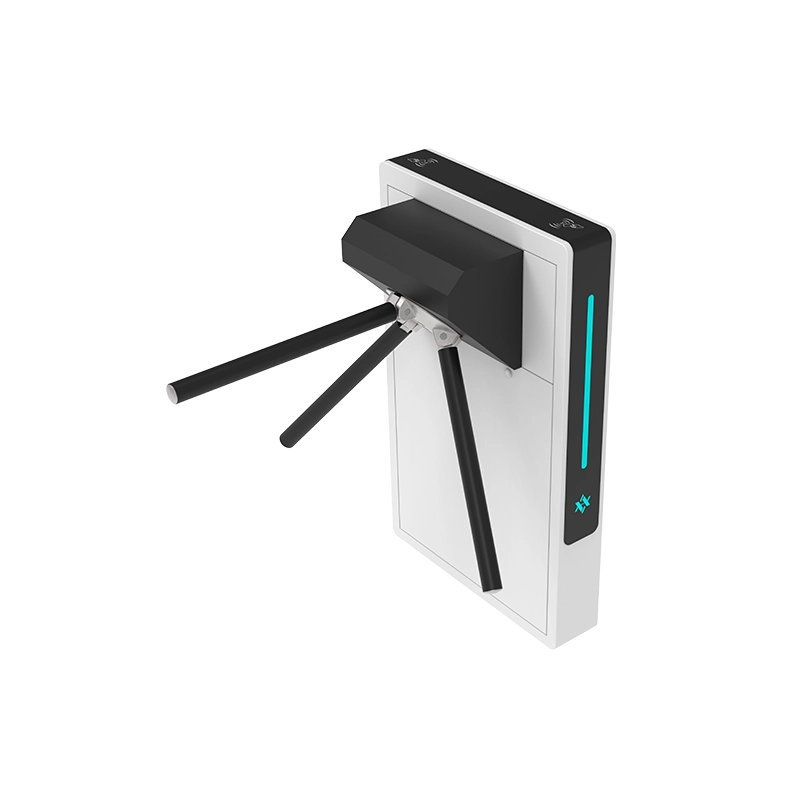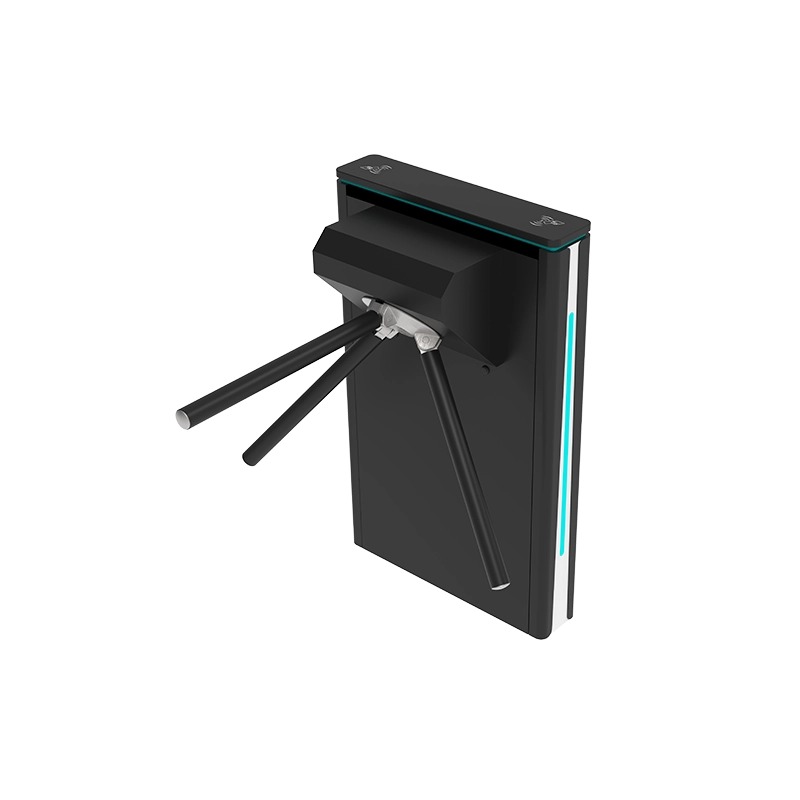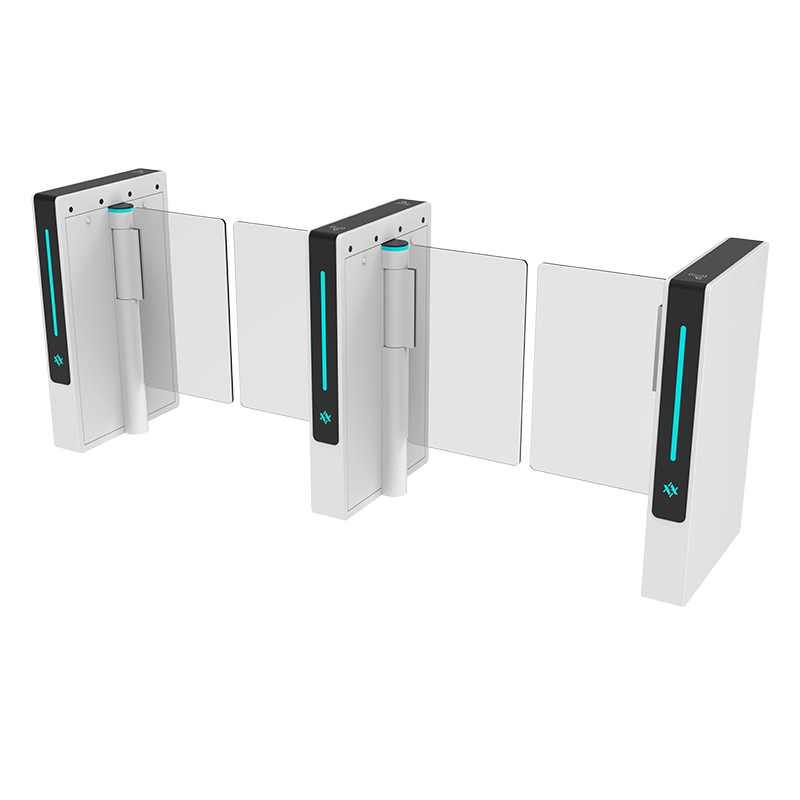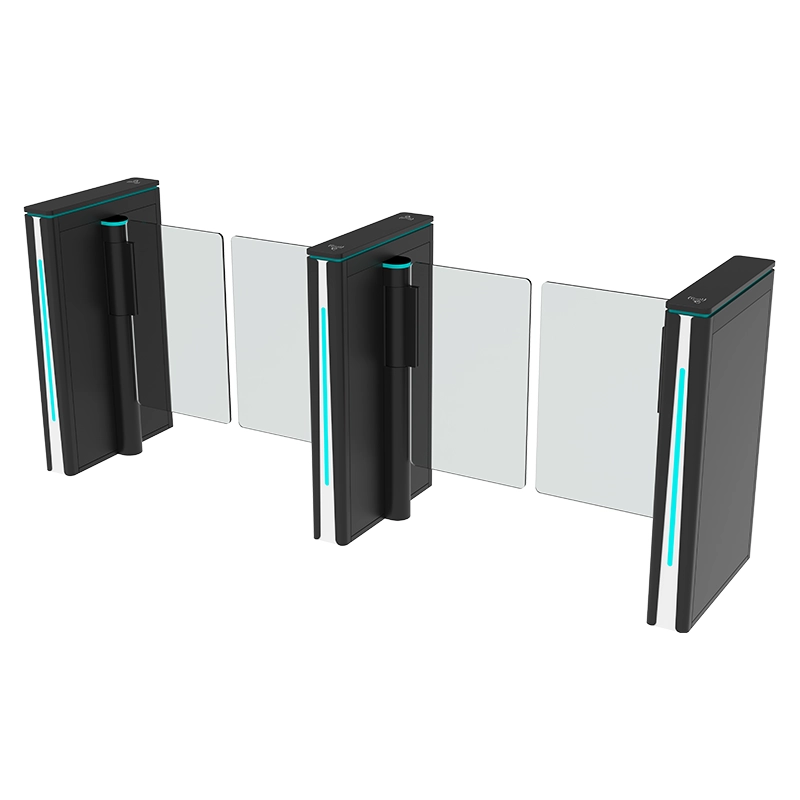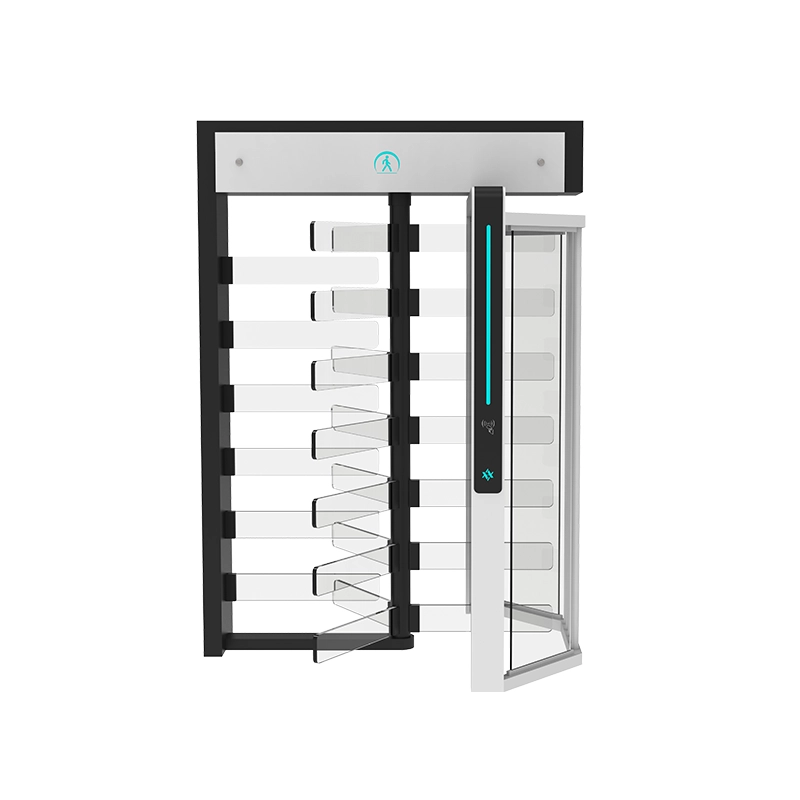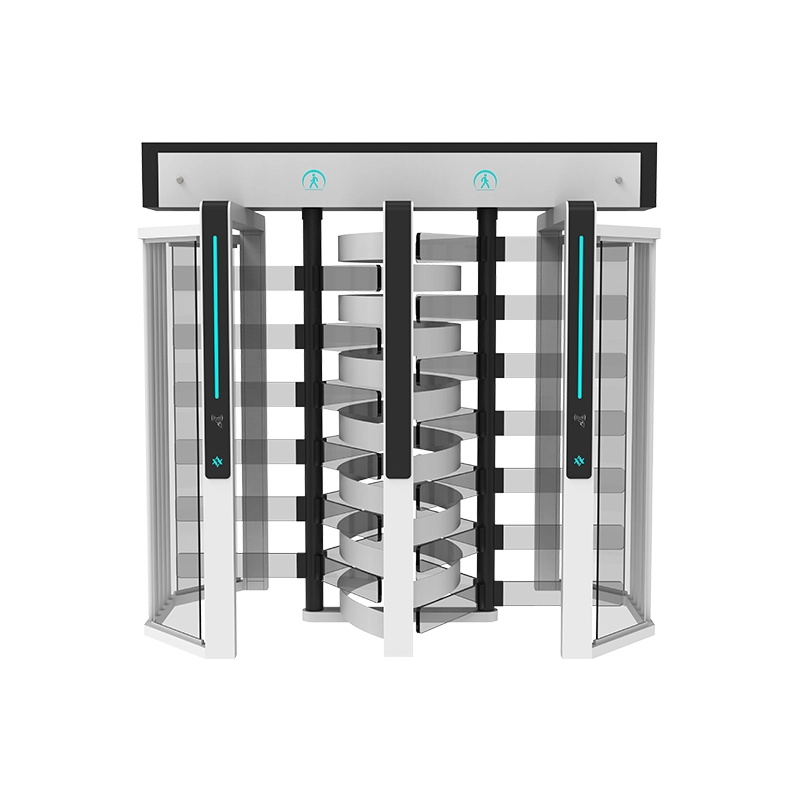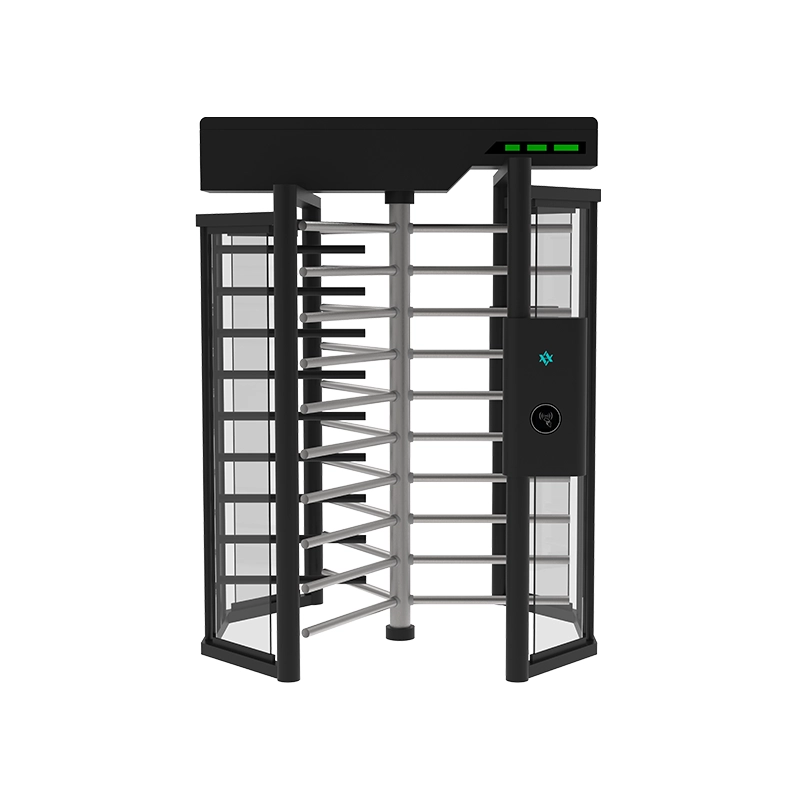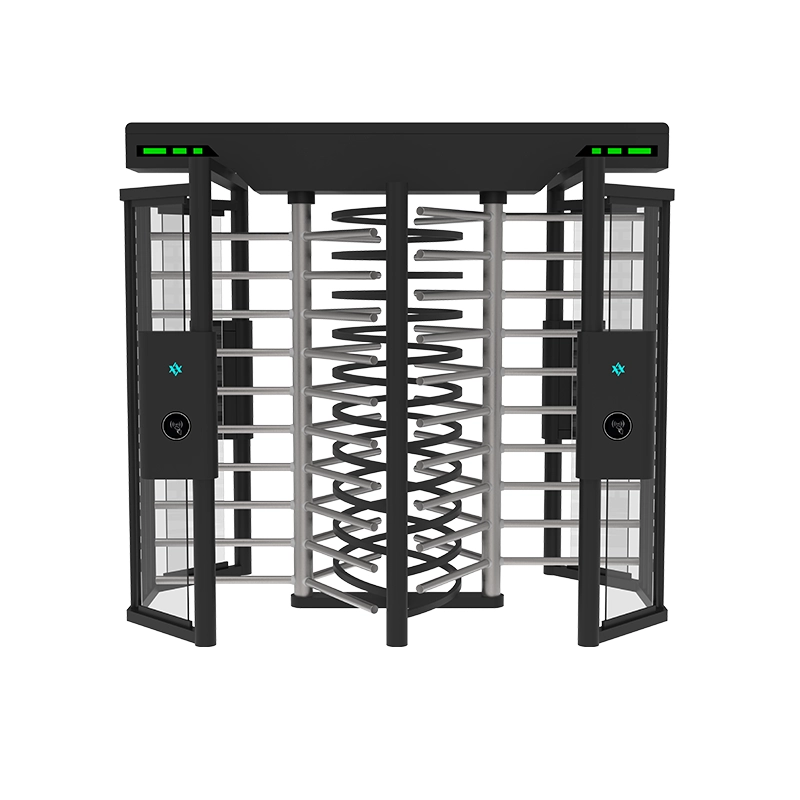

Shortlisting a turnstile gate manufacturer is a sourcing problem disguised as a product problem. The category names are standardized — speed gate, flap barrier, swing barrier, tripod — so two quotations can look nearly identical while the companies behind them operate at completely different levels. One may build its own mechanisms and hold traceable test documentation; the other may buy finished units from an unknown upstream factory and forward your technical questions to someone it cannot name.
This guide covers how to vet a turnstile manufacturer, verify the certifications you are shown, and establish what OEM customization realistically includes.
What a Turnstile Manufacturer Actually Does
A turnstile is not a cabinet with a door in it. It is a coordinated electromechanical product with three layers, and a company’s real capability shows up in which of them it controls.
The cabinet is sheet metal forming the frame, lid, side panels, and access doors — welding, surface treatment, and the tolerances that decide whether panels still align after installation. The drive and mechanism is the motor, gearbox or belt drive, clutch assembly, and linkage that moves the barrier panels; this layer produces most field failures, because a worn mechanism cannot be fixed by firmware. The control layer is the mainboard, sensor array, power supply, indicator boards, and firmware.
A genuine manufacturer designs or at minimum specifies all three layers and can explain how they interact. A trading operation typically controls none of them.
In-House Production vs. Assembly and Rebadging
Most turnstile sellers describe themselves as factories. What matters is where fabrication and mechanism assembly physically happen, and who holds the engineering drawings.
An in-house manufacturer cuts, bends, and welds its own cabinet components, assembles the drive mechanism, loads firmware, and can issue a revised drawing if your lane width changes by 50 mm. An assembly operation buys pre-formed cabinets and purchased mechanisms and controls only final build and packaging. A rebadging operation buys complete units, applies a logo, and resells them.
None of these is automatically disqualified — a small integrator that rebadges reliable equipment and services it well is a legitimate partner. The problem is that rebadging is presented as manufacturing, so you pay for a margin chain you did not know existed and every technical question gains a translation step. The practical test: ask for a video of the mechanism being assembled and for the part numbers used. A manufacturer answers in minutes; an intermediary deflects with photos of finished products.
What Separates an Engineering Manufacturer from a Trading Company
Drawings. An engineering manufacturer keeps its own CAD files and issues dimension drawings, foundation plans, lane layouts, and wiring diagrams under a project reference. A trader forwards generic PDFs its upstream supplier publishes, so every buyer receives the same file.
Firmware access. Ask who writes the control firmware and whether passage logic and timing can be changed. If the answer is “the board supplier handles it,” you have found the boundary of that company’s engineering control.
Mechanism sourcing. Motors and gearboxes are often bought from specialized component makers, which is normal. What matters is the brand and model of the drive unit and whether replacements are stocked. A manufacturer answers immediately because it is a selling point; an intermediary usually does not know.
Failure honesty. Ask what tends to break on the supplier’s own product within three years. A company that engineers what it sells names specific wear items — sensor windows, clutch parts, power supplies — and already has a spares plan.
If you are still selecting product types before evaluating vendors, the overview of the working principle and types of turnstiles explains how these layers differ across speed gates, flap barriers, and swing barriers.
The 10-Point Turnstile Manufacturer Vetting Checklist
Score every candidate against the same ten points and request the evidence column in writing before discussing pricing. A vendor that cannot supply evidence for six or more rows is not a qualified candidate, regardless of price.

| # | Vetting point | Evidence to request | Warning sign |
|---|---|---|---|
| 1 | Factory audit | Business license and a workshop video call showing fabrication, assembly, and test areas | Address resolves to an office building; stock photos reused across many sellers |
| 2 | Mechanism sourcing | Brand and model of motor and drive unit; in-house mechanism assembly; rated duty cycle | “Industrial grade” with no model number; refusal to name the component maker |
| 3 | Verifiable certifications | Certificate numbers, issuing body, and scope — not just a scanned image | Number cropped out, expired dates, or scope naming a different product category |
| 4 | Test reports | Report number, laboratory, standards applied, and the exact model tested | Report covers a different model than the one quoted |
| 5 | OEM and ODM capability | Which items are customizable, MOQ per change, added lead time per change | Everything customizable with no MOQ, tooling cost, or schedule impact |
| 6 | Spare parts policy | Three-year spares list, unit prices, stock status, urgent shipping method | No spares list; parts quoted only as “contact us after the sale” |
| 7 | Warranty terms | Written statement: duration, start date, covered and excluded items, freight responsibility | Verbal warranty claims, or exclusions that quietly cover the mechanism |
| 8 | Communication quality | Named technical contact and response time on engineering questions before purchase | Replies only after pricing is raised; sales and technical staff give conflicting specs |
| 9 | Export experience | Destinations by region, familiarity with your voltage and documents, packing method | No export references and no knowledge of your market’s requirements |
| 10 | References | Two or three comparable projects with permission to contact the installer | Only logo walls or unrelated installations |
Running the Factory Audit Remotely
Most overseas buyers cannot visit a factory before ordering, which makes a scheduled video call the highest-value thirty minutes in the sourcing process. Ask to see three areas in sequence: sheet metal fabrication, the mechanism assembly bench, and the testing bay where finished units are powered up. Watch whether the camera operator knows the workshop, whether units appear in various stages of assembly rather than only finished, and whether the person answering technical questions stands near the line or in an office. Then ask them to open the access door on a unit in progress and describe the drive assembly.
Mechanism Sourcing: The Question Most Buyers Forget
Barrier mechanisms are the highest-wear component in any turnstile and the part most likely to be substituted silently between your sample and your production batch. When you approve a sample, record the drive unit’s brand, model, and rated duty cycle in the purchase order as a controlled specification, and require any later substitution to be disclosed in writing.
Spare Parts and References: The Long-Term Test
Purchase price is a one-time number; spare parts availability is a recurring one. Ask for the recommended spares list for the first three years with unit prices attached, and which items are stocked versus made to order. A manufacturer that has thought about this answers with a table; a reseller answers with a promise.
For references, ask for two projects of similar scale in your region, then contact the installer rather than the end client. Installers will say candidly whether drawings matched the delivered equipment and how quickly spares arrived after a failure.
Turnstile Certifications: What CE, CMA, and CNAS Actually Mean
Certification is where buyers are most often misled — usually not through forgery, but through ambiguity. Three different kinds of document get called “certification,” and they prove three different things.
The Difference Between a Certificate and a Test Report
A CE certificate is a manufacturer’s declaration that a product conforms to the applicable EU directives and standards. For machinery this generally means a Declaration of Conformity supported by technical documentation and, where applicable, testing to harmonized standards. A laboratory test report is evidence supporting that declaration for the specific model tested.
A CMA mark indicates that a Chinese testing laboratory has met the qualification requirements of China’s national metrology authority and may issue legally valid test reports. A CNAS accreditation indicates the laboratory has been assessed against ISO/IEC 17025 and that its reports are recognized under international mutual recognition arrangements. Both are statements about the laboratory, not the product.
The consequence matters: a CMA/CNAS report is only as strong as the model it names. A report covering a flap barrier does not automatically cover a speed gate or a different cabinet size in the same series, so check the model designation on the report against the one on your quotation.
| Document | What it actually proves | What it does not prove | How to verify it |
|---|---|---|---|
| CE certificate / Declaration of Conformity | The manufacturer declares conformity with applicable EU directives; the supporting report shows the tested model met the cited standards | That every model in the range was tested, or that the product is approved for a specific installation | Cross-check model designation, standards cited, and issue date against your quotation |
| CMA accredited test report | The testing laboratory holds Chinese government qualification to issue statutory inspection reports | Product quality beyond the specific tests performed on the named model | Request the report number and lab name, and confirm the CMA qualification is current |
| CNAS accredited test report | The laboratory operates to ISO/IEC 17025 and its results are recognized under international mutual recognition arrangements | Product certification in a regulatory sense — CNAS accredits laboratories, not products | Confirm the tested model matches the ordered model |
| Design patent | A specific industrial design was registered and is protected where it was filed | Product performance, safety, or manufacturing quality of any kind | Check the number against the issuing IP office’s public register |
| Software copyright registration | The control firmware is registered as an original work by the stated owner | Firmware quality or security, or that the supplier can modify it | Request the certificates and separately confirm who can modify the firmware |
A Worked Example: AIPADA’s Documented Certifications
As a concrete illustration of a verifiable answer, AIPADA (Shenzhen Aipada Technology Co., Ltd.) supplies these document numbers on request:
- CE certification, certificate number ZR0119400918C. The number and issuing body can be checked against the issuing organization’s records.
- CMA and CNAS accredited test report, report number UCT1648D35. This report covers a flap barrier model and should be read as evidence for that model, not as blanket validation of the entire range.
- Design patent ZL 2021 3 0788509.8. An industrial design registration, which protects appearance rather than performance.
- Four software copyright registrations covering the company’s control software.
Two points here are worth stating plainly. First, the test report names a specific product type — if you are buying a speed gate rather than a flap barrier, ask which document applies to that model, since a supplier that waves the same report at every product has not answered your question. Second, a design patent proves nothing about quality; it only tells you whether a supplier develops its own cabinet designs or copies another manufacturer’s.
Projects requiring certifications for a different product family should confirm them separately: the flap barrier turnstile range is the line covered by the report above.
OEM and ODM: What Is Realistically Customizable
OEM and ODM are marketing terms until you establish what changes and what does not. Buyers often assume they are ordering a bespoke product when they are actually selecting from a fixed options list, and the resulting schedule and cost surprises damage the project.
What Can Be Customized
Cabinet finish and material. Brushed stainless steel (typically 304, sometimes 316 for coastal or corrosive environments) and powder-coated finishes in RAL colors are standard options, with custom colors and two-tone finishes usually available. Ask for physical samples before approving a color, since photographs distort metal tones.
Barrier panel material and height. Acrylic, tempered glass, and polycarbonate panels are common in varying thicknesses and heights. Taller panels change both the visual interception profile and the weight the mechanism must move, so the drive unit may need to be confirmed against the panel choice — a change engineering must evaluate, not sales.
Lane width. Standard pedestrian lanes typically run around 550–600 mm clear width, with accessible and luggage lanes considerably wider. Changing lane width usually changes cabinet spacing and sometimes cabinet depth, and should come with a revised layout drawing.
Branding. Logo placement, custom indicator graphics, nameplates, and packaging are the most common OEM requests. For wholesalers building a private label, these are usually achievable with modest printing costs and no mechanism changes.
Firmware features. Passage timing, normally-open versus normally-closed defaults, alarm tones, indicator logic, direction modes, and input/output behaviors can often be adjusted within existing firmware. Whether a new function can be added depends on whether the supplier owns the firmware source.
Reader and biometric integration. Mounting cutouts, brackets, internal power provisioning, and cable paths can be prepared for third-party RFID readers, QR scanners, and facial recognition terminals. This needs accurate device drawings from you and must be confirmed before production rather than retrofitted on site.
What Cannot Be Customized
Some specifications are effectively fixed, and a supplier that agrees to all of them without hesitation is either inexperienced or planning to deliver something different. You cannot change opening or closing speed beyond the drive system’s physical limits. You cannot make a slim speed gate perform as a full-height security barrier — the two serve different threat models. You cannot obtain safety certification for a configuration that was never tested, or compress a customization lead time to match stock when new tooling is involved. And you cannot have an accessible lane that is also narrow — a common conflict.
How OEM Projects Are Quoted and Scheduled
A credible OEM quotation separates three numbers: base unit price, per-unit customization cost, and one-time engineering or tooling cost. It states added lead time in days for each change, because a logo print may add two days while a new panel size could add two weeks. It also states the minimum order quantity for the customized configuration, which may exceed the MOQ for standard units.

Ask for a first-article approval step on any OEM project involving a structural change: photographs or video of the modified unit operating before the full batch is produced, with the approved sample’s specifications written into the purchase order.
For budgeting, the speed gate price guide breaks down how cabinet material, drive type, sensor configuration, and customization each affect unit cost, which helps judge whether a customization premium is reasonable.
AIPADA Factory Profile: What the Records Show
Manufacturing Footprint
AIPADA operates as Shenzhen Aipada Technology Co., Ltd., founded in 2014, giving it more than eleven years of continuous manufacturing experience. Production runs from a 3,000 m² facility at Building 19, Guorun Industrial Park, Tangxia Town, Dongguan, employing approximately 80 staff with a monthly capacity of about 3,000 units. That scale is large enough to hold component stock and run multi-lane projects in parallel, while small enough that engineering changes are handled by the people who build the product.
Quality and Intellectual Property Documentation
Documented quality evidence includes CE certification (certificate number ZR0119400918C), a CMA and CNAS accredited test report (report number UCT1648D35) covering a flap barrier model, one registered design patent (ZL 2021 3 0788509.8), and four software copyright registrations. As with any supplier, these should be assessed for what they actually cover: the test report applies to the specified model, and the patent protects an industrial design rather than product performance.
Commercial Terms and Export Mix
Standard commercial terms are a two-year warranty with lifetime technical support, a lead time of 7–15 days, a minimum order quantity of one unit, and payment by T/T with a 30 percent deposit. The single-unit MOQ lets buyers order one sample for evaluation before committing to a project batch — a low-risk way to test both product quality and communication quality.

Export distribution is roughly 40 percent Europe, 25 percent Middle East, 20 percent Southeast Asia, and 15 percent South America. The customer base is mainly engineering contractors and wholesalers rather than retail buyers, so the company expects technical questions and layout coordination as part of a normal order and supports private-label OEM programs.
Current configurations appear in the speed gate turnstile product range, with supporting equipment in the access control category. For a specific project, share your entrance dimensions, lane count, credential method, and installation environment so the recommendation is based on your layout rather than a standard package.
Questions to Ask Before You Place a Turnstile Order
Send these by email to every shortlisted vendor so answers arrive in writing and can be compared side by side. The quality of the responses will differentiate suppliers faster than any brochure.
- Which exact models are you proposing for our entrance dimensions, and what are the clear widths of the standard and accessible lanes?
- What brand and model of motor and drive unit is used, and what is the rated duty cycle?
- Which components are manufactured in your facility and which are purchased? Can you show the mechanism assembly area on a video call?
- Which certificate and test report numbers apply to the model you are quoting, and which model designations appear on them?
- Which items on our specification can be customized, which cannot, and what does each change add in cost and lead time?
- How does the system behave on tailgating, wrong-way entry, obstruction, power failure, and fire alarm input?
- Which documents ship with the order — dimension drawing, lane layout, foundation plan, wiring diagram, and installation guide?
- What pre-shipment testing will be performed on our configuration, and will we receive photo or video evidence?
- What is the recommended spare parts list for the first three years, and what do those parts cost?
- What exactly does the warranty cover, when does it start, and who pays freight on replacement parts?
Frequently Asked Questions
How can I tell if a turnstile manufacturer is a real factory?
Ask for a scheduled video call and request to see the fabrication area, the mechanism assembly bench, and the testing bay in sequence. A real factory takes you straight to equipment and shows units in various stages of assembly. Cross-check the factory address against the business license. A trading company typically shows a clean showroom, finished products only, and staff who cannot answer mechanism questions without leaving the room.
Are CE, CMA, and CNAS certifications equivalent?
No. CE is a manufacturer’s declaration of conformity with applicable EU directives, supported by technical documentation and testing. CMA indicates a Chinese laboratory is qualified to issue statutory test reports. CNAS accredits a laboratory’s competence under ISO/IEC 17025. The first concerns the product; the second and third concern the laboratory. None of them replaces checking that the tested model matches the model you are buying.
What can be customized on a turnstile OEM order?
Realistically: cabinet material and finish, barrier panel material and height, lane clear width, branding and packaging, reader mounting and cable routing, and firmware parameters such as passage timing and alarm logic. What is not realistic is changing mechanism speed beyond the drive’s physical limits, converting a speed gate into a full-height barrier, or obtaining certification for a configuration that was never tested.
What is a typical lead time and minimum order from a Chinese turnstile supplier?
AIPADA, for example, quotes a 7–15 day lead time with a minimum order quantity of one unit and payment by T/T with a 30 percent deposit. OEM orders with tooling or firmware changes take longer, and the supplier should state that extra time in days rather than “slightly longer.” A vendor promising both a very short lead time and extensive customization is a scheduling risk, not a bargain.
Should I buy from the factory directly or through a local integrator?
Both work. Direct factory purchasing suits customization, multi-lane projects, and OEM branding, because engineering changes reach the people who build the product. A local integrator adds site surveys, installation, and faster on-site response, which matters more for single-lane retrofits. The deciding factor is who will be responsible for commissioning and first-line fault diagnosis.
What information do I need to provide for an accurate quotation?
Entrance dimensions and available installation space, the number of normal and accessible lanes, expected pedestrian volume and peak-hour traffic, indoor or sheltered installation, credential method, existing controller and protocol, fire alarm and evacuation requirements, power supply and cable route, preferred finish, delivery destination, and required schedule.
How to Compare Turnstile Manufacturers on Equal Terms
Your judging criteria at the end of a sourcing process should match the ones you started with. Compare candidates on whether the proposed configuration fits your measured entrance, whether lane widths and cabinet combinations appear on a drawing, whether access control interfaces are confirmed in writing, and whether the mechanism in your sample matches the one in your production order.
The turnstile gate manufacturer worth working with answers engineering questions before discussing price, tells you plainly which of your requests are unrealistic, and provides document numbers you can check. That combination is rarer than the market suggests, and it is the most reliable predictor of how the project will go after the equipment reaches the site.
To move from evaluation to a proposal, send your entrance dimensions, lane count, credential method, and project environment to info@aipadaturnstile.com or WhatsApp +86 191 2995 1956. AIPADA’s engineering team will return a configuration recommendation, a lane layout drawing, and the applicable certificate and test report numbers.