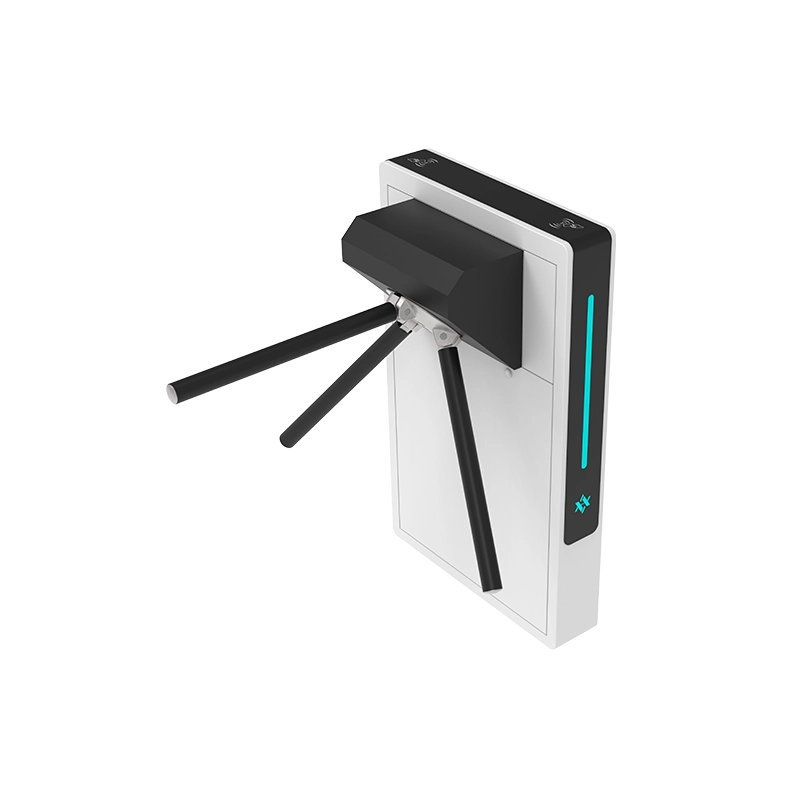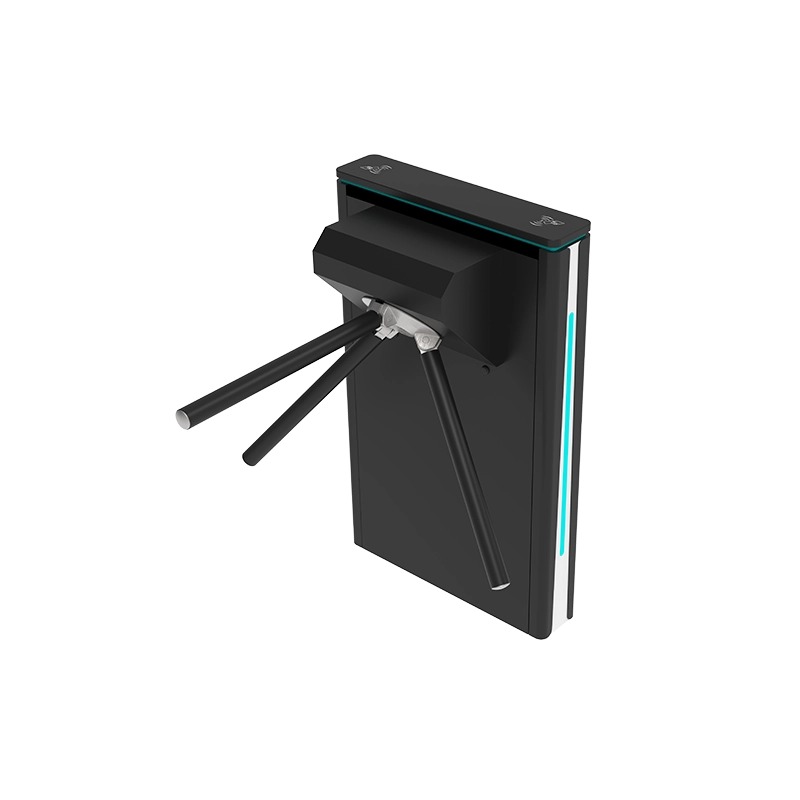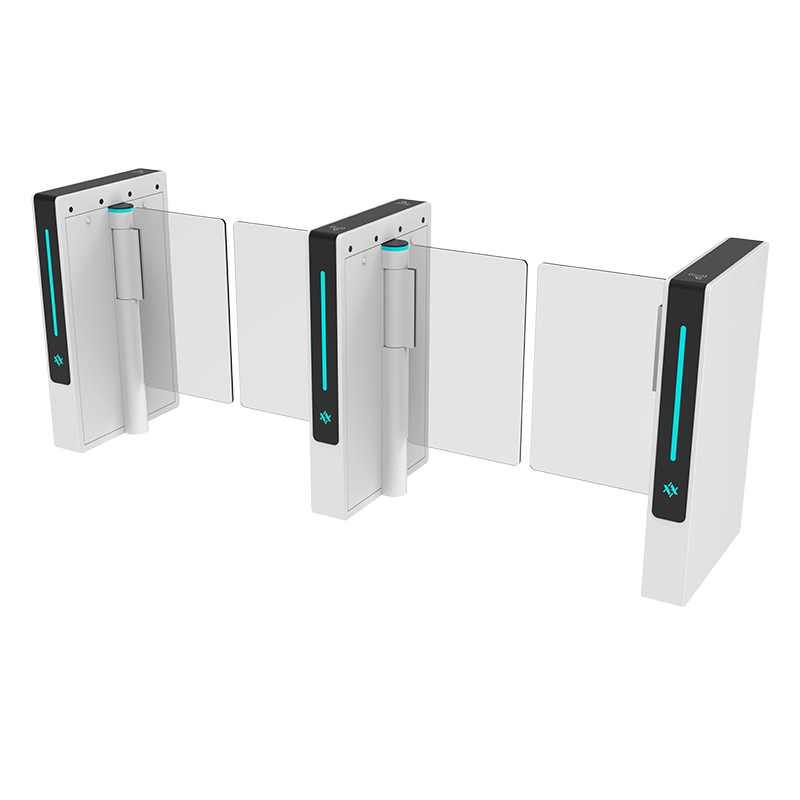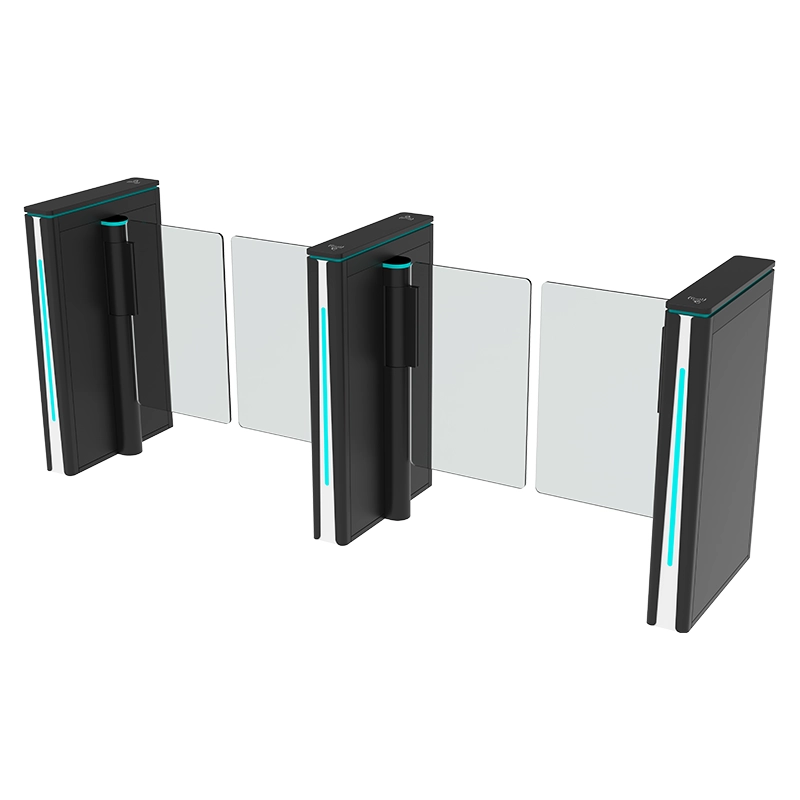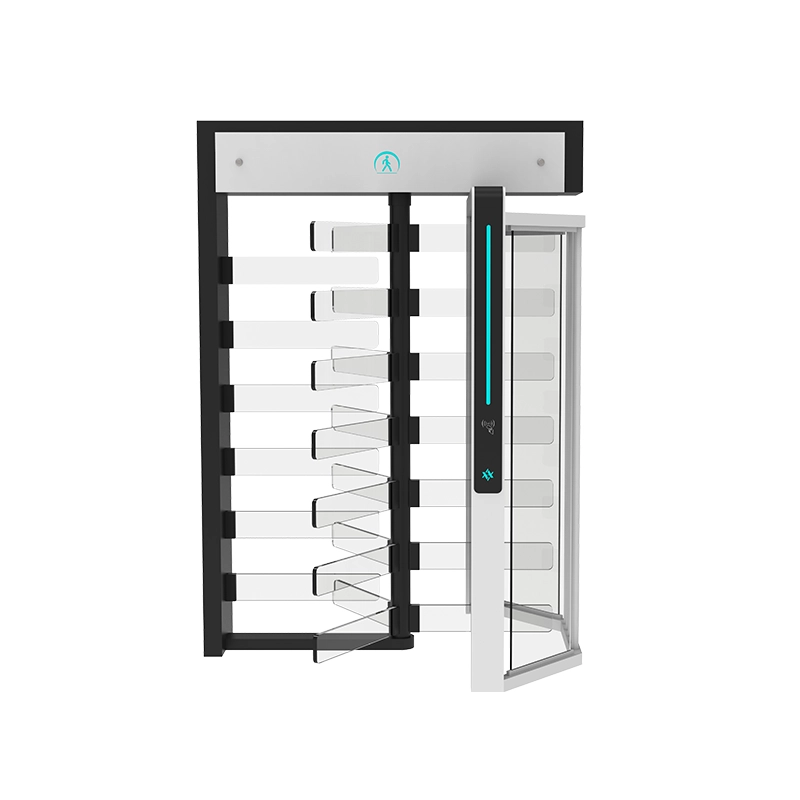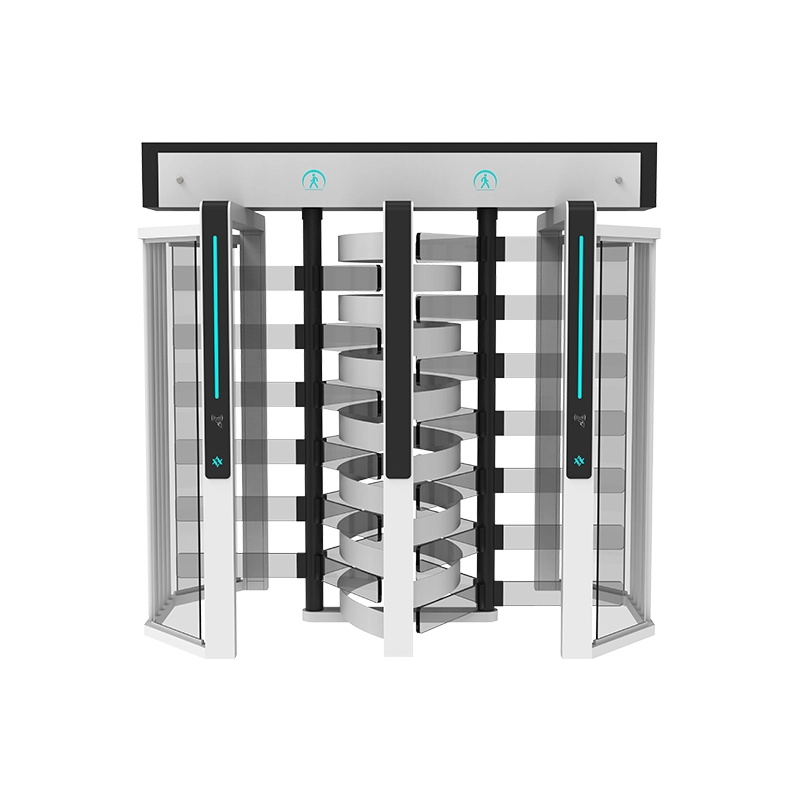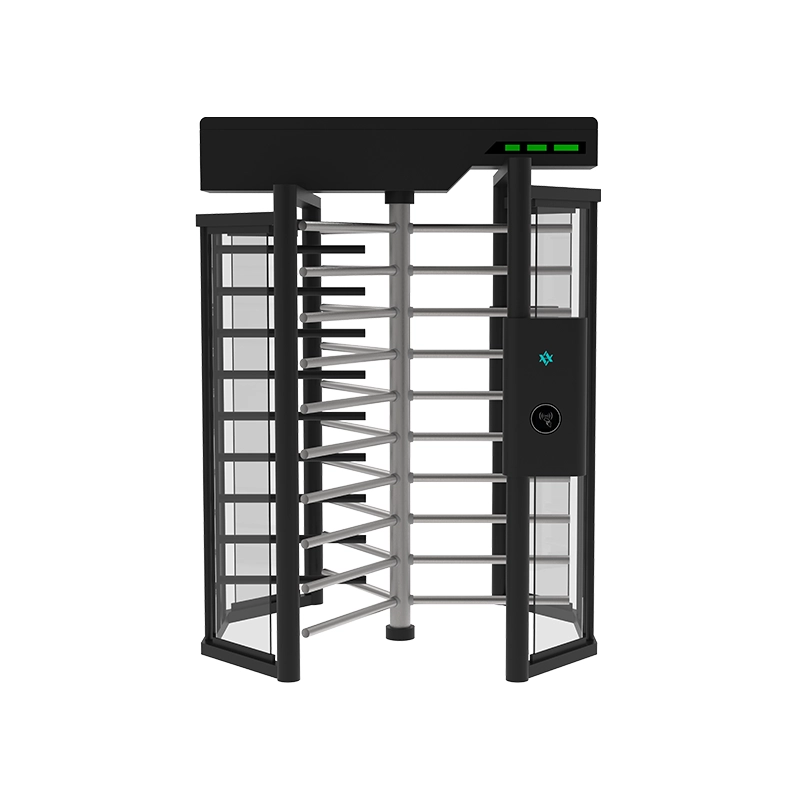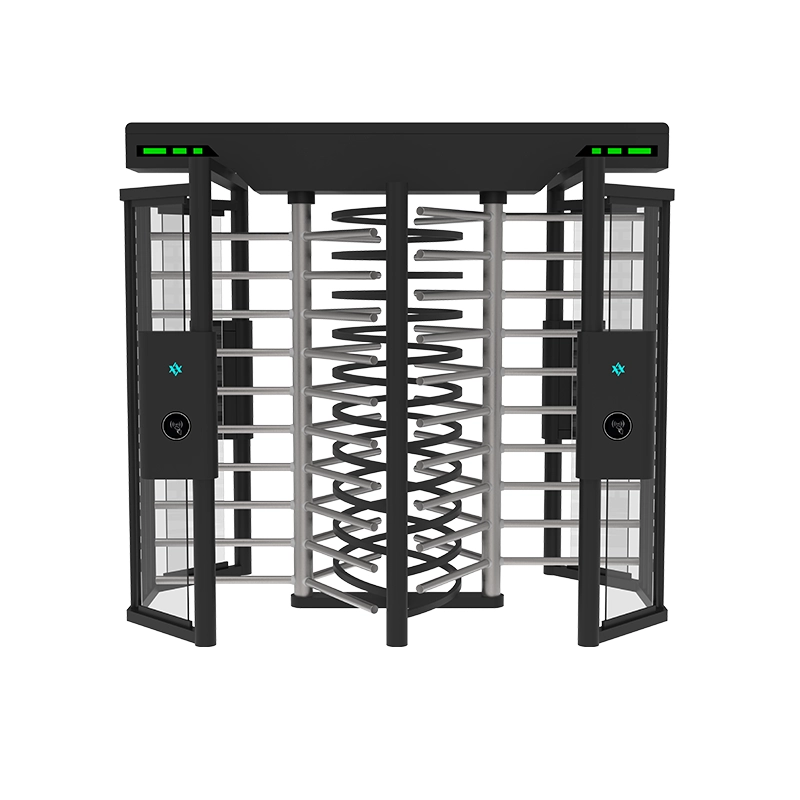

An optical swing turnstile does not simply open after a card is accepted. During one passage, its sensor system observes changing beam states across the lane, while the controller decides whether the barrier should remain closed, begin opening, stay open, stop closing or return to its secure position.
Consider an ordinary office entrance. A pedestrian approaches, presents an authorized credential, walks between the cabinets and leaves the controlled zone. To the user, this may feel like one continuous movement. To the turnstile controller, it is a sequence of separate events that must occur in a credible order.
This article follows that single passage from the sensor’s point of view. It does not repeat the credential and controller integration covered in our access control swing gate signal guide. Instead, it begins with the lane waiting in its normal state and examines what the optical detection system may observe before, during and after passage.
Quick answer: An optical swing turnstile normally uses multiple infrared detection points to observe where an object is within the passage. These sensors do not identify the person or grant permission. They provide changing lane-state information that the controller uses alongside the authorization signal, direction settings and programmed safety logic.
What Makes an Optical Swing Turnstile Optical?
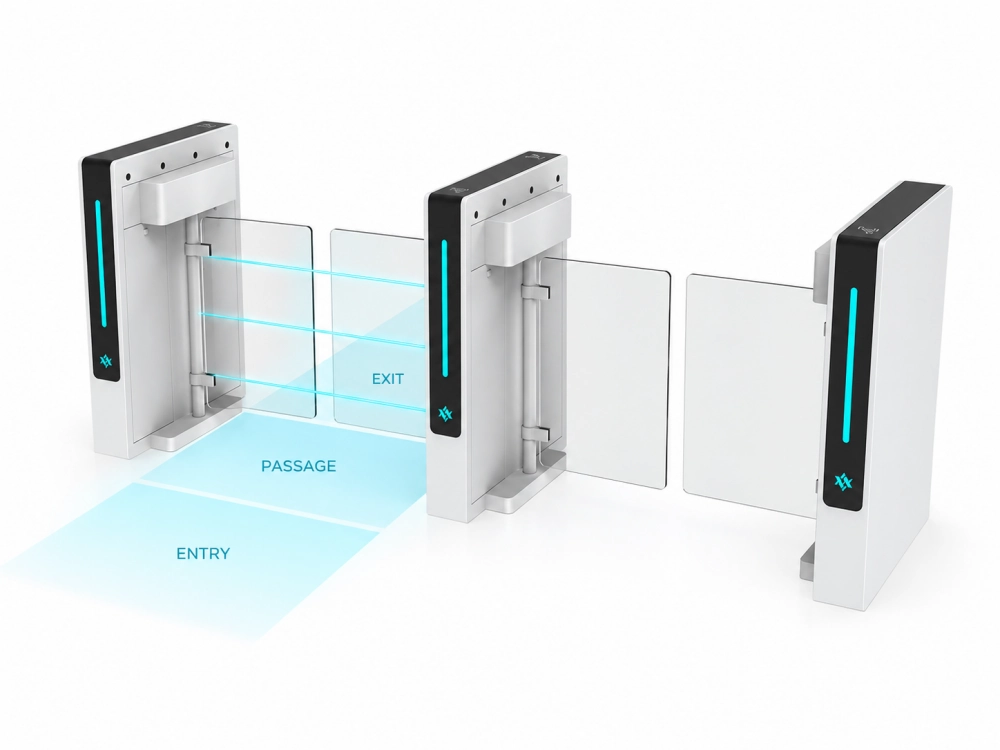
The word optical refers to the use of light-based detection across the passage. In many pedestrian turnstiles, infrared emitters and receivers are positioned inside opposing cabinets. Together, they create detection points or monitored zones across the lane.
When the passage is empty, the controller expects a normal sensor pattern. As a person or object enters the lane, one or more beams change state. The sequence of those changes helps the controller estimate whether movement is proceeding in the permitted direction and whether the closing area is clear.
An optical swing turnstile combines this detection system with physical swing panels. Unlike a barrier-free optical turnstile, it provides both electronic monitoring and a visible barrier. Unlike a basic motorized pedestrian gate with minimal sensing, it can use several detection points to follow movement through different parts of the passage.
The word “optical” should not be interpreted as proof of one fixed sensor quantity or one universal detection capability. Sensor count, beam height, spacing, controller programming and exception logic vary by model.
For example, the AIPADA AT206 commercial pedestrian swing turnstile specifies six pairs of infrared sensors. Buyers should still confirm the exact sensor configuration, control logic and barrier response included in the model and quotation they receive.
Optical Swing Turnstile Sensor Zones
It is more useful to think in terms of functional zones than to count visible sensor windows from a product photograph. A typical lane can be understood as three connected areas, although the physical arrangement and software definitions differ between products.
ZONE 01
Entry zone
This area detects movement approaching or beginning to enter the controlled passage. Its state may help distinguish a valid entry sequence from movement that begins from the wrong side.
ZONE 02
Passage zone
The middle of the lane indicates that the pedestrian or an accompanying object remains inside the turnstile. The barrier should not treat the passage as complete merely because the first sensor has cleared.
ZONE 03
Exit and closing zone
The final area helps confirm that the authorized passage has finished and that the space affected by barrier movement is clear before normal closure.
These zones do not work as three independent switches. Their value comes from sequence. Entry followed by passage followed by exit tells a different story from an exit-side beam changing first, two closely spaced patterns entering together or an object remaining stationary near the swing panel.
One Passage Through Seven Sensor States
The following sequence describes the logic of one normal passage. It is a functional explanation rather than a universal timing specification. Actual opening time, authorization window and closing delay must be confirmed for the selected controller and project.
What Optical Turnstile Sensors Cannot Know
A sensor beam can indicate interruption, restoration and sequence. It does not automatically know the identity, intention or physical condition of the person interrupting it.
For example, a similar sensor change might be caused by a pedestrian, suitcase, child, long coat or person stopping to retrieve a phone. The controller interprets the pattern according to programmed rules, but it cannot make every real-world situation identical.
This distinction matters when comparing a swing arm optical turnstile or swing glass optical turnstile. A taller glass panel may provide a stronger visual boundary, but panel height alone does not describe sensor coverage.
Likewise, a high sensor count is not meaningful unless the controller logic, beam placement and barrier movement are designed and tested as one system.
Important distinction: Credential systems decide who is authorized. Optical sensors observe what happens in the lane. The swing barrier controls physical passage. Reliable operation depends on these three functions exchanging the correct information at the correct time.
How an Optical Swing Turnstile Handles Exceptions
A useful sensor system must do more than recognize an ideal passage. Its real value appears when movement deviates from the expected sequence.
Two people enter on one authorization
If a second person follows closely, the sensor pattern may remain occupied for longer or show more transitions than the controller expects for one passage. The system response depends on the sensor arrangement and programming. It may sound an alarm, hold the barrier state, record an exception or notify security staff.
Do not treat the phrase “anti-tailgating” as a complete specification. During a project review, ask what separation the model can detect, how luggage affects the sequence and what the gate actually does after a suspected tailgating event.
A person approaches from the wrong direction
When the exit-side zone changes before the permitted entry sequence, the controller may identify wrong-way movement. The selected response might include keeping the barrier closed, issuing an audible or visual alarm, or sending an event to another system.
Bidirectional lanes need especially clear logic because the permitted direction can change by time, credential or operating mode. Direction indicators should agree with the controller’s current setting.
An object remains within the barrier area
A suitcase, mobility aid or person may remain inside the monitored area while the normal passage timer continues. A properly configured system should not close solely because a fixed time has elapsed if the relevant safety zone still indicates an obstruction.
General guidance from the UK Health and Safety Executive states that a powered gate should respond safely when a person interacts with it. Project teams can review the HSE guidance on powered-gate safety as a general risk principle. Final compliance requirements must be assessed for the specific pedestrian entrance, product, location and applicable local standards.
The user presents a credential but does not enter
An authorization should not leave the lane open indefinitely. If the expected entry sequence does not begin within the configured window, the gate may cancel the unused permission and return to its normal state. Commissioning should verify this behavior without assuming one universal timeout value.
These incidents are examined from a broader security perspective in our guide to security swing gate entrance risks. The distinction is intentional: that article focuses on threats and responses, while this article explains the sensor-state evidence behind those responses.

Commission the Sensor Sequence, Not Just the Card Reader
A common handover mistake is to present a valid card, see the barrier open and declare the lane operational. That confirms only part of the system. It does not prove that the optical swing turnstile handles realistic movement correctly.
A stronger commissioning session should test a planned set of passages:
- Normal entry: One person presents a valid credential and walks through at a natural pace.
- Slow passage: The user moves more slowly than average without stopping in an unsafe position.
- Temporary stop: The person pauses inside the lane and then continues.
- Carried object: The user passes with a bag or another object expected at the site.
- Close following: A second tester follows behind to verify the configured tailgating response.
- Wrong-way approach: Movement begins from the non-authorized side.
- Unused authorization: A valid credential is accepted but nobody enters.
- Obstruction during closure: An approved test object enters the defined safety area while the gate is closing.
- Power and emergency state: Authorized technicians verify the model-specific response under the approved site procedure.
- Recovery: The lane returns to normal service after each alarm or interrupted passage.
Record the gate configuration, controller version, direction setting and observed response. A video of each test can help the supplier distinguish sensor-position issues from timing, wiring or controller-logic problems.
Questions to Ask Before Ordering an Optical Swing Turnstile
Product descriptions often compress a complex detection system into phrases such as “infrared anti-pinch” or “anti-tailgating.” Buyers need more specific answers.
- How many infrared sensor pairs are included in the quoted configuration?
- Which parts of the passage and swing-panel area do they monitor?
- What is the programmed response to tailgating, reverse entry and prolonged obstruction?
- Can the authorization and passage timeout settings be adjusted?
- How does the controller handle luggage, children and mobility aids?
- What changes when the lane is configured for bidirectional operation?
- Which alarms or passage events can be returned to the access control system?
- What cleaning, alignment or diagnostic procedure applies to the sensors?
- Which tests will be demonstrated before shipment and repeated during site commissioning?
A high sensor count should not replace these questions. The supplier should be able to explain the detection sequence, provide model-specific documentation and confirm how the configuration will behave in the customer’s real entrance.
Select the Lane Around Real Movement
An optical swing turnstile performs best when the product, lane width and control settings match the people who will use it. An employee-only office lane may see predictable single-person passage. A reception entrance may need to handle visitors who hesitate after scanning a QR code.
A gym may experience closely spaced peak traffic. A hotel or transport entrance may receive luggage that occupies the sensor field differently from a person walking alone.
Accessible routes require additional planning. A wider passage is not complete merely because the swing panels are longer. Reader reach, approach space, sensor coverage, barrier movement and the route before and after the gate must work together.
Our pedestrian swing gate planning guide explains how to review those physical entrance conditions.
Buyers can also compare the available cabinet and barrier designs in the AIPADA swing turnstile range. Product selection should be based on the confirmed sensor configuration and project requirement rather than appearance alone.
Send AIPADA a Passage Test Brief
For this type of project, a useful inquiry should describe movement rather than provide only a required quantity. Send the entrance drawing, clear lane width, permitted direction, access method, expected peak traffic and the exceptional passages the system must manage.
Plan the gate around the real passage sequence
Include wheelchair access, luggage, close-following users, bidirectional operation and required alarm behavior. AIPADA can review the lane arrangement, swing-gate model, recognition-device interface and commissioning requirements before quotation.
The practical question is not whether an optical swing turnstile has infrared sensors. It is whether the complete detection sequence supports the people, carried objects, security rules and exception cases expected at the real entrance. Following one passage from approach to safe closure reveals far more than a sensor count printed on a specification sheet.