

Unsecured entrances allow intruders to slip into your building without being noticed. This creates a high risk for your staff and assets. Tripod turnstiles provide a physical barrier to stop these threats.
Tripod turnstiles detect and prevent unauthorized access by using a combination of mechanical locks and electronic sensors. They only unlock when they receive a valid signal from an ID reader. The three-arm design ensures that only one person can pass at a time, effectively stopping tailgating and forced entry.
I have spent many years looking at how buildings manage their front desks. It is clear that a simple door is not enough for high-traffic areas. You need a system that works automatically. Let me explain how these machines keep your facility safe.
What is the role of turnstiles in access control?
Open lobbies are very hard to monitor with just human eyes. Security guards can get distracted, and people can slip past them in a crowd. This leads to unrecorded entries and potential safety issues.
The role of turnstiles in access control is to act as a physical filter for human traffic. They ensure that every person who enters a building has been verified by the security system. They also provide data on occupancy levels and help prevent dangerous overcrowding in public spaces.
Creating a Physical and Psychological Barrier
In my work, I have noticed that a turnstile does more than just block a path. It creates a clear boundary. When a person walks up to a tripod turnstile[^1], they immediately understand that they need permission to pass. This psychological effect stops many people from even trying to enter without a badge. Unlike a standard door, which can be held open for a friend, a turnstile resets after every single rotation. This makes it a much more reliable tool for enforcing security policies. It forces every individual to stand for a second and prove who they are before the machine lets them in.
Accuracy in Data and Safety
I also find that turnstiles are the best way to get accurate data. If you use a turnstile at your entrance, you know exactly how many people are inside at any moment. This is very important for fire safety. If an alarm goes off, the system can print a list of everyone who is still in the building. Also, because the turnstile only allows one person through at a time, it prevents the "stampede" effect during busy hours. It keeps the flow of people moving at a steady and safe pace.
| Benefit | Description |
|---|---|
| Tailgating Prevention | Only one person can pass per valid scan. |
| Crowd Control | Slows down the flow to a manageable speed. |
| Audit Trail | Every entry is recorded with a time stamp. |
| Integration | Works with cards, faces, and QR codes. |
What is a tripod turnstile gate mechanism?
Cheap gates often jam or break when people push against them. This causes long lines and makes your security look weak. You need a mechanism that is strong enough to resist force but smooth enough for daily use.
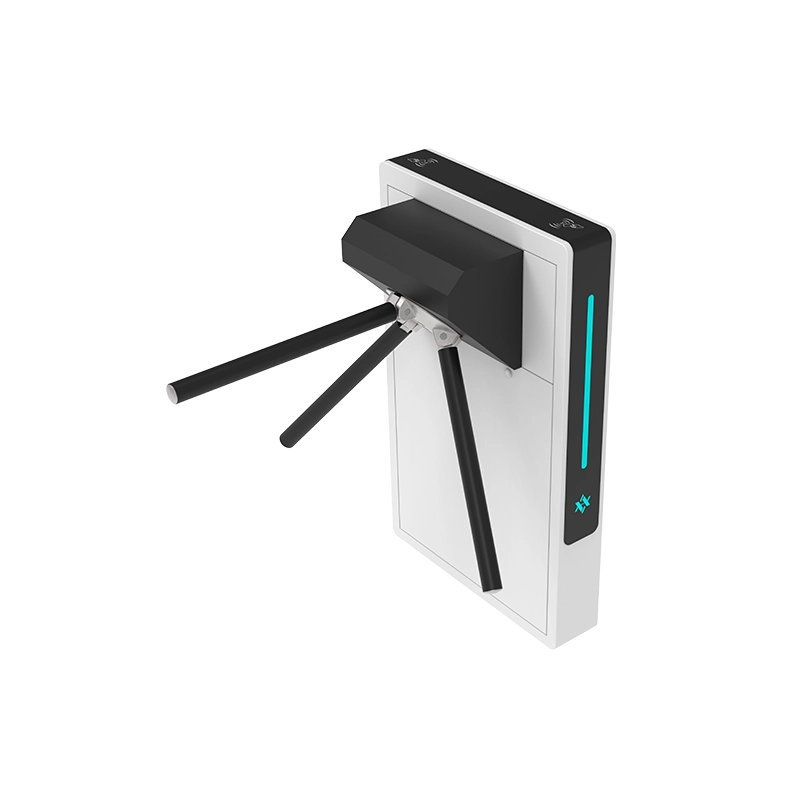
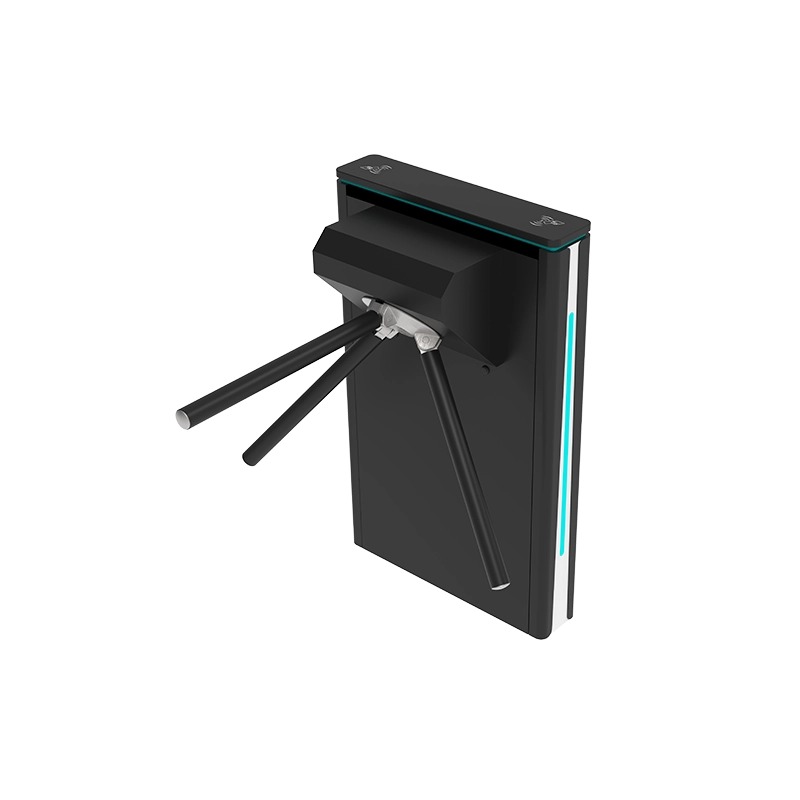
A tripod turnstile mechanism consists of a rotating hub with three arms, a locking system, and a control board. When a user presents a valid card, the control board releases a solenoid or activates a motor. This allows the hub to turn 120 degrees, letting one person through.
The Mechanical Locking System
The most important part of the mechanism is the internal lock. I often tell people to look at the solenoid. This is a small electronic part that moves a pin to lock or unlock the gears. In a high-quality tripod turnstile, these parts are made of hardened steel. If someone tries to jump over or push the arm without a card, the lock stays engaged. The arms will not budge. This mechanical strength is what stops unauthorized people. Some systems even have a "drop arm" feature. This means the top arm falls down during a power outage or fire alarm to let people escape quickly.
Motorized vs. Manual Rotation
There are two main ways the arms move. In a manual system, you have to push the arm with your hip or hand after it unlocks. These are very common because they are simple and cost less. In a motorized system, a small motor turns the arms for you as soon as you touch them. I prefer the motorized version for professional offices. It feels more high-tech and is much quieter. The motor also helps control the speed of the rotation. It ensures the arm does not swing back and hit the person behind you. This makes the experience better for everyone using the gate.
Key Mechanism Features
- Self-Centering: The arms always return to the perfect home position.
- Anti-Reverse: Once you start pushing, you cannot go backward.
- Hydraulic Dampener: This stops the arms from shaking or making loud noises.
- Position Sensors: These tell the computer exactly where the arms are.
What are the 4 types of access control?
If your security rules are too simple, people will find ways to break them. If they are too complex, your employees will complain. You must choose a logic style that fits how your specific organization works.
The four types of access control are Discretionary (DAC), Mandatory (MAC), Role-Based (RBAC), and Rule-Based Access Control. These models decide who gets permission to enter. DAC is set by the owner, while MAC is a strict central system. RBAC is based on job titles, and Rule-Based uses specific conditions.
Flexible and Strict Models
I see Discretionary Access Control (DAC) used in small offices. The business owner decides who gets a card. It is easy to set up, but it is not the most secure because permissions can be shared too easily. Mandatory Access Control (MAC) is the opposite. It is used by the government or military. In this model, every user has a "clearance level." Even if I am the boss, I cannot give you access unless the central security officer says so. This is the best way to protect very sensitive areas where secrets are kept.
Role and Rule Logic
Role-Based Access Control (RBAC) is the most popular choice for the companies I work with. Instead of giving permission to "John Smith," the system gives permission to the "Accounting Department." This makes it very easy to manage. If a new person joins the team, you just give them the "Accountant" role, and they can use the turnstiles immediately. Rule-Based Access Control adds another layer. It uses logic like "no one enters after 8 PM" or "no entry if the front door is already open." This is great for preventing people from staying in the office too late or for managing gym memberships.
| Access Type | Best Use Case | Security Level |
|---|---|---|
| Discretionary (DAC) | Small local shops or offices. | Low to Medium |
| Mandatory (MAC) | Military and government labs. | Very High |
| Role-Based (RBAC) | Corporate buildings and schools. | Medium to High |
| Rule-Based | Gyms and timed parking lots. | High (for logic) |
What are the 4 components of access control?
Many people think a turnstile is the only thing they need. But a gate without a brain cannot do its job. You need four specific parts working together to make sure no unauthorized person gets inside.
The four components are Identification, Authentication, Authorization, and Accountability. Identification is who you say you are. Authentication is the proof. Authorization is your permission level. Accountability is the log of your actions. All four are required for a complete and secure entrance system.
Identification and Authentication
The first step is Identification. This happens when a person shows a card to the reader on the turnstile. The person is basically saying, "I am an employee." But the system cannot just take their word for it. It needs Authentication. This is when the reader checks the chip in the card or scans a fingerprint. It proves that the person really is who they claim to be. I always suggest using biometrics, like face recognition, for this part. It is much harder to fake a face than it is to steal a plastic card.
Authorization and Accountability
After the system knows the person is real, it checks Authorization. This is the "Yes or No" part of the process. The computer looks at the rules and decides if this person is allowed to enter right now. If the answer is yes, the tripod arm unlocks. The final part is Accountability. This is the part that many people forget. Every time someone goes through the turnstile, the system writes it down. It saves the name, the time, and the gate number. If something goes wrong later, I can go back and look at the report. This keeps everyone honest and helps solve security problems quickly.
Hardware and Software Interaction
- The Credential: This is the card, face, or code the user has.
- The Reader: This is the device mounted on the turnstile that "reads" the credential.
- The Controller: This is the brain inside the turnstile that makes the decision.
- The Management Software: This is where the admin sets the rules and views the logs.
My Insights: Understanding Tripod Turnstiles’ Role in Security
Enhance security efficiently with tripod turnstiles. Discover how they uniquely prevent unauthorized access using advanced mechanics and sensor technology.
Tripod turnstiles restrict passage using mechanical barriers, sensors, and access control systems. They verify credentials, trigger alarms for unauthorized attempts, and integrate security measures like cameras and real-time audits to ensure secure entry.
Mechanics and Detection in Tripod Turnstiles
Core Mechanism
Tripod turnstiles employ rotating arms locked by default, rotating only 120 degrees upon credential validation (e.g., RFID or biometrics). This physical barrier effectively restricts multiple entries and reverse access, supported by a clutch mechanism resisting manual force.
Detection Methods
Sensor arrays, particularly infrared, monitor the passage at torso height. They immediately detect unauthorized access by observing beam breaks, suggestive of tailgating, and trigger a lock mid-rotation. Pressure sensors warn of climbing attempts, while anti-passback logic curbs repeat credential usage shortly after entry.
Response and Emergency Features
Upon unauthorized access detection, turnstiles activate alarms, flash lights, stop rotation, and log events for audit trails—often triggering CCTV for immediate security response. Additionally, in emergencies like power failures or fire alarms, the arms drop for unimpeded exit, prioritizing safety.
Leveraging these comprehensive security features ensures tripod turnstiles offer effective control, enhancing both monitoring and safety within facilities.
Conclusion
Tripod turnstiles are the most effective way to stop unauthorized entry. They use strong mechanical parts and smart software to verify every person. This ensures your building stays safe and your records stay accurate.
](https://aipadaturnstile.com/wp-content/uploads/2025/11/AT107-TC-01.webp)
](https://aipadaturnstile.com/wp-content/uploads/2025/12/vertical-tripod-turnstile.jpg)
](https://aipadaturnstile.com/wp-content/uploads/2025/12/popup-img.jpg)