
](https://aipadaturnstile.com/wp-content/uploads/2026/04/What-is-the-Difference-Between-Flap-Barrier-and-Turnstile.jpg "What is the Difference Between Flap Barrier and Turnstile")

Choosing the right entrance control system can be complex. Understanding the specific terms helps. This article will clarify the distinctions between flap barriers and other types of turnstiles. I will provide clear definitions and practical insights.
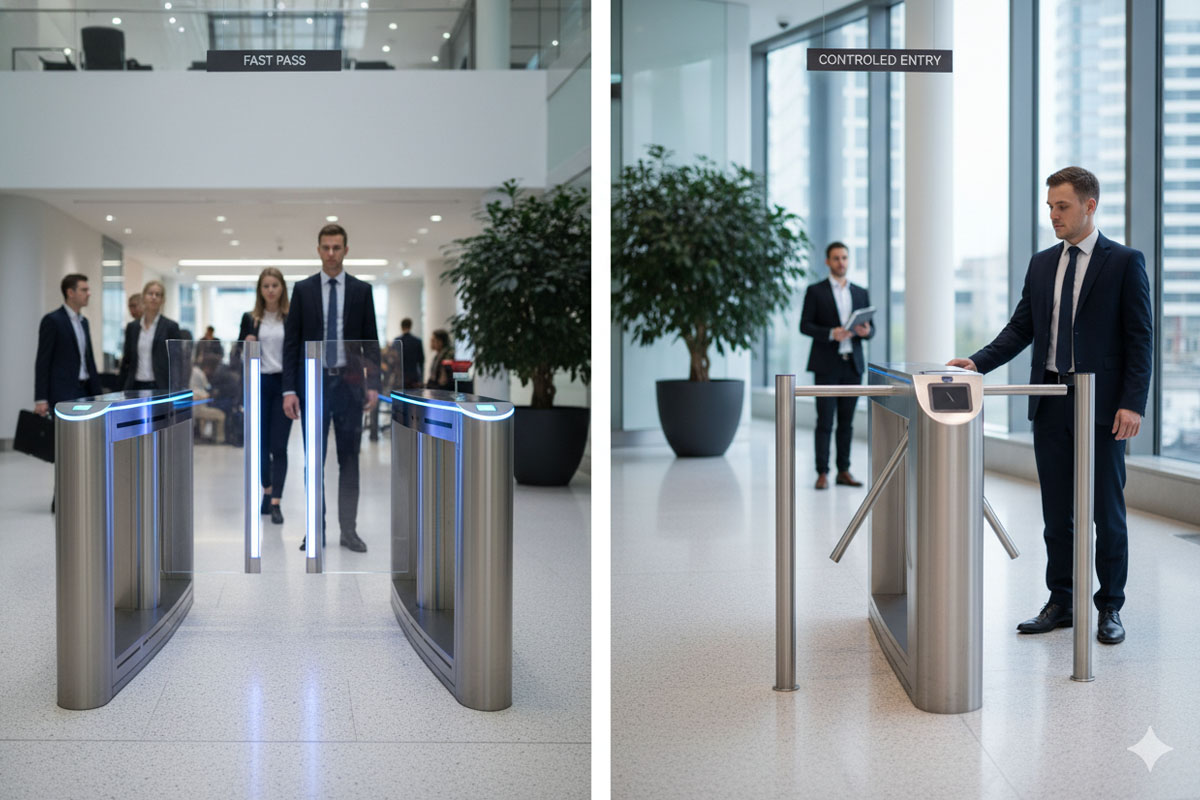
A turnstile is a general term for all entrance gates designed to control pedestrian traffic. A flap barrier is a specific type of turnstile that uses retractable panels for quick access control. Flap barriers are known for their speed and modern appearance. Other turnstiles include tripod, swing, and full-height models.
The world of access control offers many solutions. Each system has unique features. Knowing these differences helps in selecting the most suitable option for any environment. This article will explore these distinctions in detail.
What is the difference between a turnstile and a flap barrier?
The terms "turnstile" and "flap barrier[^1]" are often used interchangeably. But they refer to different concepts in access control. It is important to define them clearly.
A turnstile is an overarching category for any gate that manages pedestrian entry and exit. It ensures controlled passage. A flap barrier is a particular type of turnstile. It features two wings that retract into the barrier housing. This allows fast, singular passage for authorized individuals. Flap barriers are common in modern corporate buildings and public transportation hubs.
Understanding this hierarchy is important. It helps in classifying different access control devices. Turnstiles broadly cover various designs. Flap barriers represent one advanced design within this broader group. They are recognized for their efficiency and aesthetic integration into contemporary spaces.
Turnstile: The Broad Category
A turnstile is a mechanical gate. It limits passage to one person at a time. This device enhances security. It also aids in tracking attendance.
Types of Turnstiles
The turnstile family includes several common designs.
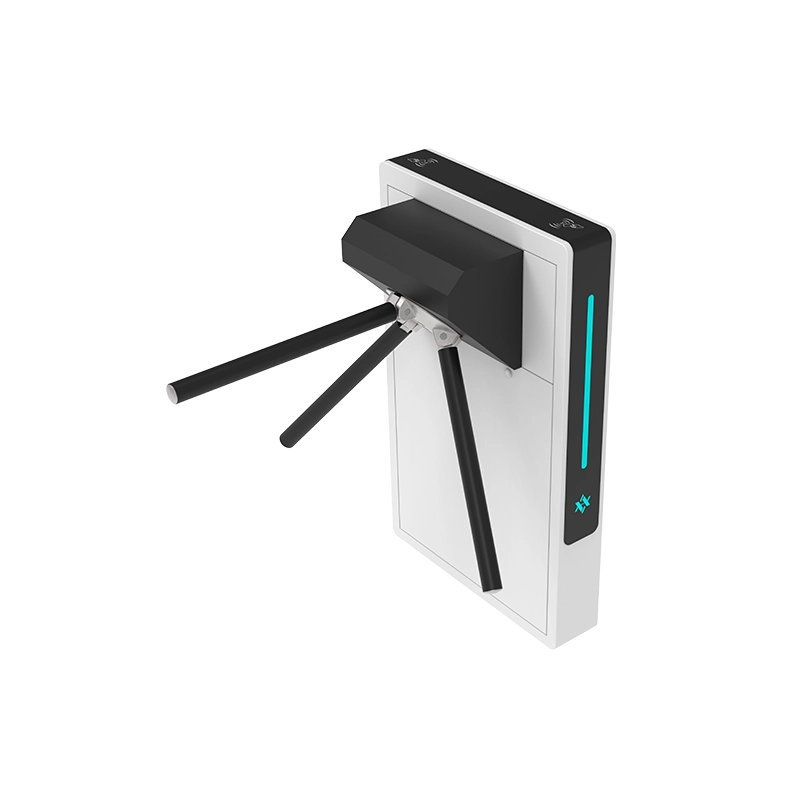
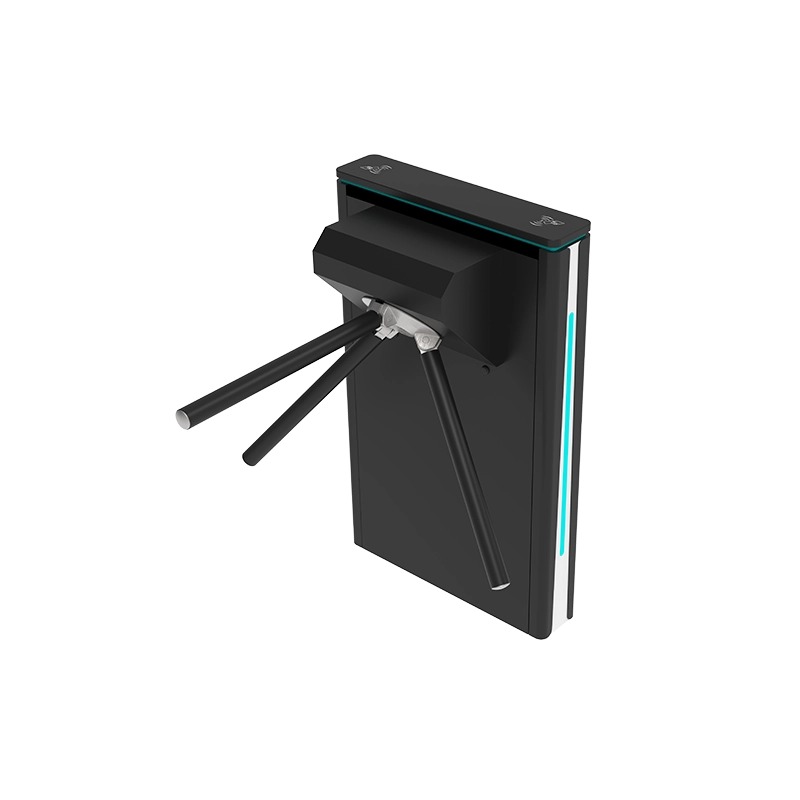
Tripod Turnstiles:
- Description: These gates have three rotating arms. They are typically waist-high.
- Operation: A person pushes one arm after authorization. The arms then rotate to allow passage. They lock again.
- Use Cases: Often seen in factories, construction sites, and amusement parks.
- Characteristics: Known for durability and cost-effectiveness. They offer moderate throughput speed.
Swing Turnstiles:
- Description: These turnstiles feature a single swinging panel. The panel is usually made of glass or metal.
- Operation: The panel swings open like a door upon authorization. It then closes after passage.
- Use Cases: Common in executive lobbies, hospitals, and libraries.
- Characteristics: Provides wider access for wheelchairs or large items. They offer a modern appearance.
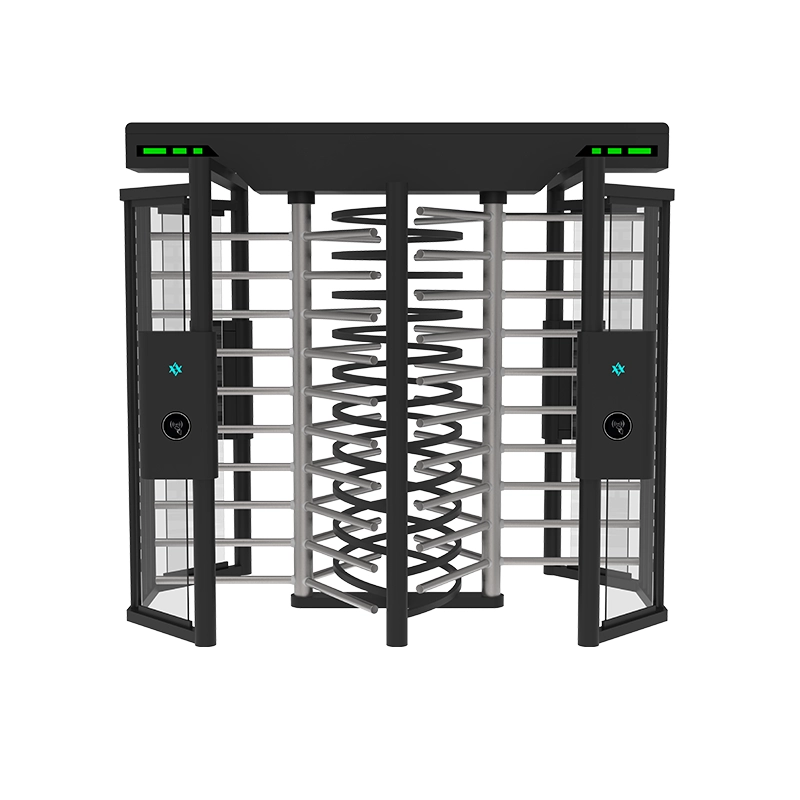
Full-Height Turnstiles:
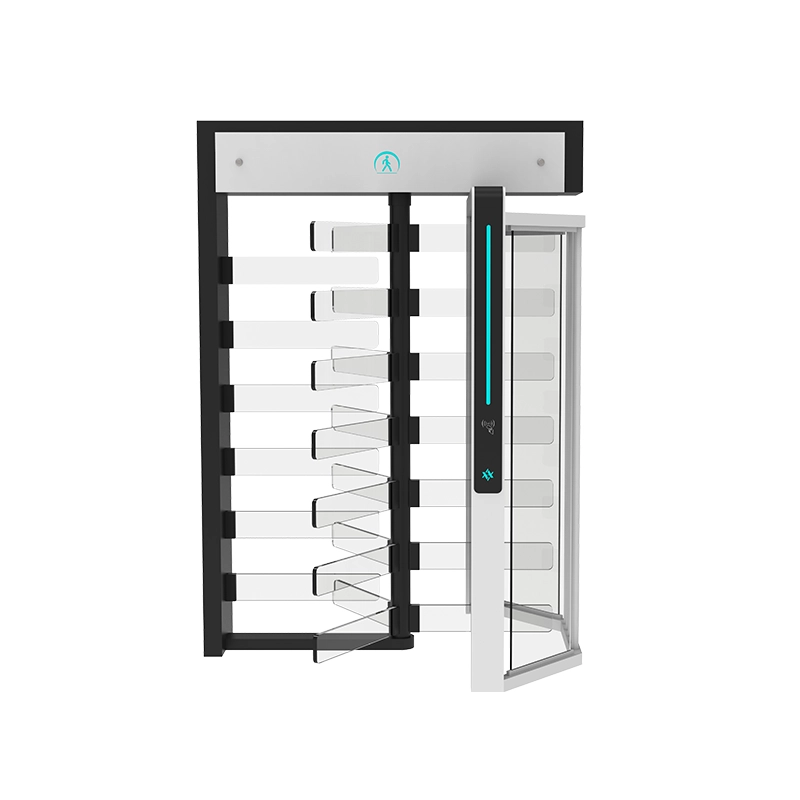
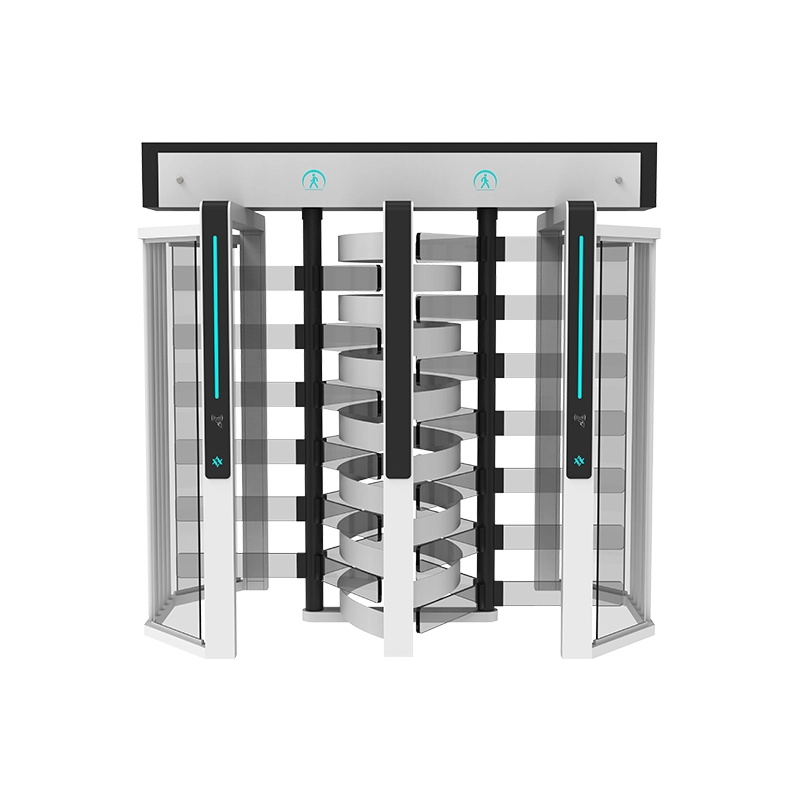
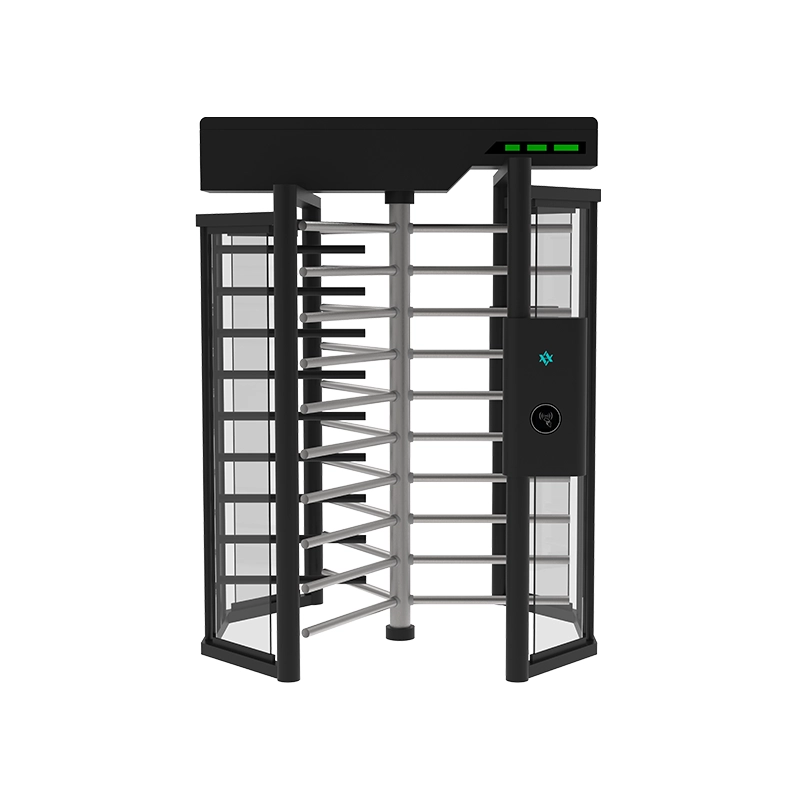
- Description: These are tall, rotating barriers. They extend from floor to ceiling.
- Operation: The user enters a compartment. The barrier rotates to allow passage.
- Use Cases: Found in high-security areas like prisons, military bases, and stadiums.
- Characteristics: Offers the highest level of physical security. It prevents climbing over or crawling under.
Flap Barrier: A Specific Design
Flap barriers are a specialized type of turnstile. They emphasize speed and modern design.
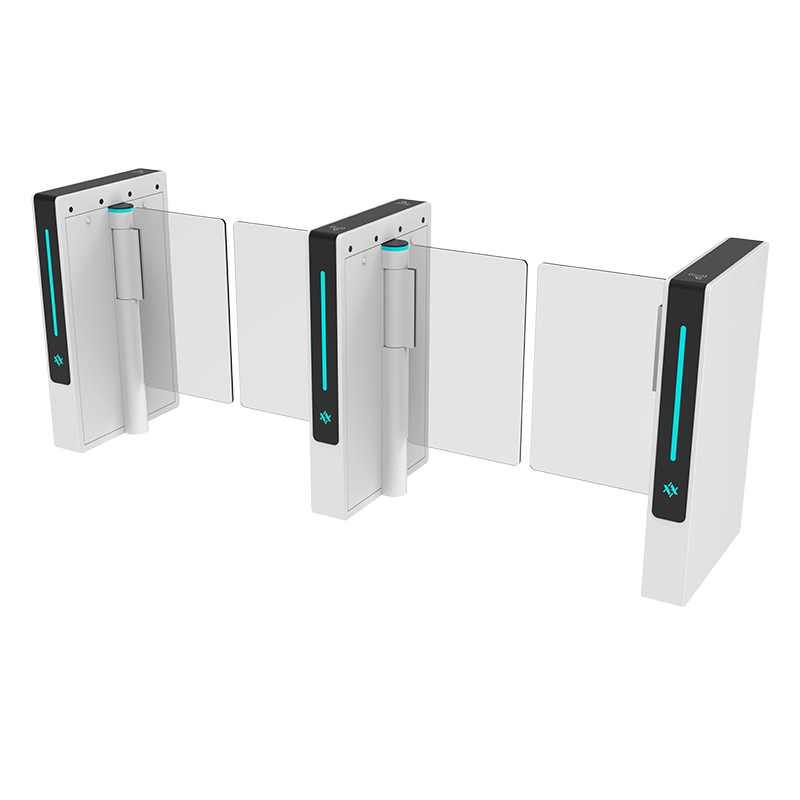
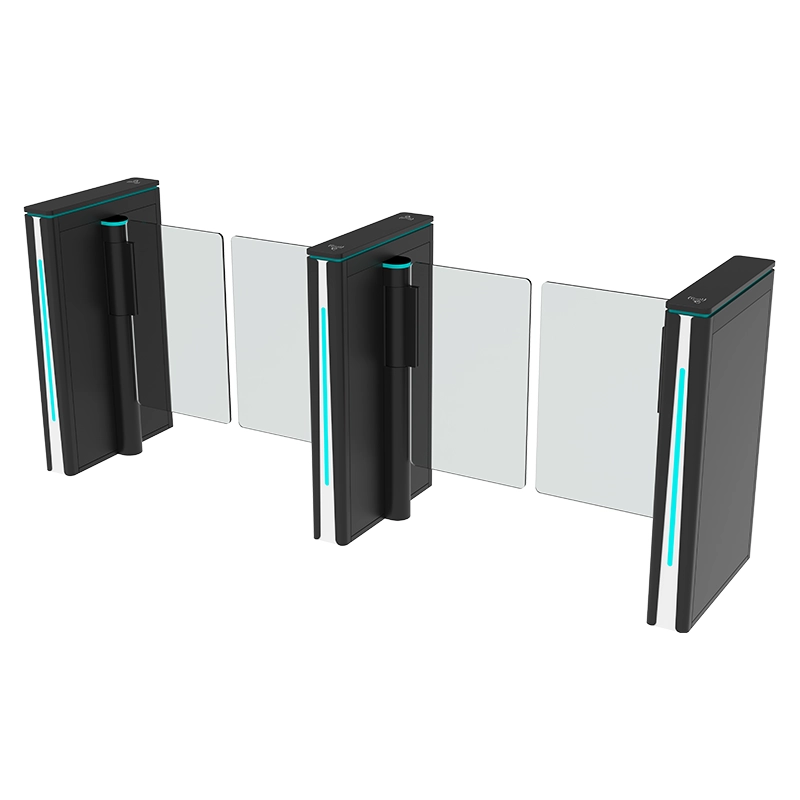
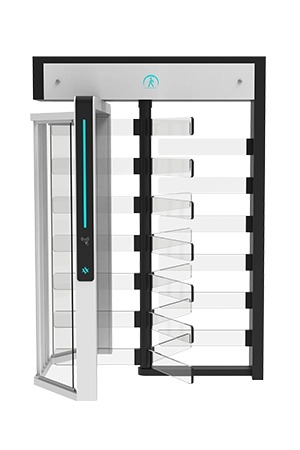
- Mechanism: Two retractable wings, or "flaps," control access. These flaps typically consist of glass or acrylic. They slide into the barrier’s casing.
- Operation: Upon authorization, the flaps quickly retract. This creates an open lane. They close rapidly after the person passes.
- Key Attributes:
- High Throughput: Designed for very fast pedestrian flow.
- Aesthetics: Offers a sleek and professional look. It integrates well with modern architectural designs.
- Security Level: Provides a good deterrent against unauthorized entry.
- Integration: Easily integrates with advanced access control technologies. This includes facial recognition and biometric systems.
In summary, "turnstile" is the broad category for all pedestrian access control gates. "Flap barrier" is a refined type of turnstile. It offers a balance of speed, design, and moderate security.
What is the problem with the flap barrier?
Flap barriers are efficient and visually appealing. But they also have certain limitations. It is important to consider these potential issues. This helps in making an informed selection.
The primary challenge with flap barriers is their physical security level. While they deter unauthorized entry effectively, a determined individual can bypass them. This can happen by jumping over or forcing the flaps. They offer less physical deterrence than full-height turnstiles[^2]. Another consideration is the higher cost compared to simpler turnstile models. These factors are critical when evaluating their suitability for specific security needs.
Understanding these trade-offs is essential for deployment. While flap barriers excel in speed and aesthetics, their application requires careful assessment of security requirements and budget constraints.
Security Limitations
Flap barriers prioritize fast throughput and elegant design. Their security features are designed as deterrents.
Vulnerability to Evasion:
- Tailgating: One common issue is unauthorized individuals following closely behind an authorized person. The system’s sensors aim to prevent this. But high-speed tailgating can occur.
- Jumping Over: The typical height of flap barrier panels is at waist level. This makes them vulnerable to being jumped over by agile individuals.
- Forcing Open: While motorized, the flaps can be forced open with sufficient physical force. This may cause damage to the unit. It also allows unauthorized passage.
Security Comparison: Feature Flap Barrier Full-Height Turnstile Tripod Turnstile Physical Security Medium (Deters, but can be breached) High (Strong physical barrier) Medium (Physical blockage) Throughput Speed Very High Low Moderate Aesthetic Appeal High Low (Functional, industrial) Medium Cost Implication High High Low
Technical and Operational Concerns
Flap barriers incorporate sophisticated technology. This can lead to specific operational and maintenance considerations.
System Complexity:
- Sensor Reliance: Flap barriers depend on multiple infrared sensors. These detect pedestrian presence. They prevent accidental closure. If these sensors become obstructed or misaligned, malfunctions can occur.
- Motor Systems: The rapid retraction and closure of the flaps rely on precise motor systems. Any failure in these motors can render the unit inoperable.
Maintenance Requirements:
- Routine Cleaning: Sensors and transparent panels require regular cleaning. This ensures optimal performance and prevents false readings.
- Calibration: Periodic calibration of sensors may be necessary. This maintains accuracy in pedestrian detection.
- Component Wear: As mechanical devices, components like motors and panels can experience wear over time. This necessitates eventual replacement.
Cost Implications
The advanced features and design of flap barriers often result in higher costs.
- Initial Investment: The acquisition and installation costs for flap barriers are generally higher than for simpler turnstile types. This is due to their intricate electronics and premium materials.
- Long-Term Expenses: While designed for durability, the complexity of flap barrier systems can lead to higher long-term maintenance costs. These include specialized parts and technical support.
Therefore, while flap barriers offer advantages in speed and appearance, their suitability must be carefully assessed against specific security requirements, operational context, and budget.
What is a flap barrier?
A flap barrier is a distinct type of pedestrian access control device. It holds a specific role within the broader turnstile category. Understanding its design and function is important.
A flap barrier is a sophisticated pedestrian gate. It features two retractable wings or "flaps." These flaps quickly slide into the barrier’s housing upon authorization. They then close rapidly after a person has passed. Its primary purpose is to provide fast, efficient, and secure pedestrian entry in areas with high traffic volume. These devices are commonly found in modern office buildings, public transport systems, and commercial complexes.
Flap barriers are engineered for both performance and aesthetics. Their design allows for seamless integration into various architectural environments. They represent a blend of advanced technology and elegant form.
Core Mechanism and Components
The operation of a flap barrier is a precise sequence of events. It relies on advanced components.
Operational Sequence
The user experience is straightforward. But the underlying mechanics are complex.
- Credential Presentation: A user presents an authorized credential. This could be a proximity card, a QR code, or biometric data.
- Authorization Signal: The access control system verifies the credential. It then sends an authorization signal to the barrier.
- Sensor Activation: Internal infrared sensors detect the presence of the approaching person.
- Flap Retraction: The barrier’s motors quickly retract the flaps into the cabinet. This creates an open lane.
- Passage Completion: The user walks through the open lane.
- Flap Closure: Once the sensors confirm the person has cleared the lane, the flaps rapidly extend. They secure the passage for the next authorized user.
Key Technologies
Modern flap barriers incorporate several critical technologies. These ensure reliable and safe operation.
- Brushless Motor Technology:
- Function: These motors drive the rapid and smooth movement of the flaps. They are known for their precision.
- Advantages: Brushless motors contribute to quieter operation. They also offer enhanced durability and a longer lifespan. This reduces maintenance needs.
- Infrared Detection Systems:
- Function: Multiple infrared beams are strategically placed within the lane. They detect pedestrians. This prevents the flaps from closing on a person.
- Safety and Anti-Tailgating: These sensors are crucial for user safety. They also help in detecting and preventing unauthorized tailgating.
- Integrated Control Boards:
- Function: The central control unit manages all operations. It processes input from credential readers and sensors. It directs motor movements.
- Compatibility: Control boards are designed for seamless integration. They work with diverse third-party access control systems. This includes facial recognition, fingerprint scanning, and traditional card readers.
Common Applications
Flap barriers are ideally suited for environments where speed, appearance, and moderate security are important.
- Corporate Environments:
- Requirements: High employee traffic during peak hours, a professional aesthetic, integration with corporate ID systems.
- Solution: Flap barriers facilitate quick, efficient entry for staff and visitors. They enhance the modern image of the building lobby.
- Public Transit Hubs:
- Requirements: Very high throughput for large volumes of commuters, rapid ticket validation.
- Solution: Metro stations and airports use flap barriers to manage passenger flow efficiently.
- Upscale Commercial Properties:
- Requirements: Sophisticated design, secure access control for tenants and guests.
- Solution: The sleek appearance of flap barriers complements high-end architectural designs.
In essence, a flap barrier is a technologically advanced and aesthetically refined access control solution. It is designed for managing high volumes of pedestrian traffic with speed and efficiency.
What are the 4 types of barriers?
When discussing barriers in pedestrian access control, the term encompasses various designs. Each design serves different security and traffic management needs. It is important to categorize these main types.
There are four primary types of physical barriers used in pedestrian access control systems. These include tripod turnstiles, swing turnstiles[^3], flap barriers, and full-height turnstiles. Each type provides distinct levels of security, operational speed, and aesthetic integration. They are engineered for specific environmental and functional requirements. Understanding these categories helps in selecting the most appropriate solution for any given application.
The diversity in barrier types allows for tailored solutions. Different environments require different approaches to security and throughput. This section will outline the characteristics of each main type.
Overview of Pedestrian Barrier Types
Each barrier type offers unique advantages and is suited for particular scenarios.
1. Tripod Turnstiles
These are one of the most widely recognized and traditional forms of turnstiles.
- Design: Features three rotating arms. They are typically set at waist height. The arms are usually made of stainless steel.
- Key Attributes:
- Cost-Effectiveness: Generally the most economical option available.
- Durability: Constructed to withstand frequent use and various environmental conditions.
- Security Level: Provides a medium level of security. It deters casual unauthorized entry. But it can be overcome by climbing.
- Throughput Rate: Offers a moderate speed of passage. It is not ideal for extremely high traffic volumes during peak times.
- Typical Applications: Factories, construction sites, gyms, sports facilities, and general entrance points for public venues.
2. Swing Turnstiles
These barriers are known for offering wider access lanes and a more modern appearance.
- Design: Comprises a single panel that swings open. The panel material can vary. Options include tempered glass, acrylic, or stainless steel.
- Key Attributes:
- Accessibility: Ideal for accommodating individuals with wheelchairs, baby strollers, or large luggage.
- Aesthetics: Can present a sophisticated and contemporary look. This makes them suitable for upscale interior designs.
- Security Level: Provides a medium level of security. It functions as a deterrent against unauthorized access.
- Throughput Rate: Offers moderate to high speed. It can be faster than tripod turnstiles[^4] for single users.
- Typical Applications: Corporate headquarters, hospitals, academic institutions, and locations requiring barrier-free access.
3. Flap Barriers
These barriers are specifically engineered for speed and sleek integration.
- Design: Utilizes two retractable panels, or "flaps." These panels slide into the barrier’s cabinet upon authorization.
- Key Attributes:
- High Throughput: Designed for very efficient and rapid pedestrian flow. This makes them suitable for crowded areas.
- Modern Design: Characterized by a contemporary and elegant appearance. Often uses transparent materials like glass.
- Security Level: Offers a medium level of security. It is effective as a visual and physical deterrent. However, it can be bypassed.
- Integration Capability: Excellent for seamless integration with advanced access control systems. This includes biometrics and smart card readers.
- Typical Applications: High-rise office buildings, subway stations, airports, and large commercial centers.
4. Full-Height Turnstiles
These represent the highest standard of physical security among pedestrian turnstiles.
- Design: Tall, rotating gates that extend from the floor to the ceiling. They completely enclose the user during passage.
- Key Attributes:
- Maximum Security: Nearly impossible to climb over or crawl under. They establish a robust, physical perimeter.
- Durability: Built to be extremely rugged and resistant to tampering. Often suitable for outdoor and harsh environments.
- Throughput Rate: The slowest among the types. It allows only one person to pass at a time.
- Appearance: Typically has a functional, industrial look. It is not generally chosen for aesthetic reasons in high-end lobbies.
- Typical Applications: Prisons, military installations, data centers, stadiums, and industrial facilities requiring stringent access control.
The selection of a specific barrier type depends on a comprehensive evaluation. Factors include security priorities, anticipated pedestrian volume, aesthetic considerations, and budgetary constraints.
My Insights: Understanding the Distinctions Between Swing Gates and Speed Gates
Confused about which gate suits your facility needs? Get clarity on the differences between swing gates and speed gates.
Swing gates use pivoting panels for wider access, ideal for accessibility, while speed gates feature retractable barriers for fast, efficient flow in busy areas, integrating seamlessly with modern access control systems.
Analyzing Key Differences in Gate Mechanisms
Core Differences and Applications
| Feature | Swing Gates | Speed Gates |
|---|---|---|
| Mechanism | Pivoting panels | Retractable barriers |
| Access Width | Adjustable, suited for wide or handicapped access | Narrower but efficient for high traffic |
| Speed | Moderate opening speed | Rapid operation |
| Space Requirements | Requires more physical space | Designed for compact areas |
| Integration | Basic access control integration | Advanced integration with tight security systems |
Use Cases: Swing gates are best for environments that need wide access, such as facilities accommodating mobility aids. They are less suited for fast-paced traffic due to their slower mechanism and space requirements.
Speed Gates: These are ideal for environments requiring high throughput and seamless integration with access systems. They minimize bottlenecks and offer a modern, sleek appearance.
Considerations for Selection
When choosing between swing and speed gates, evaluate the specific needs of the location, including traffic volume, space constraints, and accessibility requirements. Speed gates excel in modern, busy environments with strict security needs, while swing gates provide flexibility in access width, making them suitable for accommodating diverse entry needs.
Conclusion
Understanding the distinctions between various pedestrian access control barriers is fundamental. "Turnstile" is a broad term for all such gates. "Flap barrier" is a specific type, known for its speed and modern design. Each barrier type, including tripod, swing, and full-height turnstiles, offers unique features for different security and operational needs.
](https://aipadaturnstile.com/wp-content/uploads/2025/11/AT107-TC-01.webp)
](https://aipadaturnstile.com/wp-content/uploads/2025/12/vertical-tripod-turnstile.jpg)
](https://aipadaturnstile.com/wp-content/uploads/2025/12/popup-img.jpg)