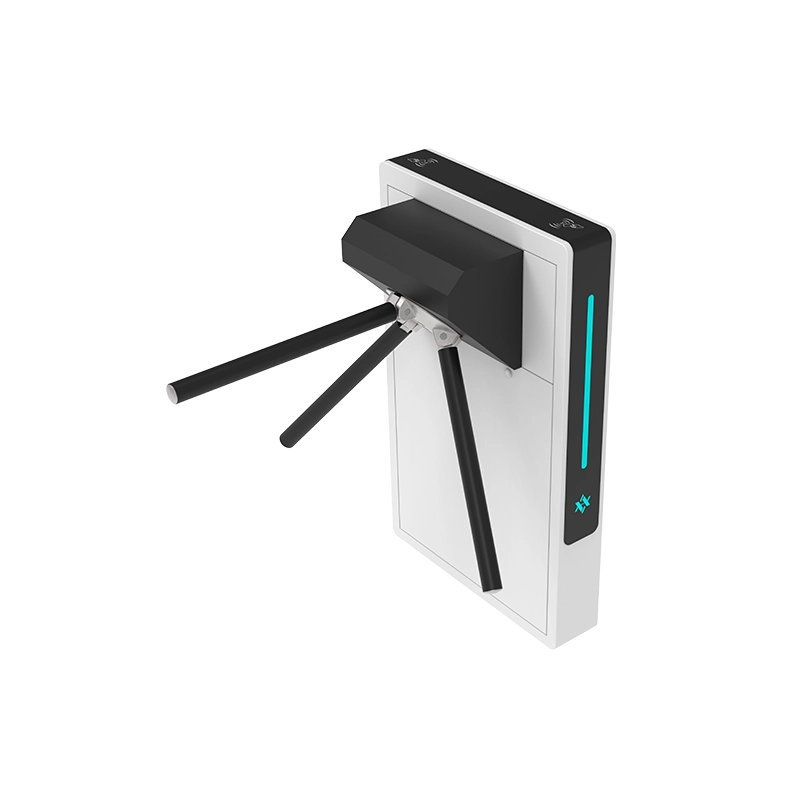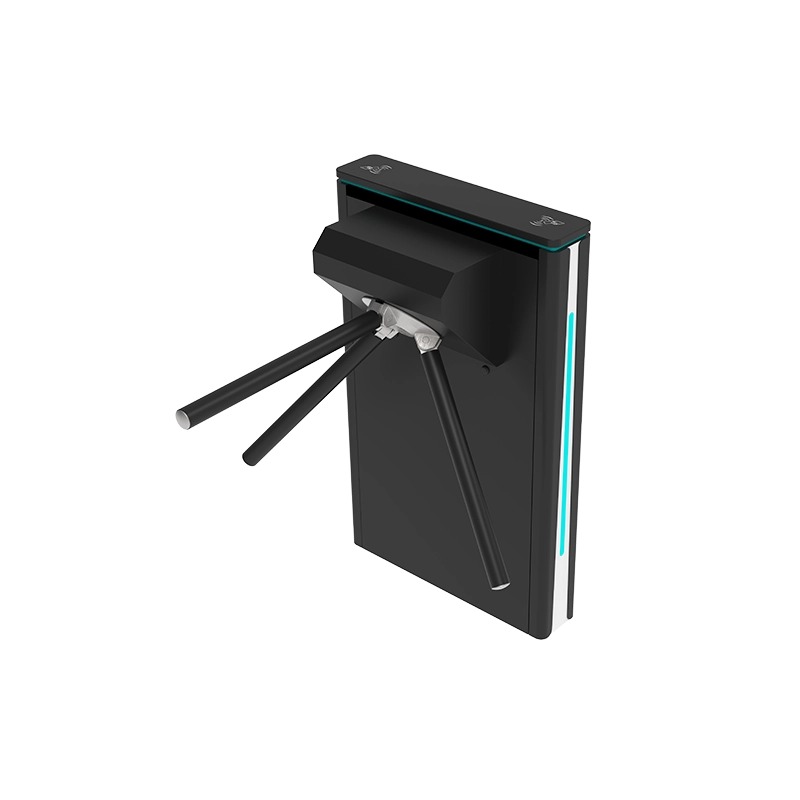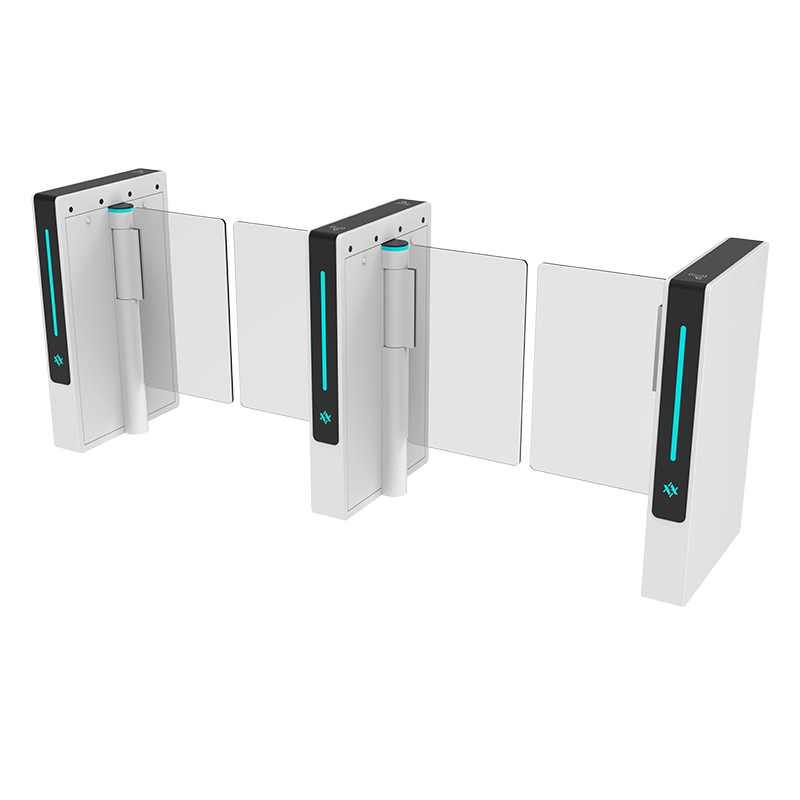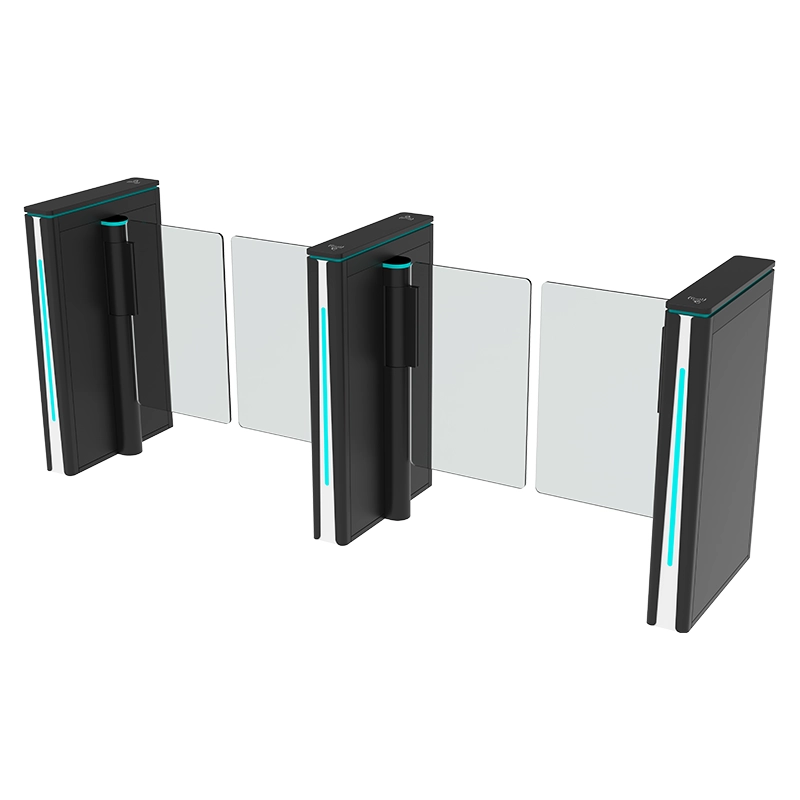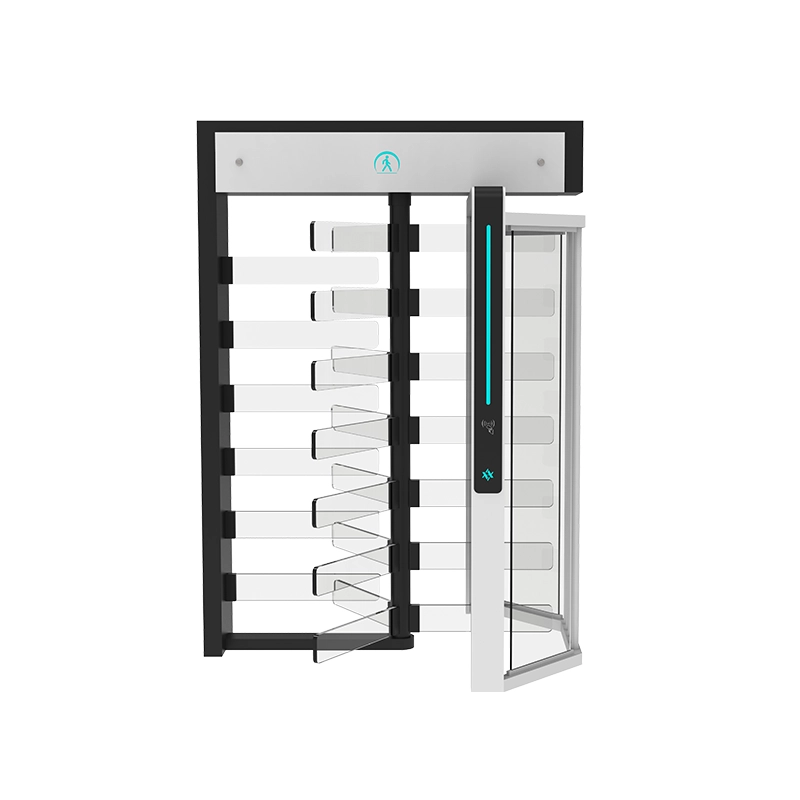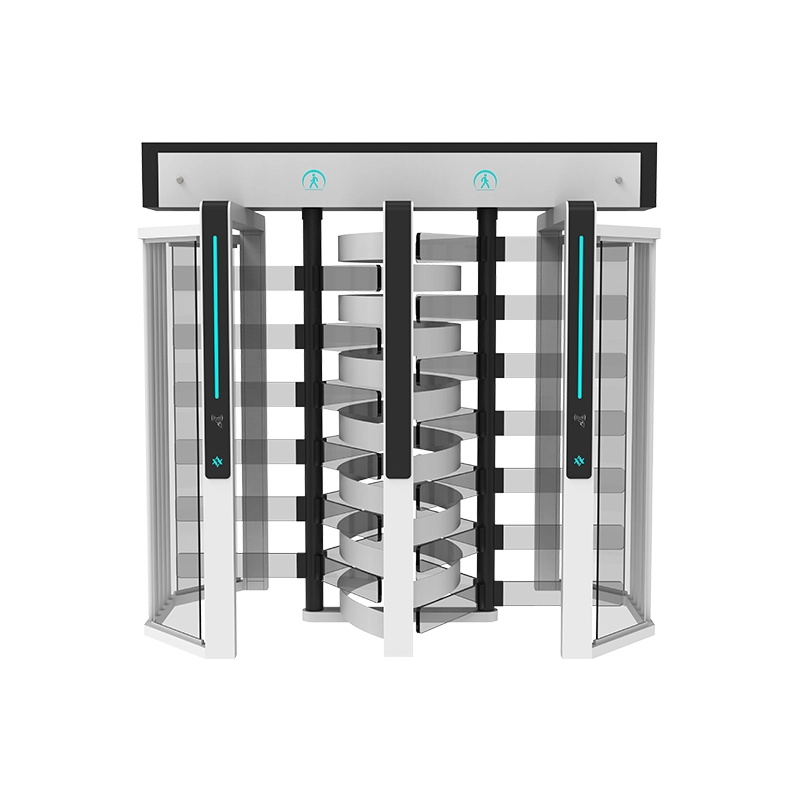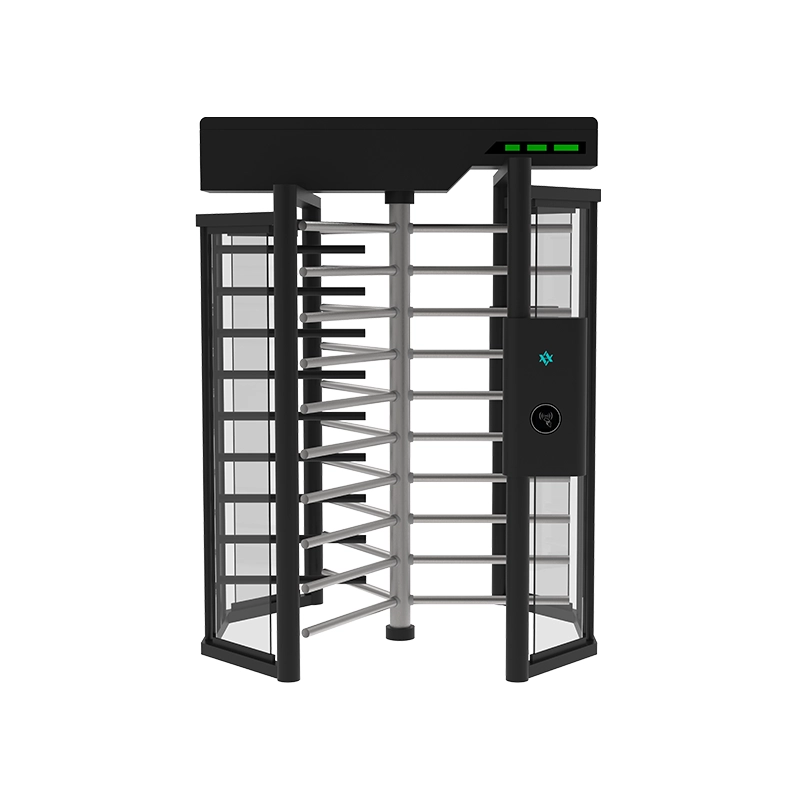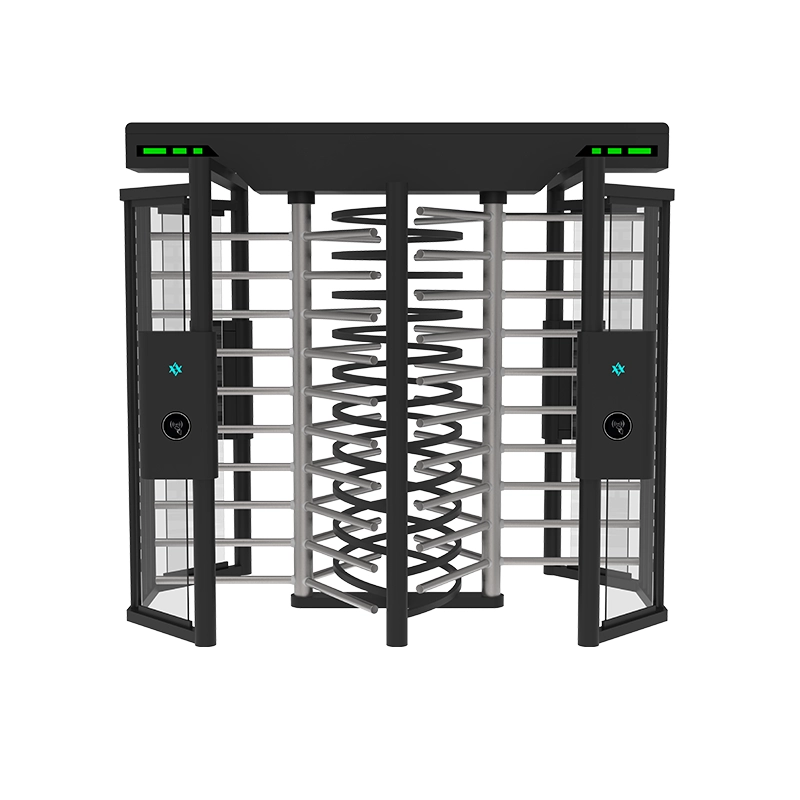
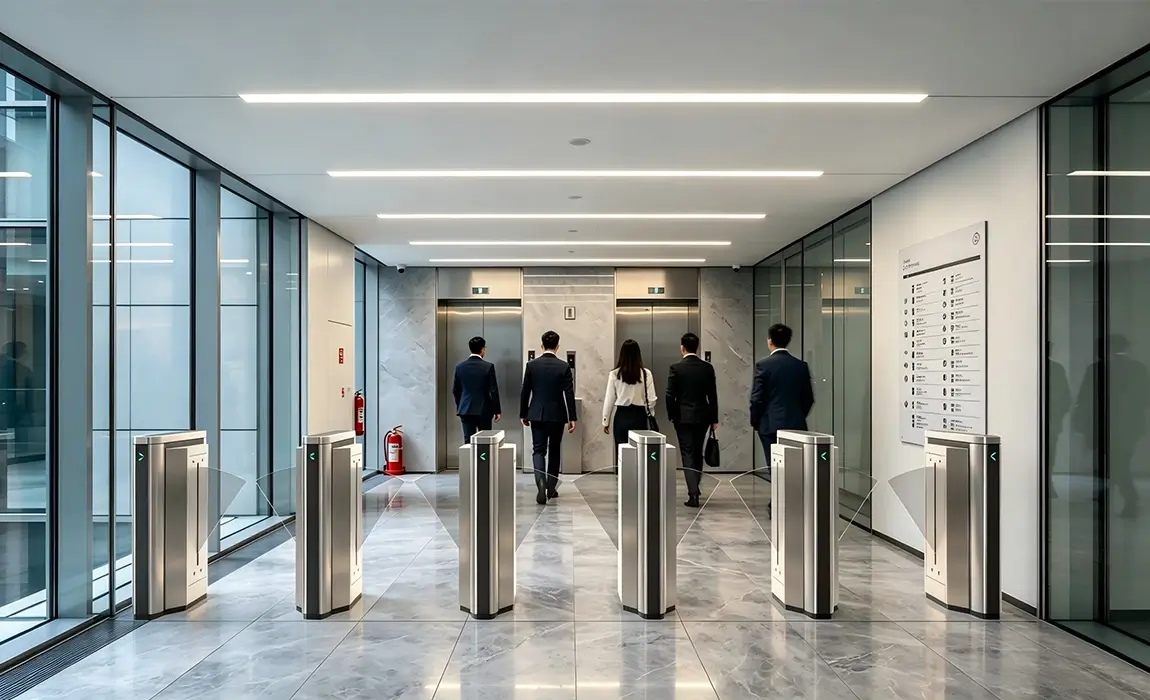

What Is a Flap Barrier Gate?
A flap barrier gate is a pedestrian access control device that uses two retractable wing panels — usually acrylic, tempered glass, or stainless steel — to open and close a single-person lane. On a valid credential from a card reader, fingerprint terminal, face recognition camera, or QR scanner, the wings retract into the cabinet; once the person clears the lane, they close again in under a second. The cabinet is 900–1,000 mm tall, which is why the product is classed as a waist-high barrier rather than a full-height turnstile.
In procurement documents the same product appears as a flap barrier gate, flap barrier turnstile, flap turnstile, or retractable flap barrier. Naming is regional: North American and Gulf projects tend to say “flap barrier turnstile,” UK and Southeast Asian projects say “flap barrier gate,” and Chinese factories list both.
Swing barriers use wide panels on a pivoting post and read as more architectural; speed gates use full-height glass panels for very high transit volume. A flap barrier gate occupies the middle: small footprint, positive blocking, high throughput, and a price most commercial projects can absorb.
How a Flap Barrier Gate Works, Step by Step
- Idle state. Wings closed and locked, and the infrared (IR) array confirms the lane is empty before the controller arms for the next read.
- Credential read. The access terminal verifies an RFID card, biometric template, QR code, or facial template and sends a dry-contact or Wiegand signal to the controller.
- Direction and passback check. The controller validates the requested direction against the lane mode — one-way in, one-way out, bidirectional, free-pass, or locked — and blocks reuse of the same credential.
- Wing retraction. The drive retracts the wings in roughly 0.4–0.8 seconds depending on motor type and wing mass, with an LED and audible cue confirming passage.
- Passage monitoring. The sensor array tracks the user’s position and counts beam interruptions to establish how many people are actually in the lane.
- Close and re-arm. Wings close only after the last sensor pair clears. If a beam is still broken — a second person, a cart, a child — the gate holds open or alarms.
Step six is where cheap gates fail. The quality of the passage-monitoring logic, not the headline opening speed, decides whether a flap barrier turnstile prevents tailgating or only appears to.
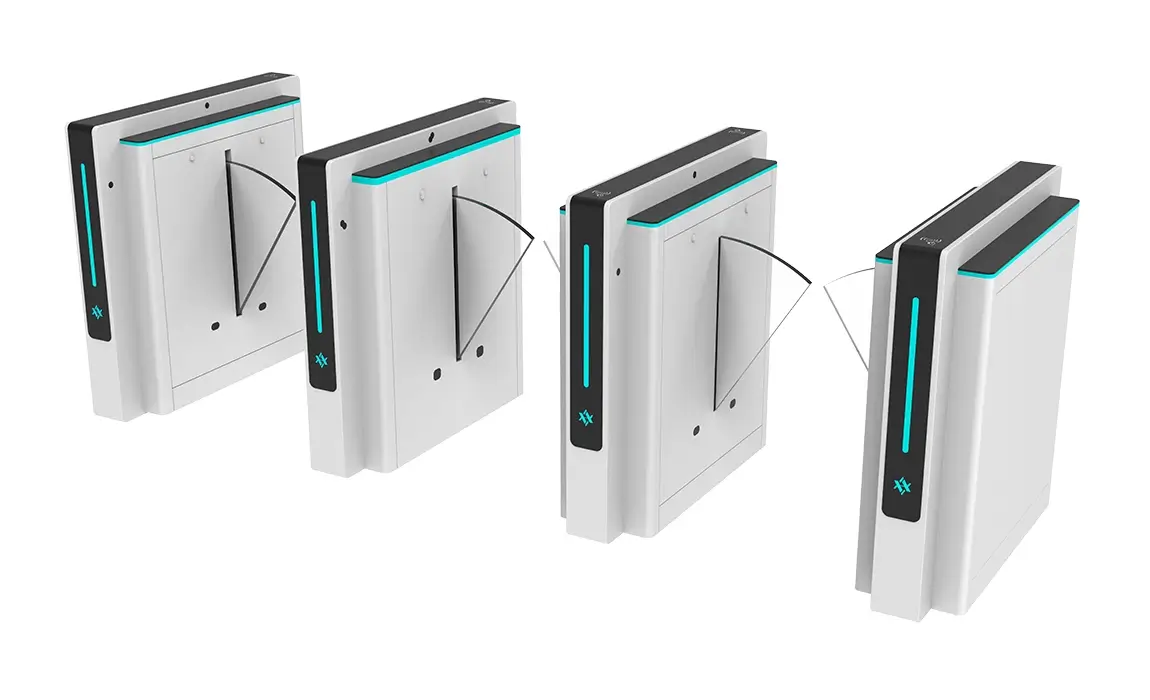
Key Components of a Flap Barrier Turnstile
Five subsystems decide whether a gate performs for a decade or becomes a maintenance line item. Ask suppliers to specify each in writing before comparing quotations.
1. The Drive Motor: Brushed DC, Brushless DC, or Servo
- Brushed DC. Carbon brushes contact a commutator, producing dust, heat, and noise. Brush life is finite — a few million cycles in light lobby use, less in continuous transit duty.
- Brushless DC (BLDC). No brushes, so no dust and no commutator wear. Quieter and smoother at low speed. A good BLDC drive commonly reaches 5–10 million mean cycles between failures (MCBF) in turnstile duty.
- Servo. Closed-loop control with an encoder gives precise position, programmable acceleration, and the best anti-pinch behavior, because the controller reads obstruction from the torque signature rather than sensors alone. Fastest, quietest, most expensive.
For an office lobby at a few thousand passages a day, a quality BLDC drive is right. For a transit station at 30,000 daily passages on continuous duty, the servo premium pays back in availability.
2. Reduction Mechanism, End Stops, and Fail-Safe Release
Motors spin fast; wings move slowly and carry torque, so a gearbox or belt stage connects the two.
- Backlash. Loose gearing lets the wing wobble when pushed by hand and accelerates end-stop wear.
- End stops and clutch. The wing must stop hard at 90 degrees without sending that shock into the gearbox, so good designs pair a mechanical stop with a resilient buffer plus a torque limit or electromagnetic clutch.
Fail-safe behavior lives here too. On power loss the mechanism should drop the wings open or allow manual push-through at a defined force, typically under 30 N at the wing tip. If a supplier cannot state that release force, treat it as a specification gap.
3. Wings and Panels
- Acrylic. Light, economical, fast, easy to replace — but it scratches and can craze under UV unless stabilized.
- Tempered glass. Heavier, better looking, far more scratch resistant, available in 8–12 mm. The extra mass needs more torque, so pair glass wings with a BLDC or servo drive.
- Stainless steel panels. For plants and secure zones where durability matters most. Heavier, and louder on closure unless damped.
- Soft-edge wings. Foam or rubber-edged panels for schools, gyms, and children’s areas, where impact injury risk outweighs aesthetics.
Standard wing height is about 900 mm. Taller glass wings, 1,200 mm and up, make climbing harder but raise closing force and cut throughput.
4. IR Sensor Arrays and Anti-Tailgating Logic
This is the most under-specified part of most tenders, and it is where the security value comes from. A low-cost gate may carry three or four sensor pairs — enough to know someone is in the lane, not enough to determine direction, count bodies, or tell a person from a rolling suitcase. For genuine anti-tailgating, specify 8–12 IR pairs as a light curtain down the lane, plus pairs at the wing plane. A dense array lets the controller estimate how many people are in the lane from beam-break counts, detect a second person entering on one credential and alarm while holding the wings closed, flag travel against the permitted direction as a passback violation, and retract the wings the moment an obstacle enters the wing arc.
Sensor type matters as much as count. Analog-output pairs with an adjustable threshold resist dust, humidity, and sunlight better than digital phototransistors, which glare can blind or vibration can misalign.
5. Controller, Power Supply, and Interfaces
- Inputs: two or more dry-contact or Wiegand inputs for readers, plus inputs for fire alarm, remote open, free-pass, and lock.
- Outputs: relays for passage counting and alarm; RS-485, RS-232, or TCP/IP for management software.
- Fire override: forces fail-open the moment the alarm contact closes — a life-safety requirement, not a convenience feature.
- Power: AC 100–240 V with a switch-mode supply. Confirm brownout tolerance, since mains stability is not guaranteed in every export market.
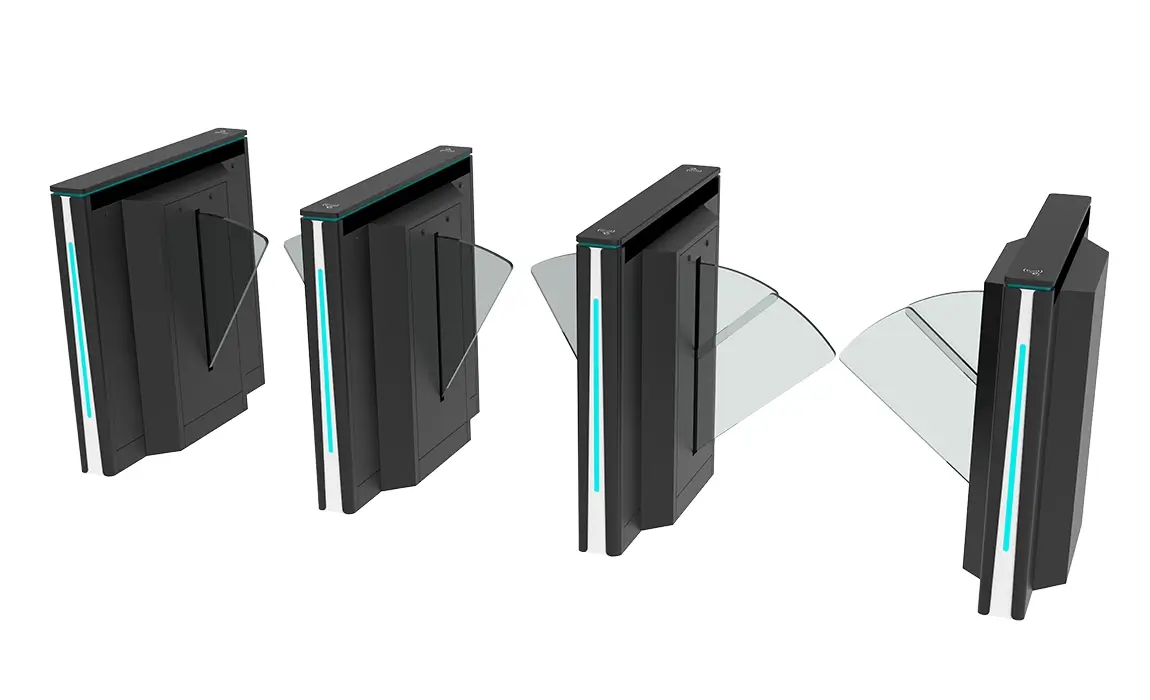
Types of Flap Barrier Gates
Flap barriers are classified two ways: by drive behavior, and by panel material or lane geometry. Both affect price and should be stated on the purchase order.
Semi-Automatic vs Fully Automatic Flap Barriers
In a semi-automatic unit, the motor retracts the wings but the user pushes them back, or a spring returns them, after passage. These are mechanically simple and inexpensive, and they do not depend on position feedback to reseat the wing. Fully automatic units power both strokes under motor control, which nearly every modern commercial project specifies. That delivers:
- Consistent closing timing regardless of how gently a user walked through.
- Remote control of lane state — hold open for free-pass, or lock closed during an event.
- True anti-pinch behavior, because wings can stop and reverse mid-stroke.
- Consistent LED and audible feedback for visitors unfamiliar with the entrance.
Panel Materials Compared
| Panel material | Weight | Wear behavior | Drive required | Best fit |
|---|---|---|---|---|
| Acrylic | Light | Scratches visibly; may craze without UV stabilizer | BLDC or brushed DC | Indoor offices, budget-sensitive projects |
| Tempered glass, 8–12 mm | Medium–heavy | Scratch resistant; fragments if overloaded | BLDC or servo | Corporate lobbies, airports, premium buildings |
| Stainless steel panel | Heavy | Very durable; can dent, louder on closure | Servo or high-torque BLDC | Factories, secure zones, outdoor canopies |
| Soft-edge foam or rubber | Light | Compresses on impact; needs replacement | BLDC | Schools, gyms, children’s facilities |
Lane Width and Housing Design
Standard lane clear width is 550–600 mm, which passes an adult with a bag without contact. Accessible lanes run 900–1,000 mm and must be provided at every accessible entrance under the ADA in the United States and equivalent rules in the EU and Gulf. Specifying all narrow lanes to save floor space is a common error that surfaces at commissioning. Housing style is mostly architectural, but the internal volume must fit the drive you specified: a brushed motor drops into a slim cabinet more easily than a servo drive plus gearbox.
How to Size a Flap Barrier Gate for Your Project
Use the table as a specification checklist, and fill in your target values before requesting quotations so every supplier answers the same brief.
| Criterion | Typical range | What it controls | Watch out for |
|---|---|---|---|
| Throughput per lane | 25–40 persons/min (to ~600/hour) | Queue length at peak; lane count | Figures quoted at unlimited credential speed — biometric reads are slower than cards |
| Opening / closing time | 0.4–0.8 s | Peak flow, perceived responsiveness | Faster strokes raise wear and pinch energy |
| Lane clear width | 550–600 mm standard; 900–1,000 mm accessible | Wheelchair, luggage, cart passage | At least one accessible lane per entrance, by code |
| IR sensor pairs | 8–12 pairs for anti-tailgating | Tailgating detection, anti-pinch, counting | “Multiple sensors” instead of an actual count |
| Drive type | Brushed DC, BLDC, servo | Noise, service interval, service life | Brushed motors in continuous-duty transit use |
| MCBF / cycle life | 5–10 million cycles (BLDC, servo) | Service intervals and spares planning | MCBF quoted without the duty cycle it assumes |
| IP rating | IP32–IP54 typical; IP65 exposed outdoor | Dust, rain, washdown tolerance | Indoor-rated cabinets under an open canopy |
| Power and interfaces | AC 100–240 V; dry contact, Wiegand, RS-485, TCP/IP | Reader integration, management, fire override | A missing fire alarm input is a compliance failure |
How Many Lanes Do You Actually Need?
Peak-hour demand sets the lane count, not average daily traffic. Count the people who must pass in the busiest 15 minutes, apply credential read time, and add a safety factor. A card reader takes about 1.0–1.5 seconds per person including approach; a face terminal takes 0.5–1.5 seconds for an enrolled user and longer for visitors, while the lane itself caps at roughly 25–40 persons per minute. The lower number governs.
Take 900 staff arriving between 08:30 and 09:00 — about 300 people, or 20 per minute. Two lanes at 25 persons per minute each gives headroom, a third accessible lane is required by code, and a fourth is usually added so maintenance does not close the entrance.
Typical Applications
These four applications generate most flap barrier demand.
Office Lobbies
Lobbies combine high peak-hour volume with a strong appearance requirement, since the entrance is the first thing visitors see. A typical specification is three or four 600 mm lanes with acrylic or glass wings, BLDC drives, one reader per lane, and one accessible lane — sized so 300–500 people can clear a 45-minute arrival window, and integrated with HR systems for attendance records.
Metro and Transit Stations
Fare-line gates run continuous duty for 18+ hours a day, tolerate vibration, dust, and temperature swings, and must fail open on power loss so a station can evacuate. Servo or high-specification BLDC drives, IP-rated enclosures, and anti-condensation heating are standard. Fare media integration also demands fast validated reads with minimal false rejection, because a rejected fare gate drives passenger complaints faster than almost anything else.
Airports
Airports use flap barriers three ways: staff and crew access, segregated passenger flows, and immigration zones. Airside gates typically run one-way with anti-passback enforcement and camera integration, so every passage event is logged with an image record. Reliability matters more than price here, because a stuck lane in a restricted zone is a security event, not just an inconvenience.
Gyms, Fitness Clubs, and Other Venues
Membership venues favor flap barriers because they enforce one-member-per-entry while looking modern, with soft-edge wings where children use the facility and QR codes or member cards as the usual credential. Traffic is bursty rather than continuous, so a good BLDC unit beats servo on economics. Factories use them for shift-change access and headcount confirmation.
Flap Barrier vs Swing Gate vs Speed Gate
Buyers often arrive asking for a “flap barrier vs speed gate” comparison, and the confusion is fair, because some vendors use “flap gate” for both product families.
A flap barrier gate uses two short panels that retract into a cabinet at hip height: compact, comparatively inexpensive, positive blocking, 25–40 persons per minute per lane. A swing gate uses taller panels rotating on a post, usually 1,500–1,800 mm high, giving a stronger visual and physical barrier, but it cycles more slowly and costs more. A speed gate uses full-height glass panels with servo drives and very fast actuation, commonly rated for 40–60 or more persons per minute per lane — the premium option for airport terminals, headquarters lobbies, and high-volume transit entrances.
| Factor | Flap barrier gate | Swing gate / swing barrier | Speed gate |
|---|---|---|---|
| Barrier height | ~900 mm, waist-high | 1,500–1,800 mm | 1,600–1,800 mm glass |
| Throughput per lane | 25–40 persons/min | 20–30 persons/min | 40–60+ persons/min |
| Footprint | Compact, narrow cabinets | Wider, needs arc clearance | Longest cabinet |
| Visual impact | Understated, functional | Open and architectural | High-end, glass-heavy |
| Typical drive | BLDC or brushed DC; servo on premium units | BLDC or servo | Servo almost always |
| Anti-tailgating | Good with 8–12 IR pairs | Good with a dense sensor array | Excellent, high sensor density |
| Climb-over resistance | Low to moderate | Moderate | High |
| Relative cost per lane | Lowest of the three | Mid-range | Highest |
| Best fit | Offices, gyms, factories, schools, secondary entrances | Corporate lobbies, hotels, banks | Airports, transit, HQ lobbies, high-security zones |
The practical rule: for maximum throughput in the smallest footprint on a controlled budget, choose a flap barrier gate. If the entrance is a design statement in a premium lobby, a swing or speed gate may justify the cost. Above roughly 1,000 persons per hour at one entrance, consider speed gates. You can compare flap barrier turnstiles and speed gate turnstiles on the same dimensions before locking in a layout.
Flap Barrier Gate Price and Cost of Ownership
A price range is useful for budgeting and misleading for procurement, because the gate is one line item among several.
What Drives the Price
- Drive type. Brushed DC at the bottom, BLDC in the middle, servo at the top — usually the largest cost delta.
- Panel material and thickness. Acrylic up to 12 mm tempered glass moves the price materially and forces a stronger drive.
- Sensor count and type. Six to twelve analog IR pairs with a proper light curtain cost more, and they separate real anti-tailgating from a marketing claim.
- Housing grade and finish. 304 versus 316 stainless steel, gauge thickness, and finish. Grade 316 is worth the premium in coastal or chlorine-exposed sites.
- Cabinet configuration. A single-lane set is one master plus one slave cabinet; multiple lanes share cabinets, so cost per lane falls as lane count rises.
- Site factors. Freight, crating, duty, floor plates, electrical rough-in, and commissioning labor are excluded from an ex-works price.
Typical China Ex-Works Market Reference Range
As a budgeting reference only, Chinese ex-works pricing for flap barrier turnstile lanes commonly falls between USD $400 and $1,200 per lane, depending on panel material, drive type, sensor density, and housing finish. Entry-level acrylic-wing units with brushed drives sit at the low end; servo-driven units with tempered glass wings, dense IR arrays, and 316 stainless housings sit at the high end.
That range is a planning reference, not a quotation. Exact pricing depends on your specification, lane configuration, reader integration, and delivery terms.
Cost of Ownership Over Ten Years
Power draw, scheduled maintenance, and wear parts are predictable and small if maintained on schedule. The dominant unplanned cost is drive replacement: a BLDC or servo drive reaching 5–10 million MCBF may never need replacement in a normal lobby, while a brushed motor in continuous duty can fail well before that. Downtime is the cost buyers underestimate most. Compare quotations on total cost per million passages, not cost per lane.
How to Choose a Flap Barrier Turnstile Manufacturer
Gate hardware is long-life equipment, and the supplier relationship outlasts the delivery.
What to Verify Before You Commit
- Certification, not claims. Ask for the certificate number itself — a third-party test report for the exact product family beats a general quality statement.
- Factory reality. A verifiable factory address and a capacity you can compare against your schedule.
- Testing capability. Does the factory cycle finished units under load before shipment? A turnstile that never ran a full cycle is a warranty claim in transit.
- Spares and documentation. Wiring diagrams, controller manuals, and a written spares list. If you cannot get a wiring diagram at quotation stage, you will not get one at service stage.
- Warranty and export experience. Duration, what is covered, who pays warranty freight.
AIPADA as a Flap Barrier Turnstile Supplier
AIPADA — Shenzhen Aipada Technology Co., Ltd. — has manufactured pedestrian access control hardware since 2014. The factory occupies 3,000 m² at Building 19, Guorun Industrial Park, Tangxia Town, Dongguan, with 80 staff and a monthly capacity of 3,000 units, covering single-lane prototypes and multi-lane rollouts on the same line.
On compliance, AIPADA holds CE certification under certificate number ZR0119400918C and a CMA and CNAS accredited test report, UCT1648D35, covering the flap barrier product. The company also holds design patent ZL 2021 3 0788509.8 and four software copyrights covering the controller firmware — useful if your project needs evidence of original software rather than rebadged boards.
Terms suit international project buyers: MOQ 1 unit, lead time 7–15 days, T/T with a 30% deposit, a 2-year warranty, and lifetime technical support. Exports run 40% Europe, 25% Middle East, 20% Southeast Asia, and 15% South America, so the standard product is already configured for those markets.
For a project quote, contact info@aipadaturnstile.com or WhatsApp +86 191 2995 1956. Send a floor plan with lane count, lane widths, expected peak throughput, and the credential types you plan to use, and you will get a usable quotation rather than a generic price list. Readers, cameras, and management software can be quoted alongside the barrier — see the access control products range.
Five Questions to Ask Any Supplier
- What is the exact drive type, and what MCBF can you document for it?
- How many IR sensor pairs are in the lane, and what is their output type?
- What force is required at the wing tip to push through on power loss, and where is it measured?
- Will you supply a wiring diagram, controller manual, and spares list with the quotation?
- Which certifications apply to the exact model quoted, and what are the certificate numbers?
Those questions avoid the two most expensive mistakes in this category: buying an under-specified gate that cannot enforce the security policy it was bought for, and buying from a supplier that cannot support the product after the warranty ends. For a deeper look at how architectures compare across the turnstile family, see this guide to the working principle and types of turnstiles.
Frequently Asked Questions About Flap Barrier Gates
How many people per minute can a flap barrier gate handle?
A single lane passes 25–40 persons per minute, roughly 600 per hour, assuming a cooperative user with a card or biometric credential. The 0.4–0.8 second wing cycle is rarely the bottleneck; credential read time usually is. Size the entrance on peak-15-minute demand and add a spare lane.
What is the difference between a flap barrier gate and a speed gate?
A flap barrier gate uses short, hip-height panels that retract into a compact cabinet, costs less, and passes 25–40 persons per minute. A speed gate uses full-height glass panels with a servo drive, typically passes 40–60 or more persons per minute, and is designed as a premium architectural feature. Because some suppliers use “flap gate” loosely for both, confirm panel height, drive type, and throughput rating in writing.
Can a flap barrier gate integrate with face recognition or existing access control?
Yes. Standard controllers accept dry-contact relay closures and Wiegand signals, covering most RFID readers, fingerprint terminals, QR scanners, and face recognition cameras. Networked controllers add RS-485 or TCP/IP for central management software, passage logging, and remote lane control. Specify the reader model and its output protocol with your enquiry.
What happens during a power failure or fire alarm?
Well-designed units provide fail-open behavior: the wing releases so people can push through at a defined low force, typically under 30 N at the wing tip, or the wings retract automatically. A dedicated fire alarm input forces the lane open when the alarm contact closes — a life-safety requirement in most jurisdictions, not an optional extra.
How much does a flap barrier gate cost, and what affects the price?
As a market reference for budgeting, Chinese ex-works pricing for flap barrier turnstile lanes generally sits around USD $400–1,200 per lane. The main drivers are drive type, panel material and thickness, the number and quality of infrared sensor pairs, housing grade such as 304 versus 316 stainless steel, and whether readers and management software are included. Freight, duty, electrical work, and commissioning labor are separate, so exact pricing requires a project quote.
How do I stop people from tailgating through a flap barrier gate?
Tailgating prevention depends on sensor density and controller logic more than on the wing itself. A gate with three or four infrared pairs can detect that someone is in the lane but cannot reliably count how many. Specify 8–12 pairs as a light curtain along the lane, plus pairs at the wing plane, preferably analog-output sensors with adjustable thresholds so dust and sunlight do not cause drift. The controller counts beam breaks, compares the count against the single credential presented, and alarms when a second person is detected. Anti-reverse logic should also be enabled. For a broader comparison of gate architectures, see the speed gate manufacturer guide.