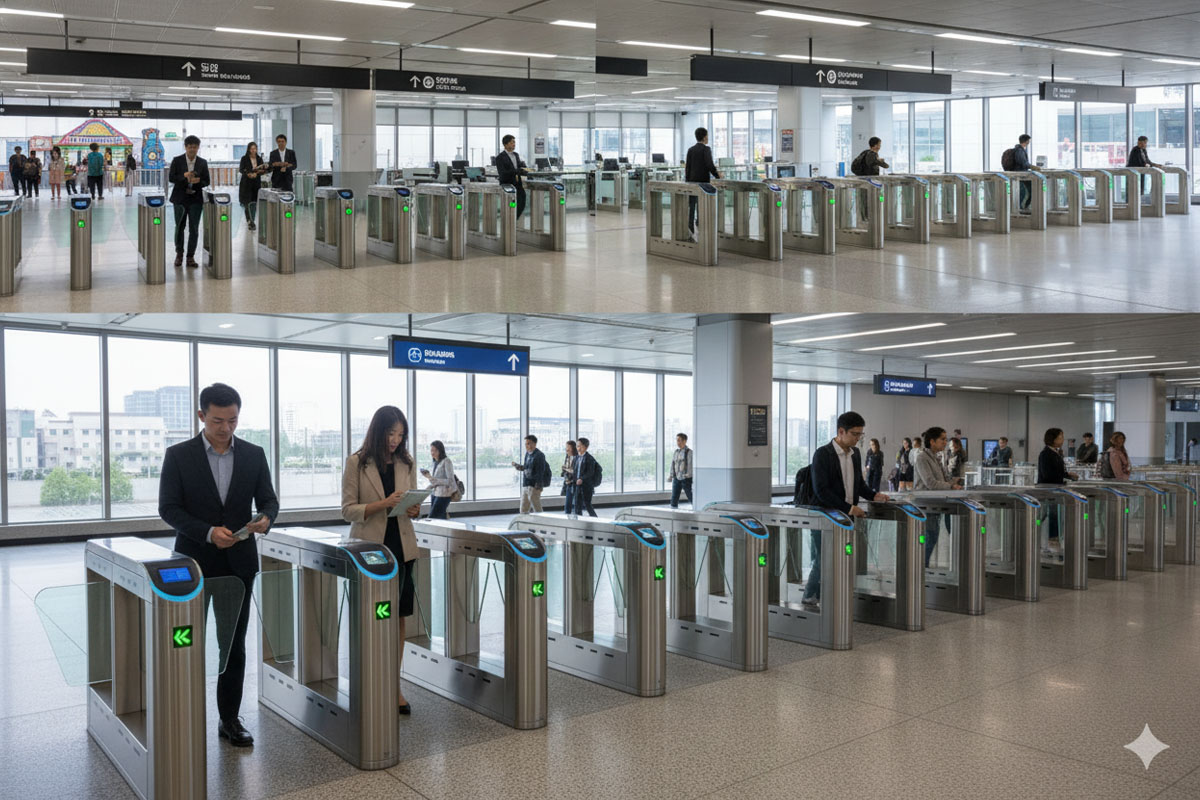
](https://aipadaturnstile.com/wp-content/uploads/2026/04/Where-are-Flap-Barriers-Commonly-Installed.jpg "Where are Flap Barriers Commonly Installed")

Where Flap Barriers Are Actually Installed: 12 Venue Types and the Configuration Each One Needs
Flap barriers show up in more buildings than almost any other pedestrian gate, but the reason they win is rarely the same twice. In an office tower it is the slim cabinet and the quiet motor. In a stadium it is the ticket-checking speed. In a factory it is the anti-tailgating sensor set. If you are specifying a flap barrier — also called a flap barrier turnstile or swing flap gate — the venue dictates the lane width, the reader, the fail mode and the finish. This guide walks through the twelve locations where flap barriers are most commonly installed, what each one demands from the hardware, and where a different gate type is the better answer.
AIPADA has manufactured turnstiles and pedestrian access gates since 2014 at our 3,000 m² facility in Dongguan, China, shipping to engineering contractors and distributors across Europe, the Middle East, Southeast Asia and South America. The installation patterns below are drawn from those projects. Where we quote figures, they are typical China ex-works market references, not fixed quotations — final pricing always depends on lane count, finish, reader integration and control software.
Why Flap Barriers Dominate So Many Entrances
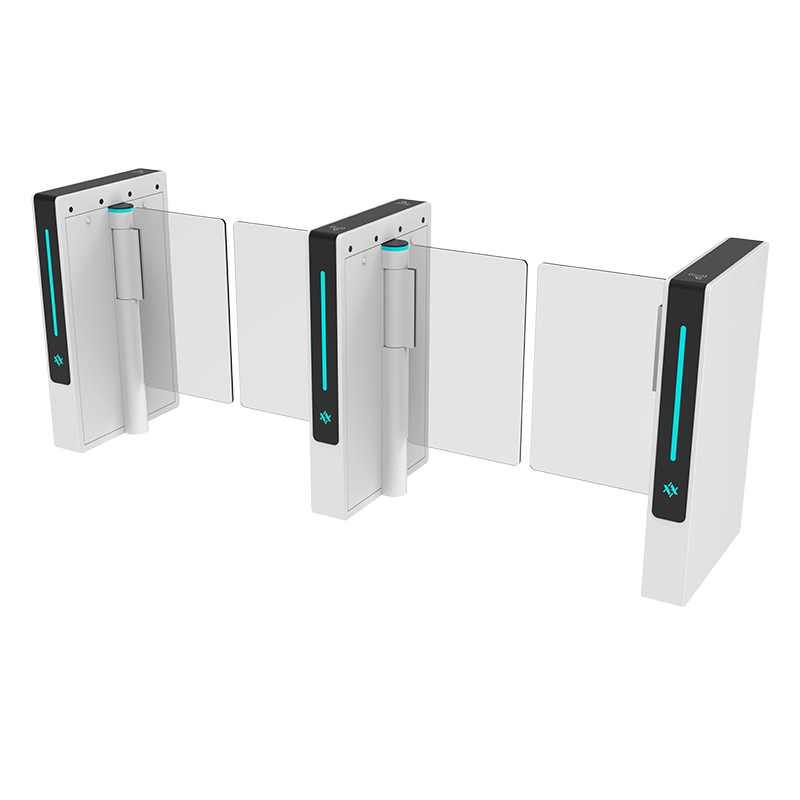
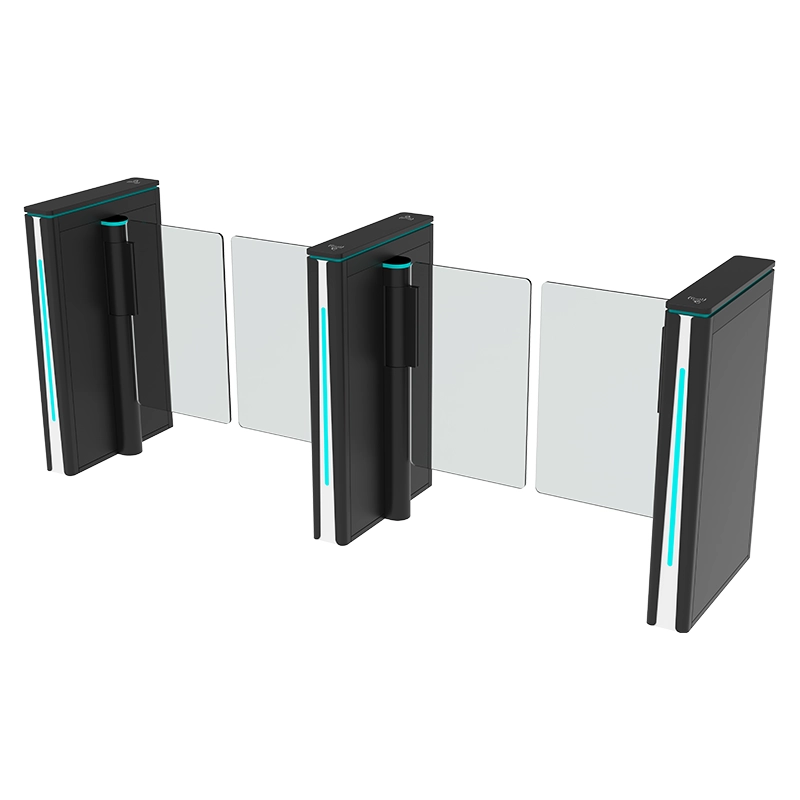
A flap barrier uses two retractable wings — usually acrylic, tempered glass or polycarbonate — that swing into the cabinet to open and return to the closed position after each authorised passage. That single mechanical choice produces a specific set of advantages:
- High throughput. A well-tuned unit opens and closes in roughly 0.4–0.6 seconds and sustains 30–40 people per minute per lane, which is why flap barriers are the default for ticketed, high-volume entrances.
- Bi-directional by default. Nearly every model we build is bidirectional out of the box, with separate entry and exit readers so a single lane serves both directions.
- Low visual weight. The closed wings sit at waist height and read as a barrier rather than a wall, so lobbies keep their sight lines.
- Easy reader integration. Because the wings are driven electronically, almost any credential type — RFID card, QR code, fingerprint, face recognition, ticket barcode — can be wired in as the trigger.
- Comfortable accessible passage. With a 900 mm lane, a flap barrier passes wheelchairs, luggage trolleys and cleaning carts that a tripod turnstile would block.
The trade-off is physical security. A waist-high flap barrier deters and directs; it does not stop a determined intruder who is willing to vault it. That single fact determines which of the twelve venues below get flap barriers and which get full-height turnstiles instead.
1. Office Towers and Corporate Lobbies
This is the single largest application category. A typical installation is a bank of three to six lanes in the main lobby, split as two or three entry lanes and one or two exit lanes, with one lane widened to 900 mm for accessibility and deliveries.
What matters here is aesthetics and noise. Cabinets are usually stainless steel with a brushed or mirror finish, and the client will often specify the wing material to match the interior — clear acrylic for a minimal look, or smoke-tinted polycarbonate where a stronger visual line is wanted. Our standard office-grade flap barrier runs at ≤50 dB, which is quiet enough to sit directly beside a reception desk.
The credential mix is usually employee cards on RFID, with QR code or face recognition added for visitors and contractors. Integration is normally at the software layer: the barrier receives a dry-contact or Wiegand signal from the access controller, and passage events are written back to the visitor management or HR system. See our visitor access control system guide for how the visitor lane is usually configured.
2. Metro, Rail and Bus Terminals
Transport entrances push the hardware hardest. Peak flows are measured in tens of thousands per hour, tickets are disposable or on a phone screen, and the gates run 20 hours a day. Flap barriers are used in the unpaid-to-paid transition where the credential is a ticket rather than an employee card.
Three requirements appear in almost every transit project:
- Fast read, fast wing. The scanner has to read a phone screen or a paper barcode in under 0.3 seconds, and the wing cycle has to overlap the next passenger’s approach. A slow reader is the most common cause of queue build-up at transit gates — see our notes on common gate problems.
- Fail-open or fail-locked as dictated by fire code. Transit authorities usually specify fail-open in the direction of evacuation, with battery backup keeping the lane live through a power dip.
- Heavy-duty cycle rating. Ask any supplier for the MCBF (mean cycles between failures) figure. For transit work we specify mechanisms rated well above the traffic a standard office lane sees.
Where a station also needs to hold back a genuine crush of people, designers often pair flap barriers with wider speed gate turnstiles rather than using flap units alone.
3. Stadiums, Arenas and Concert Venues
Event venues live or die on ingress time. The design target is usually to clear a full house within 45–60 minutes, which works out to banks of eight to twenty lanes running in parallel, all entry-facing before the event and reversible afterwards.
The specific configuration that works:
- Ticket-first credentialing. Handheld or fixed barcode/QR scanners mounted on the cabinet top, with the lane linked to the ticketing platform so a scanned ticket cannot be reused.
- Wide lanes. 600 mm is enough for a walking adult, but event venues frequently specify 900 mm so families with bags move through without hesitation.
- Reversible direction. The ability to flip a whole bank from entry to exit after the event is a software setting on bidirectional flap barriers, and it removes the need to double the lane count.
- Outdoor-rated cabinets where the gate sits outside the concourse. Look for IP-rated enclosures and a canopy; standard indoor cabinets will corrode at the fixings within a few seasons. Our outdoor-rated gates follow the same engineering logic.
4. Airports and Airport-Adjacent Facilities
Airports use flap barriers in three distinct places, and it is important not to confuse them: staff-only zones, security checkpoints and premium lounge entrances. Passenger boarding gates use a different class of hardware entirely.
For staff zones the driving requirement is credential hierarchy — a cleaner’s badge opens the service corridor but not the apron door, and every passage is logged. For lounges the flap barrier is a membership gate: the credential is a boarding pass or loyalty code, the cabinet is finished to match the lounge interior, and the lane must accept a passenger with a roll-aboard bag. That means a 900 mm lane and a wing that stays open long enough for a slow-moving traveller.
If you are working on the wider passenger flow problem rather than a single door, our guide to airport swing gates and passenger flow covers lane planning at the terminal scale.
5. Factory and Industrial Site Entrances
Industrial sites are the application where the flap barrier most often gets replaced by something heavier. The reason is tailgating: on a production site, an unauthorised person behind an authorised badge is a safety and theft risk, and a waist-high barrier does almost nothing to prevent it.
Where flap barriers are still the right answer — typically the personnel entrance to an office block inside the plant, or the canteen and locker-room access — the specification usually adds:
- Multi-beam anti-tailgating sensors. A grid of infrared beams across the lane that counts bodies, not just credential presentations. If two people cross on one credential the gate alarms and refuses to release the second passage.
- Anti-crush protection. Beams low in the lane so a child or a cart in the path stops the wing rather than being hit by it.
- Integration with time and attendance. The barrier becomes the clock-in point, which means the data feed has to be clean enough for payroll.
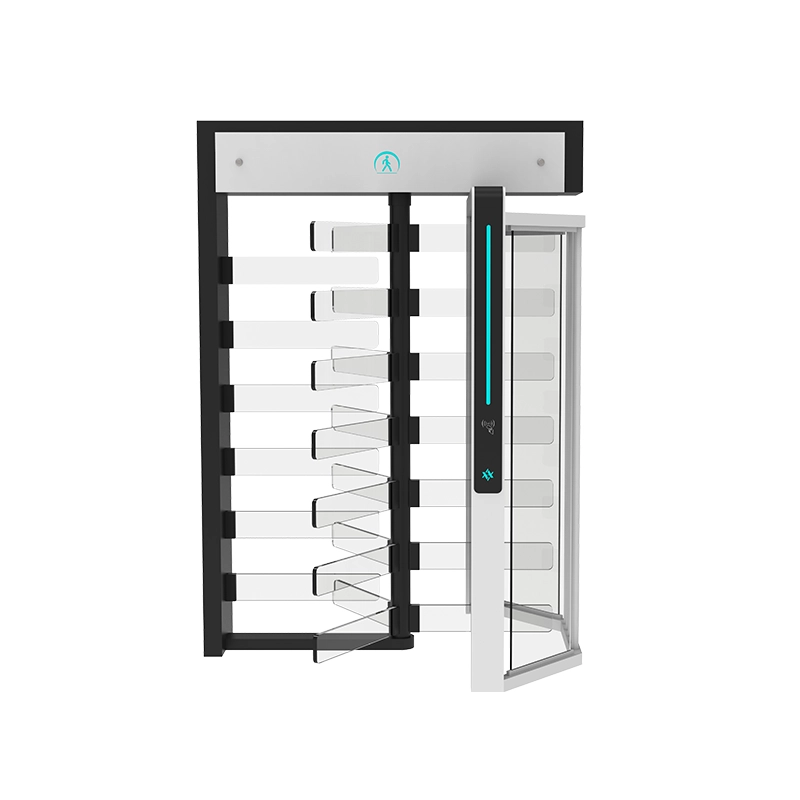
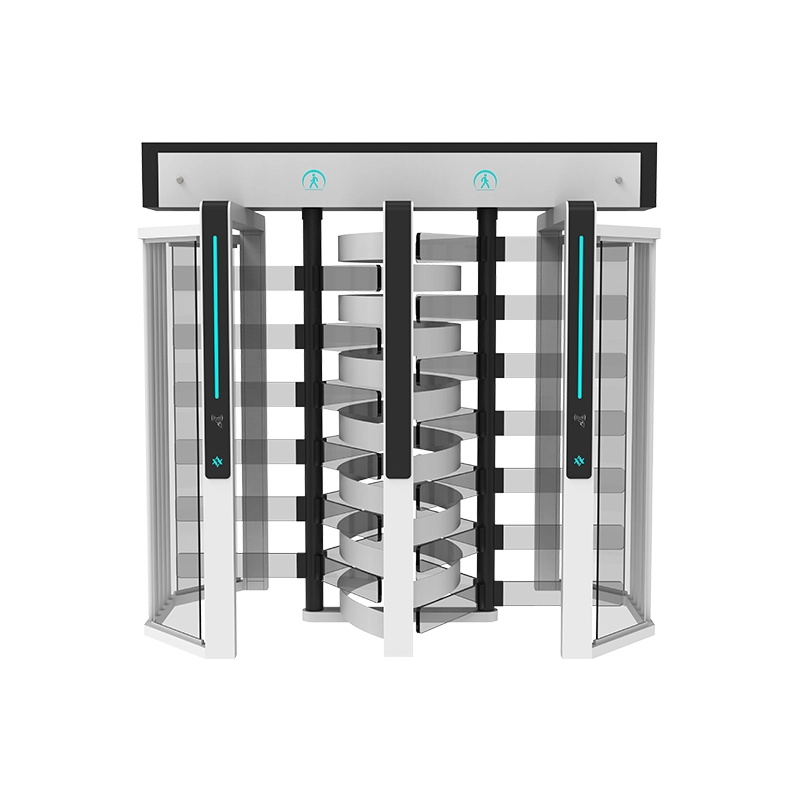
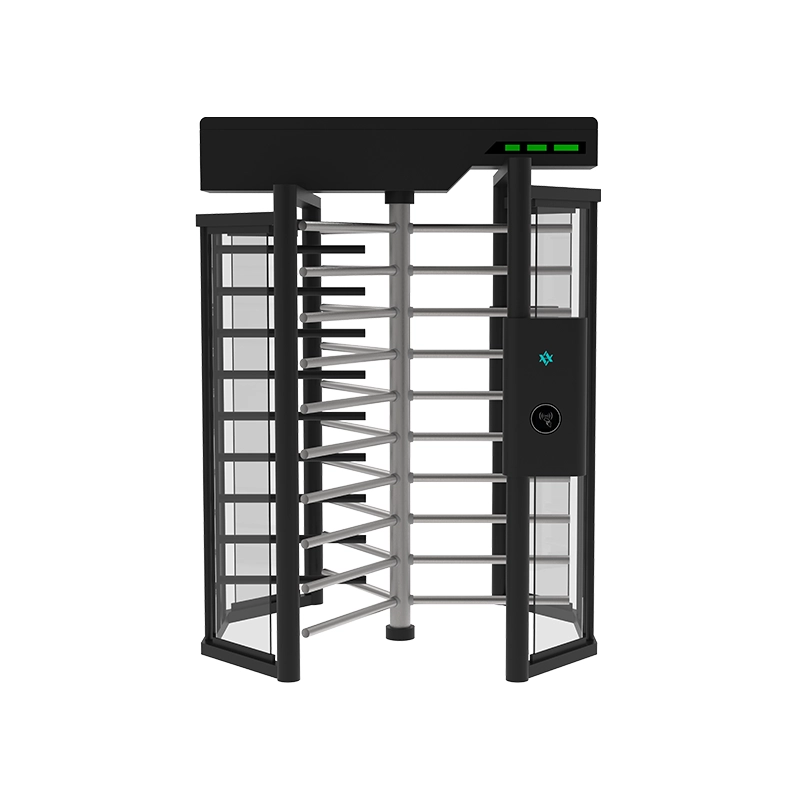
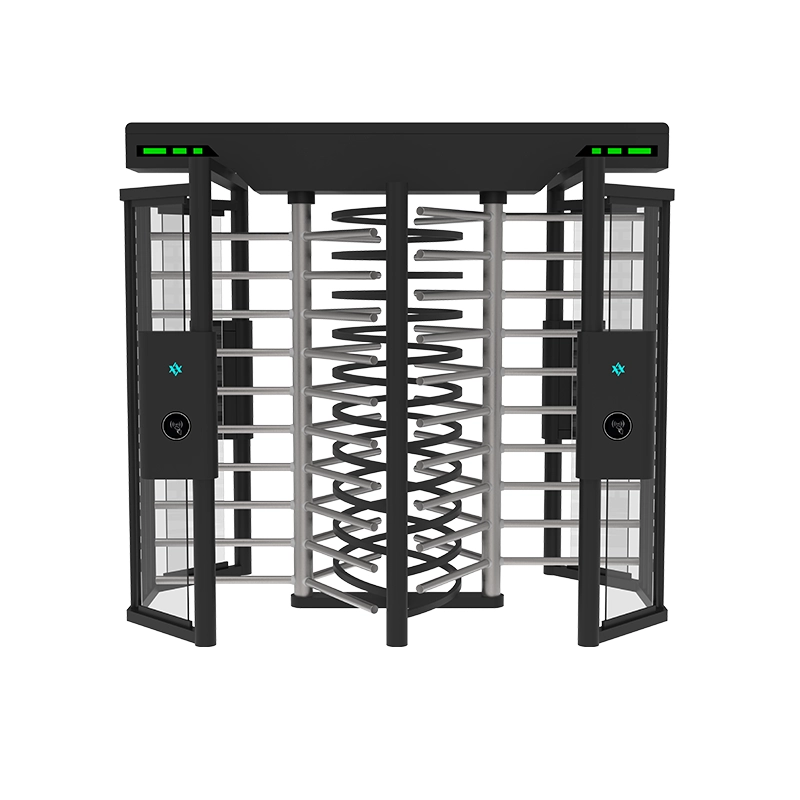
Where the requirement is a genuinely closed perimeter, the correct product is a full height turnstile — a rotating cage that cannot be vaulted. Our comparison of full height turnstiles versus speed gates covers that decision in detail.
6. Gym, Fitness Club and Swimming Pool Entrances
Gyms are a membership-verification problem dressed up as an access problem. The gate has to confirm that the person entering has a live membership, catch the member whose subscription lapsed last week, and do it without a staff member standing at the door all day.
The common configuration is a two-lane install — one in, one out, or a single bidirectional lane at a quiet club — with the flap barrier connected to club management software. Members check in with a wristband, a card or a phone QR code; the system writes attendance, triggers the automated renewal reminder, and can refuse entry on an expired plan. Hand geometry and face recognition are increasingly used so members do not have to carry anything. Our gym turnstile selection guide covers lane count and peak-hour sizing.
Two details specific to wet areas: choose a cabinet finish that tolerates chlorine and humidity (316 stainless where the gate is inside the pool hall), and place the electronics where they will not sit in a puddle.
7. Banks, Government Service Halls and Healthcare
These venues share a queue-management problem rather than a security problem. The flap barrier is used to marshal visitors into a single file, issue them a numbered ticket or a temporary card, and make sure nobody wanders into the staff side of the counter.
Typical specification: low-to-medium traffic, bidirectional lanes, ticket dispenser or reception-integrated credentialing, and a strong preference for a quiet mechanism because the gate sits next to a public counter. In hospitals the lane usually has to accommodate a wheelchair and a patient trolley, so 900 mm clear width is close to mandatory — the same reasoning we set out in accessible entrance design.
8. Universities, Schools and Campus Buildings
Campus installations divide into library and examination-hall gates, laboratory doors, and student-hall entrances. Library gates are the classic use: the credential is a student card, the gate records who is in the building, and the lane must accept a student with a laptop bag and a stack of books.
Examination halls add a tailgating requirement, because an unregistered person inside an exam room is a serious integrity issue. That pushes the specification toward multi-beam counting sensors rather than a simple card-and-open logic.
9. Supermarkets, Retail and Shopping Centres
Retail uses flap barriers in two very different ways. The first is the staff or delivery entrance, where the requirement is simply that only employees pass. The second is the customer-facing entrance of a membership retailer or a store that wants to count footfall.
For customer entrances the barrier often runs in a normally-open mode outside peak hours — wings retracted, sensors counting — and switches to credential-checking during promotions or at night. Our supermarket swing gate and customer flow guide explains how the lane geometry interacts with trolleys and peak queues, which is the same problem whether the gate is a flap barrier or a swing gate.
10. Residential and Serviced Apartment Entrances
In residential towers the flap barrier typically sits between the lobby and the lift core, or at the entrance to a gated compound. Credentials are resident cards and fobs, with an intercom or a QR code for visitors and deliveries. Design priorities are quiet operation, a finish that suits a residential interior, and a lane wide enough for luggage and strollers.
11. Data Centres, Laboratories and Clean Rooms
These are the highest-security flap barrier installations, because the gate is one layer in a multi-layer control scheme. Common features: two-factor credentialing (card plus fingerprint or face), interlocked vestibules where the second gate will not open until the first has closed, full passage logging with a video reference, and antistatic or clean-room-compatible finishes.
12. Car Parks, Toll Points and Vehicle-Adjacent Pedestrian Routes
Pedestrian gates beside vehicle lanes solve the problem of people walking through a barrier arm meant for cars. Flap barriers are used to give pedestrians their own credentialed route — a driver parks, walks to the pedestrian gate, badges in — with an outdoor-rated cabinet and, where the site is exposed, a canopy.
Quick Comparison: What Each Venue Demands
| Venue | Typical lanes | Lane width | Key requirement |
|---|---|---|---|
| Office lobby | 3–6 | 600 mm + 1×900 mm | Quiet, slim cabinet, software integration |
| Transit station | 8–30 | 600 mm | Sub-second reads, high MCBF, fail mode per fire code |
| Stadium | 8–20 | 600–900 mm | Ticket scanning, reversible direction, speed |
| Airport staff zone | 2–6 | 600–900 mm | Credential hierarchy, audit trail |
| Factory personnel door | 2–4 | 600 mm | Anti-tailgating sensors, payroll integration |
| Gym | 1–4 | 600–900 mm | Membership validation, wet-area materials |
| Bank / service hall | 2–6 | 600–900 mm | Queue marshalling, quiet operation |
| Library / exam hall | 2–8 | 600 mm | Counting sensors, occupancy data |
| Retail membership store | 2–6 | 900 mm | Trolley clearance, normally-open mode |
| Residential tower | 1–4 | 900 mm | Luggage clearance, intercom integration |
| Data centre / lab | 2–6 | 600–900 mm | Two-factor auth, interlocking vestibule |
| Car park pedestrian route | 1–3 | 600 mm | Outdoor rating, canopy, IP-rated cabinet |
When a Flap Barrier Is the Wrong Choice
Three situations come up often enough to call out:
- You need real physical containment. A flap barrier is a directed passage, not a fence. For a perimeter that must stop a vault, use a full height turnstile — see our full height turnstile guide.
- You need very high throughput with generous lanes. If lanes must pass 60+ people per minute each, or the client wants a wider, more open feel, a speed gate or a swing turnstile is usually the better product. Our flap barrier vs swing turnstile comparison sets out the trade-offs.
- The site is a hard industrial environment with no power continuity. In that case a purely mechanical tripod turnstile may outlast electronics. Tripod gates are also the cheapest way to credential a low-traffic door — see the tripod turnstile guide.
What to Put in the Specification
Whoever is writing the tender document will get a better price and a faster delivery if the following are stated up front:
- Number of lanes and split of entry / exit / bidirectional
- Clear lane width, and whether one lane must be accessible (900 mm typical)
- Credential types to be supported now, and any planned later
- Direction of fail-safe operation required by local fire regulations
- Indoor or outdoor; if outdoor, the IP rating required
- Cabinet and wing finish, and whether it must match an existing interior
- Integration details: dry contact, Wiegand, RS-485 or network, and the access control platform in use
- Expected peak throughput and daily cycle count
Supplying those eight items turns a vague enquiry into a quotable specification. Everything else — motor selection, sensor count, wing material — follows from them.
Frequently Asked Questions
How many flap barrier lanes does a building typically need?
A useful rule of thumb is one lane per 300–500 staff for a single-shift office, plus one accessible lane regardless of headcount. Calculate against the peak ten minutes rather than the daily total: an office of 900 people arriving between 08:30 and 09:00 needs roughly three entry lanes, not one.
Can flap barriers be installed outdoors?
Yes, with the right specification — an IP-rated cabinet, corrosion-resistant stainless, sealed electronics and a canopy or shelter. Indoor cabinets installed outdoors are one of the most common specification mistakes we see; the mechanism usually survives but the fixings and the electronics do not.
What happens to the gate during a power failure?
It depends on how the fail mode is wired. A fail-open configuration retracts the wings so people can leave freely, which is normally what fire regulations require on an escape route. A fail-locked configuration keeps the lane closed, which is right for a secure perimeter. Battery backup can hold the lane live through short outages in either case.
How do flap barriers stop two people entering on one card?
Through the anti-tailgating sensor array. Beams across the lane count the bodies that actually cross, independent of how many times a credential is presented. If the count exceeds one passage, the gate alarms and will not reset for the next person until the lane is clear.
What is the service life of a flap barrier?
It is governed by the mechanism rather than the cabinet. Ask for the MCBF rating and the recommended service interval. A typical commercial-grade unit in an office lobby will need cleaning and a mechanism inspection annually; a transit-grade unit running 20 hours a day needs a shorter cycle. In all cases the wear item is the wing drive and its bearings, not the stainless shell.
Do flap barriers meet accessibility requirements?
A flap barrier lane can be built to accessible clear widths — 900 mm is the common target — and the swing direction and speed can be tuned so the gate does not close on a slow-moving user. The gate is only one part of an accessible route though; the approach, floor level and signage matter as much. See our accessible entrance guide.
Buying Flap Barriers for a Project
AIPADA manufactures flap barrier turnstiles from 600 mm single-lane units to multi-lane banks with integrated ticketing, face recognition and turnstile management software. Every cabinet is built to order at our Dongguan factory — 3,000 m² of production space, capacity of 3,000 units per month — and every unit ships with CE certification, a two-year warranty and a documented service interval. Minimum order quantity is one unit, standard lead time is 7–15 days depending on finish and reader configuration, and terms are typically 30% T/T with the balance against the bill of lading.
Send us the lane count, the credential types and a photograph of the entrance and we will come back with a configuration drawing, a lane layout and a quotation. Browse the current range in the flap barrier turnstile catalogue, or read the complete flap barrier guide for the engineering detail behind the specification above.
Prices quoted anywhere on this site are China ex-works market references for budgeting only. Your final price depends on lane count, finish, reader integration and control software — request a quotation for a firm figure.