

A glass swing turnstile should be specified as a moving entrance assembly, not selected only because the transparent barrier looks modern. The panel, hinges, drive mechanism, sensors and cabinet work together every time the lane opens and closes. A change in panel width, height or material may also change weight, leverage, opening time and the space needed around the gate.
This engineering guide focuses on the transparent swing panel itself: what a buyer should confirm before production, where damage usually begins, how replacement access affects downtime and which tests should follow any panel repair. It does not repeat the sensor sequence covered in our optical-turnstile guide.
Decision summary
Confirm its material, finished dimensions, edge treatment, fixing pattern and visibility markings.
Panel clearance, sensors, reader reach and the accessible route must be reviewed together.
A spare panel is useful only when the correct fixing parts, tools and commissioning procedure are available.
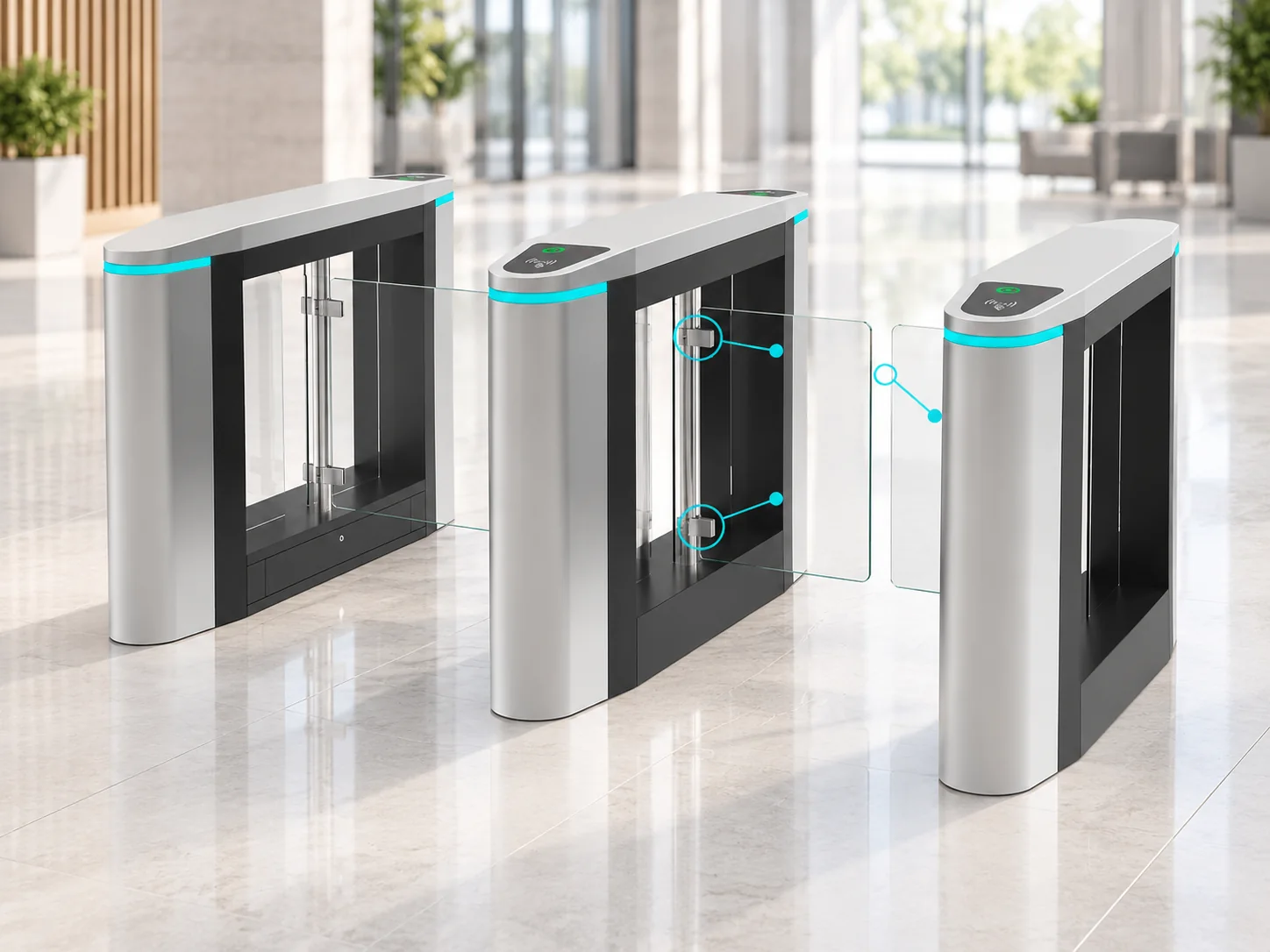
Define the Glass Swing Turnstile Panel Before Quotation
The phrase glass swing turnstile describes the appearance of the barrier, but it is not a complete technical specification. Transparent panels may use different materials or constructions, and the correct choice depends on the supplier’s tested design and the requirements of the installation. Buyers should not replace the specified panel with a locally sourced sheet of similar size without checking its material, weight and fixing details.
Ask the supplier to identify the following items on a drawing or approved specification:
- Panel material and construction
- Confirm what the transparent panel is made from and whether any marking, film or laminated construction is included.
- Finished width, height and thickness
- Use finished dimensions rather than an approximate passage width. The panel needs clearance through its complete opening arc.
- Edge and corner treatment
- Confirm the finished edge profile and whether exposed corners are rounded or otherwise protected by the approved design.
- Fixing pattern
- Record hole positions, brackets, sleeves, pads, fasteners and tightening requirements. A panel that fits visually may still be incompatible with the original clamp or hinge.
- Visibility treatment
- A highly transparent panel may need a visible strip, logo or contrasting mark so approaching users can recognize the moving barrier.
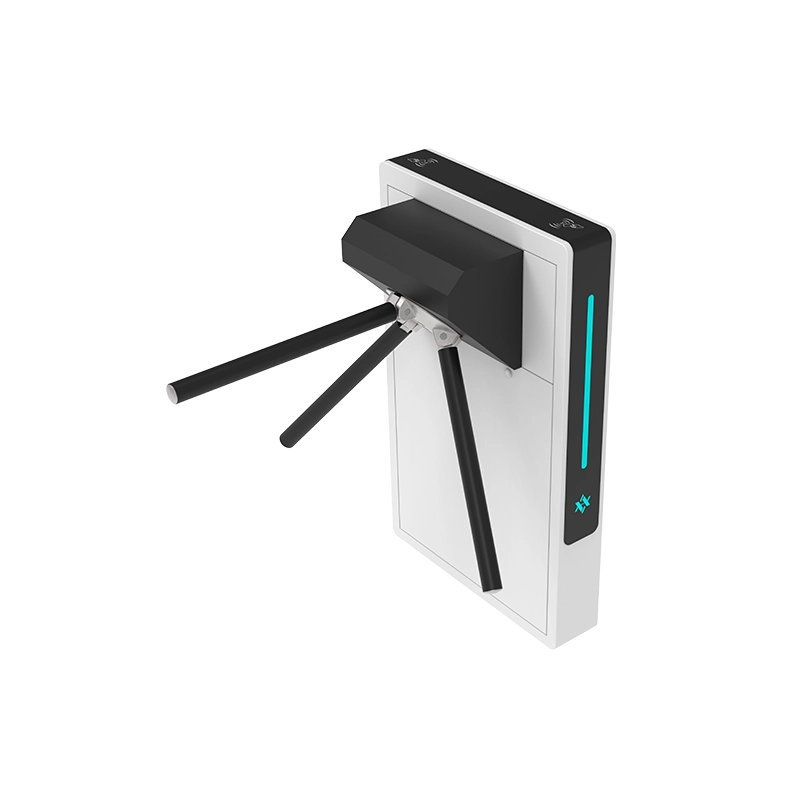
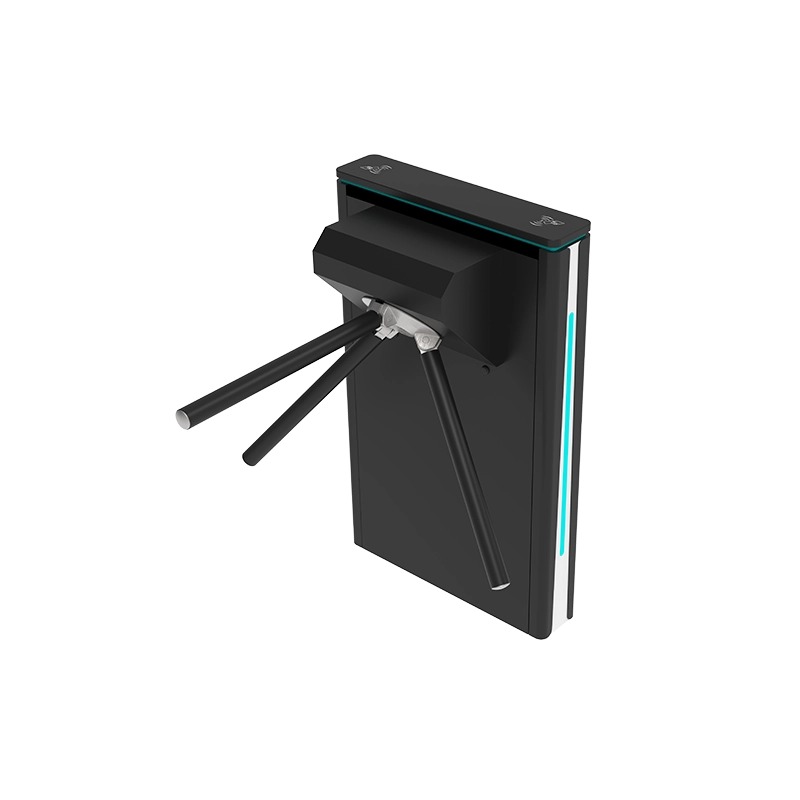
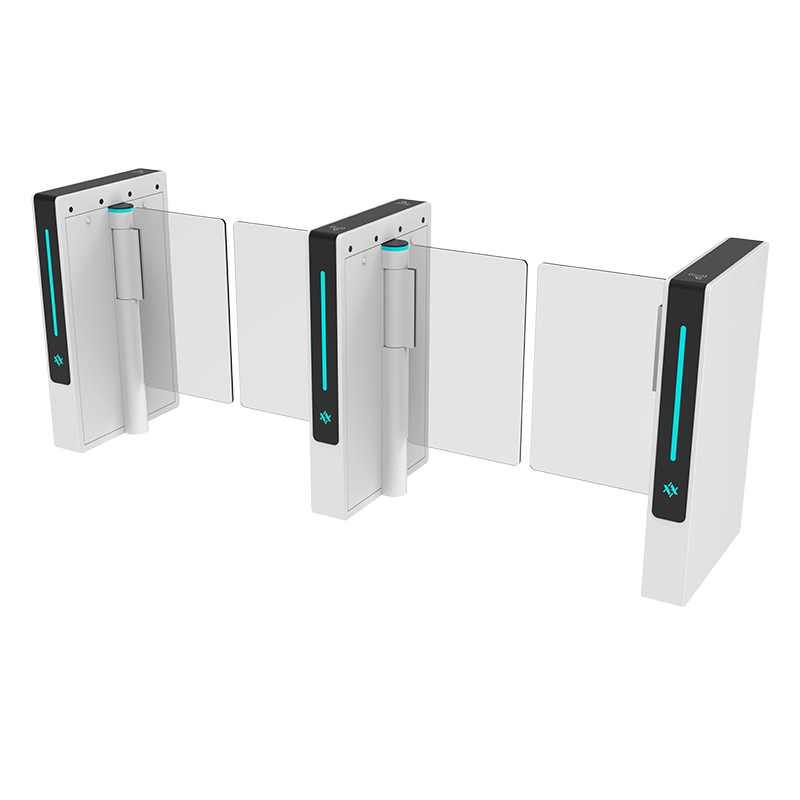
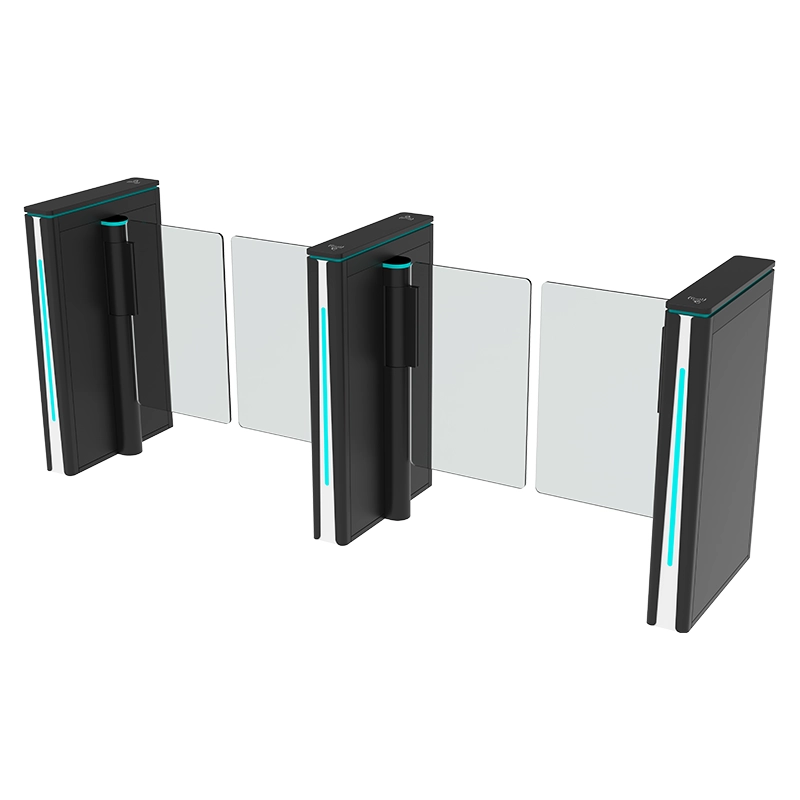
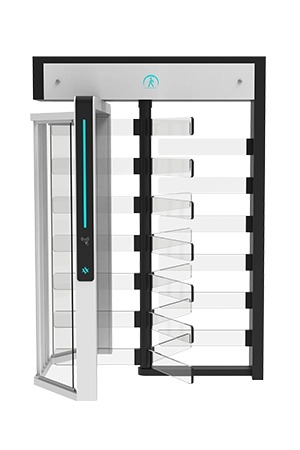
AIPADA offers several swing configurations with transparent panels. The AT203 business park swing turnstile uses a framed cabinet arrangement, while the AT211 Prismatic Aurora swing turnstile presents a slimmer dark cabinet profile. These products illustrate why a replacement panel should be matched to the selected model rather than ordered as a generic piece of glass.
Panel Size Changes More Than the Clear Passage
A wider lane may require a wider barrier panel, but the decision cannot stop at the desired opening. Increasing the panel size can change the moving mass, leverage at the hinge, wind exposure near an exterior doorway and the space swept by the panel. The mechanism and controller settings must remain suitable for the approved configuration.
Review the panel in three positions: closed, partly open and fully open. At each position, confirm that it does not conflict with the opposite panel, cabinet, wall, guardrail, reader pedestal or nearby queue equipment. The clear passage should be measured at the narrowest usable point, not inferred from the distance between two cabinet centerlines.
| Proposed change | Possible consequence | Evidence to request |
|---|---|---|
| Wider or taller panel | Different mass, leverage and sweep area | Approved drawing and mechanism compatibility |
| Different panel material | Changed stiffness, weight or breakage behavior | Material specification and supplier approval |
| New hole or bracket pattern | Stress concentration or insecure fixing | Model-specific fixing drawing and hardware list |
| Higher transparency | Barrier may be less visible to users | Approved marking or contrast treatment |
Inspect the Fixing Points, Not Only the Glass Surface
Damage does not always begin in the middle of a panel. The area around a hole, clamp or bracket can experience concentrated load. Missing pads, the wrong fastener, uneven tightening, metal-to-panel contact or a misaligned hinge can create conditions that are not obvious during a quick visual inspection.
During incoming inspection and scheduled maintenance, check the panel from both sides. Look for edge chips, cracks, cloudy areas around fixings, movement between the panel and bracket, loose covers and evidence that the panel is touching another component. Do not hide damage under a sticker or continue using a lane simply because the panel has not separated from the bracket.
The AT204 optical swing turnstile and AT208 optical swing barrier have visible panel-support and hinge arrangements that should remain aligned with the cabinet. The exact fastener and adjustment procedure must come from the selected model’s documentation.
Separate Impact Risk From Access-Control Logic
A sensor system may reduce the chance of the barrier closing on a person, but it does not make the panel immune to impact. A suitcase, trolley, cleaning machine or person moving across the lane can still contact the panel. Similarly, a strong panel does not correct an unsuitable sensor layout or closing command.
Review these two questions separately:
- Will the control system recognize the movement? Test authorized passage, hesitation, reversal, tailgating, luggage and obstruction with the actual configuration.
- What happens if physical contact occurs? Confirm the approved panel design, safe response, inspection rule and replacement process for the project.
Do not claim that a lane meets a specific impact or safety-glazing standard unless the necessary evidence is available for the supplied panel and the standard applies to that installation. Local building, accessibility and safety requirements should be reviewed by the project designer or authority. For U.S. projects, the surrounding accessible route can be checked against the U.S. Access Board guidance on accessible routes; this does not by itself certify the turnstile or its transparent panel.
Cleaning Can Reveal or Create Maintenance Problems
Transparent panels show fingerprints and dust easily, so they may be cleaned more often than opaque barriers. Frequent cleaning is useful for inspection, but unsuitable chemicals, abrasive pads or aggressive scraping may damage surface treatments, visibility markings or nearby finishes.
The handover documents should identify approved cleaning materials and the areas that must stay dry. Staff should clean along the panel rather than use it as a handle, step or support. Cleaning is also a practical time to look for looseness, unusual movement, edge damage and contact marks. Any new defect should be photographed and compared with the previous inspection record.
Check Transparent-Panel Visibility in Real Lighting
A transparent barrier can look clear and elegant in a product photograph but become difficult to recognize at the actual entrance. Reflections from polished floors, glass walls and stainless-steel cabinets can hide the panel edge. Strong backlighting may also make the cabinet easy to see while the moving panel almost disappears. This matters when first-time visitors, children or people looking at a phone approach the lane.
Test visibility at the installed height and from both directions. Repeat the review in the lighting conditions that occur during opening hours, including direct sunlight near an external façade and reduced illumination during evening operation. Stand at the normal approach distance rather than inspecting only from beside the cabinet.
If additional contrast is needed, agree on the marking with the supplier before production. A stripe, logo, frosted area or other visible element should remain compatible with the panel material and should not cover sensor windows, fixing points or inspection areas. A temporary sticker added after handover may peel, trap dirt or conceal a developing defect. Record the approved position and dimensions so a replacement panel presents the same visual cue.
Control Spare Panels by Model and Lane Position
Keeping one spare transparent panel can reduce downtime, but only when the part can be identified and installed correctly. A spare without a model reference, handing or fixing drawing can create uncertainty during an urgent repair. Two panels that look alike may have different hole positions, corner profiles, thicknesses or visibility markings.
Store the spare vertically or in the orientation recommended by the supplier, protect its edges and keep the mounting hardware in a labelled package. The label should include the turnstile model, project, lane position, left- or right-hand location where applicable, part number and drawing revision. Photograph the spare and its label when it enters stock.
After any design change, verify whether the stored panel still matches the installed gate. Replacing cabinets, brackets or control hardware may leave an old spare physically incompatible even when the lane looks unchanged. Maintenance records should show which spare was used and whether a new one must be ordered.
Plan the Glass Swing Turnstile Replacement Before Failure
Replacement planning begins when the gate is ordered, not after a panel is damaged. Record the model, lane position, panel handing, finished dimensions, fixing pattern and spare-part number. For a bank of several gates, label each cabinet and panel position so maintenance staff do not assume every component is interchangeable.
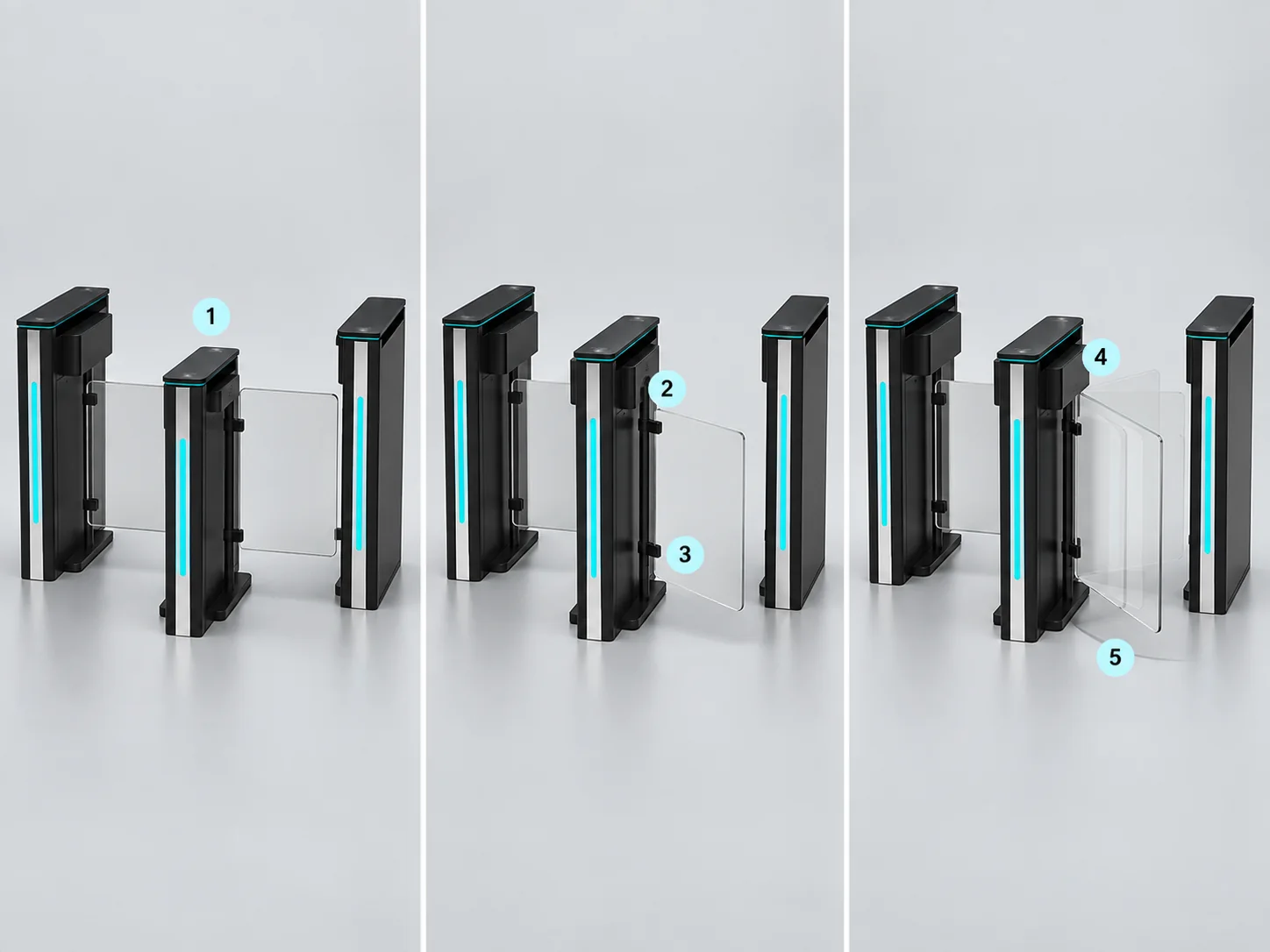
A practical replacement sequence is:
Close the lane, remove power as required and prevent users entering the work area.
Support the panel before releasing covers, clamps or fasteners.
Check brackets, pads, hinge parts and adjacent surfaces instead of replacing only the visible panel.
Fit the approved replacement with the specified hardware and alignment.
Test the complete opening arc, clearances, sensor response and emergency behavior before reopening.
This work should be completed by trained personnel following the product documentation and the site’s isolation procedure. Broken or unstable transparent panels can have sharp edges and should not be handled as routine office waste.
Test the Complete Lane After Panel Replacement
A gate that opens once after repair is not ready for service. The replacement may affect alignment, closing position and the relationship between the panel and detection zones. Run repeated passages from both permitted and prohibited directions, according to the project logic.
The acceptance record should include:
- Panel identity, lane position and replacement date
- Fastener, bracket and protective-pad inspection
- Closed-position alignment and clearance between paired panels
- Full opening without contact with cabinets, rails or nearby equipment
- Normal authorized passage and controlled closing
- Obstruction, hesitation and reversal tests
- Wrong-way and unauthorized-entry response, where configured
- Emergency input and power-recovery behavior
- Unusual noise, vibration or movement during repeated cycles
Information to Send With a Glass Swing Turnstile RFQ
Prepare one lane-information package
Send the entrance drawing, required clear passage, cabinet arrangement, panel height preference, opening direction, expected users, luggage or trolley conditions, reader type, installation environment and number of lanes. If an existing panel must be replaced, include the model, serial information, front and side photographs, finished dimensions and close-ups of every fixing point.
This information allows the supplier to evaluate the panel together with the drive, sensors and cabinet. It also prevents a quotation based only on appearance. If accessibility is required, identify the continuous route and the actual users rather than requesting a nominal wide lane without site context.
Choose a Maintainable Glass Swing Turnstile
A well-specified glass swing turnstile combines a visible, correctly supported panel with suitable movement control and practical service access. The strongest purchasing decision is not the panel that looks most transparent in a rendering. It is the configuration whose material, dimensions, fixing details, operating clearances and replacement procedure can all be verified.
Review the available AIPADA swing turnstile range, then send the required passage width, panel preference, opening direction and entrance plan through the AIPADA contact page. AIPADA can review the panel configuration, fixing arrangement and maintenance access before preparing a project quotation.
](https://aipadaturnstile.com/wp-content/uploads/2025/12/popup-img.jpg)