

A supermarket swing gate should make the correct customer route feel obvious before anyone reaches the barrier. Shoppers arrive from a car park, shopping mall or street entrance. Some take a trolley, some carry a basket, and some enter as a family. Staff may need to admit a delivery worker, assist a wheelchair user or release the gate when a trolley becomes awkwardly positioned.
The gate is only one point in that journey. Its location relative to the storefront, trolley bay, promotional displays, checkout exit and customer-service desk determines whether it supports one-way movement or creates a daily obstruction.
This guide walks through a supermarket entrance from the public side to the sales floor. It explains where a supermarket swing gate belongs, what must remain clear around it and how to plan staff control, trolley passage and emergency behavior without turning the entrance into a narrow security corridor.
Route principle: Use the gate to reinforce an already understandable entrance path. Do not expect the barrier to correct a confusing storefront, an incorrectly positioned trolley bay or an exit route that points customers back toward the entrance.
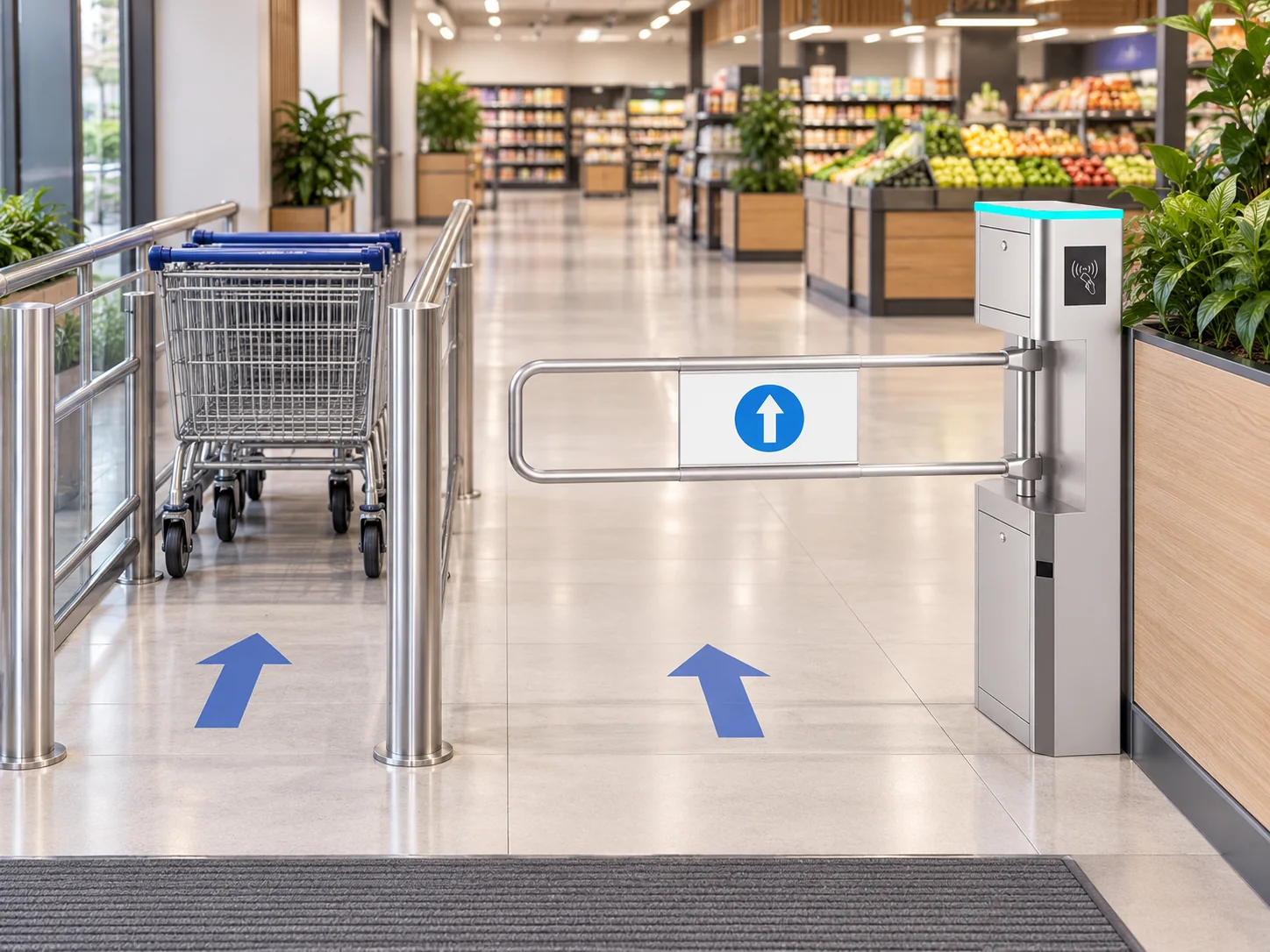
Start Outside the Supermarket Swing Gate
Begin the site review several metres before the proposed gate. Observe where customers come from and what they see first. A supermarket inside a shopping centre may receive people from two directions, while a standalone store may have automatic sliding doors that discharge everyone into one narrow lobby.
The approach should let customers recognize the entrance lane without crossing the checkout exit. Seasonal displays, promotional pallets and advertising stands often move after the original installation. If they occupy the approach, shoppers may arrive at the swing arm from the side or hesitate directly in front of it.
Mark these items on the plan before selecting a cabinet position:
- Public doors and their opening or sliding zones
- Customer approach from the mall, pavement or car park
- Checkout and self-checkout exits
- Trolley and basket collection points
- Customer-service or security staff positions
- Promotional areas that may change during the year
- The continuous accessible route into the sales floor
A useful drawing shows the real finished entrance, not an empty opening between two walls. Bollards, anti-theft equipment, product displays, floor mats and queue rails all reduce the space available for an orderly approach.
Place the Supermarket Swing Gate at the Entry Decision Point
The gate normally works best where customers have already recognized the entrance but have not yet mixed with shopping-floor traffic. Installed too close to the external door, it creates a queue in the doorway. Installed too far inside, it leaves a large uncontrolled area where people can enter from the side or reverse direction unnoticed.
The entry decision point should give a shopper enough space to align with the lane, understand the opening direction and continue forward after the arm moves. The barrier must not open into a trolley parked beside the lane or into a customer waiting near a display.
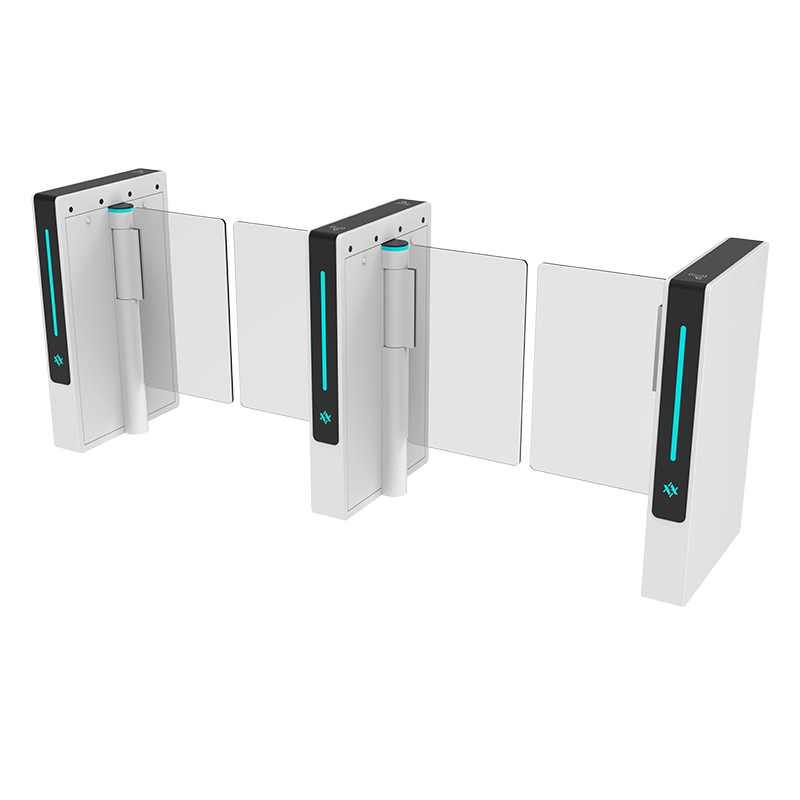
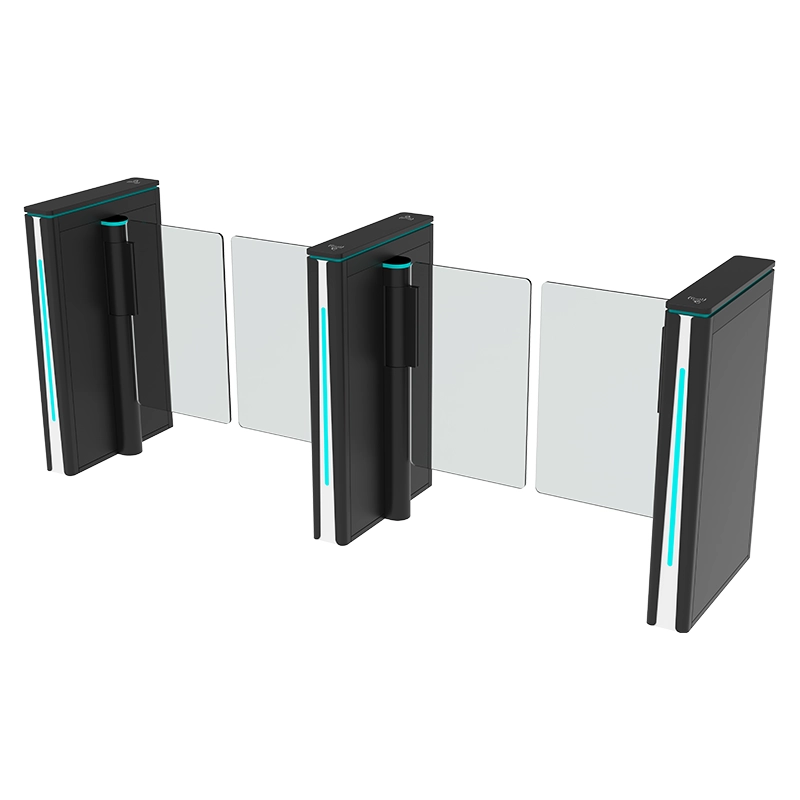
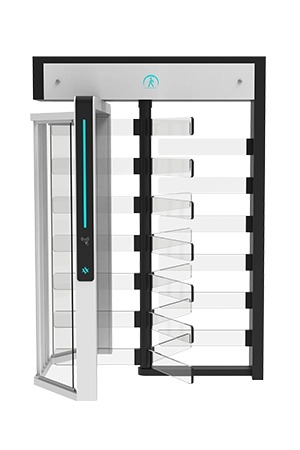
In a compact store, the AIPADA AT201 supermarket swing gate turnstile uses a column-style body that can reduce the cabinet footprint. A compact product still requires adequate arm clearance, approach space and a properly guided route. A smaller cabinet does not make an unsuitable corner safe or convenient.
Decide Whether Trolleys Are Collected Before or After the Gate
Trolley position changes the required passage. If customers collect trolleys before the gate, the entrance must accommodate the trolley body, the shopper pushing it and small steering corrections. If trolleys are collected after the gate, the pedestrian lane can be more compact, but the trolley bay must not block the gate exit or encourage people to reverse through the entrance.
Neither arrangement is universally correct. The decision depends on available space, store format and how trolleys are returned. What matters is that the same trolley journey is followed from collection to checkout and back to the return area.
Test the lane using the largest trolley expected on site, not only a dimension from a catalogue. Push it slowly, slightly off-centre and with a child-seat section or basket projection where applicable. Check the following:
- Clear distance between the trolley and fixed surfaces
- Swing-arm movement relative to the trolley frame
- Space for hands on the trolley handle
- Turning space immediately before and after the gate
- Behavior when the customer stops midway
- Passage of baskets, strollers, mobility devices and luggage
The AT207 product page states an adjustable passage arrangement from 600 to 900 mm, but the project should confirm the actual clear passage, arm length and surrounding route for the intended trolley and accessibility requirements. Product range alone does not establish compliance for a specific store.
Follow the Customer Through the Swing Gate
As the customer reaches the barrier, the expected action should be simple. Some supermarkets use a sensor or touchless approach. Others use staff release, remote control, membership credentials or another access device. The operating method should suit ordinary customers who may never have used this type of gate.
A status light can help, but the physical route should remain understandable without detailed instructions. The arm should open toward a clear zone, and the customer should not need to step backward to avoid it. Guardrails can help define the passage when there is open space beside the mechanism, provided they do not create sharp turns or reduce necessary clearance.
The AIPADA AT207 supermarket entrance swing gate supports configurable one-way or two-way operation and optional integration with readers or remote release. For a normal customer entrance, configure the operating logic around the intended one-way route rather than leaving direction changes to informal staff practice.
Walk-through test
Approach as a first-time customer while pushing a trolley. Look for the entrance cue, pass the barrier, collect a basket if required and continue toward the first aisle. Any point that requires stopping, turning around or asking which way to go should be reviewed before installation.
Keep the Checkout Exit Separate from the Entrance
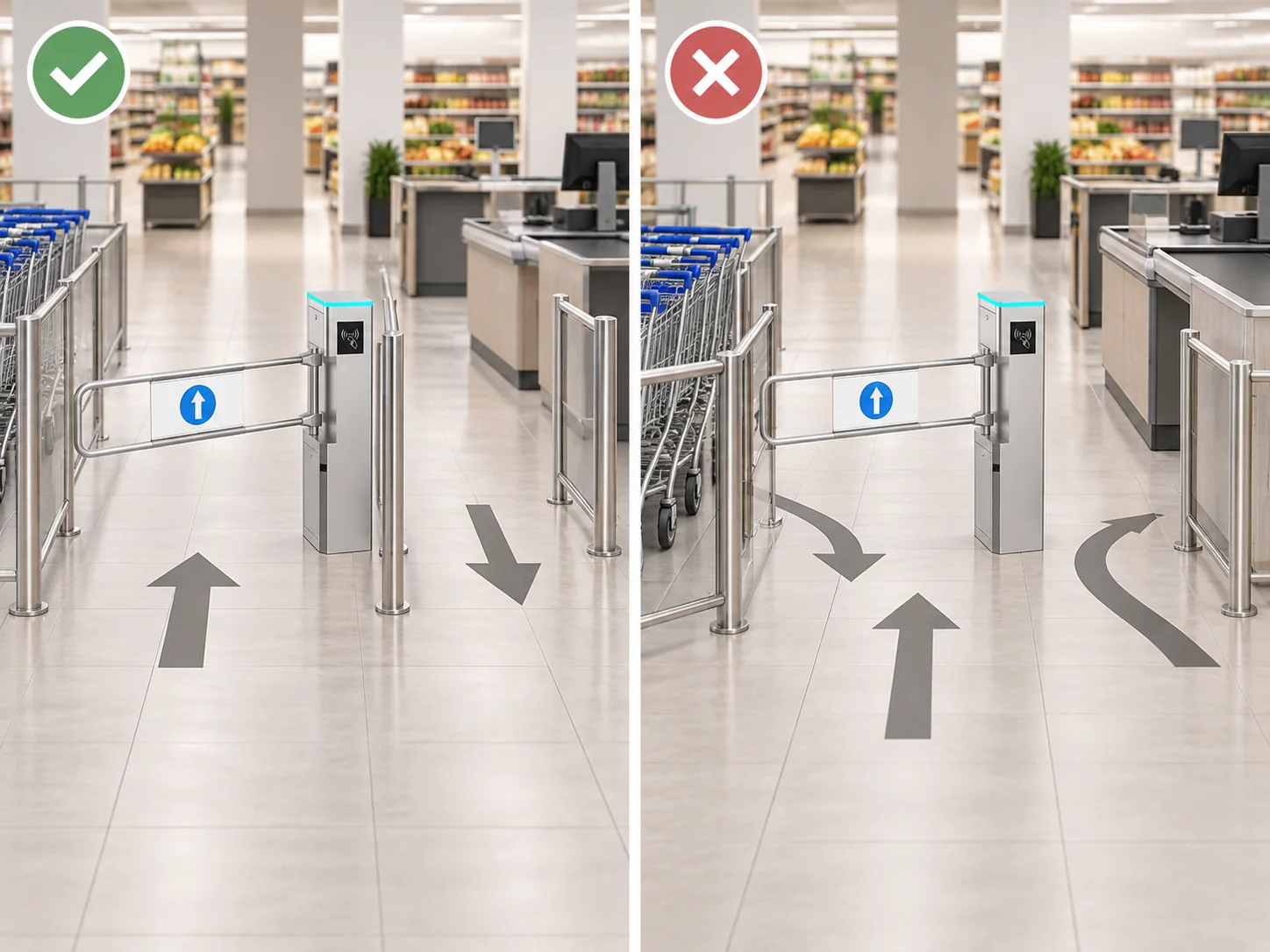
The checkout exit and store entrance serve different moments in the customer journey. Combining them at one narrow opening can produce face-to-face conflict, especially when outgoing customers carry bags and incoming shoppers push empty trolleys.
Where space permits, the entrance swing gate should support inward movement while checkout or self-checkout lanes lead to a separate outward route. The two flows may be close enough for staff supervision, but they should not point directly at each other.
Watch for a common failure: the checkout exit releases customers into the approach of the entrance gate. During quiet periods this appears harmless. At peak time, outgoing trolleys occupy the space needed by incoming shoppers, and people begin walking around the swing gate instead of through it.
A short guardrail, display boundary or change in floor treatment can make the two routes easier to understand. These elements should guide movement without creating an enclosed passage that interferes with evacuation or wheelchair turning space.
Give Staff a Clear Override Position
A supermarket entrance is not fully automatic in every situation. Staff may need to assist an older customer, admit a service contractor, respond to a stopped trolley or hold the gate open temporarily. The override position should have a direct view of the barrier and its approach.
Remote control can be useful only when the operator knows what is happening at the gate. Do not place the release button at a desk hidden behind shelving or facing away from the entrance. If the gate is monitored from customer service or a security podium, confirm the real seated sightline after monitors, displays and promotional signs are installed.
Define who may use the override, when it may be used and how the gate returns to normal one-way operation. A permanent manual-open condition can quietly remove the routing function that the store intended to create.
Use the Gate as Part of the Loss-Prevention Boundary
A pedestrian swing gate can make the entrance direction clear and discourage casual reverse movement. It is not a complete loss-prevention system by itself. Blind corners, unguarded spaces beside the cabinet and a direct path from the sales floor back to the public entrance can still weaken the boundary.
Review the gate together with checkout positions, electronic article surveillance equipment, cameras, staff visibility and the customer-service desk. The aim is a coherent boundary that legitimate customers understand. Aggressive barriers or confusing alarms at the entrance can damage the shopping experience without solving the actual control gap.
The ambiguous terms swing gate barrier and barrier swing gate are sometimes used for pedestrian equipment, but they can also refer to vehicle or driveway gates. In this project, they should always mean a compact pedestrian gate for a supermarket customer entrance, not an outdoor vehicle-control product.
Plan for Families, Strollers and Assisted Passage
A parent may enter while pushing a stroller and guiding a child. Another customer may use a wheelchair or walking aid. A delivery worker may carry cartons that change body width and visibility. The entrance plan must handle these predictable users without requiring them to squeeze through a standard lane.
Keep the wider route visible and available. It should not become a storage position for spare baskets, promotional stands or returned trolleys. Check the continuous approach on both sides of the gate, including turns and doors. For U.S. projects, the U.S. Access Board guide to accessible routes can support the design review, while final requirements should be confirmed by the responsible designer and local authority.
Stress-Test the Supermarket Swing Gate at Peak Time
A quiet weekday test does not reveal weekend conditions. Recreate the busiest expected entrance period with customers or staff substitutes using real trolleys. Include a family group, one person who stops, an assisted user and an employee override.
Record observable results rather than a general “pass”:
| Test movement | Observe | Possible correction |
|---|---|---|
| Customer with trolley | Side clearance and arm timing | Adjust clear width or arm configuration |
| Family entering together | Stops, separation and closing behavior | Review detection and staff procedure |
| Checkout traffic crossing entrance | Face-to-face conflict and blocked approach | Separate or redirect the outgoing route |
| Manual staff release | Operator visibility and response time | Move the control or improve sightlines |
Confirm Emergency and Power-Failure Behavior
The gate arrangement must not obstruct the required emergency route. Confirm the response to power failure, fire-alarm input and manual emergency release with the project designer, local authority and fire-safety team. Product functions must be coordinated with the complete building plan rather than treated as a substitute for code review.
Test the installed system with the barrier, guardrails, trolley bay and promotional fixtures in their normal positions. Staff should know how to recognize the emergency condition and restore normal operation afterward. Never allow movable retail displays to narrow a route that was approved as clear during commissioning.
Build the Request for Quotation Around the Store Route
A useful quotation request should include the supermarket entrance drawing rather than only asking for one gate. Send:
- Finished entrance width and depth
- Public door, checkout exit and sales-floor directions
- Trolley collection and return positions
- Largest trolley dimensions and expected passage method
- Required pedestrian and assisted-passage widths
- Preferred one-way operating direction
- Normal activation and staff-override method
- Guardrail and side-gap requirements
- Emergency input and power-failure sequence
- Floor fixing, cable route and finish requirements
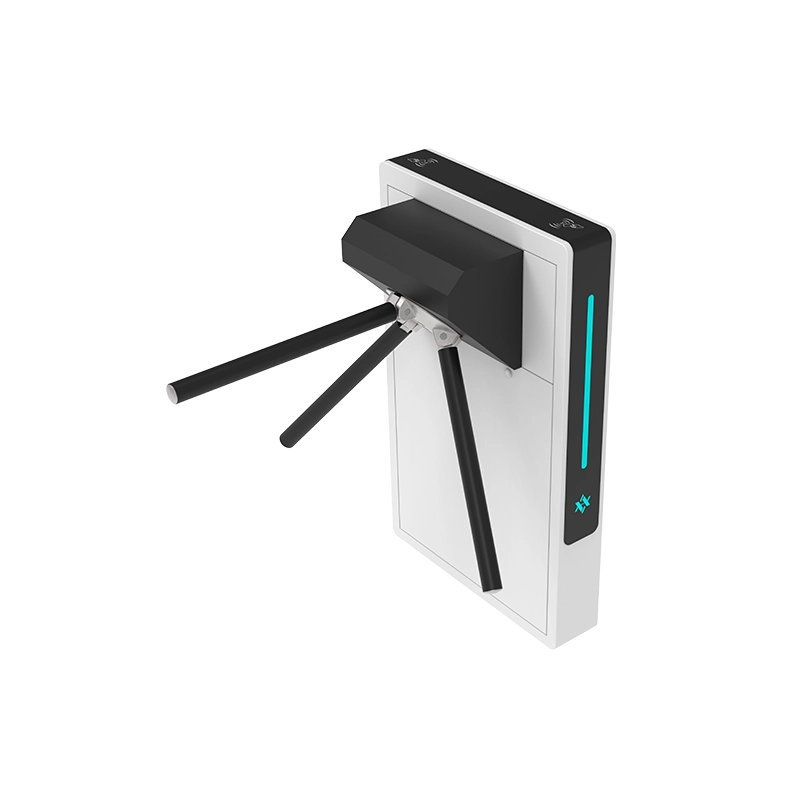
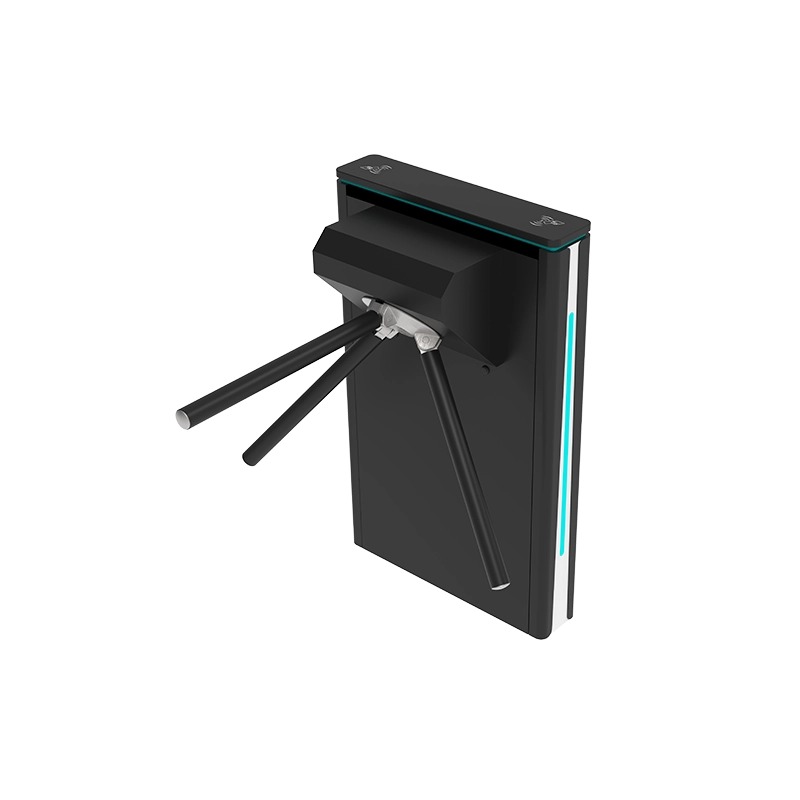
Ask for a plan showing cabinet position, swing-arm movement, clear passage and nearby guardrails. Review that drawing with store operations, loss prevention, accessibility and fire-safety stakeholders before production. Buyers can compare the two retail models above with the broader AIPADA swing turnstile range.
Make One-Way Customer Flow Easy to Follow
The most effective supermarket swing gate does not demand attention. Customers see the entrance, collect a trolley in the planned sequence, pass through without conflict and continue toward the first aisle. Staff can assist from a visible position, while checkout traffic follows a separate route out of the store.
AIPADA can review the entrance width, trolley arrangement, customer direction, staff-control point and required passage. Send the store plan and trolley dimensions to request a suitable supermarket swing gate layout and quotation.
](https://aipadaturnstile.com/wp-content/uploads/2025/12/popup-img.jpg)