
Mechanism guide • Operation, selection & replacement
A turnstile mechanism is the assembly that controls the barrier’s movement, positioning and locking. Depending on the design, it can include a shaft, bearings, indexing or locking parts, springs, damping components, a motor and transmission, plus position feedback. It works with the controller; it is not the same thing as the card reader or the complete turnstile gate.
For buyers and maintenance teams, the useful question is not simply “Which mechanism is strongest?” It is whether the assembly matches the barrier, operating mode, control system and required passage behavior. This guide explains those checks without assuming every turnstile uses the same internal design.
How does a turnstile mechanism work?
In an access-controlled lane, the credential system decides whether passage is authorized. The turnstile controller then commands the mechanism to release or move the barrier. Mechanical parts and feedback help it reach the next intended position. The exact sequence depends on the product, but a typical authorized cycle can be understood in four stages.
- Permission: the access-control system sends an accepted passage command for the configured direction.
- Release or drive: an electromechanical assembly releases its lock for a user-pushed movement, or a powered drive moves or assists the barrier.
- Position tracking: switches, sensors or an encoder provide the feedback required by that design. Springs, damping or motor control manage the movement toward its intended stop.
- Return to the ready state: the controller and mechanism complete the cycle and restore the configured holding or locking condition.
This is a functional sequence, not a wiring diagram. A manual mechanical turnstile may operate without an electronic permission stage. An optical lane also needs pedestrian-detection logic beyond the mechanical cycle; see how optical swing turnstile sensors work for that separate function.
Mechanism versus motor
The motor provides powered motion where fitted. The mechanism also includes the parts that transfer, support, limit or hold that motion. Replacing a motor does not necessarily resolve a worn bearing, damaged lock or incompatible controller.
Mechanism versus complete gate
The gate includes the cabinet, barrier, mechanism, controls and accessories. For the wider equipment breakdown, read turnstile structure composition. Here, the focus is the movement assembly and its compatibility.
Manual, semi-automatic and motorized mechanisms
The term mechanical turnstile can be ambiguous: it may describe a purely manual gate, or be used loosely for a gate with physical rotating arms. Ask what powers the rotation and what releases the lock instead of relying on the label alone.
| Operating mode | What moves the barrier? | What to confirm |
|---|---|---|
| Manual mechanical | The user supplies the movement; mechanical arrangements establish the permitted movement or direction. | Direction control, counting requirements and whether electronic authorization is part of the supplied system. |
| Semi-automatic electromechanical | The user typically pushes the released rotor; electrical components control permission or locking. | Release signal, centering and damping, timeout behavior and specified emergency functions. |
| Fully automatic or motor-assisted | A motor drives or assists movement according to the controller’s sequence. | Motor/controller pairing, feedback, motion profile, protective functions and reset behavior. |
“Semi-automatic” does not necessarily mean a small motor drives the arm. For example, published semi-automatic designs use solenoid locking with user-pushed rotation. Equally, “automatic” alone does not identify the motor, gearbox or feedback system. Obtain the assembly specification for the exact model.
Tripod turnstile mechanism: indexing, centering and arm release
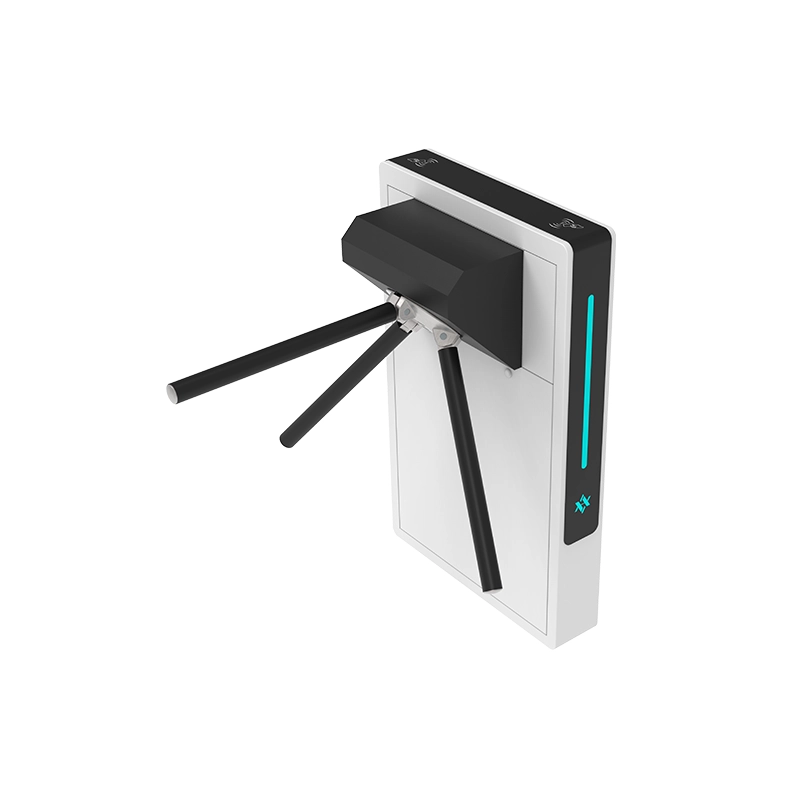
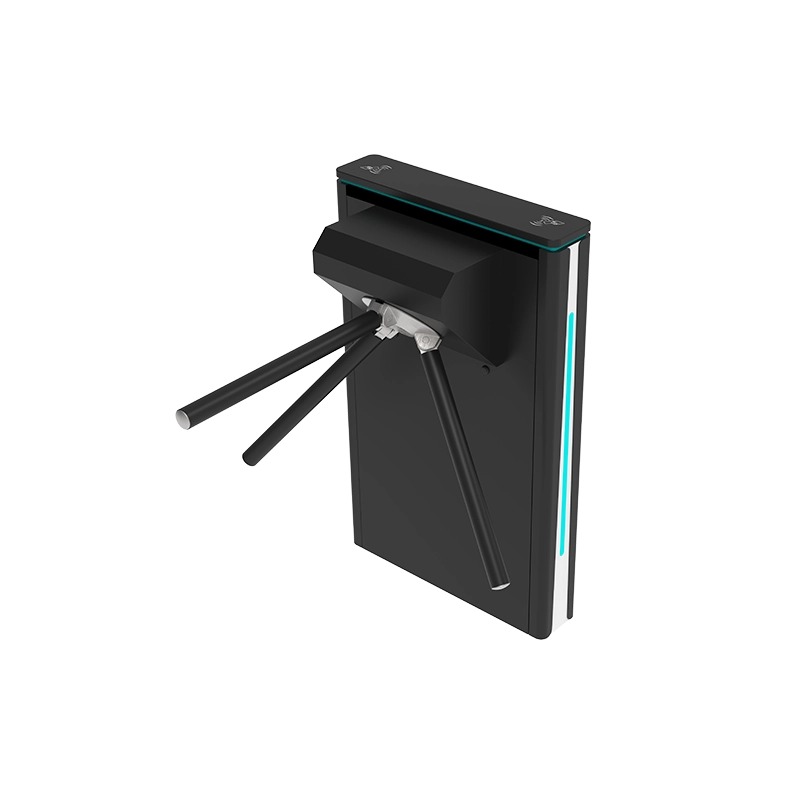
A tripod turnstile mechanism controls a three-arm rotor. In a conventional three-position arrangement, the angular interval between ready positions is 120 degrees. That geometry does not tell you whether the user or a motor supplies the movement.
For a tripod turnstile gate mechanism, ask how the rotor centers, how motion is damped, what prevents unintended reverse movement during a cycle, and how an unused authorization expires. Check whether passage feedback represents an actual completed movement or only an opening command.
On models with a drop-arm feature, the arm-release function is an additional item to verify. Normal rotation, emergency arm drop and arm restoration after power returns are different actions. Do not infer one from another.

The AT109 fully automatic tripod turnstile is a product option to discuss when powered operation is required. Request its current mechanism configuration and control documentation for your project instead of identifying internal parts from the exterior photograph.
Full height turnstile mechanism: confirm the rotor configuration
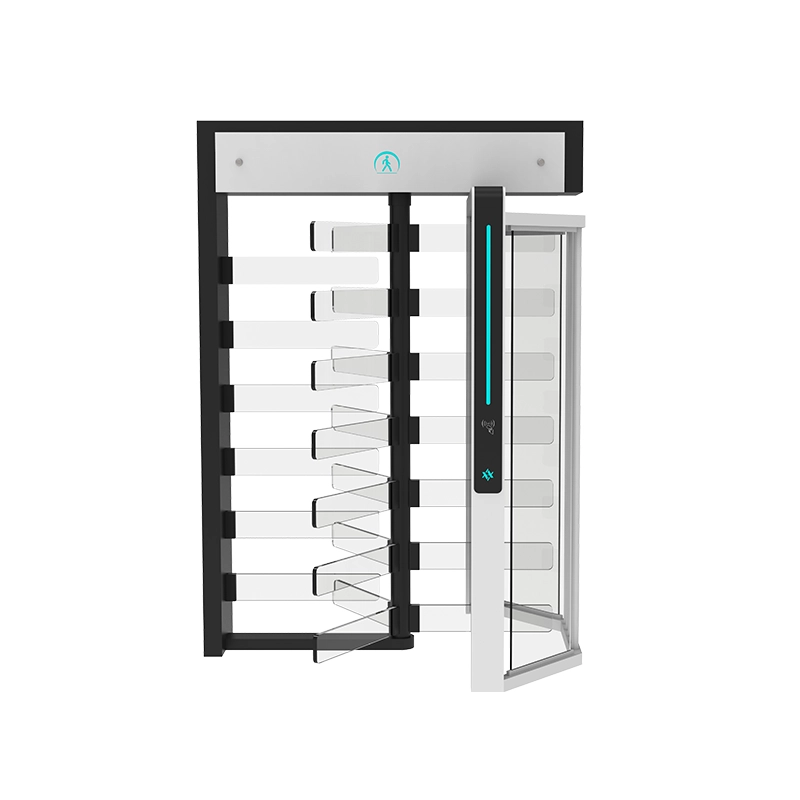
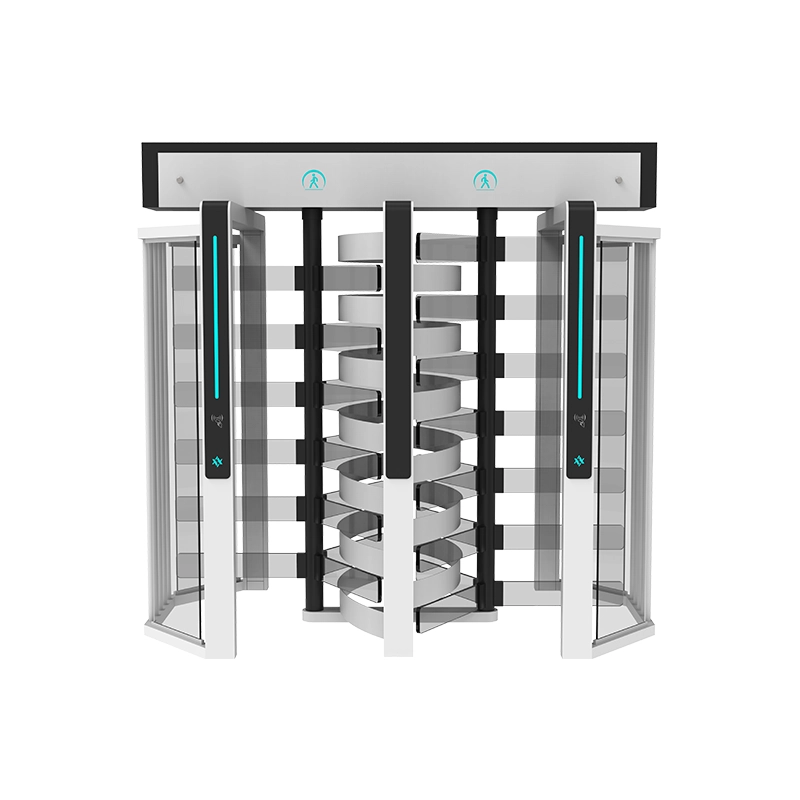
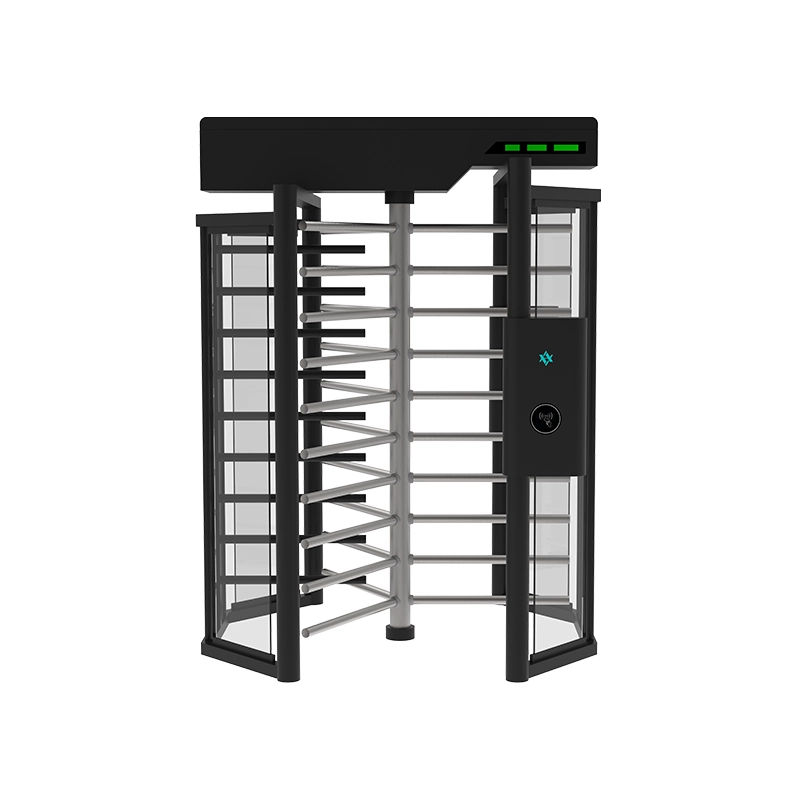
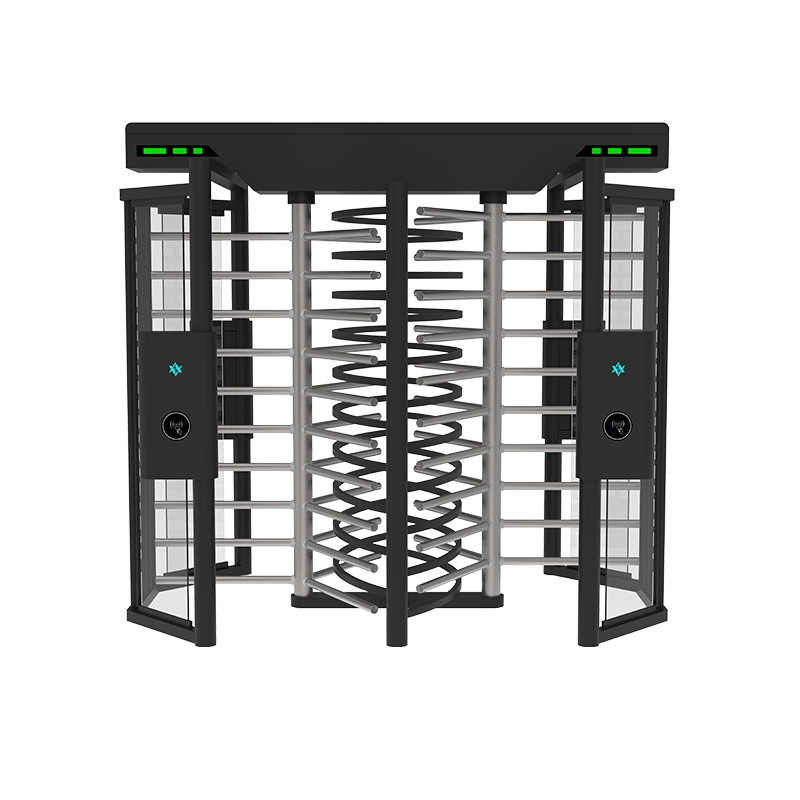
A full height turnstile mechanism must match its rotor and support arrangement. Three-section and four-section designs have different indexing geometry: 120 and 90 degrees respectively. Neither the cabinet size nor the appearance of the top housing proves that two mechanisms are interchangeable.
Confirm the shaft connection, mounting interface, rotor configuration, supported loads and direction settings. Ask whether bearings and structural supports are part of the supplied head assembly or separate components. For a double unit, establish which assemblies and controllers serve each lane.
Lane layout is a separate purchase decision. Our single versus double full height turnstile guide covers that comparison without treating lane count as a mechanism specification.
Turnstile locking mechanism: four states to specify
The turnstile locking mechanism holds or releases the barrier according to its design. A solenoid-operated lock, mechanical indexing arrangement and motor-controlled holding system are not interchangeable descriptions. Request the actual locking method and test the documented operating states.
- Idle: which direction is held, released or available for authorization?
- Authorized cycle: how is one permitted movement released, completed and recorded?
- Unused permission: what happens if the person never starts or does not complete passage?
- Abnormal conditions: what occurs on power loss, a separate emergency input and subsequent restoration?
Turnstile mechanism design: what matters when selecting a drive?
For a powered assembly, start with the actual rotor or panel, its motion and the operating cycle. Comparing only motor wattage misses the interaction between barrier inertia, transmission, feedback and controller settings.
| Design check | Question for the supplier |
|---|---|
| Barrier and mounting | Which rotor or panel geometry, connection and load conditions is this assembly designed for? |
| Motion and duty | What cycle, acceleration and operating frequency were used to establish its rating? |
| Control and feedback | Which controller, firmware and position-feedback device form the approved combination? |
| Transmission | Is it geared or direct drive, and what service requirements apply to the supplied configuration? |
| Protection and recovery | How are interrupted movement, obstruction and restart handled in the complete system? |
| Environment | What temperature, moisture and enclosure conditions are permitted? |
Why planetary gearboxes are a strong option for motorized turnstiles
A well-matched planetary gearbox can give a motorized turnstile a compact, high-torque drive and support precise barrier movement. Pairing an appropriate reducer with a brushless motor, position feedback and a coordinated controller gives designers a practical way to balance installation space, output torque and repeatable motion. Select the assembly around the barrier load and required operating cycle.
Compact torque delivery
Planetary gearing shares load across multiple gear contacts, providing useful torque capacity within a compact envelope. For a powered gate, that makes it worth evaluating when the cabinet has limited space but the barrier needs adequate acceleration torque.
Controlled reversing movement
A low-backlash configuration reduces angular clearance when the drive changes direction. Combined with suitable feedback, rigid mounting and controller tuning, it can help the barrier respond consistently during repeated opening and closing.
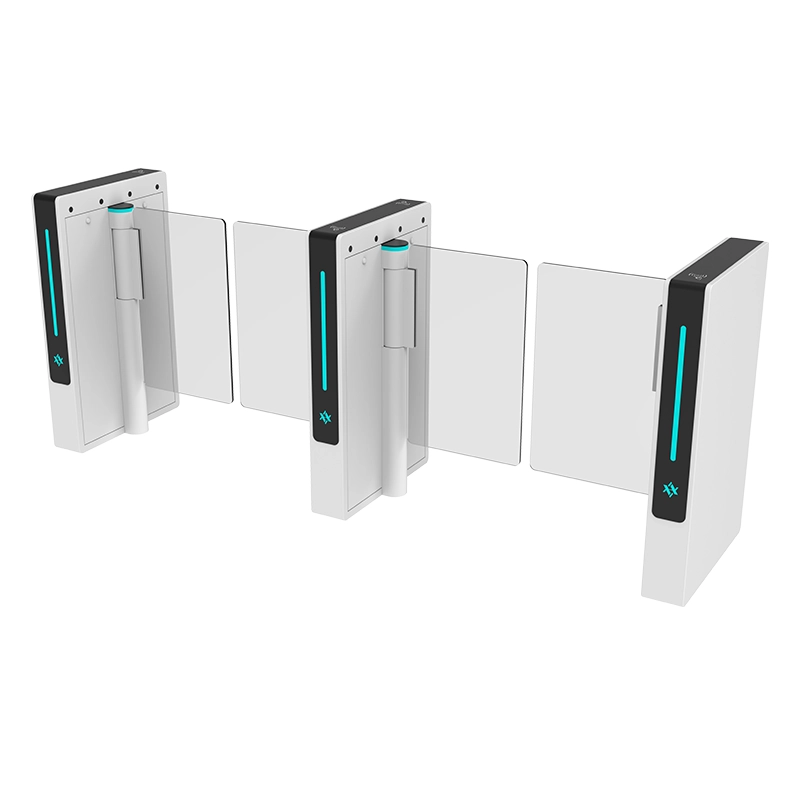
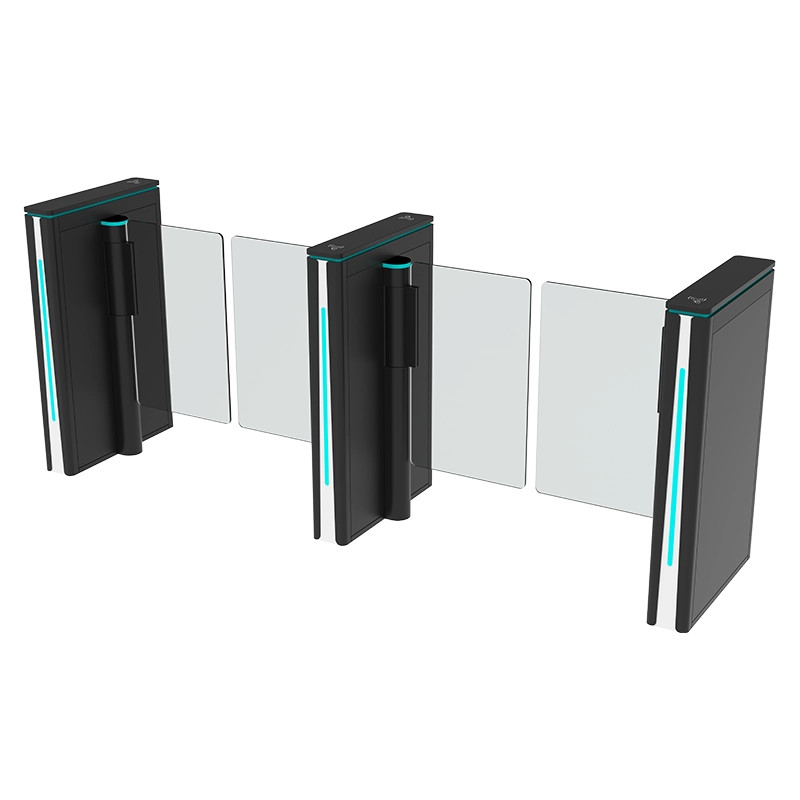
These characteristics make planetary reduction a promising choice for motorized swing and speed-gate mechanisms where compactness and repeatable motion matter. Engineers can compare low-backlash planetary gearbox configurations when defining the transmission: check allowable backlash, torsional stiffness, motor interface and output loads against the actual gate design.
For frequent start-stop operation, select a gearbox with rated and peak torque capacity appropriate to the motion cycle. Efficiency, lubrication, gearing quality and thermal conditions affect the result; quieter operation or longer service life should be established for the chosen assembly rather than inferred from the gearbox type alone. The complete gate still needs properly coordinated sensing, force control and emergency-release functions.
Match gear ratio to the required barrier motion
When a mechanism uses reduction gearing, ratio affects the relationship between motor speed and output speed. Torque capacity, acceleration, losses and duty still need to be checked together. Increasing ratio is not a universal way to improve a pedestrian gate, and a gearbox selected for general automation is not automatically a compatible turnstile replacement.
For engineering background on these trade-offs, PlanetDrivePro’s guide to gear reducer ratio selection explains why output speed alone is an incomplete selection method. Use it as supplementary motion-design reading; the turnstile supplier must confirm the actual mechanism and controller combination.
For a new motorized turnstile project, a planetary gearbox is worth including in the drive evaluation when compact torque delivery and controlled reversing motion are priorities. Confirm the selected configuration with the turnstile manufacturer so the transmission, motor and controller work as one matched system.
Before buying a replacement turnstile gate mechanism
A similar-looking assembly is not enough to establish compatibility. Send the supplier the existing equipment identification and ask for a written match. If the failure has not been diagnosed, obtain service guidance first: a reader, wiring or controller fault can resemble a mechanism problem.
Replacement enquiry checklist
- Identify the gate: manufacturer, model, serial number and approximate installation date.
- Identify the assembly: mechanism label, part number, revision and clear photographs taken under the manufacturer’s safe service procedure.
- Record mechanical interfaces: mounting drawing, shaft/coupling connection and rotor or panel configuration.
- Record electrical interfaces: rated supply, connector documentation, controller model and feedback device. Do not rely on wire colors alone.
- Describe the behavior: affected direction, when the fault occurs, any error indication and whether it follows an impact or recent change.
- Confirm scope: bare mechanism, motor, controller, brackets, cables and setup work included in the quote.
- Agree acceptance checks: both configured directions, normal passage, timeout, feedback and approved emergency/reset states.
Installation and commissioning should follow the equipment manufacturer’s instructions. Avoid altering locking parts, force settings or emergency wiring as a shortcut to making an unmatched mechanism work.
Frequently asked questions
Is a turnstile mechanism the same as a turnstile head?
Suppliers sometimes use “head” for the assembly that contains the rotor’s locking and indexing components. The included parts vary. Ask for a parts list and drawing rather than assuming the term includes the controller, motor or support bearings.
Can one mechanism fit tripod and full height turnstiles?
Do not assume so. The load, support arrangement, indexing geometry, mounting and control requirements can differ. Compatibility needs confirmation for the specific models, even if the outer assemblies look similar.
Does every automatic turnstile use a planetary gearbox?
No. Powered mechanisms may use different transmission arrangements, including direct drive. Confirm the design from the manufacturer’s documentation rather than identifying the transmission from a general product label.
Can I order a mechanism separately from the complete turnstile?
Ask about availability for the exact model and revision. Provide the identification and interface details above. A complete gate listing does not by itself confirm standalone spare-part stock or compatibility with another brand.
Need help matching a mechanism to your entrance?
Send AIPADA your gate model, operating requirements and available assembly details. For a new project, include the gate type and access-control system; for a replacement, include the existing part identification so compatibility and supply scope can be checked.
Request mechanism configuration support