
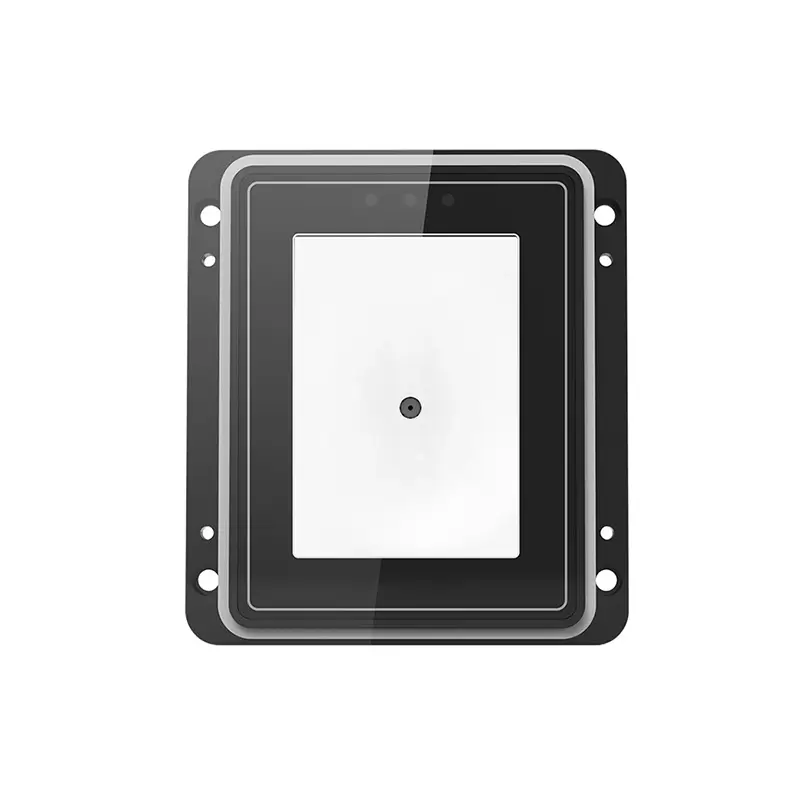
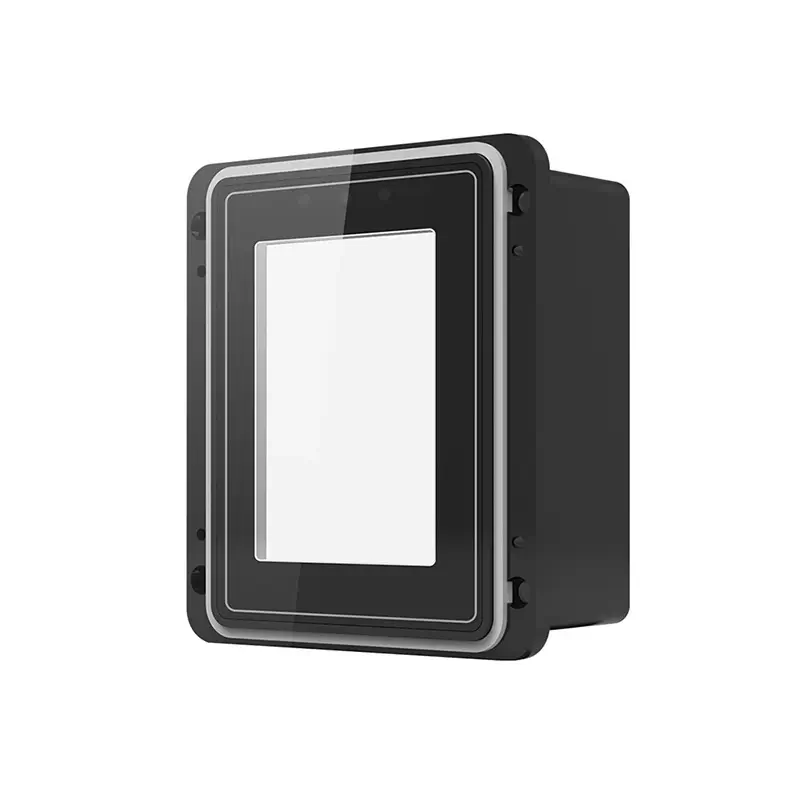
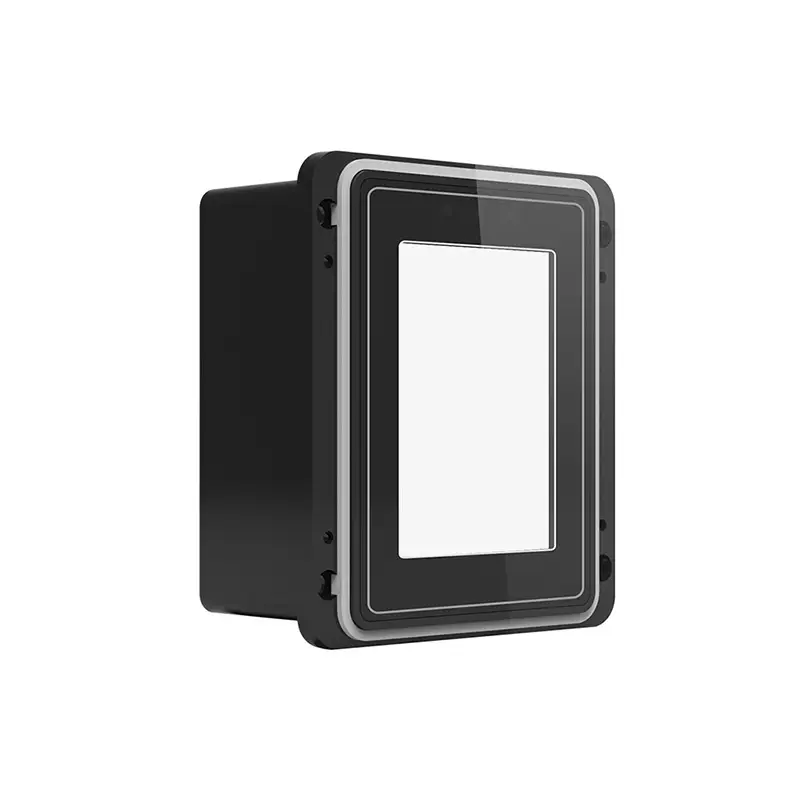
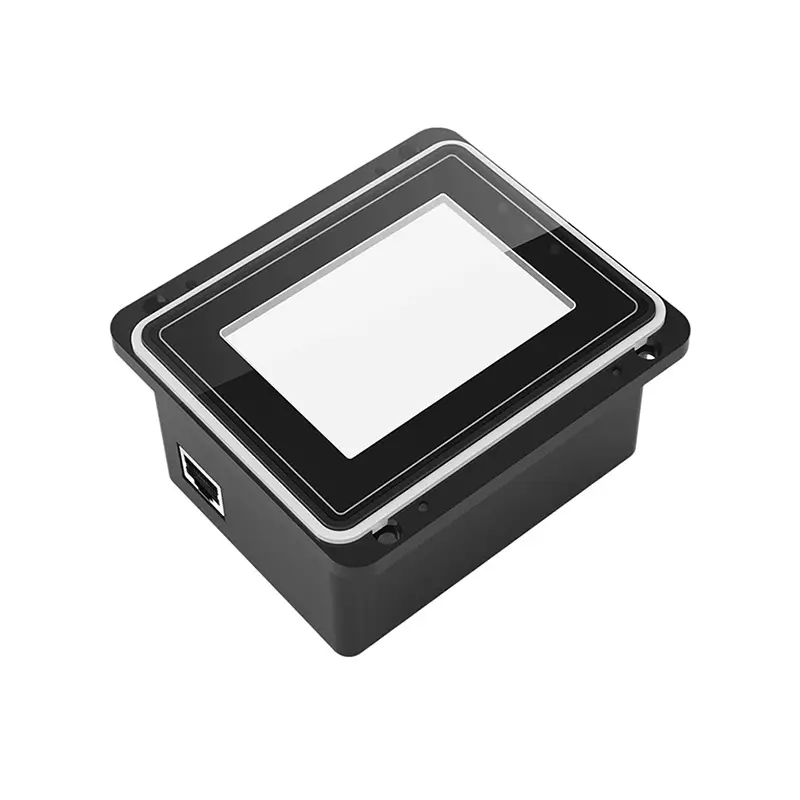


ATX200 Embedded QR Code Scanner for Turnstiles Functional features
This Touchless Embedded QR code scanner ATX200 carries a 2-year warranty and durable maintenance and repair support.
We can provide OEM and ODM services. We also provide biometric devices, such as IC/ID card readers, fingerprint scanners, QR code scanners, face recognition cameras, and so on.
ATX200 is an embedded QR code scanner, which adopts the self-developed core decoding technology, and can support the rapid reading of one-dimensional code and QR code systems at the same time. Its surface is made of tempered glass, which has good light transmittance, scratch resistance, and fall resistance. It can be used for multiple purposes. If you need this QR code scanner for the turnstile, please contact us.
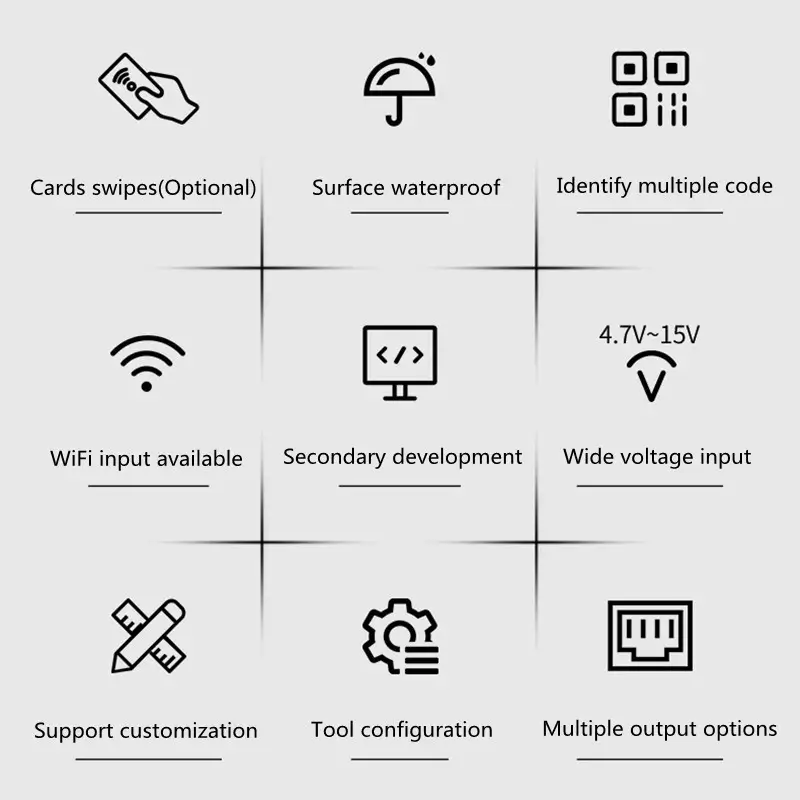
This QR code scanner can be equipped with an NFC card swiping function (radio frequency 13.56 MHz non-contact IC card, M1 sensor card, NFC mobile phone, and ID card), which can adapt to complex comprehensive application scenarios.
QR code scanner ATX200 can recognize various code systems, such as one-dimensional code, two-dimensional code, mobile phone screen code, paper code, etc, 70 times per second, and scan it as you want from 360 degrees. Recognizable distance of between 3-10cm. Multiple feedback mechanisms enhance the interactive experience. Three indicator lights, a reading window red light flashing, and a scanning code beeping prompt sound, Enhance your scanning experience.
The ATX200 can combine USB, RS232, TTL, and other data transmission methods, and integrate WiFi output to meet the hard needs of the Internet of Things era. Automatic recognition image reading, supports secondary development, and provides function customization. Self-development, diverse development interfaces, good compatible capacity.
Secondary development interfaces: C/C++, C#, Java, DELPHI, compatible with Android Pad, Android development board, Windows, Mac, Linux system, cash register, Raspberry Pi.
Support 4.7-15v wide voltage input, eliminate the impact of voltage on the service life of equipment, save switching power supply, reduce equipment costs, and apply to more scenarios. For example, 12V security pedestrian turnstile gate, 5V self-service cabinet, vending machine, ticket-taking machine, meal-taking cabinet, express cabinet, garbage recycling bin, payment machine, printer, queuing machine, registration machine, borrowing, and returning bookcase, etc.
There are rich communication interfaces, WiFi, RS232, TTL, and USB (analog keyboard, hid development mode) output is optional, SDK is provided, and secondary development and customization services are supported. Compatible with Windows (xp/7/8/10), MAC, Android, and Linux systems.
- light source: Led diffuse lighting (white lighting, red indicator)
- Instruction: Buzzer, three blue LED status indicators, red LED indication
- Identification code: QR Code, Data Matrix, EAN_13, EAN_8, RSS_14, CODE_39, CODE_93, CODE_128, ITF, Code Bar, Inverse Code, Mirror Code, etc.
- Field of view angle: Horizontal field of view 77°, vertical field of view 60°
- Reading angle: Tilt ± 40°, deflection ± 30°, rotate 360°
- Depth of field: 0mm~55mm( 15mil QR Code)
- Microprocessor: 32-bit 1G CPU, high-speed DDR memory
- Data interface: RS232 (9.6 ~ 115.2kbps), USB1.1 (HID-KBW, HID-POS), custom HID (add USB development interface, high-speed transmission)Data line: RS232 data line (USB power supply interface + DB9 data interface), USB cable, TTL line
- Operating temperature: -20~70 degrees Celsius
- Storage temperature: -40 to 80 degrees Celsius
- Humidity: Relative humidity 0%~95%
- Ambient light intensity: 0~80,000LUX
- Operating Voltage: Supports 5~15V wide voltage input
- Working current: 0.15A (5V) or 0.05A (15v)
- Maximum Power Consumption: 0.75W
Touchless Embedded QR code scanner for types of turnstiles.
- International Certification: FCC Part15 Class B, CE EMC Class
- Maintenance Requirements: Support remote maintenance and online upgrade
- Materials Body: Imported PC window: Tempered glass
- Operating System: Supports Windows (xp.7.8.10), Linux, Android, Mac, etc
How the ATX200 Embedded QR Code Scanner Works
The ATX200 is a flush-mount QR code scanner module built to sit directly inside a turnstile reader panel, an access control pedestal or a self-service terminal. A 32-bit image processor with high-speed DDR memory captures the code, runs AIPADA’s self-developed decoding core and hands the decoded credential to the host controller. Because the module is embedded rather than bolted on, the reader face stays flush with the cabinet surface — no protruding lens, no exposed cable, nothing for a passing trolley to catch.
What makes the ATX200 practical for pedestrian access control is the combination of speed, angle tolerance and low-light resilience:
- Up to 70 reads per second — a queue of staff badges or visitor tickets clears without the pause people associate with older scanners.
- 360° rotation, ±40° tilt and ±30° deflection — users do not have to align the code carefully; the module reads it as it is presented.
- 0–80,000 LUX ambient light tolerance with LED diffuse illumination — mobile screen codes stay readable under bright atrium daylight and under indoor LED downlights alike.
- Triple feedback — three blue status LEDs, a red indicator and a buzzer confirm a successful read instantly, which reduces “did it scan?” hesitation at busy lanes.
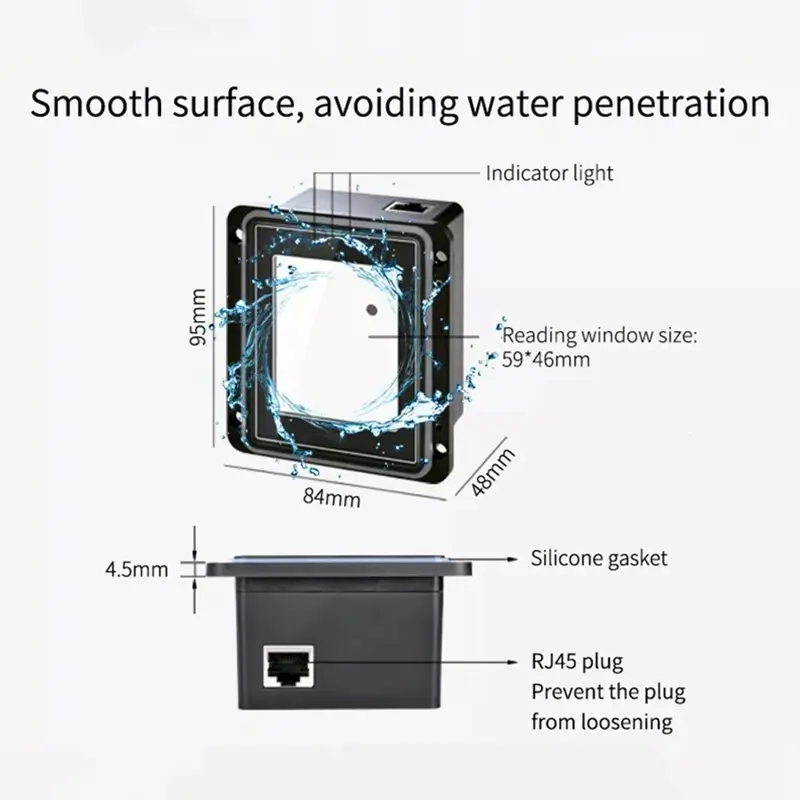
The reading window is tempered glass over an imported PC body: high light transmittance, scratch resistance and drop resistance. In a lobby where thousands of hands and phone screens touch the same spot every day, that surface is what keeps the optics stable over the service life of the gate.
ATX200 Technical Specifications
Full module parameters for project specification and tender documentation:
| Parameter | Specification |
|---|---|
| Scanning technology | 32-bit 1G CPU image decoder with self-developed decoding core |
| Supported symbologies | QR Code, Data Matrix, EAN-13, EAN-8, RSS-14, CODE-39, CODE-93, CODE-128, ITF, Code Bar, Inverse Code, Mirror Code |
| Reading speed | Up to 70 scans per second |
| Reading distance | 3–10 cm (15 mil QR code); depth of field 0–55 mm |
| Field of view | 77° horizontal × 60° vertical |
| Reading angle | Tilt ±40°, deflection ±30°, rotation 360° |
| Light source | LED diffuse lighting (white illumination, red indicator) |
| Indication | Buzzer, three blue LED status indicators, red LED indication |
| Voltage | 5–15 V wide voltage input (supports 4.7–15 V) |
| Working current | 0.15 A at 5 V / 0.05 A at 15 V |
| Maximum power | 0.75 W |
| Data interface | RS232 (9.6–115.2 kbps), USB 1.1 (HID-KBW, HID-POS), custom HID, TTL; WiFi output optional |
| Optional card reading | 13.56 MHz non-contact IC card, M1 sensor card, NFC mobile phone, ID card |
| Operating temperature | −20 °C to +70 °C |
| Storage temperature | −40 °C to +80 °C |
| Humidity | 0–95 % relative humidity |
| Ambient light | 0–80,000 LUX |
| Materials | Imported PC housing, tempered-glass reading window |
| Operating system support | Windows (XP/7/8/10), Linux, Android, Mac |
| Certification | FCC Part 15 Class B, CE EMC Class B |
| Maintenance | Remote maintenance and online firmware upgrade |
Because the supply accepts a 4.7–15 V range, the module runs from the same rail as the turnstile controller without an extra switching power supply — one less component in the cabinet, one less failure point, and a lower equipment cost per lane.
Communication Interfaces and SDK Development
The ATX200 is not a closed box. It ships with a defined interface for both integration and secondary development, which is what turns a scanner module into a project-specific credential reader.
Interface options
- USB 1.1 in HID-KBW mode — plug in, scan, and the decoded string arrives as keyboard input. No driver, no configuration file.
- USB HID-POS and custom HID — structured output for POS and kiosk software that expects a stable packet format.
- RS232 at 9.6–115.2 kbps — the standard route into a turnstile mainboard, PLC or access controller, supplied with a cable combining the USB power interface and a DB9 data connector.
- TTL and WiFi output — for embedded boards and IoT gateways where a cabled run is impractical.
Development kit
Secondary development interfaces are provided for C/C++, C#, Java and Delphi. The supplied SDK and documentation cover Android tablets and Android development boards, Windows, Mac, Linux, cash registers and Raspberry Pi. Typical development work includes writing the decoded credential into a visitor management database, mapping a ticket string to a barrier opening command, or driving a bespoke display on a self-service kiosk.
If you already run an in-house credential format, send us the string structure — AIPADA supports function customisation so the module reports exactly the fields your system expects.
Integrating the Scanner with Turnstiles and Access Control
The ATX200 is most often specified as the credential reader on a pedestrian gate. Mounted in the reader panel of a tripod turnstile, a flap barrier or a swing gate, it turns a paper ticket, a phone screen or a printed badge into an electrical release signal.
Typical deployment patterns
| Site type | Credential flow |
|---|---|
| Scenic spots and attractions | Visitors scan an e-ticket QR code from their phone; the scanner passes the booking reference to the ticketing platform for single-use validation |
| Factories and industrial parks | Staff scan an employee QR badge; the module reads the code and the access controller logs the shift entry |
| Office buildings | Visitor codes are issued at reception and expire automatically; the scanner reads the code and the swing gate releases one passage |
| Stadiums and venues | Season or match tickets scan at high throughput — up to 70 reads per second keeps entry lanes moving at kick-off |
| Museums and exhibition halls | Membership and timed-entry passes are read from paper or screen, with the LED and buzzer confirming acceptance |
Wiring into an existing controller
The module outputs a standard data stream, so it can report to most mainstream access controllers either directly over RS232/TTL or through the turnstile mainboard. If you are retrofitting a venue, tell us the controller make and the credential format — our engineers will confirm the wiring and, where required, adapt the output string so no change is needed at the door.
Where a site needs two factors rather than one, the same reader panel can combine QR scanning with the optional 13.56 MHz NFC channel for staff cards, so employees tap and visitors scan on the same housing.
Ordering, Lead Time and After-Sales Support
AIPADA has manufactured turnstiles and access control components since 2014 in a 3,000 m² facility in Dongguan, China, with a capacity of around 3,000 units per month. The ATX200 is covered by the same supply terms as our gate products:
- Minimum order quantity: 1 unit — suitable for pilot installations and single-site retrofits.
- Lead time: 7–15 days for standard configuration.
- Payment terms: T/T with 30 % deposit.
- Warranty: 2 years, with long-term spare-part supply to support later-stage repair and replacement.
- Compliance: CE (ZR0119400918C) and CMA/CNAS (UCT1648D35) test reports available for tender packages.
- Customisation: OEM and ODM — housing colour, cable length, output format and firmware behaviour can be adapted to the project.
For distributors and system integrators we support consolidated shipments and can pre-configure the output format so modules arrive ready to drop into the gate cabinet.
Frequently Asked Questions
1. Can the ATX200 be embedded into our existing turnstile?
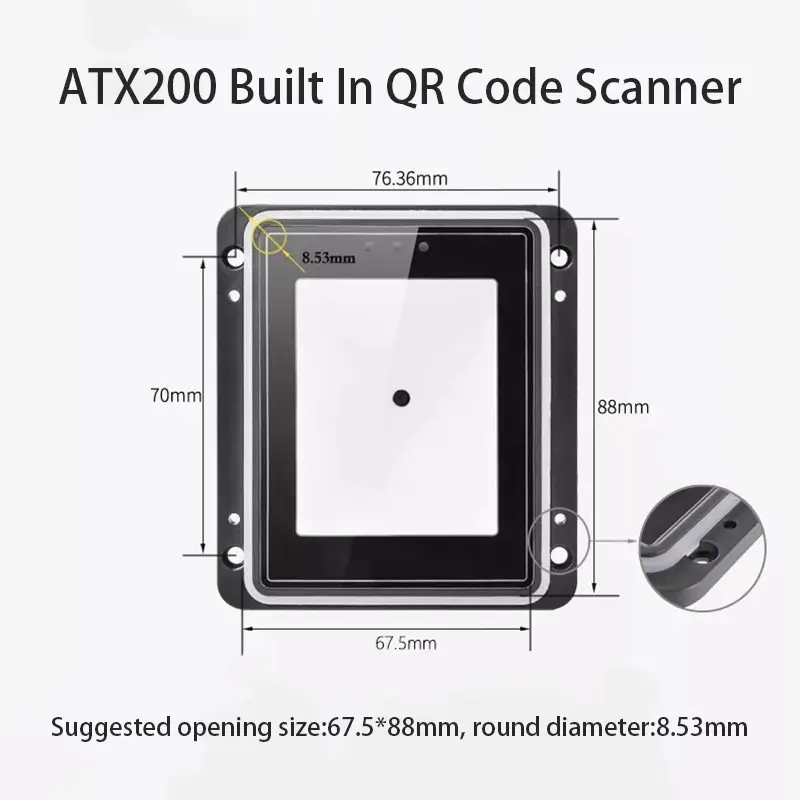
Yes. It is designed as an embedded module. Share the reader-panel opening dimensions and the cabinet thickness, and we will confirm the mounting arrangement and cable routing. Where the panel is not yet cut, we supply the cut-out drawing for your fabricator.
2. Does it read a QR code from a mobile phone screen?
Yes. The module reads screen codes as well as paper codes, with 0–80,000 LUX ambient light tolerance and LED diffuse illumination to keep the screen readable in bright lobbies. Reading is at 3–10 cm, so visitors hold the phone naturally rather than pressing it against the glass.
3. Which output interface should we choose?
USB in HID-KBW mode is the simplest route when a PC or kiosk collects the credential. RS232 is the usual choice when the credential must feed a turnstile mainboard or access controller over a longer cable run. Tell us the host equipment and we will recommend the interface and supply the matching cable.
4. Can we develop our own application on top of the module?
Yes. SDK support is provided for C/C++, C#, Java and Delphi across Windows, Android, Linux and Mac hosts, including Raspberry Pi and Android development boards. This allows a site to map a scanned code to its own database, display or barrier-release logic.
5. How is firmware kept current after installation?
The module supports remote maintenance and online upgrade, so decoding improvements and symbology additions can be applied without swapping hardware.
Related Turnstile Guides
- ›Outdoor Turnstiles: Weather Protection and Site Planning
- ›Single vs Double Full Height Turnstiles: Which Layout Fits Your Entrance?
- ›Turnstile Dimensions: Cabinet Size, Lane Width and Installation Space
- ›Portable Turnstiles: Base-Mounted Options for Temporary Entrances
- ›Glass Swing Turnstiles: Panel Safety and Replacement