
Outdoor entrance planning • Buyer’s field guide
Outdoor turnstiles should be selected for the actual exposure of the complete entrance: gate, reader, control equipment, cabling and installation surface. A stainless-steel cabinet alone does not establish that a system is suitable for unprotected rain, coastal salt, freezing conditions or washdown.
This guide helps facility managers and installers turn a site survey into a clear purchase specification. Start with exposure, then confirm the model and its installation requirements before comparing quotations.
First, identify what “outdoor” means at your entrance
A gate beneath a deep building overhang and a gate beside an open perimeter fence have different requirements. Photograph the entrance from both approaches and record where water, sunlight and wind reach it. Use the following three site descriptions as a starting point; they are planning categories, not product protection ratings.
Sheltered entrance
A roof protects the passage from much of the direct rain. Check wind-driven rain at the sides, roof runoff, wet footwear and the reader’s position outside the roof line.
Ask: Does the supplier approve this exact location as sheltered outdoor use?
Exposed entrance
The gate receives direct rain and sunlight. Document pooling, nearby sprinklers, dust, temperature extremes and whether a canopy can be added.
Ask: Which supplied components are approved for direct exposure?
Aggressive environment
A coastal, industrial or regularly washed area needs a more specific review. Describe salt deposits, process chemicals and cleaning practices instead of simply writing “outdoor.”
Ask: What material, finish and maintenance conditions apply?
Outdoor turnstile specifications: what to request in writing
Compare suppliers against the same conditions. If one quote includes protected readers and installation accessories while another covers only the gate, the equipment prices are not directly comparable.
| Check | Request from the supplier | Clarify before ordering |
|---|---|---|
| Approved environment | Model-specific indoor, sheltered outdoor or exposed outdoor installation statement | Whether a canopy or additional enclosure is required |
| Ingress protection | Documented protection ratings for the relevant enclosures and installed devices | Which assembly each rating covers, including cable entries and added readers |
| Materials and finish | Materials for cabinet, rotor or panels, fasteners and exposed mounting parts | Which parts change with a stainless-steel upgrade |
| Operating conditions | Permitted operating temperature and humidity, plus any conditions on condensation | Whether optional heating or other environmental provisions are needed |
| Reader and sensors | Approved device models and mounting positions | Performance under the site’s sunlight, rain and user approach conditions |
| Installation | Foundation, anchoring, cable-entry and drainage requirements | Who supplies civil work, electrical protection and weather sealing |
| Service | Cleaning instructions, inspection tasks and environmental exclusions | Spare parts, local service access and responsibility after installation |
Match the turnstile type to the entrance’s job
Weather suitability and passage control are separate decisions. Once the environmental requirements are defined, select the barrier format around the people using the entrance and the level of supervision available.
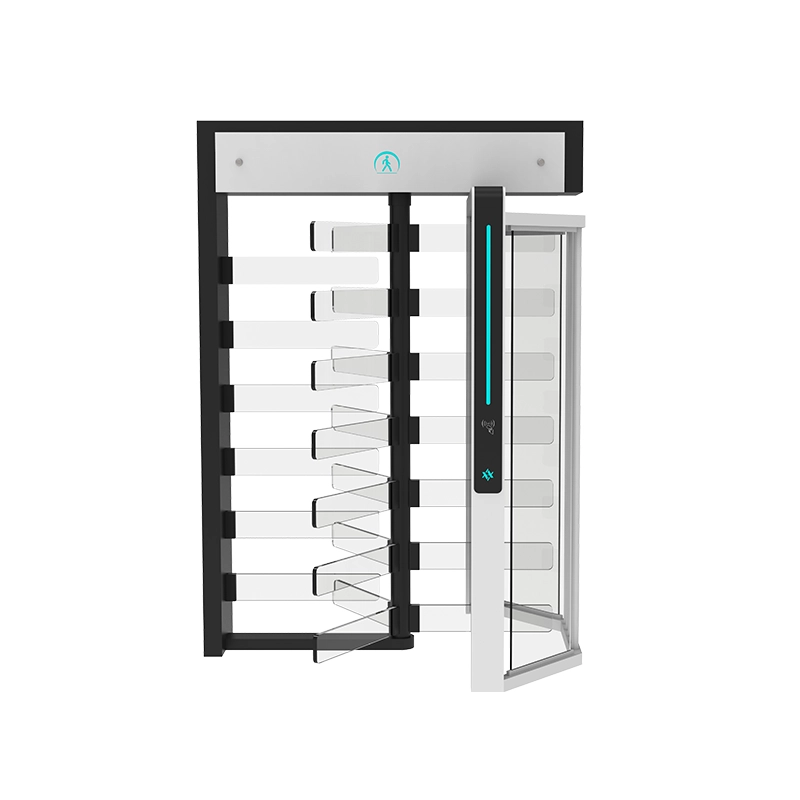
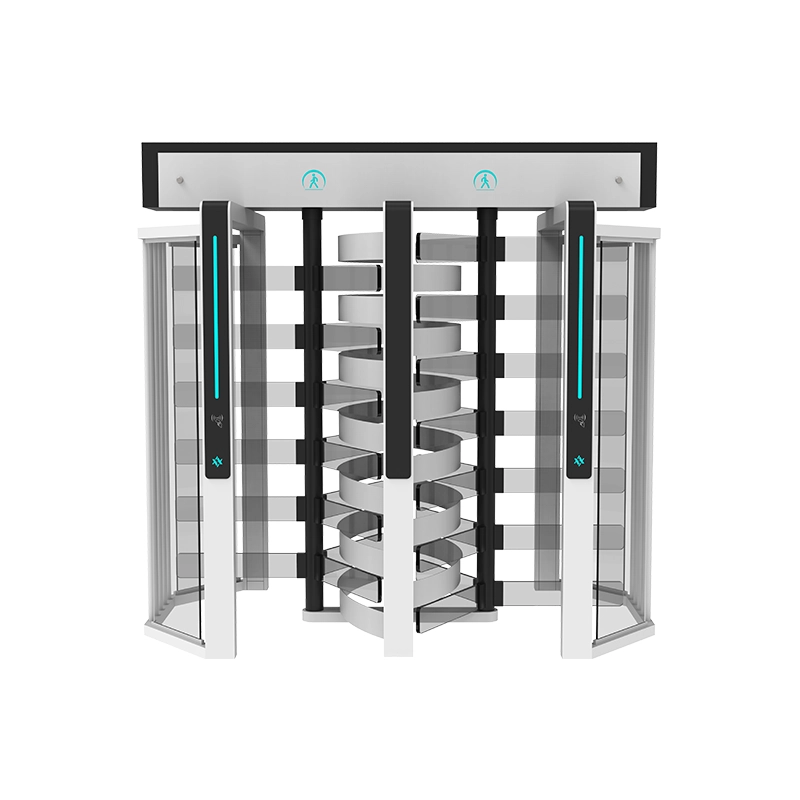
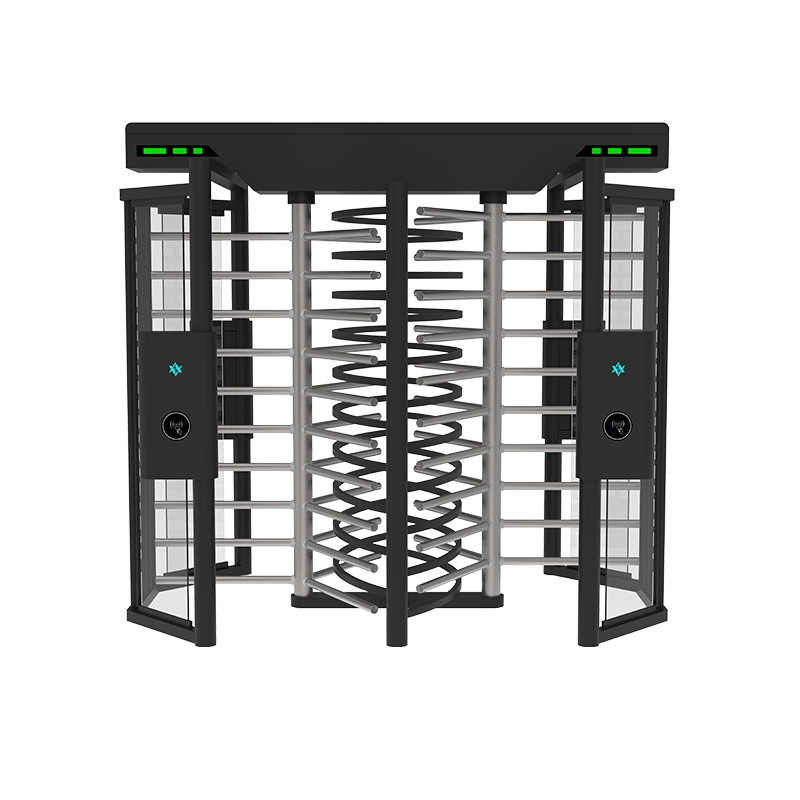
- Outdoor full height turnstiles: consider these for controlled perimeter pedestrian entrances where a taller physical barrier is appropriate. Coordinate the surrounding fence, supervision and a separate route for users or equipment that cannot pass through the rotor.
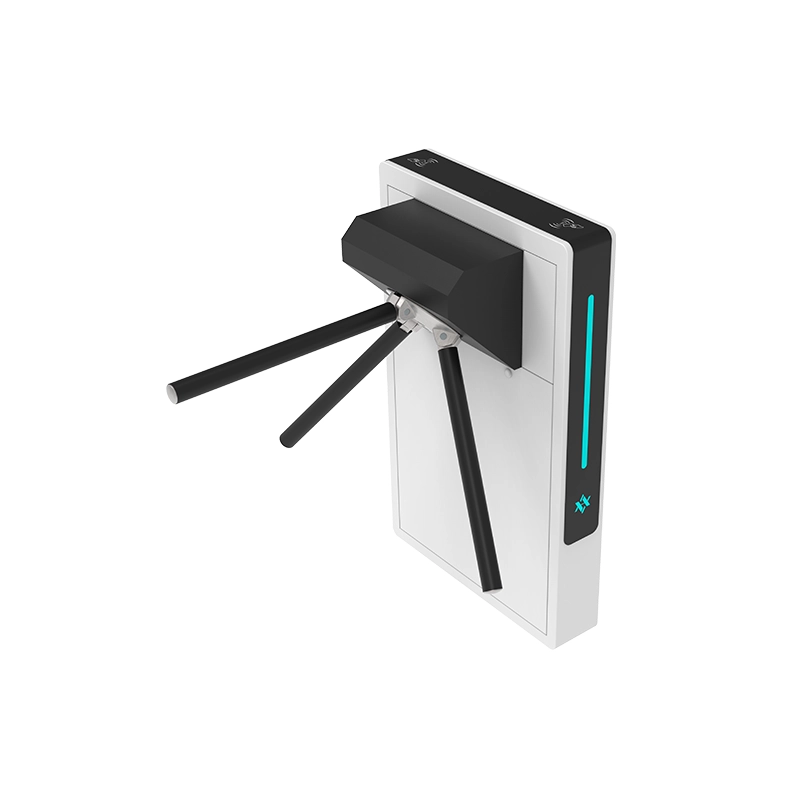
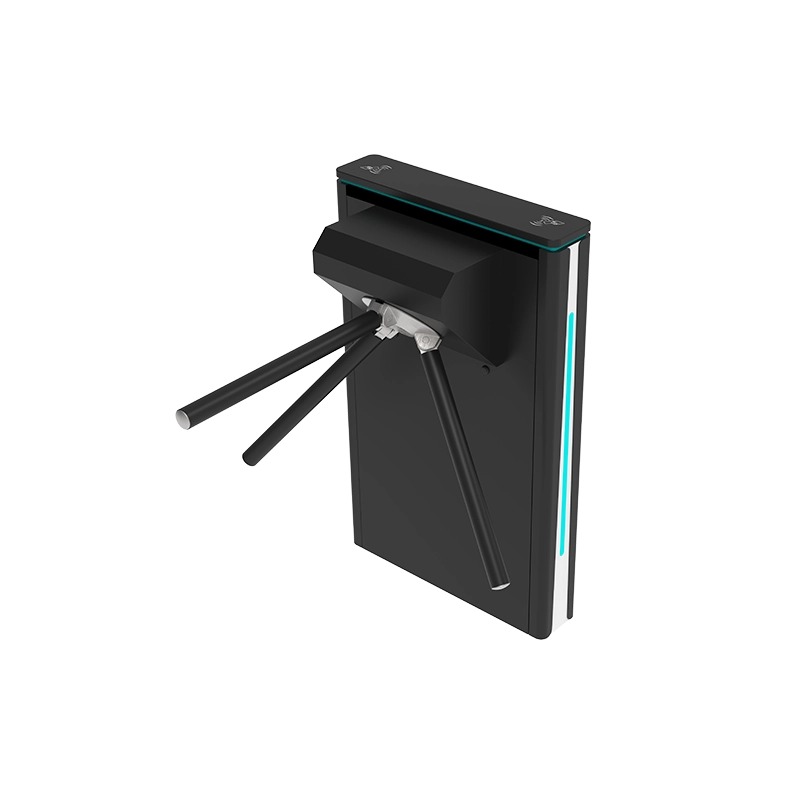
- Outdoor tripod turnstiles: consider an approved outdoor model for supervised staff entry or attendance control. Plan another suitable route for wheelchairs, large luggage and deliveries.
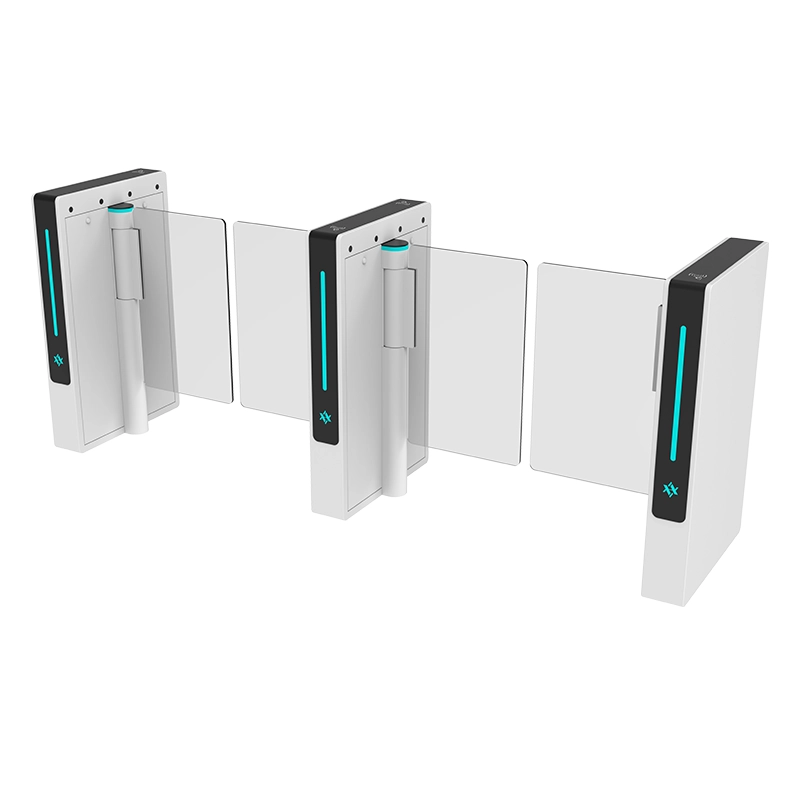
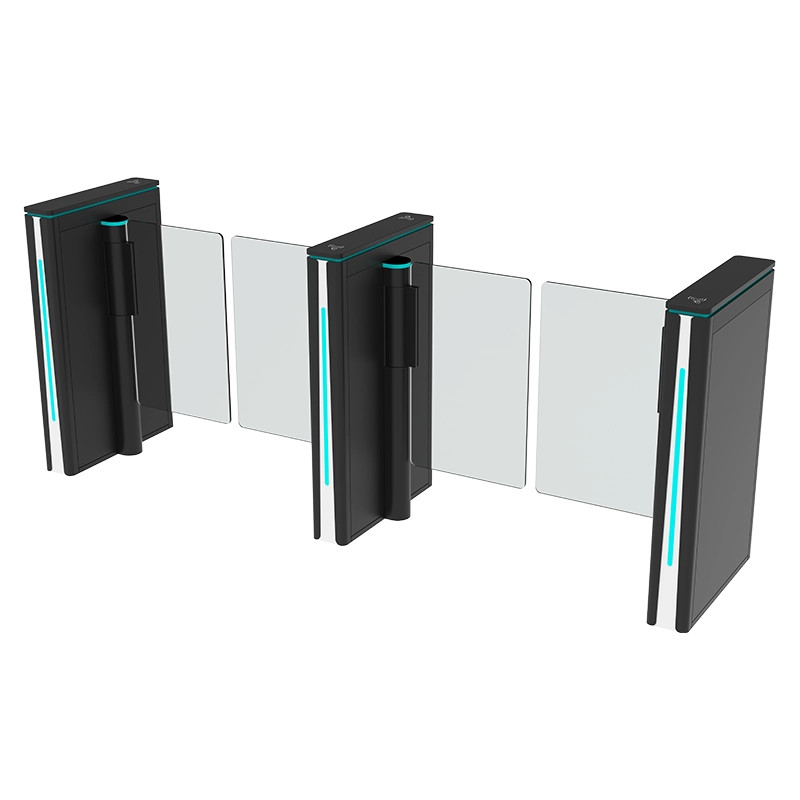
- Outdoor swing or optical gates: consider models explicitly approved for the proposed exposure when the project needs a different passage arrangement. Include sensor and reader checks in the site review; do not assume an indoor lobby configuration can be moved outside unchanged.
For detailed space calculations, use the turnstile dimensions and installation-space guide. For the choice between one rotor and a two-lane assembly, see single vs double full height turnstiles.
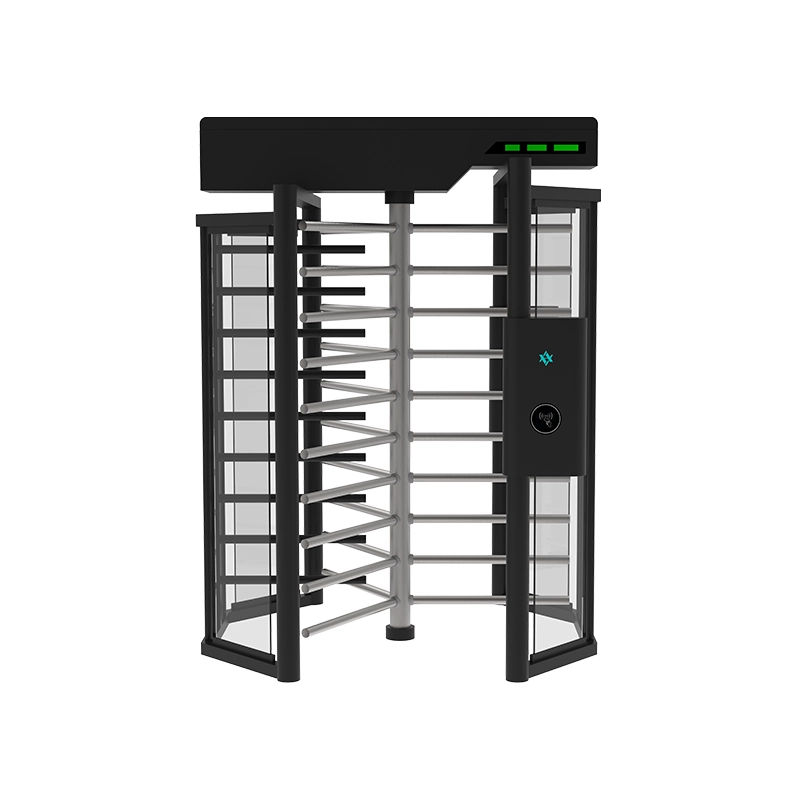
The AT504 coated full height turnstile page lists a coated construction with stainless-steel components and an optional SUS316 upgrade. Use it as a starting point for a project discussion. Confirm the parts included in the upgrade and the approved exposure conditions on the quotation; a material option does not establish the environmental performance of the entire entrance.
Five checks to make during the site survey
Trace water from the roof to the ground
Look beyond direct rain. Mark roof discharge, splash from adjacent roads, irrigation and low points where water collects. Ask the installer to coordinate drainage with the foundation and cable routes. A canopy should not discharge water onto the reader, the passage or the service door.
Confirm who designs and installs the canopy, its supports and drainage. Do not assume a small cover over the rotor also shelters the waiting person and credential reader.
Review every exposed component
List the gate, card reader, QR scanner or face terminal, intercom, exit control and any separate control box. Ask for environmental approval for each selected device in its installed orientation. An outdoor gate paired with an indoor-only reader leaves a gap in the specification.
Include cable glands, junction boxes and site-added openings in the installer’s review. Keep changes to the enclosure within the manufacturer’s installation instructions.
Check real credential use
Record when sunlight faces the reader and where people stop to present a card or phone. Arrange a demonstration with the proposed device and representative credentials. Check the approach with bags, umbrellas and workwear, including the point where people wait while the previous user clears the lane.
Write acceptance criteria around the complete interaction: successful reading, understandable feedback, authorized passage and recovery after a rejected credential.
Plan access when the normal lane is unavailable
Identify the accessible route, service route and approved emergency arrangements with the project team. Document the specified behavior during a power interruption, an emergency input and restoration of power. These are different operating states and should not be treated as interchangeable.
Have the responsible designer and installer confirm applicable local requirements. Do not assume that a freely rotating rotor or a released swing panel automatically makes the complete entrance an approved emergency exit.
Leave room for inspection and cleaning
Show where technicians can open service panels without standing in moving traffic. Record how the surrounding pavement is cleaned and whether water jets or chemicals could reach the equipment. Obtain the manufacturer’s cleaning method rather than treating the turnstile like outdoor paving.
Assign responsibility for checking seals, coating damage, reader operation and drainage. Use the model’s service instructions to set the inspection interval and arrange a review after significant environmental events.
Turn your survey into a comparable outdoor turnstile quote
Copy this into your project enquiry
- Location and exposure: country/city, sheltered or exposed, entrance photos, roof coverage and nearby sources of water or dust.
- Climate and cleaning: expected temperature range, condensation concerns, salt or industrial exposure, cleaning methods.
- People and operation: staff or visitors, arrivals during the busiest interval, entry/exit directions, supervision and operating hours.
- Passage needs: wheelchair route, bags, equipment, deliveries and alternative access during maintenance.
- Access control: existing platform, preferred reader model, power and network provision, required operating states.
- Requested scope: proposed gate configuration, environmental documentation, installation drawing, canopy requirements, commissioning and service responsibilities.
Ask the supplier to separate the gate, reader integration, environmental options, shipping and installation scope. Compare the complete accepted configuration, not just the lowest gate price. Keep the approved drawing and component list with the purchase order so substitutions can be reviewed before delivery.
Questions buyers ask about outdoor turnstiles
Do outdoor turnstiles need a canopy?
It depends on the model’s approved installation conditions and the exposure at the site. A canopy may be required or recommended, but it does not replace suitable equipment, cable-entry protection or drainage. Confirm its coverage and responsibilities before ordering.
Is a stainless-steel turnstile automatically waterproof?
No. The enclosure material and protection against water entering the equipment are different specifications. Request the applicable environmental documentation for the selected gate and accessories rather than relying on appearance or a general “weatherproof” label.
Can an indoor turnstile be installed outside under a roof?
Only if the manufacturer approves that configuration and location. A roof does not remove humidity, temperature changes, wind-driven rain or condensation. Obtain written confirmation instead of assuming that shelter makes an outdoor entrance equivalent to an indoor lobby.
Which AIPADA model should I choose?
Start with the site information above. The gate family, material options, reader and installation arrangement should be reviewed together. A product page helps create a shortlist; the project quotation should confirm the exact configuration suitable for your entrance.
Planning an outdoor pedestrian entrance?
Send AIPADA your entrance photos, location, exposure conditions and access-control requirements. Request a proposed model and configuration, the installation conditions to confirm, and a clearly itemized quotation.
Discuss your outdoor turnstile project